Discernment for Dummies

discernment “But solid food is for the mature, who because of practice have their senses trained to discern good and evil.”

Hebrews 5:14, NASB

“The first point of wisdom is to discern that which is false; the second, to know that which is true.”

Lucius Caelius Lactantius


Defined, discernment is the ability to perceive reality as it really is. It is a difficult quality for mentally ill people to have. We tumble through this world with wrong perceptions. We deal with issues like delusions and paranoia. Some of us are tangled up with derealization/depersonalization. We question the “realness” of our reality.

Discernment is being in a right relationship with truth.

One of my prayers has been, “Lord, let it be the real me who encounters the real you.” I’m belly-full of pretense and posturing. I know I have this strange tendency to deceive myself. I don’t know when I’m getting screwy.

“But when he, the Spirit of truth, comes, he will guide you into all the truth.”

John 16:13, NIV

The Holy Spirit leads me into what is true and valid. I can trust Him to interface and interpret for me what is real and what is authentic. That is His ministry. That is what He does,  I can trust Jesus’ referral.

There are many ways that God gives to help me discern. These are the things the Spirit uses:

  • the Bible
  • personal desires, hopes, and inclinations
  • circumstances
  • solid counsel from the mature
  • common sense
  • past results and experiences
  • “gut” impression
  • supernatural leadings (dreams, visions, audibly)

True discernment comes in the objective reality of the Bible. This book wants to direct and guide me like no other. It stands as the trustworthy  director in a world of competing voices. It directs me through all of the din. I must read God’s Word to  walk in His truth.

Discerning the realness of reality once was the easy attribute of Adam. After the Fall, we (human beings) lost this ability. We currently struggle with the inability to see truth. We’re regaining this through the Spirit. Thank God we’re being transformed and renewed with this new ability. Faith is the adventure we now get to operate in.

“Faith is the divine evidence whereby the spiritual man discerneth God, and the things of God.”

John Wesley

bry-signat-1

cropped-christiangraffiti1 (2)

Listening to the Disturbed

There is a tremendous need to listen to those suffering with mental illness.

Listening takes patience.

I believe it is a rule written somewhere, that self-centered people are simply not prepared to reach hurting people.  You might say they don’t have the capability to become a good listener. One thing is certain,  listening will change you.  The more you do it, the better (and wiser) person you will become.

Listening to the disturbed takes work. You can become that catalyst for healing and wholeness. But you have to set aside your own agenda to do this.

Typically the mentally ill are intense communicators. Sometimes they can be delusional and seem incoherent. But your patience will pay off. Trust the Holy Spirit to strengthen you.

“Spouting off before listening to the facts is both shameful and foolish.”

Proverbs 18:13

A Good Listener:

1. listens with spiritual ears open, hearing and understanding the spirit beneath the words;

2. listens with the heart and mind still and th e mouth shut;

3. listens with no personal agenda;

4. listens with compassionate spiritual eyes, maintaining involved eye contact;

5. listens with a compassionate heart;

6. listens with a committed heart;

7. listens with attentiveness;

8. listens without judgment;

9. listens without fear;

10. listens with faith, knowing that the Spirit of God is at work to will and do according to His good purpose;

11. waits patiently, quietly and prayerfully through times of silence, making room for the unfolding of things previously too deep and too painful to even know or express;

12. counts it a privilege to witness a soul in the process of transformation, even when it doesn’t look like it;

13. offers to explore options wisely;

14. offers to pray when the time of tears and sharing ends;

15. consoles with words of comfort and confidence in the faithfulness of God, which is usually all anyone needs to hear;

16. waits to give advice until asked;

17. offers a hug;

18. recognizes that these are holy moments of eternal consequence;

19. keeps all holy moments completely confidential.

20. doesn’t try to take the place of the Holy Spirit.

“Understand this, my dear brothers and sisters: You must all be quick to listen, slow to speak, and slow to get angry.”

James 1:19

flourish2

I have no clue where this list came from. But it is quite good and very thorough. I exhort you to really listen close to those with a disability. Forget about WWJD. Try HWJL.

(How Would Jesus Listen?)

bry-signat-1

cropped-christiangraffiti1 (2)


*

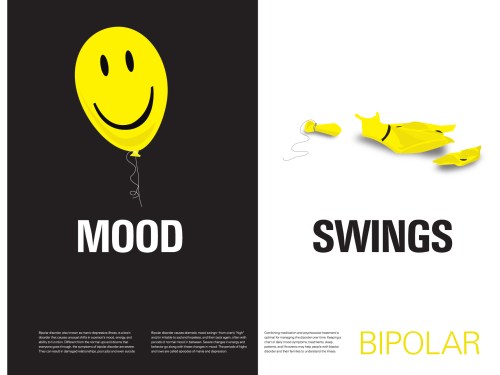
Bipolar Disorder– Basic Stuff


If you have bipolar disorder, you may recognize many below. Not everyone has exactly the same symptoms. Talk with your healthcare provider about your symptoms at each visit.

  • Feeling sad or blue, or “down in the dumps”
  • Loss of interest in things you used to enjoy, including sex
  • Feeling worthless, hopeless, or guilty
  • Sleeping too little or too much
  • Changes in weight or appetite
  • Feeling tired or having little or no energy
  • Feeling restless
  • Problems concentrating or making decisions
  • Thoughts of death or suicide


Symptoms of mania may include:

  • Increased energy level
  • Less need for sleep
  • Racing thoughts or mind jumps around
  • Easily distracted
  • More talkative than usual or feeling pressure to keep talking
  • More self-confident than usual
  • Focused on getting things done, but often completing little
  • Risky or unusual activities to the extreme, even if it’s likely bad things will happen

Here are some behaviors that may be seen in people with bipolar disorder. Please note some of these behaviors may also indicate a different problem, so proper diagnosis is important.

  • Agitation
  • Alcohol or drug abuse
  • Irritability
  • Excessive gambling
  • Violence
  • Poor judgment with decisions
  • Careless spending, buying sprees
  • Talking about hurting oneself
  • Risky sex or change in sexual activity
  • Impulsive financial investments
  • More arguments
  • Change in energy level, appetite, or sleep pattern
  • Relationship problems at home or work
  • Mounting debt
  • Drinking or drugging for ‘escape’ or maintenance purposes
  • Legal/criminal issues
Visit http://www.webmd.com/depression/guide/bipolar-disorder-manic-depression for more detailed information about bipolar disorder and its symptoms.

bry-signat-1

cropped-christiangraffiti1 (2)


Chart of Awareness: Mental Illness


Mental_chartspg_630-_0

Charts and maps have always intrigued me. The one above helps illustrate the incredible issues that we must deal with. These are US numbers and don’t reflect what’s going on in the rest of the world. One can only surmise that they’re not as good. Below is a bit wider view, that includes some major countries.

past-year-mental-disorders

I hope that this will build awareness for those affected by mental illness.

bry-signat (1)

cropped-christiangraffiti1.jpg