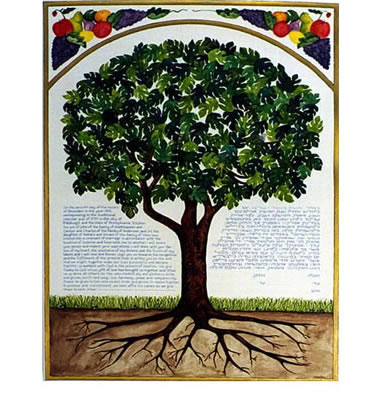
Nothing But Leaves

“Seeing at a distance a fig tree in leaf, He went to see if perhaps He would find anything on it; and when He came to it, He found nothing but leaves, for it was not the season for figs.”

Mark 11:13, NASB

Perplexing isn’t it?  I personally have had a certain amount of ambiguity with this passage.  I have questions that I’ve swept under the rug.  Why did that poor tree get cursed?  It wasn’t the trees fault, after all.  And didn’t Jesus realize this?  So why go through the theatrics?

I don’t know if this is the case with anyone else. 

I hesitate to ask around.  But recently have come to a better place about this entire event.  The traditional view is that it comes immediately after “the cleansing of the temple” and that explains a lot.  The fig tree is always emblematic of Israel.  (The Old Testament is well populated with these references.) The disciple Mark adroitly organized his Gospel in order to connect both events.

I assure you, Jesus has no issues or vendettas against trees.  😁

But He does take an issue with things that claim fruit, but really have nothing.  There’s nothing but leaves. I’ve been told that the figs do grow, almost as fast as leaves.  The lush greenness is the prime indicator of the succulent fruit. At least, in theory, it has the potential.

Luke 12:7-9,

Look, for three years now I have come seeking fruit on this fig tree, and I find none. Cut it down. Why should it use up the ground?’ And he answered him, ‘Sir, let it alone this year also, until I dig around it and put on manure. Then if it should bear fruit next year, well and good; but if not, you can cut it down.’”


The beautiful leaves declare its fruitfulness.  This tree was loaded, but had nothing to show but leaves.  Within God’s plan for Israel was for fruit.  Enough to feed the nations that would stream to Jerusalem.  Instead, it was worthless.  There was nothing to be had.  Loads of leaves, and the promise of an incredible harvest, but zilch, zero, nothing.

Hypocrisy is a deadening experience, with a definite sterility.

Israel was finding this out, and Jesus is now declaring it to the nation.  A corrupt temple, and a fruitless tree; this were all indicators of hypocrisy and showiness.  The luxuriant leaves loaded the tree, but ‘where’s the fruit?!’

Sometimes we declare that we are fruitful, on the mere basis of our lovely leaves. 

At times maybe even green?  Leaves are pretty much all we can do.  And we do it quite well. But the fruit is from the Holy Spirit, (Galatians 5:22.)

Israel failed God.  They became religious and neglected mercy, and justice.  Humility and graciousness.  The widow and the orphan were not part of their personal equation.  They produced leaves by the wheelbarrow load, but were missing out on the authenticity to what was true, and what really mattered.

Pharisees will do this all the time.

They turn into hypocrites who do not possess what they profess. A hypocrite values true godliness, but he personally falls short of all those things he admires. But he will never, ever admit it to anyone.  And even we who struggle so, must continually admit that we stumble and falter as we try to follow.

The terrible temptation of this time is to look good without being good.

It’s the awful curse of legalistic religion, and it runs rampant in our nation today, even in our government. The Lord absolutely detests it. God help us understand, and repent from what He shows us.

Personally, I may be a ‘screwy’ excuse of being a disciple, but I have decided I don’t want to deceive people anymore. 

God, help me.

“This year, or this month, or, more likely, this very day, we have failed to practice ourselves the kind of behavior we expect from other people.”  

C.S. Lewis
 

1brobry-sig4

cropped-christiangraffiti1 (1)

The Incarnation

“The central miracle asserted by Christians is the incarnation. They say that God became man.”

C.S. Lewis

Incarnation, the central Christian doctrine that God became flesh, that God assumed a human nature and became a man in the form of Jesus Christ, the Son of God and the second person of the Trinity.

Christ was completely God and fully man at the same time. This teaching is clear and I really can’t wrap my mind around it. Becoming man did not diminish God–if anything it was an addition and not a subtraction.

Now it’s true that Jesus voluntary set aside all of the perogatives of being God; He chose to lay His deity aside. Please think this verse through–let it sink into your hearts.

Though he was God,
    he did not think of equality with God
    as something to cling to.
Instead, he gave up his divine privileges[b];
    he took the humble position of a slave[c]
    and was born as a human being.
When he appeared in human form,[d]
    he humbled himself in obedience to God
    and died a criminal’s death on a cross.

Have a blessed Christmas. Know deep down that He has come for you, He holds you and cares for you. He will never ever leave you!

Photo by Pixabay on Pexels.com

Prayer Changes My Heart

“I pray because I can’t help myself. I pray because I’m helpless. I pray because the need flows out of me all the time – waking and sleeping. It doesn’t change God – it changes me.”

CS Lewis

One of my blogging friends, Theresa Moore, posted this quote on Facebook the other day and it really stuck with me. C.S. Lewis was such a brilliant man and has such a wonderful way of explaining faith and related matters.

I especially can relate to the last part of the quote: “It doesn’t change God – it changes me.” That is so true. God does not change. He is the same yesterday, today, and forever. But by spending time with Him in prayer I am changed to be more like Him each day. As I pray for the ability to see me as He sees me – both as I am and as He desires me to be – I grow in faith and understanding. I cannot help but be changed by this process.

I have found another thing about prayer.

Jesus said that we should pray for our enemies and for those who persecute us. When we do this, our tendency is to pray that God would change them. But prayer seldom changes the difficult people in our lives (though on occasion it can).

What prayer for our enemies does is change our attitude towards them. When I earnestly pray for the difficult people in my life, God helps me to see them from His perspective and to understand a little better why they might be the way they are and the root of their difficult behavior.

Prayer doesn’t change my enemies.

It changes me. It helps me gain the wisdom and compassion necessary to love them as God has called me to do. And when I love them, perhaps I might help them to change, too.

Dear friends, never take revenge. Leave that to the righteous anger of God. For the Scriptures say,

“I will take revenge;
    I will pay them back,”
    says the Lord.

20 Instead,

“If your enemies are hungry, feed them.
    If they are thirsty, give them something to drink.
In doing this, you will heap
    burning coals of shame on their heads.”

21 Don’t let evil conquer you, but conquer evil by doing good.

Romans 12:19-21, NLT

anotherfearlessyear.net

Mentally Ill Christians Can Do Ministry


“Religious people love to hide behind religion. They love the rules of religion more than they love Jesus. With practice, Condemners let rules become more important than spiritual life.”

Mike Yaconelli

“We are told that Christ was killed for us, that His death has washed out our sins, and that by dying He disabled death itself. … That is Christianity. That is what has to be believed.” 

                                                                C.S. Lewis, Mere Christianity 

People with mental illnesses, for the most part, have been diverted underground.  We have been pushed into hiding our true identity;  we can come out into the open, but only if we agree to play according to the rules—their rules. 

We are expected to censor ourselves and say appropriate things at the right time.  Pharisees [who are alive and well] insist on a level of purity that all must maintain. [I am not picking on anyone, just a generality.]

If I say that I am depressed, paranoid, manic, or desperate I will upset the apple cart and muddle up everything.  “Truth?  You can’t handle the truth?”, [a line from some movie.]  But if we use our shortcomings as credentials, we have the ability to speak about grace, love, and of self-acceptance, with real authority. 

Christians with mental illnesses have been given a gift that we are to share with the Church.  The Holy Spirit has sprinkled us into each fellowship of believers.  He places us as we are suffering in strategic places. Our “gifts” are to speak to the Body, spiritually about a lot of things, but especially grace. 

If our fellowships become religious, it is usually because of our weaknesses, we have allowed ourselves to be silenced into submission by the “interpreters” of scripture.  If we don’t like the rules, we are told to go elsewhere.  We are not welcome. 

But don’t you see, that is our moment to shine! 

Our “unsightly” presence shouts out to the “wonderful” people, proclaiming grace in weakness.  Those who receive us, receive Him.  Those who turn from us, muffling us, are doing that to Jesus. Frightening, isn’t it?  It’s interesting to note that those who do not believe yet have often used “legalism” as the touchstone for their evaluation.

I would strongly suggest that we take our illnesses into the open.  That we become transparent toward others.  As we do this, we can oh-so-gently guide our fellowships into true grace and love.  They look at me and they see Jesus. 

And that is our ministry as mentally ill people to the Church. 

9 But He said to me, “My grace is sufficient for you, for power  is perfected in weakness.”  Therefore, I will most gladly boast all the more about my weaknesses, so that Christ’s power may reside in me.”

10 “So because of Christ,  I am pleased in weaknesses, in insults, in catastrophes, in persecutions, and in pressures. For when I am weak, then I am strong.” 

                               2 Corinthians 12:9-11 (HCSB)

Dear friend, the gospel is either radical, or it is nothing.