God’s Gift to the Broken Ones: Isaiah 61

“The Spirit of the Sovereign LORD is upon me, 
      for the LORD has anointed me 
      to bring good news to the poor. 
   He has sent me to comfort the brokenhearted 
      and to proclaim that captives will be released 
      and prisoners will be freed.
 2 He has sent me to tell those who mourn 
      that the time of the LORD’s favor has come,
      and with it, the day of God’s anger against their enemies. 
 3 To all who mourn in Israel,
      he will give a crown of beauty for ashes, 
   a joyous blessing instead of mourning, 
      festive praise instead of despair. 
   In their righteousness, they will be like great oaks 
      that the LORD has planted for his own glory.”

Isaiah 61:13, NLT

Jesus is presently speaking. Isaiah the prophet, has developed an understanding of Jesus’ ministry. Jesus would read from this scroll, and publicly announce that it is speaking exclusively of Himself. He owns it. The kings of Israel had been anointed, and Jesus now wears this anointing. He is the son of David. He is the real King.

There is a unique presence, that has saturated Jesus’ ministry. He is as full of the Spirit as you could possibly get. Jesus has been immersed and soaked in the Spirit. When you touch Him, He spills God all over you.

These verses in Isaiah 61, funnel His presence unto the most unfortunate. There is the poor, the brokenhearted and the prisoner that benefit from His work. The margins of society are suddenly electrified by His presence. He simply lights up those who have been passed over.

These sweet verses in Isaiah 61 carry a gentleness and kindness, to the extent we aren’t used to. But they also carry exceptional authority. The “Isaiah Jesus” declares freedom. A new kingdom has just arrived. An emphasis on “the mourners” here in v.v. 2 —3 gives us a sense of direction. Mourners are sad, they weep over what could have been. All they can really see is a painful loss.

Jesus’ work is “zeroed” into these dear ones who are full of sadness. His work among men will gravitate to these who are in anguish and despairing. But He speaks of a healing or a restoration. Grace has now come, and something quite significant and alive is available. Healing, focused on the “inside” is now actively working us to a wholeness.

There is something more. There is not just a negation of the bad, but a terrific step to what is quite good. His new kingdom has been honed down to work in our confused hearts. This kingdom now enables us to wear crowns. And to be joyous in the middle of sadness.

He really wants us, to exchange our gritty ashes, for beauty. The idea here is elegance, and gracefulness and goodness. He insists on completely removing the darkness and the nastiness. He very much intends for us to become best friends with goodness and kindness.

In verse 3, we are given an understanding of oak trees now planted in good places. We exist now for people to be directed to God’s glory and honor. That dear one, is a great description of us being redeemed ones. We are oaks who declare God’s goodness and healing.

They Are Bread for Us! [Challenges]

bread

Only do not rebel against the Lord. And do not fear the people of the land, for they are bread for us. Their protection is removed from them, and the Lord is with us; do not fear them.” 10 Then all the congregation said to stone them with stones. But the glory of the Lord appeared at the tent of meeting to all the people of Israel.”

Numbers 14:9-10

Exactly, how do we see our challenges? During the time of Moses and Joshua, and when the land of Canaan [still out there] had yet to be conquered, was still waiting, this happened. But there were many [most] who wanted out. In their limited experience, they saw some serious problems– disaster, becoming a slaughter. They were terrified.

An attempt to stall this insurgency, a few speak up. They call it what it is– rebellion. The people [enmass] begin to organize. More a mob than a crowd, things get nasty. Moses stands up, and speaks loud enough to be heard. [He is not a public speaker.] And do not fear the people of the land, for they are bread for us. Their protection is removed from them, and the Lord is with us; do not fear them.”

Many times we have to choose. The decision to follow Him is almost always dangerous. It requires daring ideas, and is against much of we label common sense. People will always speak doubtful things, and we find little support for our faith to launch out.

Bread is there to build us up. It is good food that might strengthen us. It becomes the metaphor for strength that increases. I grew up with “Popeye” eating spinach out of a can. He found lots of energy, with amazing new abilities. [It almost persuaded me to eat it.] The enemies in the land may seem to be formidable, and without the presence of God they were.

But we are really strengthened by our foes. That which did not weaken us, but only made us stronger. What is bread? Why it is “the staff of life.” In 1 Corinthians 16:9, “There is a wide-open door for a great work here, although many oppose me.”

Victory is never easy. It would be easy if it is always found in a can of spinach. But it is not. It is exclusive to the “presence” of God. Our foes will only fortify us. And that’s a promise for you.

1brobry-sig4 (2)


cropped-christiangraffiti1-3


On Life Support

 untitled (2)And I will give them singleness of heart and put a new spirit within them. I will take away their stony, stubborn heart and give them a tender, responsive heart, 20 so they will obey my decrees and regulations. Then they will truly be my people, and I will be their God. 21 But as for those who long for vile images and detestable idols, I will repay them fully for their sins. I, the Sovereign Lord, have spoken!”

Ezekiel 11:19-21, NLT

This is one of those complex portions of God’s scripture where several ideas overlap. In our English translation, we read compound sentences and knotty syntax. But the thoughts are God’s, and therefore significant. Without these truths though, I believe that we can quickly slip into a ‘comatose’ condition.

First we must consider who is involved.

  1. God [speaking through the prophet] declares His intentions.
  2. His repentant people [Israel] are acted upon.
  3. But there is a third bunch, those unrepentant ones who have decided within themselves that they will stick with their idols.

God is very decisive by this point. The prophetic ministry was supposed to work, many prophets and teachers have been sent out. But with very limited success. If we pick one out, it would have to be Hosea; his ministry was dramatic– but ultimately fruitless. The only real successful prophet was Jonah– preaching to Ninevah, ironically a pagan people. But God’s own people are living in flagrant sin. They remain untouched. They’ve chosen to remain in their sinful condition.

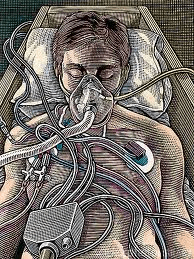
A solid and clear promise has been given. An interior work has been promised by God, if they can only show a minute sense of life. The nation is on “life support.” The prophets attend to the needs before them. They are very far from the virile and robust nation– they are in the ICU and are showing only scanty signs of life.

This promise is that a special work will be done inside. They will become both tender and responsive again. A new receptivity and awareness will come into being. The ability to obey will ignite within. We call this “revival.” Revivalists throughout history have carried this to every generation.

As I scan over my Christian life of more than 30 years, I simply see my own “cycles” of sin and revival. I wish I could have been more consistent. But I cling to the faithfulness of God. He stays true even when I’m not. He has promised me. I’ll take Him at His word.

And I am certain that God, who began the good work within you, will continue his work until it is finally finished on the day when Christ Jesus returns.”

Philippians 1:6, NLT

God will do what He can, His efforts are heroic. He fully intends to change us— if we’re only willing.

“A revival is nothing else than a new beginning of obedience to God.” 

Charles Finney

1brobry-sig4

cropped-christiangraffiti1 (1)

)

Left-Handed People

Left-handed people are powerful

15 “But when the people of Israel cried out to the Lord for help, the Lord again raised up a rescuer to save them. His name was Ehud son of Gera, a left-handed man of the tribe of Benjamin. The Israelites sent Ehud to deliver their tribute money to King Eglon of Moab. 16 So Ehud made a double-edged dagger that was about a foot long, and he strapped it to his right thigh, keeping it hidden under his clothing. 17 He brought the tribute money to Eglon, who was very fat.

18 After delivering the payment, Ehud started home with those who had helped carry the tribute. 19 But when Ehud reached the stone idols near Gilgal, he turned back. He came to Eglon and said, “I have a secret message for you.”

So the king commanded his servants, “Be quiet!” and he sent them all out of the room.

20 Ehud walked over to Eglon, who was sitting alone in a cool upstairs room. And Ehud said, “I have a message from God for you!” As King Eglon rose from his seat, 21 Ehud reached with his left hand, pulled out the dagger strapped to his right thigh, and plunged it into the king’s belly. 22 The dagger went so deep that the handle disappeared beneath the king’s fat. So Ehud did not pull out the dagger, and the king’s bowels emptied. 23 Then Ehud closed and locked the doors of the room and escaped down the latrine.”

Judges 3:15-23, NLT

Moab had subjected Israel to a considerable tribute. Every Israelite was affected by this arrangement. Just imagine owing a debt that you couldn’t pay, and having to pay it anyway. The Bible (Judges 3:12–4:1) includes the story of Ehud, an Israelite judge who uses his ‘left-handedness’ in successfully assassinating an oppressive king. Moab’s dominance over Israel would last for 12 years prior to Ehud’s brave deed.

We have metal detectors in our airports. If you are carrying a weapon, the detector senses it and alerts the TSA people. You simply can’t carry a gun or a knife and pass through the security. You will be caught.

A Israelite by the name of Ehud manages to get into the King of Moab’s palace with a dagger. The king’s guards searched him as if he were a right-handed man. But Ehud is left-handed, and he manages to keep the dagger hidden. After the search he is allowed to enter the palace.

It is just a moment, and Ehud states that he is carrying a secret message for King Eglon. The king clears the room.  Ehud and the king are now alone. It is then when Ehud draws his dagger strapped to his right leg. He then (rather grotesquely) stabs Eglon and escapes the palace.

Only 10% of the world’s population is left-handed. It is kind of rare, I suppose. Studies have shown that there is a greater incidence of left-handed mathematicians, musicians, architects, and artists. Historically, most regarded left-handedness as a weakness and a deficiency. There is a suggestion that being a lefty is unlucky or evil. There are some who even avoid contact with left handed people. (The Latin for “left” is “sinister.”).

Various Thoughts on This Passage:

1) God will always respond to the cry of His people for deliverance.

2) Our innate gifts are given to us to build God’s people.

3) Our so-called “weaknesses” will often be used to advance God’s kingdom.

4) Sometimes we will have to take a stand and do what no one else will do.

This account in Judges 3 should encourage and strengthen your faith. What others consider is weakness, is often what God uses to deliver His people. I suppose that this is the reason the Holy Spirit preserved this story of Ehud the Judge.

8

bry-signat (1)

cropped-christiangraffiti1.jpg

*