The Torment of Depression

Depression runs rampant through our society. It seems like it’s the “common cold” of mental illness.

Depression is often a progressive and debilitating disorder.

It is like having a ‘bruised brain’ that refuses to heal. There is an substantial list of psychological disorders. Technically depression is a mood disorder that has a series of symptoms. These symptoms are the evidence that something is definitely wrong.

Depressed mood (such as feelings of sadness or emptiness).

Reduced interest in activities that used to be enjoyed.

Change in appetite or weight increase/decrease.

Sleep disturbances (either not being able to sleep well or sleeping too much).

Feeling agitated or slowed down.

Fatigue or loss of energy. Feeling exhausted, even when you wake up.

Feeling worthless or excessive guilt.

Difficulty thinking, concentrating or troubles making decisions.

Suicidal thoughts or intentions.

http://www.nami.org/

The above list is a summary of something called the DSM-IV which doctors use to diagnose the mental disorder of depression. Spinning off this, you will discover some other disorders, like:

Generalized anxiety disorder (GAD)

Panic disorder, panic attacks

Social withdrawal, isolating from others

Depersonalization/derealization

OCD (obsessive compulsive disorder)

Psychosis and paranoia, hallucinations

PTSD (post traumatic stress syndrome)

Specific Phobias (fears of something)

SAD (social anxiety disorder)

Schizophrenia, or, schizoaffective disorder

Eating disorders (bulimia, anorexia)

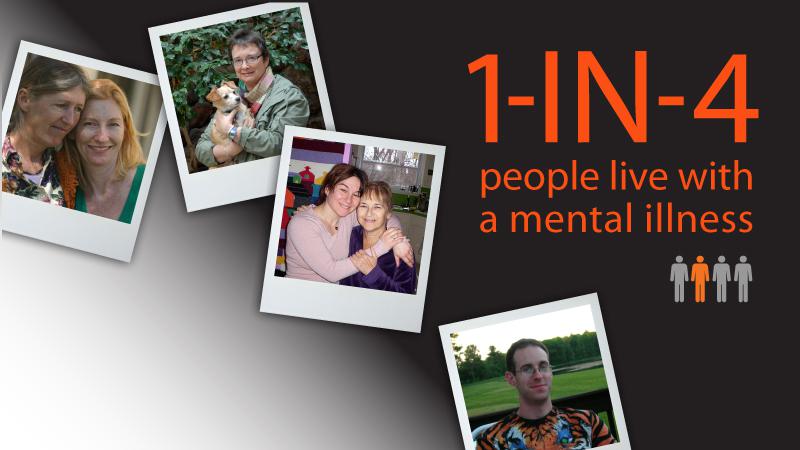
Even though mental illness is widespread in the population, the main burden of illness is concentrated in a much smaller proportion-about 6 percent, or 1 in 17 Americans-who live with a serious mental illness. The National Institute of Mental Health reports that one in four adults–approximately 57.7 million Americans–experience a mental health disorder in a given year.

Unfortunately, there is a great deal of misunderstanding and stigma for those who have these disorders. I suppose people often compare it to having VD (venereal disease) or AIDS. It seems that our culture is pretty quick at labeling people as deviant or undesirable.

I hope this helps somehow. I can see a 100 holes in it, and alas, it is a meager attempt. But perhaps it will be of some value. Both NAMI.org, Psychcentral.com, and WebMD.com all have excellent info on Mental Illness.

God’s Broken Ones, Quotes

To Manning, every person is redeemable, none are too far gone.  Brennan Manning was a strong voice to the weak, the lame, the mentally challenged, and for the prodigal.

*******

“There is a beautiful transparency to honest disciples who never wear a false face and do not pretend to be anything but who they are.”

My deepest awareness of myself is that I am deeply loved by Jesus Christ and I have done nothing to earn it or deserve it.”

 “To live by grace means to acknowledge my whole life story, the light side and the dark. In admitting my shadow side I learn who I am and what God’s grace means.”

“To be alive is to be broken; to be broken is to stand in need of grace.”

“Christianity doesn’t deny the reality of suffering and evil… Our hope… is not based on the idea that we are going to be free of pain and suffering. Rather, it is based on the conviction that we will triumph over suffering.”

“I am what I am in the sight of Jesus and nothing more. It is His approval that counts.”

“[Be] daring enough to be different, humble enough to make mistakes, wild enough to be burnt in the fire of love, real enough to make others see how phony [you] are.”

“The blood of the Lamb points to the truth of grace: what we cannot do for ourselves, God has done for us. On the cross, somehow, someway, Christ bore our sins, took our place, died for us. At the cross, Jesus unmasks the sinner not only as a beggar but as a criminal before God.”

“Do the truth quietly without display.”

“It is for the inconsistent, the unsteady disciples whose cheese is falling off their cracker.”

“The dominant characteristic of an authentic spiritual life is the gratitude that flows from trust—not only for all the gifts that I receive from God, but gratitude for all the suffering. Because in that purifying experience, suffering has often been the shortest path to intimacy with God.”

“The greatest single cause of atheism in the world today is Christians, who acknowledge Jesus with their lips and walk out the door and deny him with their life style. That is what an unbelieving world simply finds unbelievable.”

“The saved sinner is prostrate in adoration, lost in wonder and praise. He knows repentance is not what we do in order to earn forgiveness; it is what we do because we have been forgiven. It serves as an expression of gratitude rather than an effort to earn forgiveness.”

“In essence, there is only one thing God asks of us–that we be men and women of prayer, people who live close to God, people for whom God is everything and for whom God is enough. That is the root of peace.”

***********

I really hope some of these quotes have connected.  Brennan Manning has authored several books all of which I can heartily recommend. 


The Numbers Don’t Lie: Mental Illness in America

giving-up2

~Mental Illness in America, 2016

Mental disorders are common in the United States and internationally. An estimated 26.2 percent of Americans ages 18 and older — about one in four adults — suffer from a diagnosable mental disorder in a given year.1

When applied to the 2004 U.S. Census residential population estimate for ages 18 and older, this figure translates to 57.7 million people.2 Even though mental disorders are widespread in the population, the main burden of illness is concentrated in a much smaller proportion — about 6 percent, or 1 in 17 — who suffer from a serious mental illness.1

In addition, mental disorders are the leading cause of disability in the U.S. and Canada.3 Many people suffer from more than one mental disorder at a given time. Nearly half (45 percent) of those with any mental disorder meet criteria for 2 or more disorders, with severity strongly related to comorbidity.1

In the U.S., mental disorders are diagnosed based on the Diagnostic and Statistical Manual of Mental Disorders, fourth edition (DSM-V).4

Mood Disorders

Mood disorders include major depressive disorder, dysthymic disorder, and bipolar disorder.

  • Approximately 20.9 million American adults, or about 9.5 percent of the U.S. population age 18 and older in a given year, have a mood disorder.1,2
  • The median age of onset for mood disorders is 30 years.5
  • Depressive disorders often co-occur with anxiety disorders and substance abuse.5

Major Depressive Disorder

  • Major Depressive Disorder is the leading cause of disability in the U.S. for ages 15-44.3
  • Major depressive disorder affects approximately 14.8 million American adults, or about 6.7 percent of the U.S. population age 18 and older in a given year.1, 2
  • While major depressive disorder can develop at any age, the median age at onset is 32.5
  • Major depressive disorder is more prevalent in women than in men.6

Dysthymic Disorder

  • Symptoms of dysthymic disorder (chronic, mild depression) must persist for at least two years in adults (one year in children) to meet criteria for the diagnosis. Dysthymic disorder affects approximately 1.5 percent of the U.S. population age 18 and older in a given year.1, This figure translates to about 3.3 million American adults.2
  • The median age of onset of dysthymic disorder is 31.1

Bipolar Disorder

  • Bipolar disorder affects approximately 5.7 million American adults, or about 2.6 percent of the U.S. population age 18 and older in a given year.1, 2
  • The median age of onset for bipolar disorders is 25 years.5

Suicide

  • In 2006, 33,300 (approximately 11 per 100,000) people died by suicide in the U.S.7
  • More than 90 percent of people who kill themselves have a diagnosable mental disorder, most commonly a depressive disorder or a substance abuse disorder.8
  • The highest suicide rates in the U.S. are found in white men over age 85.9
  • Four times as many men as women die by suicide9; however, women attempt suicide two to three times as often as men.10

Schizophrenia

  • Approximately 2.4 million American adults, or about 1.1 percent of the population age 18 and older in a given year,11, 2 have schizophrenia.
  • Schizophrenia affects men and women with equal frequency.12
  • Schizophrenia often first appears in men in their late teens or early twenties. In contrast, women are generally affected in their twenties or early thirties.12

Anxiety Disorders

Anxiety disorders include panic disorder, obsessive-compulsive disorder, post-traumatic stress disorder, generalized anxiety disorder, and phobias (social phobia, agoraphobia, and specific phobia).

  • Approximately 40 million American adults ages 18 and older, or about 18.1 percent of people in this age group in a given year, have an anxiety disorder.1,2
  • Anxiety disorders frequently co-occur with depressive disorders or substance abuse.1
  • Most people with one anxiety disorder also have another anxiety disorder. Nearly three-quarters of those with an anxiety disorder will have their first episode by age 21.5 5

Panic Disorder

  • Approximately 6 million American adults ages 18 and older, or about 2.7 percent of people in this age group in a given year, have panic disorder.1, 2
  • Panic disorder typically develops in early adulthood (median age of onset is 24), but the age of onset extends throughout adulthood.5
  • About one in three people with panic disorder develops agoraphobia, a condition in which the individual becomes afraid of being in any place or situation where escape might be difficult or help unavailable in the event of a panic attack.12

Obsessive-Compulsive Disorder (OCD)

  • Approximately 2.2 million American adults age 18 and older, or about 1.0 percent of people in this age group in a given year, have OCD.1, 2
  • The first symptoms of OCD often begin during childhood or adolescence, however, the median age of onset is 19.5

Post-Traumatic Stress Disorder (PTSD)

  • Approximately 7.7 million American adults age 18 and older, or about 3.5 percent of people in this age group in a given year, have PTSD.1, 2
  • PTSD can develop at any age, including childhood, but research shows that the median age of onset is 23 years.5
  • About 19 percent of Vietnam veterans experienced PTSD at some point after the war.13 The disorder also frequently occurs after violent personal assaults such as rape, mugging, or domestic violence; terrorism; natural or human-caused disasters; and accidents.

Generalized Anxiety Disorder (GAD)

  • Approximately 6.8 million American adults, or about 3.1 percent of people age 18 and over, have GAD in a given year.1, 2
  • GAD can begin across the life cycle, though the median age of onset is 31 years old.5
To finish reading this article, you will need to go to its source at:

http://www.nimh.nih.gov/health/publications/the-numbers-count-mental-disorders-in-america/index.shtml  


cropped-christiangraffiti1 (1)

1 in 4 Church Homes Are Dealing With This!

By Carlene Hill Byron

How many families in your church have a loved one who struggles with mental health problems? That’s kind of a trick question. People don’t talk about mental health problems. You’re more likely to hear them describe their child’s condition as “something like autism,” as the elder of one church we know says.

Or they might cover up entirely, as does an elder’s wife in another congregation. When her bipolar disorder swung into mania after childbirth, her family, already managing the added responsibilities of a newborn, had to manage her condition as well. But because her condition is a secret, they did so without any support beyond the usual “new baby” dinners.

The answer to the question is, if your congregation is representative of the U.S. population, one in four households will struggle with someone’s mental health problems over their lifetime. That’s schizophrenia, bipolar disorder, obsessive compulsive disorder, disabling chronic depression, and various anxiety disorders.  Look at the faces seated around you this Sunday.  Someone is probably hurting. And they’re probably afraid to tell you.

The least acceptable disability

Schizophrenia2
Out of Control

A study where people ranked disabilities by their “acceptability” returned these results, in order–most acceptable: obvious physical disabilities, blindness, deafness, a jail record, learning disabilities, and alcoholism.

Least acceptable: mental health problems. People with mental health problems frighten us because when people become mental ill, they become someone we don’t know. A bright boy who was his family’s bright hope may find he just can’t cut it anymore as schizophrenia turns him paranoid, disoriented, unmotivated in the extreme, and overwhelmed by delusional voices that tell him, over and over, how worthless he is.

Or, in the case of bipolar disorder, a girl who was a well-liked and active member of her Teen Challenge group may suddenly turn promiscuous, run away from home, and make a new home in the streets of a strange city. Laziness. Promiscuity. Violence. Sin. That’s what many people see when they look at those with mental health problems. It’s hard to believe that people may behave in such unacceptable ways and not be in control of their behavior.

Having a mental health problem is a lot like being on alcohol or drugs, without being able to stop. Medications “work” for about two-thirds of us. That means that a third of us can’t ever get off the chemical ride that our brains produce.

For those of us who can use medications, the side effects can be daunting. I have lost about 20 percent of my small motor functionality as a result of one of the five medications I take for bipolar disorder. I prefer that to losing large motor control and having another auto accident, being so disoriented I can’t find my way home from the store, losing bowel control in a busy bookstore, gaining 45 pounds, or any of dozens of side effects I’ve experienced on other medications.

Many people become so frustrated with side effects that they stop taking medications. Only about half of us accept treatment. Even when we are treated, not everyone regains their status as a fully functioning adult. In our extended family, six people have diagnoses. Those with bipolar disorder and chronic depression are successfully medicated and work full-time. Those with panic disorder and schizophrenia are on permanent disability. Nothing has pulled them through.


What the Bible says

The Bible talks about mental illness, as well as physical illness.

  • It describes a king who was made mentally ill until he would recognize the sovereignty of God (Dan. 4:29-34).
  • It describes demonized men who lived among the tombs and terrorized everyone until Jesus set them free (Matt. 8:28-33).
  • It also describes as demonized a young boy that most scholars today say had epilepsy (Matt. 17:15-18). Jesus delivered him, too.

suicide_germs
What was once believed

What does this tell us about illness?

First, that God is able to heal. Second, that some physical and mental illnesses are caused by demons. Third, that some mental illnesses are caused by sin. But are all mental illnesses caused by demons or sin, and is seeking God our sole resource for physical and mental healing?

Since the 1950s, we have usually sent church members with epilepsy to doctors for effective treatment with anti-convulsant drugs. In a similar way, we’ve learned that medicines can effectively treat many cases of mental illness. So if all mental illnesses were caused by demons and sin, medicine would be exorcising demons and turning hearts to repentance. That is certainly untrue, for those are the works of the Holy Spirit.

Instead, we now know that most if not all mental illnesses are biological in origin, with environmental factors possibly triggering an existing genetic predisposition to the illness. Mental illnesses, just like epilepsy, are biological disorders of the brain.

What can the church do?

Compassionate service is one of our core charges as Christians. We observe it almost daily in the experience of one man we know with schizophrenia. His life is confined almost entirely to his home due to the fear, indecision, and lethargy that have become the shape of the illness in his body. But neighbors bring him occasional meals. The secretary of his small church talks to him by telephone every weekday. Several other members take weekly calls at designated times to help break his isolation. If he doesn’t feel up to driving to his Bible study meeting or Sunday services, some member will give him a ride. Nearby relatives help him plan and manage his finances, and come by to clean occasionally and for DVD “movie nights.” Phone cards given as gifts allow him to call his mother nightly. There’s much more that could be done—more frequent house cleaning and more meals and more visits—but he enjoys far more contact with many more loving people than many shut-ins.

The challenging good news is that when people with mental illness turn to someone outside “the system” for help, the church is first to get the call 40 percent of the time. Is your church ready?

…………………..

Carlene Hill Byron is the former Director of Communications for Vision New England. Through NAMI—the Nation’s Voice on Mental Illness, she and her husband, James, train churches to effectively serve people within the congregation with mental health problems and also teach NAMI’s class for families of people with mental health problems. They are members of Asbury United Methodist Church in Raleigh, North Carolina, where James serves on staff. First published by Vision New England’s Ministries with the Disabled, Acton, Massachusetts.

http://www.mentalhealthministries.net/index.html