Exulting in Our Shadow


So that they even carried out the sick into the streets and laid them on cots and mats, that as Peter came by at least his shadow might fall on some of them. 16The people also gathered from the towns around Jerusalem, bringing the sick and those afflicted with unclean spirits, and they were all healed.”

Acts 5:15-16, ESV


Astonishing!  It was Peter, who denied the Lord—three distinct and definite times. Since we are moving past Good Friday and our celebration of Easter, so we should rest for a moment and consider Peter, and think about this “rascal.”  He really isn’t magical, or a “miracle worker,” Peter, quite precisely is a definite loser.  The best you can say is that he is a displaced and “has-been”  fisherman, who hasn’t really got a good track-record.  He tries hard, but he always muddles it up.  He falls very short.

Peter’s shadow reveals the power of unconscious influence.  His shadow wasn’t magical or possessed a healing virtue.  In a deep sense we all influence people around us–for good, or for evil.  Our imprint on others is quite significant.  Our impact is quite noticable.  Watchman Nee in his book, “Release of the Spirit.”  Nee compared our influence to the “ring” we leave in the bathtub.  Everyone leaves his mark.  Looking at that we can understand (to a degree) what that particular person is really like.  But the reality is, we all leave behind some scum.

J.R. Miller relates this thought.  “There is a legend of a good man for whom was asked some new power. He chose that he might do a great deal of good and might not be aware of it. So it was ordered that when his shadow fell behind him, where he could not see it, it should have healing power, but when it fell before him, so that he could see it, it should have no such effect.”

We need to view this thing closer.  How exactly do we influence others?  What manner of people are we to acheive such attention?  Do we really deserve “the praise of men?”  Do we go as far as to exult  in our shadows?  If we really want to powerfully affect others, we have to be humble, perhaps even dismissive of the good that may follow behind us.  (It doesn’t belong to us.”)   When we become really conscious of our significance or sway, we are in mortal danger and risk spoiling everything.

The kingdom is not big enough for Jesus, and than us–who takes over the center stage?  There is a disturbing assumption that we are most significant.  We stack-up our blocks and create a facade of being quite exceptional people.  The reality is this–we are all very much like Peter, our lives belie what is truly real.  But our authenticity really is found in the “blood of Jesus,”  which covers our wickedness.  That dear one, is our “claim to fame.”  Essentially, due to the proportion of our pride, determines the glory that the Lord receives.  We often eliminate him from our consideration.  Your pride determines His glory, plain and simple.  So step up, who goes next?

When Demons Rule People

by Julie Anne Fidler, BB Weekly Contributor

   1 They went across the lake to the region of the Gerasenes.[a] 2 When Jesus got out of the boat, a man with an impure spirit came from the tombs to meet him. 3 This man lived in the tombs, and no one could bind him anymore, not even with a chain. 4 For he had often been chained hand and foot, but he tore the chains apart and broke the irons on his feet. No one was strong enough to subdue him. 5 Night and day among the tombs and in the hills he would cry out and cut himself with stones.

 6 When he saw Jesus from a distance, he ran and fell on his knees in front of him. 7 He shouted at the top of his voice, “What do you want with me, Jesus, Son of the Most High God? In God’s name don’t torture me!” 8 For Jesus had said to him, “Come out of this man, you impure spirit!”

 9 Then Jesus asked him, “What is your name?”

   “My name is Legion,” he replied, “for we are many.” 10 And he begged Jesus again and again not to send them out of the area.

 11 A large herd of pigs was feeding on the nearby hillside. 12 The demons begged Jesus, “Send us among the pigs; allow us to go into them.” 13 He gave them permission, and the impure spirits came out and went into the pigs. The herd, about two thousand in number, rushed down the steep bank into the lake and were drowned.

 14 Those tending the pigs ran off and reported this in the town and countryside, and the people went out to see what had happened. 15 When they came to Jesus, they saw the man who had been possessed by the legion of demons, sitting there, dressed and in his right mind; and they were afraid. 16 Those who had seen it told the people what had happened to the demon-possessed man—and told about the pigs as well. 17 Then the people began to plead with Jesus to leave their region.

 18 As Jesus was getting into the boat, the man who had been demon-possessed begged to go with him. 19 Jesus did not let him, but said, “Go home to your own people and tell them how much the Lord has done for you, and how he has had mercy on you.” 20 So the man went away and began to tell in the Decapolis[b] how much Jesus had done for him. And all the people were amazed.

Mark 5:1-20

I have often wondered about this demon-possessed man. The image is striking – he was held captive by demons, and yet no earthly chains could hold him. His behavior sounds familiar to many of us who have lived in the grip of mental illness. Crying out? Cutting himself? I’ve been there. I’ve done that. Is this a story about mental illness before anyone could prescribe drugs to treat it?

I think the wording of this story is especially interesting – the Bible here refers to the demons as “impure spirits.” The King James Version refers to the demons as “unclean spirits.” It seems to indicate that Satan is much more than horns and a pointy tail. “Unclean” and “impure” could mean so many things.

The first time someone suggested I might be dealing with some form of demonic oppression in my life I thought they were crazy. Horror films have made us believe that people who “have demons” always kill people with their minds or cause things to catch on fire by pure will. The Bible includes some scary images of demons, but Satan does his best work by being subtle. It’s a lot harder to believe in demons if they’re not spitting blood directly in your face.

Satan uses daily life against us. He uses our professional struggles to make us think we’re unworthy of success; he uses our financial problems to make us believe we’re not as good as other people; he uses our painful pasts to make us buy the lie that we will never be able to overcome who we used to be.

Mental illness alters the way we see ourselves and the world around us. It makes everything seem dark even though there is reason to rejoice. It robs us of stability and even the ability to reason. I truly believe that mental illness is the enemy’s way of fighting against everything that Jesus really wants us to be. What could be more impure or unclean than that?

The King James Version of verse 20 uses the word “publish” instead of “tell”. The man began to publish in the Decapolis how much Jesus had done for him. I can relate to the demon-oppressed man’s pain but I can also relate to his healing. Jesus might drive all of my demons into the bodies of pigs someday, but for now He has quieted my unquiet mind with the right medications, counseling, and a support system. I rejoice in that, and I publish how much Jesus has done for me.

That’s how we can kick the devil back – by being thankful that help is available. I am thankful that Jesus Christ has quieted the stormy seas in my soul. I know that Satan wants to use mental illness against me, and knowing your opponent is half the battle.

Get grounded in the truth, draw close to God, and let Him cleanse the impure and unclean things that have kept you bound but crying out for so long.

Julie Anne Fidler is a contributing writer for Brokenbelievers.com.  She comes with a humble and understanding heart for those with a mental illness.  Her writing gift is valued greatly.  Look for her post weekly, on this blog.   She keeps a personal ministry blog at www.mymentalhealthday.blogspot.com.  Read more there.

Suicide– A Second Look

The World Health Organization estimates that approximately 1 million people die each year from suicide. What drives so many individuals to take their own lives? To those not in the grips of suicidal depression and despair, it’s difficult to understand. But a suicidal person is in so much pain that he or she can see no other option.

Suicide is a desperate attempt to escape suffering that has become unbearable. Blinded by feelings of self-loathing, hopelessness, and isolation, a suicidal person can’t see any way of finding relief except through death. But despite their desire for the pain to stop, most suicidal people are deeply conflicted about ending their own lives. They wish there was an alternative to committing suicide, but they just can’t see one. 

Suicide is not chosen; it happens
when pain exceeds
resources for coping with pain.

Because of their ambivalence about dying, suicidal individuals usually give warning signs or signals of their intentions. The best way to prevent suicide is to know and watch for these warning signs and to get involved if you spot them. If you believe that a friend or family member is suicidal, you can play a role in suicide prevention by pointing out the alternatives, showing that you care, and getting a doctor or psychologist involved.

Common Misconceptions about Suicide

FALSE: People who talk about suicide won’t really do it.
Almost everyone who commits or attempts suicide has given some clue or warning. Do not ignore suicide threats. Statements like “you’ll be sorry when I’m dead,” “I can’t see any way out,” — no matter how casually or jokingly said may indicate serious suicidal feelings.

FALSE: Anyone who tries to kill him/herself must be crazy.
Most suicidal people are not psychotic or insane. They must be upset, grief-stricken, depressed or despairing, but extreme distress and emotional pain are not necessarily signs of mental illness.

FALSE: If a person is determined to kill him/herself, nothing is going to stop him/her.
Even the most severely depressed person has mixed feelings about death, wavering until the very last moment between wanting to live and wanting to die. Most suicidal people do not want death; they want the pain to stop. The impulse to end it all, however overpowering, does not last forever.

FALSE: People who commit suicide are people who were unwilling to seek help . 
Studies of suicide victims have shown that more then half had sought medical help within six month before their deaths.

FALSE: Talking about suicide may give someone the idea.
You don’t give a suicidal person morbid ideas by talking about suicide. The opposite is true –bringing up the subject of suicide and discussing it openly is one of the most helpful things you can do.


Source: SAVE – Suicide Awareness Voices of Education

Excellent site: http://www.metanoia.org/suicide/

More info: http://www.helpguide.org/mental/suicide_prevention.htm

Tourette Syndrome: Know The Basics

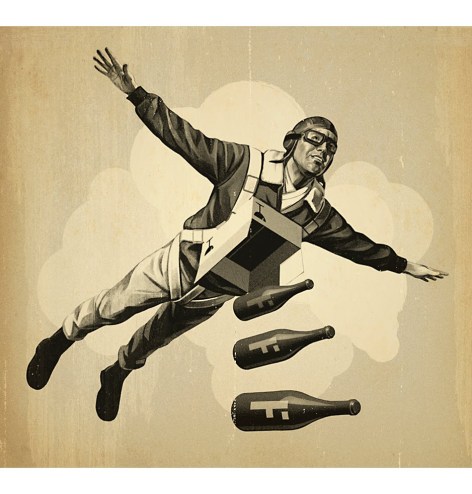
“Dropping F Bombs”

*******

Tourette’s disorder, or Tourette syndrome

(TS) as it is frequently called, is a neurologic syndrome. The essential feature of Tourette’s are multiple tics that are sudden, rapid, recurrent, non-rhythmic, stereotypical, purposeless movements or vocalizations.

 
 What are the symptoms of Tourette syndrome?
 
  • Both multiple motor and one or more vocal tics are present at some time during the illness, although not necessarily simultaneously
  • Occurrence many times a day nearly every day or intermittently throughout a span of more than one year
  • Significant impairment or marked distress in social, occupational, or other important areas of functioning.
  • Onset before the age of 18.

 Symptoms can disappear for weeks or months at a time and severity waxes and wanes.


What are the first tics that may be characteristic of Tourette’s syndrome?

Usually, the facial tic, such as rapid blinking of the eyes or twitches of the mouth, may be the first indication a parent has that their child may have Tourette’s syndrome. Involuntary sounds, such as throat clearing and sniffing, or tics of the limbs may be an initial sign in other children.


Are any other symptoms associated with Tourette’s syndrome?

Approximately 50 percent of patients meet criteria for attention deficit hyperactivity disorder (ADHD) and this may be the more impairing problem. Approximately one-third of patients meet criteria for obsessive-compulsive disorder (OCD) or have other forms of anxiety. Learning disabilities are common as well as developmental stuttering. Social discomfort, self-consciousness and depressed mood frequently occur, especially as children reach adolescence.


Yelling and irrational

What causes these symptoms?

Although the cause has not been definitely established, there is considerable evidence that Tourette’s syndrome arises from abnormal metabolism of dopamine, a neurotransmitter. Other neurotransmitters may be involved.


Can Tourette’s syndrome be inherited?

Genetic studies indicate that Tourette’s syndrome is inherited as an autosomal dominant gene but different family members may have dissimilar symptoms. A parent has a 50 percent chance of passing the gene to one of his or her children. The range of symptomatology varies from multiple severe tics to very minor tics with varying degrees of attention deficit-disorder and OCD.


Are boys or girls more likely to have Tourette’s syndrome?

The sex of the child can influence the expression of the Tourette’s syndrome gene. Girls with the gene have a 70 percent chance of displaying symptoms, boys with the gene have a 99 percent chance of displaying symptoms. Ratios of boys with Tourette’s syndrome to girls with Tourette’s syndrome are 3:1. 


How is Tourette’s syndrome diagnosed?

No blood analysis, x-ray or other medical test exists to identify Tourette’s syndrome. Diagnosis is made by observing the signs or symptoms as described above. A doctor may wish to use a CAT scan, EEG, or other tests to rule out other ailments that could be confused with TS. Some medications cause tics, so it is important to inform the professional doing the assessment of any prescribed, over-the-counter, or street drugs to which the patient may have been exposed.


What are the benefits of seeking early treatment of Tourette syndrome symptoms?

When a child’s behavior is viewed as disruptive, frightening, or bizarre by peers, family, teachers, or friends, it provokes ridicule and rejection. Teachers and other children can feel threatened and exclude the child from activities or interpersonal relationships. A child’s socialization difficulties will increase as he reaches adolescence. Therefore, it is very important for the child’s self-esteem and emotional well-being that treatment be sought as early as possible.


What treatments are available for Tourette syndrome?

Not everyone is disabled by his or her symptoms, so medication may not be necessary. When symptoms interfere with functioning, medication can effectively improve attention span, decrease impulsivity, hyperactivity, tics, and obsessive-compulsive symptomatology. Relaxation techniques and behavior therapy may also be useful for tics, ADD symptoms, and OCD symptoms. 


How does Tourette syndrome affect the education of a child or adolescent with Tourette syndrome?

Tourette syndrome alone does not affect the IQ of a child. Many children who have Tourette syndrome, however, also have learning disabilities or attention deficits. Frequently, therefore, special education may be needed for a child with Tourette syndrome. Teachers should be given factual information about the disorder and, if learning difficulties appear, the child should be referred to the school system for assessment of other learning problems.


What is the course of Tourette syndrome?

Some people with Tourette syndrome show a marked improvement in their late teens or early twenties. However, tics as well as ADD and OCD behavior, may wax and wane over the course of the life span.   


Reviewed by Charles T. Gordon, III, M.D., 2003


For more help go to: http://www.nami.org/   and  http://www.tsa-usa.org/


*******