CT Interview with Brennan Manning

brennanmanning-1

The Dick Staub Interview: Brennan Manning on “Ruthless Trust”

http://www.brennanmanning.com/

Many Christians are still afraid to let God love them as they truly are, says the former priest, sober alcoholic, and author. This is just a small excerpt of an interview given by Mr. Manning to Christianity Today.

What is premise of this book about trust?

The basic idea is in one sentence: The splendor of a human heart that trusts and is loved unconditionally gives God more pleasure than Westminster Cathedral, the Sistine Chapel, Beethoven’s Ninth Symphony, Van Gogh’s Sunflowers, the sight of 10,000 butterflies in flight, or the scent of a million orchids in bloom. Trust is our gift back to God, and he finds it so enchanting that Jesus died for love of it.

It’s what Jesus said we need to bring into the relationship.

Yes. Childlike surrender and trust, I believe, is the defining spirit of authentic discipleship. The supreme need in most of our lives is often the most overlooked: an unfaltering trust in the love of God no matter what goes down. I think this is what Paul taught when he wrote in Philippians 4:13, “There is nothing I cannot master with the help of the one that gives me strength.”

But how do we know if we’re really trusting? Most people would say they trust God.

The dominant characteristic of an authentic spiritual life is the gratitude that flows from trust—not only for all the gifts that I receive from God, but gratitude for all the suffering. Because in that purifying experience, suffering has often been the shortest path to intimacy with God.

I’d also add that biblical trust grows out of love. My trust in God flows out of the experience of his loving me, day in and day out, whether the day is stormy or fair, whether I’m sick or in good health, whether I’m in a state of grace or disgrace. He comes to me where I live and loves me as I am.

In John 17:26, Jesus says, “Father, I have made your name known. I continue to make it known. And I pray that the same love with which you love me may be in them and I in them.” The very same love that the Abba has for Jesus is the same love he has for us when he’s in our hearts. The problem is most of us aren’t aware of it.

So part of this is an attention problem?

I believe that the real difference in the American church is not between conservatives and liberals, fundamentalists and charismatics, nor between Republicans and Democrats. The real difference is between the aware and the unaware.

When somebody is aware of that love, the same love that the Father has for Jesus, that person is just spontaneously grateful. Cries of thankfulness become the dominant characteristic of the interior life, and the byproduct of gratitude is joy. We’re not joyful and then become grateful, we’re grateful and that makes us joyful.

But there’s suffering, too. In your book, tucked away between talking about gratefulness and beholding God, you talk very personally about how, if we’re truly going to learn to trust God, we can’t avoid the personal suffering.

When I was outside an alcohol and drug rehab center in New Orleans, and I was clutching a pint of Taaka vodka, what I did not want was the lifesaving treatment of detox in a 28-day program.

I kept on drinking, a drunken child crying out, “Jesus, where are you?” How do we experience trust in the midst of pain, suffering, heartache, and throbbing despair? I mean, is it possible to endure and eventually move beyond the bleak and melancholy landscape of evil and destruction, back to the experience of God as unconditional love? That’s the problem I ask Christians. Do you trust that God loves you? Everybody says, oh yes, I’ve known that for a long time. Then just watch the way they live. There’s so much fear, so much anxiety, and so much self-hatred. The best definition of faith I ever heard was Paul Tillich when he said, “Faith is the courage to accept acceptance.”

Meaning? Faith is a code to accept that Jesus knows my whole life story, every skeleton in my closet, every moment of sin, shame, dishonesty, degradedness darkening my past. Right now he knows my shallow faith, my feeble prayer life, my inconsistent discipleship, and he comes beside me and he says, I dare you to trust. I dare you to trust that I love you, just as you are and not as you should be, because you’re never going to be as you should be.

_________________________

Source/To read more, go to:  http://www.christianitytoday.com/ct/2002/decemberweb-only/12-9-21.0.html

http://www.brennanmanning.com/

For more Broken Believer teachings:  https://brokenbelievers.com/category/brennan-manning/


cropped-christiangraffiti1-3-1

Impulsive Peter

Peter was the magnificent failure.  But I’m grateful for his story.  As we examine his life and his actions and decisions, we see a man who was so much like us.  I relate and understand Peter more then any other disciple in the New Testament.  He was so real. He was so impulsive. He spoke before he thought, jumped in without looking and acted without thinking it through. Let’s take a look at Peter’s life after he met Jesus.

1) Peter, the fisherman-– When Jesus came to where  the boat was kept, Peter latched on immediately to become a disciple.  Jesus said, “Follow Me” and that is all Peter needed to hear.  (Matt 4:18-20; Matt. 14:25-31).

2) Peter, the bold-– There was a situation on a boat in a terrible storm.  It was between 3:00 am and 6:00 am.  These men are desperately exhausted, and they were still three miles from safety.  They suddenly see what appears to be a ghost, walking through the vicious storm to the boat.  It is Jesus!  He is walking on water, as if it were a sidewalk!

Peter shouts out– “Lord, if it is really you, allow me to leave this boat and let me come to you!”  Peter steps out of the boat, and begins to walk– on water!  But the wind whipping frightened him, and he began to sink.  We see Jesus, reaching out to grab Peter, to save him from drowning.  Before we judge him too harshly, how many of us would do what Peter did?

3) Peter, the confessor— Jesus asked His disciples who they thought He was. Peter was the first to acknowledge Jesus’ deity as the Son of the living God. (Matt. 16:15-16)

4) Peter, the witness— Peter, along with James and John, have been chosen to accompany Jesus to go up to a mountain top to pray.  When they arrive, something happens to Jesus.  He is ‘transfigured’, His clothes shimmer and turn white.    Then Moses and Elijah appeared, talking with Jesus. Being a man of action and not knowing what else to do, Peter offered to build shelters for the three holy men. An authoritative voice from heaven let him know that this was a time to worship, and to learn (Matt 17:1-4, Luke 9:28-36).

5) Peter, the reluctant one— Just before their last Passover, Jesus starts acting strange.  He strips off His outer garments, until He is down to His underwear.  He fills a basin with water, grabs a towel, and then begins to wash everyone’s feet.  He has become the servant to His disciples.  And Jesus will declare that this specific path is for every disciple that will follow.  Peter is incensed, and declares himself to be immune from this claim.

6) Peter, the boaster— Jesus explains that the disciples cannot follow Him.   Peter boasted that he would lay down his life for Jesus. This brought Jesus’ prediction that Peter would deny Him three times that very night. I wonder what Peter thought about this. He may have found it hard to believe, but we know that Jesus never lies.

When Jesus is arrested, Peter follows the cohort into the Temple.  It is at this point, Peter begins to outright deny Jesus.  It seems Peter can’t vocalize any support for His teacher and master.  In his craven fear, Peter denies Him who spoke and taught him.  How very sad,  (John 13 and 18).

7) Peter the repentant— Jesus appeared to them again by the Sea of Gaililee.  It is Peter, who from his fishing boat, identifies Jesus as Jesus.  Once again, he jumps out of the boat, but this time to swim to the shore.  The others follow in the boat.  Jesus has started a fire, and fish are frying. On the shore, when they had finished eating, Jesus restores Peter. Peter reaffirmed his love for Jesus three times – the same number of times he had denied Him. Jesus said to Peter, “Follow me.”

From that point, Peter followed Jesus closely. He went on to be a great preacher of the gospel and a leader of the church. He wrote 1st and 2nd Peter in the New Testament.  In the Book of Acts, we see Peter cooperating closely with the Holy Spirit.  His compulsiveness has been majorly modified and adapted to fit into the Kingdom.  Peter is now a man restrained and directed into God’s Kingdom.

1brobry-sig4 (2)


cropped-christiangraffiti1-3-1


Some Things Must Be ‘Prayed In’ [Intercession]

Apostle-Paul

16 “I pray that from his glorious, unlimited resources he will empower you with inner strength through his Spirit. 17 Then Christ will make his home in your hearts as you trust in him. Your roots will grow down into God’s love and keep you strong. 18 And may you have the power to understand, as all God’s people should,

  • how wide,
  • how long,
  • how high,
  • and how deep his love is. 

19 May you experience the love of Christ, though it is too great to understand fully. Then you will be made complete with all the fullness of life and power that comes from God.”

Ephesians 3:16-19, NLT (My bullet points)

Paul has a ‘rocking’ prayer life. The church of Ephesus would have swelled on the spot with such an amazing prayer. I have to believe that sometimes preaching and worship isn’t enough. There is a need for intercessory prayer instead.

Prayer interjects what preaching can’t. Good worship is critical, but there are needful things that are only drilled in by prayer. Paul knows this, and even though he is quite far away, he can disciple that church at a distance– through prayer. Prayer is Paul’s way of touching the church, even across the ocean!

Paul's cell at Mamertine
Paul’s cell at Mamertine

Most of our Bible heroes had seasons of  intercession.

Abraham for instance, stood and begged God for Lot’s life. Moses beseeched on behalf of Israel. Of course, Samuel and David would stand on Israel’s behalf. These are men who regarded intercessory prayer as a critical part of their walk. They ‘stood in the gap’ so others might live.

In Paul’s prayer for the Ephesians, it seems he wants to solidify some essential things within them. The prayer is marvelous. He has a confidence that he is making a difference in the spiritual lives of the church, even if he is chained to a guard in Rome. Ministry doesn’t have to be restricted by distance.

There are powerful truths in this part of Ephesians, and will penetrate the hearts of the hearers. With Paul confined and unable to visit the church, he must revive the heart of an intercessor. I hope you find someone to pray for.

”Jesus Christ carries on intercession for us in heaven; the Holy Ghost carries on intercession in us on earth; and we the saints have to carry on intercession for all men.”

–Oswald Chambers

aabryscript


cropped-cropped-christiangraffiti1.jpg


Psalm 23, Understood

psalm-23

Psalm 23, an annotated version:

The Lord is my shepherd; I shall not want.– That’s relationship

    He makes me lie down in green pastures.– That’s rest
He leads me beside still waters.– That’s  refreshment
    He restores my soul.– That’s healing
He leads me in paths of righteousness– That’s guidance
    for his name’s sake.– That’s purpose

Even though I walk through the valley of the shadow of death,– That’s testing
    I will fear no evil,– That’s protection
for you are with me;– That’s faithfulness
    your rod and your staff,  they comfort me.– That’s discipline

You prepare a table before me– That’s hope
    in the presence of my enemies;– That’s witness
you anoint my head with oil;– That’s consecration
    my cup overflows.– That’s abundance
Surely goodness and mercy shall follow me all the days of my life,– That’s blessing
and I shall dwell in the house of the Lord– That’s security
    forever.– That’s eternity

Psalm 23, ESV

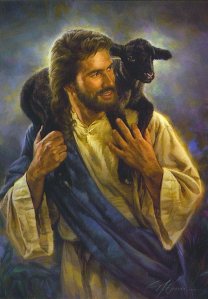
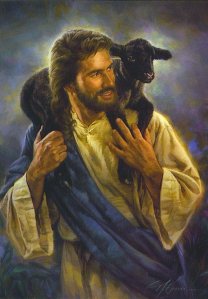
Jesus-Good-Shepherd-04We really do live in a world of uncertainty. Anything can happen (and often does) and at times we will struggle. Psalm 23 is something stable that we can latch on. It is a psalm of unparalleled comfort for the turmoil.

It is especially good to those of us who struggle with a suffering or illness. It is a tether for us that holds us in place. For those who fear death it promises us life– forever.

If you’re a broken believer who has issues, I encourage you to memorize this psalm.  As you commit it to memory it will instinctively draw you to reality. It will be something the Holy Spirit will use over and over in your life. I have been crippled with fear many times, and this psalm has protected me.

I love the Shepherd of Psalm 23.


bry-signat (1)

cropped-christiangraffiti1.jpg