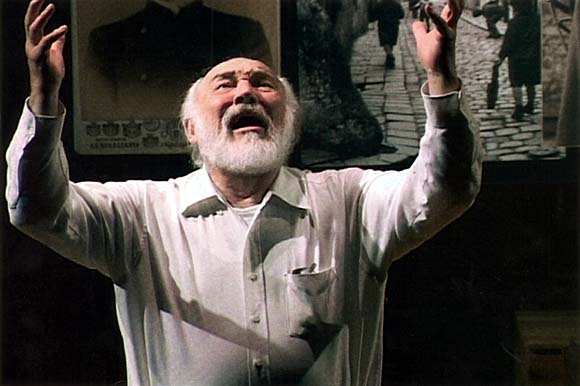
Chutzpah!

chutz·pah

  http://sp.dictionary.com/dictstatic/d/g/speaker.swf

A word from the Hebrew

1. unmitigated effrontery or impudence; gall. 2. audacity; nerve.  3. shameless audacity; impudence.

****

The essence of “chutzpah” has been described as the man who murders his parents, and then throws himself on the court because he is now an orphan. (At least that is what I have heard.) Chutzpah is most often found when things seem unattainable. It is an intelligent response to things that are ugly and desperate, and yet somehow making them available. And it is typically and completely “out-of-hand.” It seems to step-up when things are bleak, and you make certain things negotiable again.

It’s like healing and deliverance are stored on the top-shelf.  Chutzpah goes and comes back with a ladder.  It simply will not be dissuaded or denied.

“Let us then with confidence draw near to the throne of grace, that we may receive mercy and find grace to help in time of need.”

Hebrews 4:16, ESV

There is the special need for a definite form of chutzpah here. We “get close.” And then we push closer. And we are totally beyond our place and status. But all we can see, is the “mercy and grace.” So because we see such wonders, we audaciously step into His presence.

“So, friends, we can now—without hesitation—walk right up to God, into “the Holy Place.” Jesus has cleared the way by the blood of his sacrifice, acting as our priest before God. The “curtain” into God’s presence is his body. So let’s do it—full of belief, confident that we’re presentable inside and out. Let’s keep a firm grip on the promises that keep us going. He always keeps his word.”

Heb. 10:19-21, MSG

I must admit, my preference is this– I just don’t like people with chutzpah. They seem arrogant, and I distrust arrogance. I don’t like it, and it is hard for me to see it as a virtue. But as I read the Word, I discover that the people of true faith seem very conceited. They swagger in, and will receive all (and more) of what they request (or demand.)

All of there behavior seems smug and superior to a sceptical heart. And yet I must reflect on all those in the Word who were outrageous, who stepped totally out-of-line. Jacob who wrestled. Moses who negotiated. Esther who persuaded. The adulterous woman who anointed. The leper who begged. There are quite a few others, we can find. They all were “cheeky” and dauntless.

What role does “chutzpah” have in our personal walk? Should we step out into this faith that is inherently susceptible to our incredible demands?  It is outrageous that we should demand an entrance into the presence of the Most High. And then when we finally stand in this place, we insist on complete and total forgiveness. Now that, dear friends, is a chutzpah kind of  arrogance!

If we should be “chutzpah-believers” we need to know the promises in the Bible. That alone will be the only place we can stand. Our faith must exclusively be based on what God has proclaimed in the Word. To come forward without a promise is very foolish.

In the Gospels we will find a blind man whose name was Bartimaeus. He steps up and clearly insists on a healing. “Jesus, Son of David, have mercy on me.” Jesus turns at this act of chutzpah. “What would you have Me do for you?” There is a profound audaciousness in his reply. “Heal me!”

As believers, sometimes we simply take the “humble route.” But if you want God, then you must step up, be bold and take what you need from Him. It seems that our Father insists we enter His presence quite “boldly.”

Over and over, we read of Bible characters who pronounced that boldness was an incredible virtue. But faith at its essence simply will not conform to any other definition. Faith insists that we be audacious and bold, way beyond any logic or reasoning. They might think we are quite outrageous, but we know that we are only being faithful.

Understanding Bread

I have learned a lot about my Christian walk in the last few years.  Most of it has been gathered from ordinary life experiences.  Like working on a farm, hanging wallpaper, driving too fast in a cornfield (!).  If I set long enough I can list 100 more, each with a lesson or two.

Been thinking about baking bread though.  The flour, and water, and yeast are combined and mixed (kneaded).  It takes some patience and timing.  Experience is really helpful.  My Great-grandma made the best bread in Northern Wisconsin.  (As a little kid, I got a slice of bread soaked in cow’s milk for a tasty snack.)

After I grew up, got married and moved to my cabin in Alaska.  I decided I would show off my bread-making prowess to my young wife.  I floured the table and set myself to making “Grandma’s bread”.  I was going to be the star, hotshot baker!

As I worked the dough something just didn’t feel right.  I surmised that I didn’t have enough flour–it just wouldn’t come together.  I kneaded the dough for quite sometime, while I racked my brain trying to fix the out-of-control mess on the table.  I was getting embarrassed.  It was taking far too long, and the texture was all wrong.

I was getting very irritated at this growing mess. It was then my brave wife graciously pointed out that perhaps it was because I was not using white flour like I thought, but powdered sugar!  See, we had just moved in, and she had been wanting to label the canisters but hadn’t got around to it.

I took the lump outside and buried it in the yard.  It’s been over 20 years but I’ve been told that grass still doesn’t grow there!  The funny thing was I thought I was making bread, but I guess what I really was making was humility. (I keep having to learn this).

When you make bread, you need clean ingredients; pure flour and good water.  If you just came in from the barn you should wash your hands–throughly.  Whatever you mix in, stays in.  (My mom would get a little crazy and throw in raisins or nuts, which I hated.)

You do not sweep the floor and add it to dough, nor do you add chalk or anything that may look like flour.  In the same way, you and I make spiritual bread.  It  takes experience and good and wholesome ingredients.  It takes patience.  You can’t accelerate the process of baking bread.

I hope you can see my point.  We try to mix up a fresh batch of our discipleship everyday. The table is our hearts–it must be clean.  We add the flour and the yeast.  We only use clean water, purity must be maintained.

I’ve been struggling with some things in my discipleship.  I haven’t been too picky about many things.  Purity of heart and mind are areas of compromise.  As a result, I have not been pleased with the outcome.  I am embarrassed by the quality of what I serve up to my guests.

I believe there is nothing as tasty and fresh bread from the oven, served up with homemade jam!  Man, that is good.  Maybe, I’ll make up some bread.

A Statement of Dedicated Ministry

My calling is sure.  My challenge is big.  My vision is clear.  My desire is strong. My influence is eternal.  My impact is critical.  My values are solid.  My faith is tough.  My mission is urgent. My purpose is unmistakable. My direction is forward.  My heart is genuine.  My strength is supernatural.  My reward is promised.  And my God is real. ”

“I refuse to be dismayed, disengaged, disgruntled, discouraged, or distracted.  Neither will I look back, stand back, fall back, go back or sit back.  I do not need applause, flattery, adulation, prestige, stature or veneration.  I have no time for business as usual, mediocre standards, small thinking, normal expectations, average results, ordinary ideas, petty disputes or low vision.  I will not give up, give in, bail out, lie down, turn over, quit or surrender.  I’m dedicated to doing the work of the ministry. God help me.”

 There is such a thing as a “Seal of Good Housekeeping” that is given as a mark of approval.  As I read the above quotation, I thought of all the men and women that could make this declaration.  So many that we could approve of and to put a definitive seal of Kingdom approval on. 

I have friends in ministry in Mexico, India, China, Italy, Peru, Kazakhstan, San Francisco and so many other places.  They stand boldly and minister lovingly.  We must pray for them, all the time.  People like you and me who suffer with a mental illness are poor candidates for this level of intense ministry.  But we make great prayer warriors!

As we pray, standing in the gap for others, often we will experience a release from our own issues.  They just melt away.  I focus on you, and I won’t hurt as much.  I have to reach out, so God can reach in. This is what Jesus intends for me as His disciple; “in training.”

Welcoming His Judgement

To be judged by God is an awful thing.  It is always immutable and just.  He brings to us the inevitable awareness of the guilt and rebellion that we have secretly harbored for years.  We try to dodge His correction like a boxer does to the punches of his opponent.

We see judgement with a distinct clarity; as if it was to be avoided like the plague.  We fear Him, but like an eccentric guest at our special dinner party.  He is unpredictable, and sometimes will pull out the table cloth, in spite of the plates and dishes.  He does amazing tricks, but to us He seems a bit capricious and not at all in control of Himself.  We really don’t trust Him. Not really, anyway.

But the judgement of God is never punishment.  It is always corrective however, with a desire for us to find good and health in its presence.  We can contaminate our hearts with a wrong perspective.  But He is love, and our sin and iniquity won’t change that about Him.

He loves us so much, that He is obligated to correct us.  Some here have had great Dads.  The were active in our lives.  They were not perfect, but it didn’t matter; Dad loved us and that was all we needed.  Everything God does, comes out of this matrix of love.  When we truly grasp how much someone loves us, we can open up to anything they might say.

He does correct us, which can be harsh and difficult.  But God carefully weighs out the situation, just like a druggist weighs out to the milligram of the medicine we need.  He does discern, and gives no one more then they need.  He is definitely aware, and has no desire to destroy us.  Quite the opposite.

When we are judged for a particular sin or iniquity, we will know it.  But within that correction we will find no darkness or maliciousness.  Within our Father, there is nothing that would suggest evil or a desire to inflict pain.  He most definitely is not a sadist.  When we are corrected, we need to accept it, and receive it.  At the bottom of this, we will find that there is nothing but love.