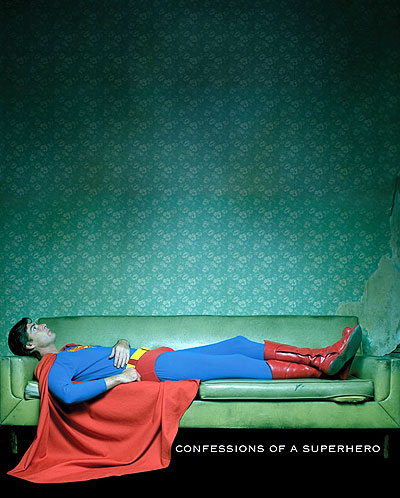
Paranoia & Delusions

superhero_400pxDelusional disorder, (previously called paranoid disorder,) is a type of serious mental illness called a “psychosis in which a person cannot tell what is real from what is imagined. The main feature of this disorder is the presence of delusions, which are unshakable beliefs in something untrue.

People with delusional disorder experience non-bizarre delusions, which involve situations that could occur in real life, such as being followed, poisoned, deceived, conspired against, or loved from a distance. These delusions usually involve the misinterpretation of perceptions or experiences.

In reality, however, the situations are either not true at all or highly exaggerated.

People with delusional disorder often can continue to socialize and function normally, apart from the subject of their delusion, and generally do not behave in an obviously odd or in a bizarre manner. This is unlike people with other psychotic disorders, who also might have delusions as a symptom of their disorder. In some cases, however, people with delusional disorder might become so preoccupied with their delusions that their lives are disrupted.

Types of delusional disorder

There are different types of delusional disorder based on the main theme of the delusions experienced. The types of delusional disorder include:

  • Erotomanic — Someone with this type of delusional disorder believes that another person, often someone important or famous, is in love with him or her. The person might attempt to contact the object of the delusion, and stalking behavior is not uncommon.
  • Grandiose — A person with this type of delusional disorder has an over-inflated sense of worth, power, knowledge, or identity. The person might believe he or she has a great talent or has made an important discovery.
  • Jealous — A person with this type of delusional disorder believes that his or her spouse or sexual partner is unfaithful.
  • Persecutory — People with this type of delusional disorder believe that they (or someone close to them) are being mistreated, or that someone is spying on them or planning to harm them. It is not uncommon for people with this type of delusional disorder to make repeated complaints to legal authorities.
  • Somatic — A person with this type of delusional disorder believes that he or she has a physical defect or medical problem.
  • Mixed — People with this type of delusional disorder have two or more of the types of delusions listed above.

Basic Principles

There are no systematic studies on treatment approaches and results in Delusional Disorder. The patient’s distrust and suspiciousness usually prevents any contact with a therapist.

Hospitalization

Hospitalization is indicated if a potential for danger is present; otherwise outpatient management is advisable. Unfortunately, involuntary hospitalization may increase distrust and resentment and increase the patient’s persecutory delusions.

Antipsychotic Drugs

Antipsychotic medication may be useful, particularly for accompanying anxiety, agitation, and psychosis. Because patients may be suspicious of medication, depot forms may be helpful. Although antipsychotics may have a good response, they are often only marginally effective for specific forms of Delusional Disorder.Other Therapies

Other treatments have been tried (electroconvulsive therapy, insulin shock therapy, and psychosurgery), but these approaches are not recommended.


Copied materials. NO COPYRIGHT INFRINGEMENT INTENDED. All content belongs to its rightful owners. Not for monetary gain. For educational purposes only.
 

Dog Poop in the Living Room! (Stigma)

One out of five Americans will experience a mental disorder during their lifetime.  But, people can get better.  With proper treatment, most people with a mental illness recover quickly, and the majority do not need hospital care, or have only brief admissions.

Mental illness has traditionally been surrounded by community misunderstanding, fear, and stigma.  Stigma towards people with a mental illness has a detrimental effect on their ability to obtain services, their recovery, the type of treatment and support they receive, and their acceptance in the community.

Often when we discover a pile of dog poop in the living room there can be issues. Frustration, a bit of anger, and some disgust are typical reactions.

Exactly what is stigma?  Stigma means a mark or sign of shame, disgrace or disapproval, of being shunned or rejected by others.  It emerges when people feel uneasy or embarrassed to talk about behavior they perceive as different.  The stigma surrounding mental illness is so strong that it places a wall of silence around this issue.

The effects are damaging to the community as well as to the person will the illness and his/her family and friends. But at Mental Health agencies and many churches are working hard to erase the stigma associated with having a mental illness.

In-House-46638176283_xlarge

The emphasis needs to be on supporting and treating people in their own communities, close to their families, friends and familiar surroundings.

Yet discrimination and community misconceptions remain among the most significant barriers to people with a mental illness being able to actively participate in the community and gaining access to the services they need.

But it is not only people with a mental illness who experience discrimination and stigma.  Rejection of people with mental illness inevitably spills over to the caregiver and family members.

Improving community attitudes by increasing knowledge and understanding about mental illness is essential if people with a mental illness are to live in, and contribute to, the community, free from stigma and discrimination.

People with mental problems are our neighbors. They are members of our congregations, members of our families; they are everywhere in this country. If we ignore their cries for help, we will be continuing to participate in the anguish from which those cries for help come. A problem of this magnitude will not go away. Because it will not go away, and because of our spiritual commitments, we are compelled to take action.”

~Rosalynn Carter

A Very English Pigeon

“I will instruct you and teach you in the way you should go; I will counsel you with my eye upon you.”

Psalm 32:8

In April 2002, I was sitting in a cavernous waiting room at King’s Cross in London, England.  I was waiting for a bus to Cambridge, UK.  I sat all alone and stared at the tiled floor at my feet.  The doctors had warned me not to travel alone, but I ignored their advice.

And now I was starting to really unravel.

Depression had followed me all the way from Alaska to England. I had pushed my limits and was completely drained and was becoming very confused.  I began to cry out to the Lord, very desperately. Sometimes madly. (Read Psalm 88.)

As I sat there staring intensely at the floor, several pigeons seemed to put on a show, just for me. They were fat little guys, apparently scratching out a good living. Several very large windows were open, and these pigeons seemed to have no fear as they took advantage of a meal from bored travelers.

All of a sudden something very odd happened. 

A pigeon came across the floor and “presented” himself, right square in front of me.  I watched him intently and saw that he was crippled, one of his feet was nothing more than a twisted claw.  He had been profoundly injured in such a way, that he would never be the same.  He was damaged, and yet somehow he was surviving, but even more, and he was thriving!

It was like experiencing a lightning bolt. God’s own light switch was being flipped.

I saw that pigeon, and I saw myself, and it was a moment of clarity, a shining grace.  In the mega-hustle of 13.6 million people in London, and in the midst of my own profound mental crisis, I knew God’s caring touch and it gave me real grace, love, and goodness–far greater than all my sin and confusion. He was just letting me know that He was very, very close. (See Psalm 34:18.)

I had seen my damaged pigeon, completely oblivious to self-pity.

I started to call out to the Father out of my confusion.  Within a few minutes, I found myself sitting on the top level of a double decker bus, with the driver aware of my problems and who specifically drove me to the place I was staying. 

I was being cared for. Between a crippled pigeon and the dutiful ministrations of a bus driver, I’d finally found my hotel. (See Matthew 6:26.) 

I have come to realize that this trip to England was not for me to see Big Ben, Parliament, or wander the academic schools of Cambridge University.  Rather I was brought there to make contact with a certain pigeon, who was waiting to meet me and pass on vital instructions. 

The Father shared things that I need to know.  British castles and churches are beautiful and worth seeing but I must admit I’ve forgotten much. I hope I can return someday.

But on this trip, all I really needed to see was a crippled English pigeon who was just waiting to meet me.

Thinking Without My “Tin Foil Hat”

As we think of mental illness an immediate question arises:  what is “serious” mental illness, and how is it different from the normal issues that are part of everyday life?

Wearing a tin-foil hat is the delusion that those who wear them are some how protected from space rays or conspiracy theories. Crazy, I know. But some believers approach mental illness in this way.
Brother and sister, we’re called to think biblically. Ephesians 6:17 tells us that the “helmet of salvation” is the only head gear we’re called to wear. It tells us that the ‘warriors’ protection is God’s salvation. We are protected by a helmet of truth.
We must educate ourselves, through our community, and knowledgeable Christian leadership, to serve the broken that are in our midst.  This figure includes a wide variety of disorders, these stats are compelling:
  • Severe mental illnesses affect 5.4 percent of adults,
  • Some 22 to 23 percent of the U.S. adult population—or 44 million people-“have diagnosable mental disorders”
  • Such statistics only begin to capture the level of pain many of our fellow believers endure daily.

 One person wrote of the broad reach of mental illness:

“I have a thousand faces, and I am found in all races. Sometimes rich, sometimes poor, sometimes young, sometimes old. I am a person with the disabling pain of a broken brain.”

We must find an acceptable form of understanding about mental illness if we are going to find our way to those who are quite frankly, very definitely lost.

Both Scripture and eldership, (healthy counseling), should be an active component to recovery. The sacrifical sacrifice of Jesus, through His blood must be taught again to the afflicted. Mental disease needs to be as understood in the same context as a physical one (e.g. diabeties or cancer).

Discernment must be sought as the whole person often needs to be taught. Issues like guilt, unforgiveness and pride are a big part of seeing people set free. Issues of past trauma like sexual and phyical abuse are factors as well.

 Your support of Brokenbelievers.com through your prayers and encouragement goes a long way. Linda and I need your help in this. We both need wisdom and a gentle hand on our lives. As we reach out, a ‘tinfoil hat’ is definitely not part of our acceptable head gear. 

The Father’s love embraces the torn and wounded consistently. This is the key to the healing of a broken heart.