“In our family “whim-wham” is code, a defanged reference to any number of moods and psychological disorders, be they depressive, manic, or schizoaffective. Back in the 1970s and ’80s – when they were all straight depression – we called them “dark nights of the soul.” St. John of the Cross’s phrase ennobled our sickness, spiritualized it. We cut God out of it after the manic breaks started in 1986, the year my dad, brother, and I were all committed. Call it manic depression or by its new, polite name, bipolar disorder. Whichever you wish. We stick to our folklore and call it the whim-whams.”
Speaking in code is often our way of communicating to those who are curious. We seldom tell anyone we have bipolar disorder outright. Some of us tried, and failed; we fall back to “I’m just a little blue today,” or the classic, “I’m just woke up on the wrong side of the bed.” We really can be somewhat disingenuous.
All too often these are half-truths that deflect the sticky issues of a mental breakdown. We seek to salvage some kind of dignity, or evade the inevitable stigma that would certainly come if we told the truth. We choose to evade, but at a cost.
I struggle with the stigma of both bipolar disorder and epilepsy. I’m still uncomfortable when others seem uncomfortable with me. So, I have developed a general rule:
Bryan’s Rule #14, “Never reveal your illness, except to qualified people.”
I suppose this adds a layer of personal security. The occasions I have violated this rule have resulted in awkward pauses and odd looks. Afterwards, the relationship changed. It was as if I suddenly sprouted a second head, or something.
As Christian believers, I know we are supposed to walk in the truth. But exactly how truthful am I supposed to be? I’ve always had an iconoclastic streak, and I love stretching the social boundaries of others. Bipolar disorder has been an illness made-to-order for people like me.
Bryan’s Rule #15, “Openness can be a true step toward my healing.”
But it take truth to change. We really need to be honest by bringing things into the light. Obscuring the truth keeps us isolated and distant from others. Will speaking forthrightly about my bipolar disorder be a challenge? Of course. But necessary if I want to heal and cope.
I’m not advocating making a big sign and parading down Main Street. Just to be a bit more honest with others, and ultimately with ourselves. Let’s be comfortable with our own personal “whim-whams.”
How many families in your church have a loved one who struggles with mental health problems? That’s kind of a trick question. People don’t talk about mental health problems. You’re more likely to hear them describe their child’s condition as “something like autism,” as the elder of one church we know says.
Or they might cover up entirely, as does an elder’s wife in another congregation. When her bipolar disorder swung into mania after childbirth, her family, already managing the added responsibilities of a newborn, had to manage her condition as well. But because her condition is a secret, they did so without any support beyond the usual “new baby” dinners.
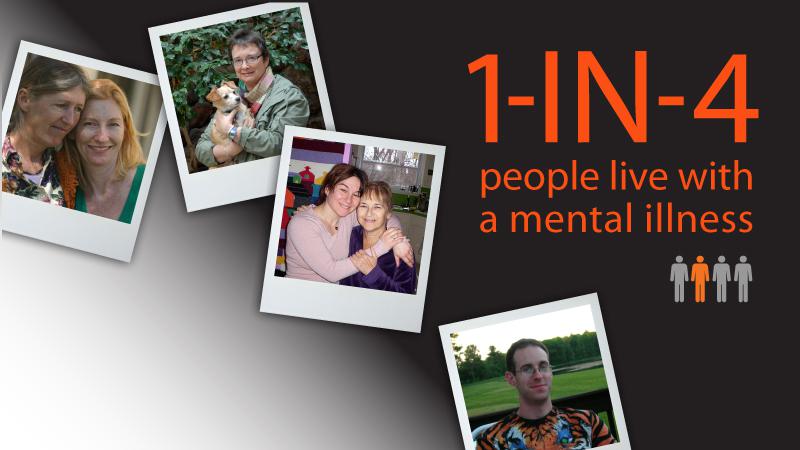
The answer to the question is, if your congregation is representative of the U.S. population, one in four households will struggle with someone’s mental health problems over their lifetime. That’s schizophrenia, bipolar disorder, obsessive compulsive disorder, disabling chronic depression, and various anxiety disorders. Look at the faces seated around you this Sunday. Someone is probably hurting. And they’re probably afraid to tell you.
The least acceptable disability
Out of Control
A study where people ranked disabilities by their “acceptability” returned these results, in order–most acceptable: obvious physical disabilities, blindness, deafness, a jail record, learning disabilities, and alcoholism.
Least acceptable: mental health problems. People with mental health problems frighten us because when people become mental ill, they become someone we don’t know. A bright boy who was his family’s bright hope may find he just can’t cut it anymore as schizophrenia turns him paranoid, disoriented, unmotivated in the extreme, and overwhelmed by delusional voices that tell him, over and over, how worthless he is.
Or, in the case of bipolar disorder, a girl who was a well-liked and active member of her Teen Challenge group may suddenly turn promiscuous, run away from home, and make a new home in the streets of a strange city. Laziness. Promiscuity. Violence. Sin. That’s what many people see when they look at those with mental health problems. It’s hard to believe that people may behave in such unacceptable ways and not be in control of their behavior.
Having a mental health problem is a lot like being on alcohol or drugs, without being able to stop. Medications “work” for about two-thirds of us. That means that a third of us can’t ever get off the chemical ride that our brains produce.
For those of us who can use medications, the side effects can be daunting. I have lost about 20 percent of my small motor functionality as a result of one of the five medications I take for bipolar disorder. I prefer that to losing large motor control and having another auto accident, being so disoriented I can’t find my way home from the store, losing bowel control in a busy bookstore, gaining 45 pounds, or any of dozens of side effects I’ve experienced on other medications.
Many people become so frustrated with side effects that they stop taking medications. Only about half of us accept treatment. Even when we are treated, not everyone regains their status as a fully functioning adult. In our extended family, six people have diagnoses. Those with bipolar disorder and chronic depression are successfully medicated and work full-time. Those with panic disorder and schizophrenia are on permanent disability. Nothing has pulled them through.
What the Bible says
The Bible talks about mental illness, as well as physical illness.
It describes a king who was made mentally ill until he would recognize the sovereignty of God (Dan. 4:29-34).
It describes demonized men who lived among the tombs and terrorized everyone until Jesus set them free (Matt. 8:28-33).
It also describes as demonized a young boy that most scholars today say had epilepsy (Matt. 17:15-18). Jesus delivered him, too.
What was once believed
What does this tell us about illness?
First, that God is able to heal. Second, that some physical and mental illnesses are caused by demons. Third, that some mental illnesses are caused by sin. But are all mental illnesses caused by demons or sin, and is seeking God our sole resource for physical and mental healing?
Since the 1950s, we have usually sent church members with epilepsy to doctors for effective treatment with anti-convulsant drugs. In a similar way, we’ve learned that medicines can effectively treat many cases of mental illness. So if all mental illnesses were caused by demons and sin, medicine would be exorcising demons and turning hearts to repentance. That is certainly untrue, for those are the works of the Holy Spirit.
Instead, we now know that most if not all mental illnesses are biological in origin, with environmental factors possibly triggering an existing genetic predisposition to the illness. Mental illnesses, just like epilepsy, are biological disorders of the brain.
What can the church do?
Compassionate service is one of our core charges as Christians. We observe it almost daily in the experience of one man we know with schizophrenia. His life is confined almost entirely to his home due to the fear, indecision, and lethargy that have become the shape of the illness in his body. But neighbors bring him occasional meals. The secretary of his small church talks to him by telephone every weekday. Several other members take weekly calls at designated times to help break his isolation. If he doesn’t feel up to driving to his Bible study meeting or Sunday services, some member will give him a ride. Nearby relatives help him plan and manage his finances, and come by to clean occasionally and for DVD “movie nights.” Phone cards given as gifts allow him to call his mother nightly. There’s much more that could be done—more frequent house cleaning and more meals and more visits—but he enjoys far more contact with many more loving people than many shut-ins.
The challenging good news is that when people with mental illness turn to someone outside “the system” for help, the church is first to get the call 40 percent of the time. Is your church ready?
…………………..
Carlene Hill Byron is the former Director of Communications for Vision New England. Through NAMI—the Nation’s Voice on Mental Illness, she and her husband, James, train churches to effectively serve people within the congregation with mental health problems and also teach NAMI’s class for families of people with mental health problems. They are members of Asbury United Methodist Church in Raleigh, North Carolina, where James serves on staff. First published by Vision New England’s Ministries with the Disabled, Acton, Massachusetts.
Lithium (brand names Eskalith, Lithobid, Lithonate, and Lithotabs) is the most widely used and studied medication for treating bipolar disorder. Lithium helps reduce the severity and frequency of mania. It may also help relieve bipolar depression. Studies show that lithium can significantly reduce suicide risk. Lithium also helps prevent future manic episodes. As a result, it ma y be prescribed for long periods of time (even between episodes) as maintenance therapy.
Lithium acts on a person’s central nervous system (brain and spinal cord). Doctors don’t know exactly how lithium works to stabilize a person’s mood. However, it helps people with bipolar disorder have more control over their emotions and reduce the extremes in behavior. It usually takes one to two weeks for lithium to begin working.
Your doctor will want to take regular blood tests during your treatment because lithium can affect kidney function. Lithium works best if the amount of the drug in your body is kept at a constant level. Your doctor will also probably suggest you drink eight to 12 glasses of water or fluid a day during treatment and use a normal amount of salt in your food. Both salt and fluid can affect the levels of lithium in your blood, so it’s important to consume a steady amount every day.
The dose of lithium varies among individuals and as phases of their illness change. Although bipolar disorder is often treated with more than one drug, some people can control their condition with lithium alone.
Lithium Side Effects About 75% of people who take lithium for bipolar disorder have some side effects, although they may be minor. They may become less troublesome after a few weeks as your body adjusts to the drug. Sometimes side effects of lithium can be relieved by tweaking the dose. However, never change your dose or drug schedule on your own. Do not change the brand of lithium without checking with your doctor or pharmacist first. If you are having any problems, talk to your doctor about your options.
Common side effects of lithium can include:
Hand tremor (If tremors are bothersome, an additional medication can help.)
Increased thirst
Increased urination
Diarrhea
Vomiting
Weight gain
Impaired memory
Poor concentration
Drowsiness
Muscle weakness
Hair loss
Acne
Decreased thyroid function (which can be treated with thyroid hormone)
Notify your doctor if you experience persistent symptoms from lithium or if you develop diarrhea, vomiting, fever, unsteady walking, fainting, confusion, slurred speech, or rapid heart rate. Tell your doctor about history of cancer, heart disease, kidney disease, epilepsy, and allergies. Make sure your doctor knows about all other drugs you are taking. Avoid products that contain sodium, such as certain antacids. While taking lithium, use caution when driving or using machinery and limit alcoholic beverages.
If you miss a dose of lithium, take it as soon as you remember it — unless the next scheduled dose is within two hours (or six hours for slow-release forms). If so, skip the missed dose and resume your usual dosing schedule. Do not “double up” the dose to catch up. There are a few serious risks to consider. Lithium may weaken bones in children. The drug has also been linked to birth defects and is not recommended for pregnant women, especially during the first three months. Breastfeeding isn’t recommended if you are taking lithium. Also, in a few people, long-term lithium treatment can interfere with kidney function.
A word of encouragement. I’ve been taking 12oo mg of Lithium twice a day for over three years now, with just minor side effects. (Mostly a bad hand tremor.) Taking Lithium has stabilized me and protected me from my more bizarre behavior.
…………………………………………………………………………………
Reviewed by the doctors at The Cleveland Clinic Department of Psychiatry and Psychology.
(TS) as it is frequently called, is a neurologic syndrome. The essential feature of Tourette’s are multiple tics that are sudden, rapid, recurrent, non-rhythmic, stereotypical, purposeless movements or vocalizations.
What are the symptoms of Tourette syndrome?
Both multiple motor and one or more vocal tics are present at some time during the illness, although not necessarily simultaneously
Occurrence many times a day nearly every day or intermittently throughout a span of more than one year
Significant impairment or marked distress in social, occupational, or other important areas of functioning.
Onset before the age of 18.
Symptoms can disappear for weeks or months at a time and severity waxes and wanes.
What are the first tics that may be characteristic of Tourette’s syndrome?
Usually, the facial tic, such as rapid blinking of the eyes or twitches of the mouth, may be the first indication a parent has that their child may have Tourette’s syndrome. Involuntary sounds, such as throat clearing and sniffing, or tics of the limbs may be an initial sign in other children.
Are any other symptoms associated with Tourette’s syndrome?
Approximately 50 percent of patients meet criteria for attention deficit hyperactivity disorder (ADHD) and this may be the more impairing problem. Approximately one-third of patients meet criteria for obsessive-compulsive disorder (OCD) or have other forms of anxiety. Learning disabilities are common as well as developmental stuttering. Social discomfort, self-consciousness and depressed mood frequently occur, especially as children reach adolescence.
Yelling and irrational
What causes these symptoms?
Although the cause has not been definitely established, there is considerable evidence that Tourette’s syndrome arises from abnormal metabolism of dopamine, a neurotransmitter. Other neurotransmitters may be involved.
Can Tourette’s syndrome be inherited?
Genetic studies indicate that Tourette’s syndrome is inherited as an autosomal dominant gene but different family members may have dissimilar symptoms. A parent has a 50 percent chance of passing the gene to one of his or her children. The range of symptomatology varies from multiple severe tics to very minor tics with varying degrees of attention deficit-disorder and OCD.
Are boys or girls more likely to have Tourette’s syndrome?
The sex of the child can influence the expression of the Tourette’s syndrome gene. Girls with the gene have a 70 percent chance of displaying symptoms, boys with the gene have a 99 percent chance of displaying symptoms. Ratios of boys with Tourette’s syndrome to girls with Tourette’s syndrome are 3:1.
How is Tourette’s syndrome diagnosed?
No blood analysis, x-ray or other medical test exists to identify Tourette’s syndrome. Diagnosis is made by observing the signs or symptoms as described above. A doctor may wish to use a CAT scan, EEG, or other tests to rule out other ailments that could be confused with TS. Some medications cause tics, so it is important to inform the professional doing the assessment of any prescribed, over-the-counter, or street drugs to which the patient may have been exposed.
What are the benefits of seeking early treatment of Tourette syndrome symptoms?
When a child’s behavior is viewed as disruptive, frightening, or bizarre by peers, family, teachers, or friends, it provokes ridicule and rejection. Teachers and other children can feel threatened and exclude the child from activities or interpersonal relationships. A child’s socialization difficulties will increase as he reaches adolescence. Therefore, it is very important for the child’s self-esteem and emotional well-being that treatment be sought as early as possible.
What treatments are available for Tourette syndrome?
Not everyone is disabled by his or her symptoms, so medication may not be necessary. When symptoms interfere with functioning, medication can effectively improve attention span, decrease impulsivity, hyperactivity, tics, and obsessive-compulsive symptomatology. Relaxation techniques and behavior therapy may also be useful for tics, ADD symptoms, and OCD symptoms.
How does Tourette syndrome affect the education of a child or adolescent with Tourette syndrome?
Tourette syndrome alone does not affect the IQ of a child. Many children who have Tourette syndrome, however, also have learning disabilities or attention deficits. Frequently, therefore, special education may be needed for a child with Tourette syndrome. Teachers should be given factual information about the disorder and, if learning difficulties appear, the child should be referred to the school system for assessment of other learning problems.
What is the course of Tourettesyndrome?
Some people with Tourette syndrome show a marked improvement in their late teens or early twenties. However, tics as well as ADD and OCD behavior, may wax and wane over the course of the life span.









 Broken Believers