OCD: Rituals and Obsession

“I couldn’t do anything without rituals. They invaded every aspect of my life. Counting really bogged me down. I would wash my hair three times as opposed to once because three was a good luck number and one wasn’t. It took me longer to read because I’d count the lines in a paragraph. When I set my alarm at night, I had to set it to a number that wouldn’t add up to a ’bad’ number.”

“I knew the rituals didn’t make sense, and I was deeply ashamed of them, but I couldn’t seem to overcome them until I had therapy.”

“Getting dressed in the morning was tough, because I had a routine, and if I didn’t follow the routine, I’d get anxious and would have to get dressed again. I always worried that if I didn’t do something, my parents were going to die. I’d have these terrible thoughts of harming my parents. That was completely irrational, but the thoughts triggered more anxiety and more senseless behavior. Because of the time I spent on rituals, I was unable to do a lot of things that were important to me.”

People with obsessive-compulsive disorder (OCD) have persistent, upsetting thoughts (obsessions) and use rituals (compulsions) to control the anxiety these thoughts produce. Most of the time, the rituals end up controlling them.

For example, if people are obsessed with germs or dirt, they may develop a compulsion to wash their hands over and over again. If they develop an obsession with intruders, they may lock and relock their doors many times before going to bed. Being afraid of social embarrassment may prompt people with OCD to comb their hair compulsively in front of a mirror-sometimes they get “caught” in the mirror and can’t move away from it. Performing such rituals is not pleasurable. At best, it produces temporary relief from the anxiety created by obsessive thoughts.

Other common rituals are a need to repeatedly check things, touch things (especially in a particular sequence), or count things. Some common obsessions include having frequent thoughts of violence and harming loved ones, persistently thinking about performing sexual acts the person dislikes, or having thoughts that are prohibited by religious beliefs. People with OCD may also be preoccupied with order and symmetry, have difficulty throwing things out (so they accumulate), or hoard unneeded items.

Healthy people also have rituals, such as checking to see if the stove is off several times before leaving the house. The difference is that people with OCD perform their rituals even though doing so interferes with daily life and they find the repetition distressing. Although most adults with OCD recognize that what they are doing is senseless, some adults and most children may not realize that their behavior is out of the ordinary.

OCD affects about 2.2 million American adults, and the problem can be accompanied by eating disorders, other anxiety disorders, or depression.  It strikes men and women in roughly equal numbers and usually appears in childhood, adolescence, or early adulthood. One-third of adults with OCD develop symptoms as children, and research indicates that OCD might run in families.

The course of the disease is quite varied. Symptoms may come and go, ease over time, or get worse. If OCD becomes severe, it can keep a person from working or carrying out normal responsibilities at home. People with OCD may try to help themselves by avoiding situations that trigger their obsessions, or they may use alcohol or drugs to calm themselves.

OCD usually responds well to treatment with certain medications and/or exposure-based psychotherapy, in which people face situations that cause fear or anxiety and become less sensitive (desensitized) to them.

Source: http://www.nimh.nih.gov/index.shtml

Bryan Lowe

For a Child Born Without Eyes

A Pastor’s Letter to the Parents of a Child Born Blind

Dear John and Diane,

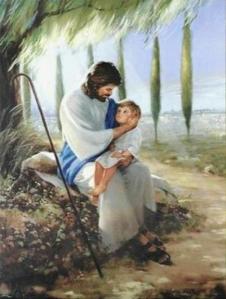
You are the child, and He is your father

Last night, as I prayed with Noel, you were heavy on my mind. I said, “Lord, O Lord, please let me be a pastor who preaches and leads and loves in a way that makes the impossibilities of life possible for your people by a miracle of sustaining grace. Help me to know the weight and pain of this life and not to be breezy when the mountains have fallen into the sea. Help me to have the aroma of Christ’s sufferings about me. Prevent shallowness and callousness to pain. O Lord make me and my people a burden bearing  people.”

O John and Diane, I am so heavy with your child’s sightlessness!

God is visiting Bethlehem with such pain these days in the birth of broken children. Randy and Ann Erickson with their baby’s broken heart; Jan and Rob Barrett with their baby’s liver outside the body; and your precious little one! Is the Lord saying, “I have a gift for your community.” This is not one or two or three couples’ burden. This is a gift and call to the whole church. This word concerning the brokenness of this fallen age of futility. This is an invitation for you all to believe that here we have no lasting city (Hebrews 13:14).

This is an invitation for you to count every gain as loss for the sake of Christ (Philippians 3:7). This is a shocking test to see if you will “lose heart” when in fact God’s purpose is to show that his grace is sufficient to renew our inner person every day to deal with the “slight momentary affliction which is preparing for us an eternal weight of glory beyond all comparison, because we look not to the things that are seen but to the things that are unseen; for the things that are seen are transient, but the things that are unseen are eternal (2 Corinthians 4:17-18).

O Lord, open our eyes to your love in this pain.

Open our eyes. Then Elisha prayed, and said, ‘O Lord, I pray thee, open his eyes that he may see.’ So the Lord opened the eyes of the young man, and he saw; and behold, the mountain was full of horses and chariots of fire round about Elisha” (2 Kings 6:17). John and Diane, the mountains surrounding your lives are filled with the horses and chariots of God.

Only to the eyes of unbelief does the devil have the upper hand here. God is at work in ways and for years and generations and millions of people that we cannot now imagine.

 This is ours to believe and to bear, no matter the cost. This is ours for this short life. It seems to me that this life is a proving ground for the kingdom to come. Some are asked to devote forty or fifty years to caring for a handicapped child instead of breezing through life without pain. Others are asked to be blind all their lives… But only in this life – ONLY in this life some are . I want to be the kind person who makes that “ONLY” what it really is – very short. Prelude to the infinity of joy, joy, joy.

But not yet. Not entirely.

How will we ever cope with the burdens of this life if we believe this is all there is, or even the main act in this drama of reality? O Lord, give us your view of things. May God fill you with anticipated joy. I consider that the sufferings of this present time are not worth comparing with the glory that is to be revealed to us.”

I love you,

Pastor John Piper


This is taken from the volunteer disability ministry blog for Bethlehem Baptist Church, Minneapolis, MN.

The Power of My Wound

A Poem by Linda K.

Healing doesn’t happen all at once.
Sexual trauma runs too deep,
is much too complex for simple remedies.

We have no Star Trek sickbay
or magic tricorder
to bind up the wounds,
erase the battle scars.

And would we want to if we could?
Would we walk away,
pretend it never happened,
we were never assaulted
violated… hated… berated…
made to feel shame and doubt?

Could we ignore the very truth of what we
know was wrong… evil… the vilest of all?
Could we simply walk away
and cease to bear witness
for those who come after?
Or maybe for those violated before
our own innocence was vanquished
but are yet to heal at all?

If we could be healed completely
in an instant, in the blink
of a selfish, knowing eye…

But to do so meant leaving
our sisters, our friends,
our daughters, even strangers,
without the hope of their presence?

Could we? Should we?

Because to heal 100 percent
I think is to forget every ounce,
every moment, of
the pain and struggle.

And to forget is to lose compassion.
So perhaps it is worth the
ups and downs of scars
that appear healed but sometimes,
more often than we’d like, bleed tears
of understanding helping others
feel not so alone.

Often I pray for complete healing.
For years I prayed to forget.
But then I remember that
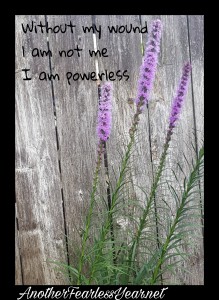
without my wound
I am not me.

Without my wound
the scarring of my heart and soul,
I am powerless.

aasignLinda

AnotherFearlessYear.net

My Scapegoat

“And Aaron shall lay both his hands on the head of the live goat, and confess over it all the iniquities of the people of Israel, and all their transgressions, all their sins. And he shall put them on the head of the goat and send it away into the wilderness by the hand of a man who is in readiness.”

Leviticus 16:21

The ritual was profoundly simple. Every year two goats were brought into the Temple. Goat #1 was sacrificed for the sins of the high priest. Goat #2 was not killed, but became the “scapegoat.” The priest would lay his hands on its head, and the nation’s sins would be transmitted and then carried to the desert.

This ritual finds fulfillment in Jesus Christ, for He absorbs our sin and carries it away.

Scripture is clear on this. Maybe this might help. Back in the 1970s I remember sponges printed with a politician’s advertising his platform/promises. At first the sponge was paper thin. But when you added water it expanded into a full-size sponge.

For some weird reason that communicates what happened at the cross. Jesus received my sin, darkness, and iniquity. He absorbed it all, and I’m free. He is my scapegoat. He carries all of my dark darkness.

“Surely He has borne our griefs (sicknesses, weaknesses, and distresses) and carried our sorrows pains [of punishment], yet we [ignorantly] considered Him stricken, smitten, and afflicted by God [as if with leprosy].”

Isaiah 53:4, Amplified