Admitting I Need Jesus

When I was in the sixth grade, a friend invited me to her church. My parents didn’t go to church, but said I could go with Clarissa if I wanted to. Before long, I was spending at least three days a week with my church friends. I learned who Jesus was and that if I believed in Him I would be saved.

I believed, though I didn’t fully understand my need for a Savior.

It would be many years and much wayward living later before I would realize the importance of the Apostle Paul’s words to the church in Rome. “For I am not ashamed of the gospel, for it is the power of God for salvation to everyone who believes, to the Jew first and also to the Greek. For in it the righteousness of God is revealed from faith to faith; as it is written, ‘But the righteous man shall live by faith.’” (Romans 1:16–17 NASB).

It’s easy to think “of course I’m not ashamed of the gospel.” Why would anyone be ashamed of the good news that Jesus died for our sins so that we might be reconciled to Him?

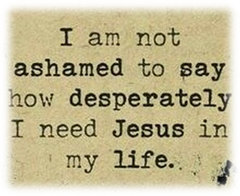
But at its core, faith in the gospel requires the believer to say “I can’t do this myself.”

Well, let me tell you a little secret that believers and nonbelievers often forget. We humans, with all our self-importance, like to think we’re the kings and queens of the universe. We strut around like peacocks, patting ourselves on the back for our so-called brilliance. And you know what? We even pass that audacity onto our poor children, encouraging them to be little independent dynamos. But hey, who needs divine intervention when we’ve got our fabulous human ego, right? wink

I remember a time when my son was in high school and because of a snow day his class schedule was changed. As a result, he took the wrong books. He called to ask me to bring the right books to the school office on my way to work, which I happily agreed to do. When I got to the office to drop them off, the school secretary chided me for bailing him out. “These kids need to learn to be responsible or suffer the consequences,” she said.

I’ve thought of that encounter often, being thankful that Jesus didn’t say the same to the Father when the plan of salvation was put into place. What if Jesus had said, “You know Dad, these humans need to be more responsible or suffer the consequences.” We’d all be doomed.

And so, although it requires me to admit I can’t do it alone, I choose to live by faith in the One who gives me His righteousness.

For the broken believer (which is all of us, if we’re honest), it is all the more important to be okay with something less than full independence. We were created to be dependent on God and on one another. We were created to live in community and relationship with others.

Note: A version of this article was originally published in the January 2020 issue of The Christian Journal, a publication I highly recommend, and not just because they publish some of my writing.

Judas Speaks

Matthew 27:3-10

My name is Judas Iscariot, and I betrayed my Lord. It really had nothing to do with avarice or greed. The money was fine, don’t get me wrong, but that isn’t why I turned Him in to the authorities. I simply did what they couldn’t. I wanted to force Jesus’ hand, so he had to drive the Romans out of our country. I was mistaken, I see that now.

Jesus loved each of us, including me. But I didn’t see it at the time.

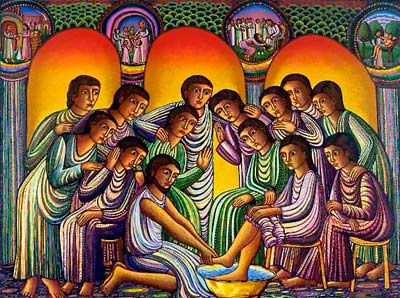
When Jesus knelt to wash my feet, I was profoundly disturbed. And when He stripped down to his underwear, I really began to have serious doubts. Behaving like a common slave wasn’t really in my thinking. It would take extra work to shape Him, and to deaden such strange behavior. But it would be worth it in the end, if only Jesus would cooperate.

In my mind I knew that Jesus only needed the right moment to become the next ruler of Israel. That was His true destiny–and I was going to help him bring it to pass.

I knew that God had called me–this was my real purpose. I would do the work of God. I would be the kingmaker, and Jesus would certainly reward me.

Some have said that Satan was inside me.

But I hardly noticed. Instead, I was filled with excitement. Finally, the other disciples would come to my side, and together we could make it happen. Enough kneeling, no more groveling–we were going to rule Israel and end the wicked Roman occupation. I truly believed this. He was our Messiah, our deliverer.

The tricky part was to convince Jesus, to manipulate him if necessary, to get him to take control.

He had to see the opportunity that was waiting for him. He was already immensely popular among the people. We could quite easily turn all of this enthusiasm into a full-blown insurrection. But we obviously needed Him to lead us, and I could help him find His way. I knew we could do it. This was God’s will for me.

My plan was fairly simple–after I met with the Pharisees, I’d lead them to the garden where Jesus was staying. They insisted on an armed escort, just in case there was trouble among the disciples. I suppose that was prudent, but my part in all of this was simply to give Jesus a kiss on the cheek, to signify that he was the one to the soldiers.

I assumed he would resist and fight. I was wrong.

You see nothing went as planned. Jesus didn’t take charge, and he certainly didn’t overthrow the government. As a matter of fact, you could say that the opposite happened–He was silent and refused to answer most of their questions. I did hear Him say, “My kingdom is not of this world.” I should have listened.

I realized way too late, that I shed innocent blood. I went back to the priests who hired me, and I insisted they take back the silver. They refused. I threw the bag at their feet and left the temple. Ugly thoughts now filled my mind, and I knew without a doubt that I was completely lost.

Go Lower Yet

footwashing

“Now that I, your Lord and Teacher, have washed your feet, you also should wash one another’s feet.”

John 13:14

Some Christians reading this part of scripture, have concluded that foot washing should be part of the Churches customary routine.  Their case is compelling, and they may be right in their interpretation.  There is as much support for this as with other things, and Lord knows we could use the humility by getting on your knees with a basin and towel before a brother. 

It probably would relieve issues between saints. It may even heal Church splits. (Oh my!)

Jesus pronounced that His act of service was to be imitated by everyone who would follow.  He further would assert that His example would be emulated by every believer that followed after Him.  Our service to our brother, or sister is to help them become clean Christians. 

We have this ministry of the basin and towel to remove the dirt and filth that comes from walking in this world.  Of course, we cannot remove sins.  But we can serve as Jesus would and intervene with His power.

Cleansing people that we meet will be a challenge. 

It will call us to strip our lives down to a minimum, and to get lower.  We need to get so low that we’re on the floor.  This requires much grace and discipline.  We must weed out every pretense and pride–especially the kind that says, “Look at me serving; am I not wonderful?  I am a true disciple now.”  We are to shake off thoughts like that. 

We are to love others, and perhaps be honestly brutal on ourselves. (Not in a morbid way, just less of ‘yourself.’)

While in my first year of Bible college, I developed a bitter dislike for a classmate.  He had been a lead guitarist; he was handsome and popular, and he oozed pride from every pore (at least I could see it).  I actually took it on myself to be God’s hand in humbling him.  I became antagonistic and scorned him every chance I could.

Within days, my prayer life shut down and the heavens became brass.  One day I was praying and the Holy Spirit graciously zapped me.  I became aware of my sin toward my brother, and I repented. There was a real definite leading, to find a basin and a towel, and then to wash his feet.

God reconciled us, as I knelt at his feet in that dorm room.  From that point on we became very good friends.

We must go lower still.   Water always finds the lowest point, were it pools and gathers into the place of healing others. Perhaps the Holy Spirit will not lead us ‘deeper’ until we start practicing true humility.

When we lower ourselves even deeper we find His presence waiting for us.  But we must cleanse our own hands first, and His blood must work its ministry on me. It’s then I can proceed to clean the filth off of their feet.  If I am not clean myself I will only perpetuate the dirt on to my brother with my dirty hands.

We must scrub our way into the heart of our sister or brother with a basin, some soap and a towel. 

The challenge for us will be a super-challenge.  Christlikeness will always demand this humble grace.  When we think about being like Jesus we must make sure we are following the Jesus in the Bible.  The Jesus who washed dirty feet as a slave.

But let’s not have any foolish nonsense of a discipleship that doesn’t kneel before our brothers in humility.


The Plow and Jesus

57 As they were walking along the road, a man said to him, “I will follow you wherever you go.”

58 Jesus replied, “Foxes have dens and birds have nests, but the Son of Man has no place to lay his head.”

59 He said to another man, “Follow me.”

But he replied, “Lord, first let me go and bury my father.”

60 Jesus said to him, “Let the dead bury their own dead, but you go and proclaim the kingdom of God.”

61 Still another said, “I will follow you, Lord; but first let me go back and say goodbye to my family.”

62 Jesus replied, 

“No one who puts a hand to the plow and looks back is fit for service in the kingdom of God.”

Luke 9:57-62, NIV

There’s to be no whitewashing the way of discipleship–there’s no glamour, no special recognition–no acclaim in it to speak of it openly. I guess this is the “real” way of being His follower. The path Jesus has for me demands I give Him my whole heart. Heart enough to turn it all to Him. Heart enough to give Him total commitment.

Jesus seems to make it hard to follow Him. But is it really?

We can see this in His responses to each prospective disciple. His statements to each possible follower seem harsh, difficult, and a bit “unreasonable,” but He doesn’t receive these men unless they do what He says.

Discipleship demands that we give up what we hold dearest.

What happened to these three “would-be” followers? Did they return home dejected and frustrated? To follow in Jesus’ footprints means we give up our personal agendas, and turn our backs on what is closest and dearest. We must renounce everything, and give Him preeminence over all.

These are hard verses with profound implications.

But this passage is given to us for a reason. We dare not minimize what it means to be a disciple. We must grasp the plow with both hands, and we can’t look back. All that we do is a fair response to His mercy, and His kindness. There is incredible joy in all of this.

“Christianity without discipleship is always Christianity without Christ. Unless he obeys, a man cannot believe.”

    Dietrich Bonhoeffer

brokenbelievers.com