“I have refined you, but not as silver is refined. Rather, I have refined you in the furnace of suffering.“
Isaiah 48:10
“Once we have come through the ‘furnace of humiliation,’ desperately, fearfully clinging to Christ for all He is worth, then we are fully equipped to march into somebody else’s furnace.”
‘Blessed with Bipolar”
Becoming a real and authentic person starts with basic responses that we’ve made in the presence of Jesus. Amazingly, this simple faith becomes the prerequisite, granting us the right to enter. However, without faith in those promises, you won’t find anything real or true.
You will not be able to handle the Kingdom of God unless you’re walking out a life of brokenness and humility.
I believe that only the heat of the furnace can teach us these things.
There are furnace promises, but they, without truly understanding them will walk around in unreality. Often ‘they get religion.’ These are those who land on “the rocky soil.” They become ‘quasi-disciples’ who will do and say things that they really don’t really understand.
But furnace people have the connection to that which is honest and true. They rarely enter into anything false or manipulative. Their own hearts are transformed by the fire, and only then are qualified to minister God’s grace. Only furnace people can enter in. You will know them by their scars.
The Church has a tremendous need for those who have withstood the furnace of humiliation.
After we endure its ugliness and its great evil, we’ll discover that we’re in an altogether different place than when we first started. The Church is waiting for those who went in and then come out on the other side.
Furnace people have the ability to function gracefully at this particular stage.
Furnace people are brought to a place where they can minister the grace of God into desperate situations. We must convince ourselves, that furnace people have a gift. They have been through the worst. They may be battered and bruised. But they still stand.
Our brothers and sisters have carried the Word with wisdom and grace. They come to us, through the fire. But will we receive them?
My hope is that you would personally grasp what God has worked in you. That really is your truest calling. The things good or bad, that have happened to you are part of how you’ll understand grace. He waits for you to respond. Will you come to Him, through the grace you find in the flames?
The most gracious people you’ll ever meet are those who endured God’s furnace.
“The furnace of affliction is a good place for you, Christian; it benefits you; it helps you to become more like Christ, and it is fitting you for heaven.”
“As I look back over fifty years of ministry, I recall innumerable tests, trials and times of crushing pain. But through it all, the Lord has proven faithful, loving, and totally true to all his promises.”
In one of my early blog posts at lindakruschke.wordpress.com, I was lamenting that remembering my past made me a little blue, because I had regrets and things have happened to me that were less than wonderful. But I have been reminded that I am who I am because of my history.
A week later I was listening to the CD Stay by Jeremy Camp in my car alot. One of the songs on that CD is called Walk by Faith, but all week I really haven’t tuned into that song even though it is the one I really needed to hear. Then one night I was listening to my iPod while I was making dinner, and had it on shuffle of my Christian Music playlist. This is something I hadn’t done for awhile – I had listening to the Oldies playlist or the Sad Heartache Songs playlist instead. I started out that night listening to the Grunge playlist, but it wasn’t helping my mood at all (now that’s a big surprise, not).
It just so happened that the third song to play on the Christian music playlist while I was chopping veggies for homemade chicken noodle soup was Walk by Faith. The chorus goes like this:
Well I will walk by faith Even when I cannot see Well because this broken road Prepares Your will for me
As I heard those words, I realized that the broken road I have traveled (and don’t we all travel a broken road of some kind?) has made me who I am. It has taught me love, compassion, empathy, and, most importantly, faith.
If my life had been perfect and easy, with no pain and heartache, first of all I wouldn’t be human. But secondly, I would be a different, perhaps shallower person. I might not even be happy.
So I have decided not to lament or regret my past.
I needed to see it for what it is: the broken road that has prepared me to be the person God wants me to be to those around me. Because ultimately, those around me have traveled a broken road too. And sometimes it is a very similar broken road so that we can relate to each other’s journey. Maybe, as I walk that road by faith, I can help others to walk by faith, too.
Besides, without the lessons learned on my broken road I would have nothing but fluff to write and my blogging would have no purpose.
Have you been walking on a broken road?
Have faith that God will use your experiences to make you the person He has planned for you to be so that you can be a blessing to others walking that broken road with you.
3 “All praise to God, the Father of our Lord Jesus Christ. God is our merciful Father and the source of all comfort.”
4 “He comforts us in all our troubles so that we can comfort others. When they are troubled, we will be able to give them the same comfort God has given us.”
At the crucifixion, Jesus suffered incredible pain.
He was beaten, flogged, spat upon, and had a crown of thorns jammed into his brow. Then He was nailed to the cross through His feet and hands and then pierced in the side with a spear causing blood and water to flow from His body. He was covered in welts, bruises, and blood so that He was almost unrecognizable.
After His resurrection, He appeared to His disciples in the upper room.
The welts, bruises, and blood were gone. His body showed very little of the pain and suffering He had endured. He did not have scars on His face or across His back. He was once again beautiful. His resurrected body testified to the resurrection we will all one day know with new, healed bodies that are once again beautiful, even in our own eyes.
The exceptions to this miraculous healing of His body were the nail scars on His hands and feet, and the scar from where He was pierced with the spear.
“Then he said to Thomas, ‘Put your finger here; see my hands. Reach out your hand and put it into my side. Stop doubting and believe.’”
John 20:27 (NIV).
These scars testified to His death and suffering on the cross. They testified to the love and mercy we find there. They testify even now to the greatest gift God has ever offered mankind: the knowledge that He was one of us, faced death as we do, and came out on the other side victorious as we one day will be if we trust in Him.
We all experience suffering and injury.
We all bear scars, some physical, and others emotional or spiritual. We tend to hide our scars from the world, thinking we are the only ones who bear them. But that’s not exactly true.
Our own scars long to testify to the love and mercy of a God who saw us through our trials and helped us come out victorious on the other side. They long to testify that we were not defeated because God was on our side.
What if, instead of hiding our scars from the world, we shared them for all to see just as Jesus bid Thomas touch the scars on His palms and His side? What if we let our scars testify to the love and mercy of our God? What if we helped share the greatest gift God has ever given mankind, a gift that our scars testify to?
“An untold story never heals.” -Mary Demuth
What victory do your scars testify to? Please dear one, share it with others. People are waiting to hear from you.
It’s easy to romanticize physical suffering — especially when you’re not the one experiencing it.
Saints like Amy Carmichael, who spent over twenty years bedridden, and Joni Eareckson Tada, a quadriplegic who lives in constant pain, can evoke peaceful images of unbroken communion with God. We may imagine that it’s easier for them to endure pain and weakness than it is for the rest of us.
Yet the reality of physical suffering is that it’s insistent and intrusive. No one gets used to it. Pain demands our attention. Time slows to a crawl, particularly in the middle of the night, when we’re begging God for the relief of sleep. We feel alone and isolated. No one else can enter the prison that our bodies have become.
Pain Accumulates
If that weren’t enough, physical pain rarely exists in isolation — it’s usually accompanied by loss, weakness, and dependence. Often, we require help with basic daily needs, and we worry about the burden we’re putting on others. We second-guess every request, not wanting to bother someone one more time. Will people get tired and think we’re “too much”? Do they resent their lack of freedom?
We longingly remember the carefree days before our physical struggles altered our lives, when we could do what we wanted. Now we measure our energy in teaspoons rather than buckets. We weigh every decision, every action. Saying yes to one activity means saying no to many others. It is hard not to envy those with fit bodies, who seem to have no cares.
Pain, loneliness, and longing can give way to depression and despair. We cry out to the Lord for relief, but relief doesn’t come. The cancer spreads. Sleep eludes us. The pain intensifies. The medicine stops working. The side effects multiply. Our caregivers grow weary. Our friends stop checking in. Our resources run dry.
Doubt Advances
The vibrant faith we once had begins to fade — which is exactly what Satan wants to happen as we suffer. He wants us to doubt and fall away from God, convinced that he is indifferent to our cries. Satan knows that we’re susceptible to discouragement when we’re physically depleted, so that’s when he attacks. As physical needs scream for attention, Satan whispers to us, “Does God even hear you, let alone really care for you? If he does, why isn’t he delivering you?”
“If God’s greatest blessing is himself, then perhaps sustenance is a more precious gift than deliverance.”
Insidious doubts slip in, making us question beliefs we once held rock-solid: Are we deeply loved by an all-powerful Father? As soon as we recognize the mental shift, we need to stop and cry out to God, asking him to meet us in our sorrow, to deliver us from our pain, and to show us evidence of his goodness and love. Are we fixating on all that we’ve lost, on how God hasn’t delivered us, on how hopeless we feel? Or do we recognize that God is with us, working for our good, and caring for us each moment?
What we think about in the moments of our deepest pain is critical. Our mindset will determine how we approach the questions that bombard us. Here are three common questions I’ve asked:
How can God be “for me” if I’m still suffering?
How can God use my weakness for good?
What good can come in moments of overwhelming pain?
How can God be ‘for me’ if I’m still suffering?
Sometimes God miraculously delivers us when we plead for relief, like at the parting of the Red Sea. Other times he sustains us, as he did with manna in the wilderness. The Red Sea deliverance freed the Israelites, but their need for manna kept them dependent on God. In gathering manna, they had a harder time forgetting their reliance on God. And if God’s greatest blessing is himself, then perhaps sustenance is a more precious gift than deliverance, since it can keep us in constant communion with him.
Take the apostle Paul. He begged God for deliverance from his thorn in the flesh, but instead he received grace — grace to bear the thorn, grace to be content with weakness, grace that would carry him through other trials as well (2 Corinthians 12:7–10).
When we realize that we can depend on God in our weakness, we learn to trust him in everything. Anyone can thank God for quick deliverance from physical suffering, but we often forget him until the next crisis. Yet when he sustains us in our pain, we’re confident that he is with us always.
How can God use my physical weakness for good?
We may think our physical weakness is keeping us from maximum fruitfulness, but that’s impossible. Our weaknesses are a part of God’s plan for our lives; they are intertwined with our calling. Paul thought his thorn was hampering his ministry, but God knew that it was the key to his strength: it forced Paul to be wholly dependent on God. When we are depleted and exhausted, lacking any resources of our own — it is then that we fully rely on God.
And in that reliance, we discover the power of God flowing through us — the same power that raised Jesus from the dead (Ephesians 1:19–20). This power keeps us enduring when we want to give up; it showcases God’s glory and brings lasting change. Because Paul relied on God’s provision, he accomplished more for the kingdom with his thorn than he could have without it. His greatest strength lay in his submission to Christ.
Even Jesus’s greatest strength appeared in his greatest physical weakness.
Throughout his ministry, Jesus impacted others by his actions. He calmed the storm with a word. He fed five thousand with a few loaves and fish. He cast out demons, healed the sick, and raised the dead. He turned the world upside down.
But at the end of his ministry, from the Last Supper on, Jesus allowed others to act upon him: he was led away, he was whipped and mocked, he was beaten and crucified. When he submitted to his captors, the crowds saw weakness rather than what was really there: Jesus’s strength and power.
Just before these horrific events, Jesus begged God to take the cup of suffering from him. But it was through Christ’s submission to the will of the Father — to torture and humiliation, to physical abuse and carrying his own cross — that God brought about the most astonishing display of his power and grace.




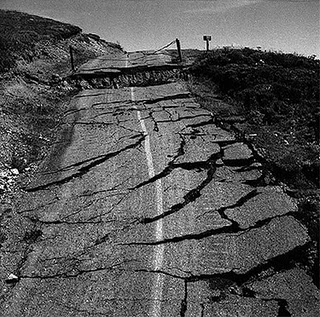





 Broken Believers