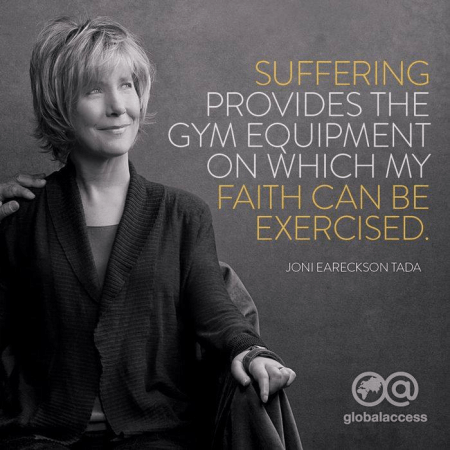
How Well Do You Suffer?

John Newton, Exodus 3:2

It seems that pain is the best teacher. We learn the hard way to come under God’s direction, and we finally learn to love others. Maybe it’s our pain that communicates His grace–is this how God changes us?

After all, the crushed grapes make the wine.

C.S. Lewis once made the comment, (and it’s worth thinking about), that “experience is the most brutal of teachers. But you learn, my God do you learn.” We face many obstacles, run into quite a few dead ends, and along the way we learn that when we really hurt, we start to teach something that the Church desperately needs.

My discipleship has been chock full of challenges. I’ve lost the use of my right arm, I have struggled with depression. I had a brain tumor removed, and must walk with a cane. I struggle with intense fatigue. I now have severe issues with pain. (I no longer pastor a church or teach in a Bible college.)

In November 1999, my wife and I lost a child.

I have prayed earnestly for a complete healing and had others pray for me. It’s funny, but all of this has happened after I became a Christian disciple! I often ask myself why? Why did God allow this to happen?

What did I do to deserve all of this?

Paul and Barnabas came into an interesting place (we can read about it in Acts 14.)

“Strengthening the souls of the disciples, encouraging them to continue in the faith, and saying that through many tribulations we must enter the kingdom of God.”

Acts 14:22, ESV

Some Bible teachers we listen to on the internet choose to minimize suffering, and of course we adopt a lot of our own theology to factor out pain and difficulty. But is this what the Bible teaches? If we read Hebrews 11, we find that life could be pretty grim for those with faith in God.

“Women received back their dead, raised to life again. There were others who were tortured, refusing to be released so that they might gain an even better resurrection. 36 Some faced jeers and flogging, and even chains and imprisonment. 

37 They were put to death by stoning; they were sawed in two; they were killed by the sword. They went about in sheepskins and goatskins, destitute, persecuted and mistreated— 38 the world was not worthy of them. They wandered in deserts and mountains, living in caves and in holes in the ground.”

Why does it have to be so hard for us as believers in Jesus?

Common sense suggests that things should get easier for those who believe. We somehow think that God rewards faith with instant glory. But I painfully discovered that my discipleship, my faith, doesn’t mean some wonderful existence on this planet. It seems that pain becomes the way we grow up and mature in Him.

I honestly believe, after over 40 years of following Jesus, that suffering is part of God’s plan for me.

It has never been easy. It never was. And I wish it was different.

My God, I wish it was different.

No matter what you are going through, remember that God always loves you. He has chosen us to navigate us through much difficulty. We must however, convert these painful things by our faith in Him. And only our faith does this.

And we know that in all things God works for the good of those who love him, who have been called according to his purpose.”

Romans 8:28

We must learn to regard people less in light of what they do or omit to do, and more in the light of what they suffer.

Dietrich Bonhoeffer

One More Night With the Frogs

“You set the time!” Moses replied. “Tell me when you want me to pray for you, your officials, and your people. Then you and your houses will be rid of the frogs. They will remain only in the Nile River.”

“All right,” Moses replied, “it will be as you have said. Then you will know that there is no one like the Lord our God.

Exodus 8:9-10

Often there comes a point in a person’s life that not to make a decision, becomes the decision.

This was the dynamic working in Pharaoh’s mind. God had warned him earlier that he must release the Jews from slavery. But he oscillates, and vacillates after each warning. His stubborn indecisiveness  is remarkable. Pharaoh resists, and becomes more and more obstinate.

There is a deep danger of delay.

God sends 10 plagues– quite dramatic and miraculous. But “the supernatural” really can’t touch certain hearts. There were certain Pharisees in Jesus’ time that they would not believe, no matter what Jesus did. (We call this, “hardness of heart.”)

In this particular ‘show-down’ a plague of frogs is threatened. It’s kind of funny, but Pharaoh doesn’t dispute the possibility of this “green invasion.” He just absorbs the inevitable. Pharaoh simply replies, “I will take one more night with the frogs.”

Within Egyptian mythology the frog was regarded as “holy.” It wasn’t to be harmed or killed. It was regarded as a blessing to the people. But that was hardly the case among the enemies of God’s chosen.

Often there comes a point in a person’s life that not to make a decision, becomes the decision.

Sadly to say, there are so many like that man today. “Lord, I’m going to follow You, but let me have just one more fling, one more trip to Vegas, or the bar, or the Princess cruise, or a new car– just “one more night with the frogs!” And the “one more night” stretches out into a terrible, endless night, in the blackness of darkness forever.

2 Corinthians 6:2

Will you choose to spend another night with the frogs, that is, in your sins? Or will you come to Jesus Christ for salvation today? There are consequences that follow each decision. What will you decide today? Will it be sin or the Savior? Will it be Heaven or Hell? Will it be forgiveness or the frogs? What will you do with the message you have read here today?

Often there comes a point in a person’s life that not to make a decision, becomes the decision.

bry-signat (1)

The Coming Train Wreck

Amos 3:7, ESV

We are witnessing something terrible.  Worldwide whole societies are being destroyed.  We’re more or less simple bystanders, there is really nothing we can do that can change the inevitable.  However, the survivors will need our assistance.  So we will wait for the inevitable crash, we pray, and anticipate a chance to bring our Savior’s love into the awful melee.

Things are accelerating far beyond what we think. 

This heightens the tension, which should make us alert and aware.  We make assumptions of the upcoming derailment which may, or may not be accurate.  But we all sense something dreadful and foreboding is approaching.

We are witnessing a train wreck.

Something disturbing is coming down.  It’s said that just before a big thunderstorm, the birds head for safety, they simply disappear.  The birds know this, and yet it seems, and yet we’re still trying to connect the dots.  We look at the skies, but yet we don’t quite understand the signs.

The crisis that is coming will stagger the unbeliever. It will certainly challenge the believer.

We must be ready ourselves.  Our viewpoint of eternity will become a much needed necessity for those who go through the devastation of the train wreck.  It’s what will pull us and others through some black and bleak times. We must prepare ourselves.

We can ask for grace, not just to help us, but to help them.

When the storm gets close, the best we can do is to head for the “storm cellar.”  As a boy, growing up in the Midwest, I have clear and distinct memories of heading for that basement shelter, with my dad and mom.  When a tornado is coming the only thing we can do is find shelter.  To choose to hide, and to take cover is both prudent and wise.

While things are collapsing, we need to find comfort in His shelter. 

His wings shelter us as believers, and we must find refuge in that precious and intimate place.  So much news is grim, and we can so easily slip into depression and despair.  We look around, but we must turn directly to these wings that cover us.  We’re protected and sheltered in that place, but only in that place.

“Those who live in the shelter of the Most High will find rest in the shadow of the Almighty.
This I declare about the Lord:
He alone is my refuge, my place of safety;
he is my God, and I trust him.”

Psalm 91:1-2

We should rest, and consciously put our own souls under His care. 

Some may look at everything and then decide to step into the storm in order to shut it down.  But brother, we can’t stop it, for it’s of the Lord.  Quite a few of the prophets in the Old Testament saw and understood what was going to happen soon, but they couldn’t do anything against Babylon or Assyria.  But with their voices they strengthened and encouraged others against an outrageous brutality.

That is something that’s going to be critically needed. It is a good thing, and it’s what we’re being called to do.

God has brought you to this particular spot. He has put you into this moment in time. You must take your place. Be alert, stay on guard. We’re put into this place by the Father.

Esther 4:14

bry-signat (1)

The Extraordinary Breath of Jesus

“Jesus said to them again, “Peace be with you. As the Father has sent me, I also send you.” 22 After saying this, he breathed on them and said, “Receive the Holy Spirit. 23 If you forgive the sins of any, they are forgiven them; if you retain the sins of any, they are retained.”

John 20:21-23 (19-23)

This is the second “peace be with you” in this passage. So why the duplication of this peace proclamation? The disciples are sequestered and scared in the upper room (v. 19; and Luke 24:36. Having peace is being emphasized–the disciples were afraid of the Pharisees, but they also were undone by Jesus’ surprise visit.

Peace was definitely a precious commodity for them.

Jesus gives his disciples a mission to do, and they must be as ‘familiar’ with Jesus just as Jesus is with God. The disciples had followed him for three years–seeing incredible miracles, and hearing profound teaching, they’re ready, they just need power.

In track and field, there’s a relay race where a baton is passed from runner to runner, and maybe that’s how it’s working here? We see the same idea in John 17:18.

The baton has now been passed to the disciples.

The breath of the risen Jesus is necessary (and yes, he’s breathing.) What went down here, I don’t know exactly. But Jesus recognizes that his 12 followers will need this to do his work. Also, we might consider Adam in Genesis 2:7 where God’s breath brought him to life, which is pretty awesome when you think of the parallels.

The Holy Spirit energizes these men to do this new work.

The disciples were pretty much observers, but now they are to take up the ‘mantle’ of Jesus’ work. This is a definite duplication, which connects with the idea of one seed producing many others (John 12:24.) That’s how the Kingdom will come to people.

Verse 23 intrigues me. It seems that our life comes from the breath of Jesus. And it’s the Holy Spirit that gives both power and the authority that’s needed to function like Jesus. We now have the ability to pronounce forgiveness to the new believer, and yet that doesn’t seem a function of the Church today.

I wonder why this is so?

This entire passage as a doozy. It clearly declares the Churches new role as we follow in his footsteps. Disciples are to do exactly what Jesus does–with his breath and authority–filled with the Holy Spirit.

If we neglect these things (it seems anyway) we’re going to fall flat on our face.

“The work of Jesus for His disciples on resurrection Sunday gives an ongoing pattern for His work among His people. Jesus wants to continue this fourfold ministry of assurancemission, the Holy Spirit and authority to His people today.”

From David Guzik’s website