Love Wears Work Gloves

 “But if anyone has the world’s goods and sees his brother in need, yet closes his heart against him, how does God’s love abide in him?”

“Little children, let us not love in words or talk but in deeds and in truth.”

1 John 3:17-18, ESV

Love is a noble idea, it’s admired and extolled by practically everyone–we see it in our music and poetry, ethics and religion. For the most part it’s a word for something decent and virtuous and honorable. It’s a good thing, but I’m afraid it’s not always scriptural.

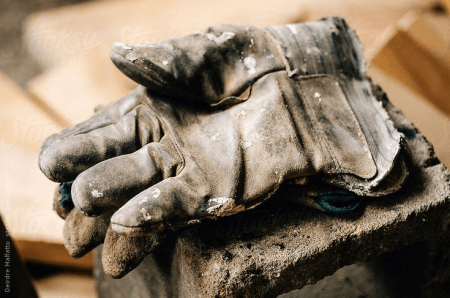
You see, Bible love wears work gloves.

It labors and sweats and works. Bible love has chores to do, and it actively looks and sees what needs to be done. 1 John 3 tells us that we shouldn’t deceive ourselves and only see the world’s definition. That love a believer has is to be different.

Love, in John’s eyes, is most assuredly “doing.” It burns spiritual calories as it labors to serve our brothers and sisters. Love finds things it can do–it doesn’t just talk but it gets busy. Love sees the need and then gets down to serve.

“You must show sincere love to each other as brothers and sisters. Love each other deeply with all your heart.”

1 Peter 1:22

Working (serving) has nothing to do with our salvation, that is a free gift. We’re saved by grace through the blood of Jesus–that’s a given. But this love isn’t  drudgery, as a matter of fact, working and serving each other is a joy. The deepest kind of joy there is.

Our words, although important, are really an insufficient way of proving our authenticity.  The love we serve another with isn’t “pretty poetry” kind of love. It’s so easy to just shout out truth and never ever show a working, serving kind of love. That sort of love is impressive, and can’t ever be duplicated.

That disconnect is a bit disturbing.

But when do we start to realize that this love is really a verb?

Our prayer and intercession really begins when we go to work for someone else. (Our lunch box is our Bible.) We read it and it energizes us to work for one  another. When we pray we truly are loving another brother or sister. It’s work that they can’t or won’t do for themselves. At least not yet. So we pray.

John is calling believers to a more real kind of love. His love is a love that sweats.

“The church is made up of individuals. It can do nothing except as its members work, and work together.”

     James H. Aughey

Dear reader–I really do pray for you. Your love impacts so many.


Deeply Hurt for a Reason

Pastor A.W. Tozer seems to have gotten a hold on something here. Those who step into discipleship or ministry will inevitably be hurt in some significant way. I wouldn’t say it was a ‘given’, but it seems to be the common path we must take. We must be aware–but often we can’t or won’t understand. This is hard and we’re easily confused.

God really isn’t our problem.

He loves us and saves us and He really wants to bless us. He is all goodness and grace. He has no evil intentions concerning you, and certainly has no desire to see you suffer in a crisis of suffering or trial. Even in times of temptation, He simply views it as a step to strengthen us–He never is out to trip us up.

I really think that the issue is us.

Our old nature–the sinner inside, delights in things like pride and selfishness (even in religious matters). Some of the most difficult people I have ever had to work with were in places of oversight within the Church!  May I suggest something?

Could it be that the problem isn’t that we are too weak, rather, it is because we are too strong?

God’s intention is ‘to bless greatly.’ But my pride and self-will must be left at the door (repeatedly). My old nature cannot truly work in the Kingdom. Only when these issues are dealt with (repeatedly) will humility and brokenness transform us. Quite simply, there is no way around this. God uses broken things. We must be broken as well.

“It takes broken soil to produce a crop, broken clouds to give rain, broken grain to give bread, broken bread to give strength. It is the broken alabaster box that gives forth perfume.”

“It is Peter, weeping bitterly, who returns to greater power than ever.”

Vance Havner

Becoming broken often takes years of trial, temptation, and affliction.

But God is patient. He’s not in any hurry.

You will ‘log-in’ many hours in the desert. Many of His best soldiers have been recruited from that barren place. The Holy Spirit is our best guide through the difficult loneliness and aridity of this place. He will guide you, and comfort you.

I sometimes teach at a local Bible college–I love Song of Solomon and choose to teach it whenever I can. Here’s a verse that has encouraged me over and over:

“Who is that coming up from the wilderness, leaning on her beloved?”

Songs 8:5, ESV

“Before God could bring me to this place He has broken me a thousand times.” 

Smith Wigglesworth

We Are Mere Servants

7–8 Jesus continued, “After a servant has finished his work in the field or with the livestock, he doesn’t immediately sit down to relax and eat. No, a true servant prepares the food for his master and makes sure his master is served his meal before he sits down to eat his own.
Does the true servant expect to be thanked for doing what is required of him? 10 So learn this lesson: After doing all that is commanded of you, simply say, ‘We are mere servants, undeserving of special praise, for we are just doing what is expected of us and fulfilling our duties.’”

Luke 17, TPT

Selfishness is endemic to men of all stripes. It’s in our bloodstream  It taints the most noble of actions and the most wonderful of efforts.

There is an exception for the empowered Christian. The ability to live unselfishly is the believer’s option. We can live above the issues of the worldling. To us is given the joy of obedience. Obeying God’s will is the privilege of redeemed men and women. We have the Holy Spirit’s abilities to meet the situation around us.

We serve because we’ve been served.

But we still are ”mere servants” and we shouldn’t make a big deal of our efforts. Within our most noble efforts is the possibility of falling short of the Lord’s wishes for us.

The only safe place for us is found  in a sacred humility. It is the posture of obedience which generates something enduring. You might say that humility is the wiring that keeps us from ‘shorting out.’ Being a humble person will insulate us from the holy power of any disobedience. 

I’m afraid that is the only way it’ll work.

“We had long known the Lord without realizing that meekness and lowliness of heart should be the distinguishing feature of the disciple.”

–Andrew Murray

Go Lower Yet

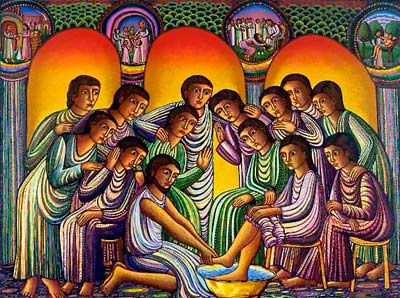
footwashing

“Now that I, your Lord and Teacher, have washed your feet, you also should wash one another’s feet.”

John 13:14

Some Christians reading this part of scripture, have concluded that foot washing should be part of the Churches customary routine.  Their case is compelling, and they may be right in their interpretation.  There is as much support for this as with other things, and Lord knows we could use the humility by getting on your knees with a basin and towel before a brother. 

It probably would relieve issues between saints. It may even heal Church splits. (Oh my!)

Jesus pronounced that His act of service was to be imitated by everyone who would follow.  He further would assert that His example would be emulated by every believer that followed after Him.  Our service to our brother, or sister is to help them become clean Christians. 

We have this ministry of the basin and towel to remove the dirt and filth that comes from walking in this world.  Of course, we cannot remove sins.  But we can serve as Jesus would and intervene with His power.

Cleansing people that we meet will be a challenge. 

It will call us to strip our lives down to a minimum, and to get lower.  We need to get so low that we’re on the floor.  This requires much grace and discipline.  We must weed out every pretense and pride–especially the kind that says, “Look at me serving; am I not wonderful?  I am a true disciple now.”  We are to shake off thoughts like that. 

We are to love others, and perhaps be honestly brutal on ourselves. (Not in a morbid way, just less of ‘yourself.’)

While in my first year of Bible college, I developed a bitter dislike for a classmate.  He had been a lead guitarist; he was handsome and popular, and he oozed pride from every pore (at least I could see it).  I actually took it on myself to be God’s hand in humbling him.  I became antagonistic and scorned him every chance I could.

Within days, my prayer life shut down and the heavens became brass.  One day I was praying and the Holy Spirit graciously zapped me.  I became aware of my sin toward my brother, and I repented. There was a real definite leading, to find a basin and a towel, and then to wash his feet.

God reconciled us, as I knelt at his feet in that dorm room.  From that point on we became very good friends.

We must go lower still.   Water always finds the lowest point, were it pools and gathers into the place of healing others. Perhaps the Holy Spirit will not lead us ‘deeper’ until we start practicing true humility.

When we lower ourselves even deeper we find His presence waiting for us.  But we must cleanse our own hands first, and His blood must work its ministry on me. It’s then I can proceed to clean the filth off of their feet.  If I am not clean myself I will only perpetuate the dirt on to my brother with my dirty hands.

We must scrub our way into the heart of our sister or brother with a basin, some soap and a towel. 

The challenge for us will be a super-challenge.  Christlikeness will always demand this humble grace.  When we think about being like Jesus we must make sure we are following the Jesus in the Bible.  The Jesus who washed dirty feet as a slave.

But let’s not have any foolish nonsense of a discipleship that doesn’t kneel before our brothers in humility.