Nothing But Leaves

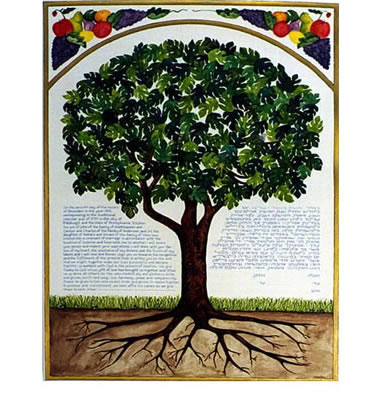
“Seeing at a distance a fig tree in leaf, He went to see if perhaps He would find anything on it; and when He came to it, He found nothing but leaves, for it was not the season for figs.”

Mark 11:13, NASB

Perplexing isn’t it?  I personally have had a certain amount of ambiguity with this passage.  I have questions that I’ve swept under the rug.  Why did that poor tree get cursed?  It wasn’t the trees fault, after all.  And didn’t Jesus realize this?  So why go through the theatrics?

I don’t know if this is the case with anyone else. 

I hesitate to ask around.  But recently have come to a better place about this entire event.  The traditional view is that it comes immediately after “the cleansing of the temple” and that explains a lot.  The fig tree is always emblematic of Israel.  (The Old Testament is well populated with these references.) The disciple Mark adroitly organized his Gospel in order to connect both events.

I assure you, Jesus has no issues or vendettas against trees.  😁

But He does take an issue with things that claim fruit, but really have nothing.  There’s nothing but leaves. I’ve been told that the figs do grow, almost as fast as leaves.  The lush greenness is the prime indicator of the succulent fruit. At least, in theory, it has the potential.

Luke 12:7-9,

Look, for three years now I have come seeking fruit on this fig tree, and I find none. Cut it down. Why should it use up the ground?’ And he answered him, ‘Sir, let it alone this year also, until I dig around it and put on manure. Then if it should bear fruit next year, well and good; but if not, you can cut it down.’”


The beautiful leaves declare its fruitfulness.  This tree was loaded, but had nothing to show but leaves.  Within God’s plan for Israel was for fruit.  Enough to feed the nations that would stream to Jerusalem.  Instead, it was worthless.  There was nothing to be had.  Loads of leaves, and the promise of an incredible harvest, but zilch, zero, nothing.

Hypocrisy is a deadening experience, with a definite sterility.

Israel was finding this out, and Jesus is now declaring it to the nation.  A corrupt temple, and a fruitless tree; this were all indicators of hypocrisy and showiness.  The luxuriant leaves loaded the tree, but ‘where’s the fruit?!’

Sometimes we declare that we are fruitful, on the mere basis of our lovely leaves. 

At times maybe even green?  Leaves are pretty much all we can do.  And we do it quite well. But the fruit is from the Holy Spirit, (Galatians 5:22.)

Israel failed God.  They became religious and neglected mercy, and justice.  Humility and graciousness.  The widow and the orphan were not part of their personal equation.  They produced leaves by the wheelbarrow load, but were missing out on the authenticity to what was true, and what really mattered.

Pharisees will do this all the time.

They turn into hypocrites who do not possess what they profess. A hypocrite values true godliness, but he personally falls short of all those things he admires. But he will never, ever admit it to anyone.  And even we who struggle so, must continually admit that we stumble and falter as we try to follow.

The terrible temptation of this time is to look good without being good.

It’s the awful curse of legalistic religion, and it runs rampant in our nation today, even in our government. The Lord absolutely detests it. God help us understand, and repent from what He shows us.

Personally, I may be a ‘screwy’ excuse of being a disciple, but I have decided I don’t want to deceive people anymore. 

God, help me.

“This year, or this month, or, more likely, this very day, we have failed to practice ourselves the kind of behavior we expect from other people.”  

C.S. Lewis


1brobry-sig4

cropped-christiangraffiti1 (1)

The Glory of Gripping Things

Acts 17:33 Artwork | Bible Art

I never had an opportunity to attend a seminary, and only have a three year diploma from a Bible Institute. But I’ve had to rely on the Holy Spirit in ways that a seminary trained pastor will never really understand. I’ve come to see the wisdom in the way God has led me.

“It is the glory of God to conceal things, but the glory of kings is to search things out.”

Proverbs 25:2

Concealing things and searching for things are contrasting actions. God hides things purposefully–they are sort of like a spiritual version of “Where’s Waldo.” Certain things are hidden, but always in plain sight.

Searching for things should definitely be our own response. The word used in Hebrew means to investigate, but with a planned purpose. It’s more than curiosity, rather it’s a passionate curiosity. And the Holy Spirit is always pleased with that.

In the New Testament book of Acts (17:11) we can see this attitude of the Bereans. They were the only ones in Scripture to be called “noble minded” for their serious study and thought. When they heard Paul’s teaching they sat down, opened their Bibles and began to investigate for themselves.

But it will always take humility. Always.

Intellect is important but it’s not enough. The list seen below is something to work through, and the issue is one that has been a challenge for me through 40+ years of following Jesus.

Here’s a study that I’m confident will bless you.

Justification & Sanctification– Gripping the Two
  •  Justification is free (John 4:1)
  • Sanctification is costly (Lk. 14:25-33)
  • Justification is instantaneous (Jn. 3:8)
  • Sanctification is a lifelong process (Jn. 8:31)
  • Justification is by faith (Eph. 2:8)
  • Sanctification is by faithfulness (1 Cor. 4:2)
  • Justification is not of works (Eph. 2:9)
  • Sanctification is of works (Eph. 2:10)
  • Justification involves Christ’s love for me (Jn. 3:16)
  • Sanctification involves my love for Christ (1 Jn. 4:19)
  • Justification concerns Christ’s righteousness (2 Cor. 5:21)
  • Sanctification concerns my righteousness (Lk. 14:25-33)
  • Justification involves my position in Christ (Col. 2:11-14)
  • Sanctification involves my practice (Col. 3:1-11)
  • Justification considers what God has done (1 Cor. 15:3-4)
  • Sanctification considers what I am doing (Lk. 14:25-33)
  • Justification is God’s commitment to me (1 Jn. 5:9-13)
  • Sanctification is my commitment to God (Jn. 14:15)
  • Justification requires obedience to one command: to believe the Gospel (Ac. 6:7)
  • Sanctification requires obedience to all of Christ’s commands (Matt. 28:19-20)
  • Justification focuses on the cross which Jesus took up once and for all (1 Cor. 1:18)
  • Sanctification focuses on the cross which I am to take up daily (Lk. 9:53)
  • Justification is finished at the moment of faith (Jn. 5:24)
  • Sanctification is not finished until I go to be with the Lord (1 Cor. 9:24-27)

Discerning between the two should only be a blessing. In some sense working through the differences between justification and sanctification should energize you, and bring truth to your walk. Now you might disagree, but let it be after you’ve worked through this list.

“I have more understanding than all my teachers, for your testimonies are my meditation.”

Psalm 119:99

The author of the above ‘list’ is unknown. May they be blessed by this if they should read this post.
 
 
cropped-christiangraffiti1 (3)
 

The Person and Ministry of Jesus

 “When the Sabbath came, he began to teach in the synagogue, and many who heard him were amazed.”

“Where did this man get these things?” they asked. “What’s this wisdom that has been given him? What are these remarkable miracles he is performing?”

Mark 6:2-3, NIV

 Jesus simply amazed people. 

We read that when He is brought to the front of the synagogue, He begins to speak.  His listeners are driven to silence and an awareness of something else.  They attempt to try to decipher these things.  It seems they cannot make the connection between the Holy Spirit and their traditions.  But as they closely listened their hair must have stood up.  What is going on? Something isn’t quite right. Too many things are being threatened. Some doubted Him.

But they remain astonished and attracted. But those eyes are on us.

And yet the situation is getting out of control.  This young man is one of their own.  They don’t expect this type of intensity from Him.  He says things that very closely approaches a definition of blasphemy.  Who is this man, and why is He speaking to us in such a manner or attitude?

And on top of all these pronouncements, He begins to perform miracles! 

He does what no one can do, or has done before.  And He does it so easy– no theatrics or gyrations.  There is no effort, no work and no sweat.  Those who observe Him, are brought into even more astonishment.  Jesus is doing things that are unreasonable, and amazing.  I can just imagine their thinking.  Who is this guy speaking to and why was He invited in the first place?  Has He been brought here to mock and shame us?

And then there are those pesky miracles. Our tendency is to see miracles as some rare and fantastic interventions in our lives, outrageous, but when in fact they’re better understood as revelations of the nature of a Covenant keeping God. They are just second nature to Jesus.

Jesus simply reveals the heart of the Father toward us.

He is the son of God. And at this particular junction, no one can compare.  As He stands behind that pulpit, He reveals an incredible intimacy with the Holy Spirit. It’s then Jesus speaks God’s words to us.

“Jesus is God spelling Himself out in language that men can understand.”

 S.D. Gordon

Jesus clearly stands as the ultimate deliverer of the human race.  We will find no hope by looking somewhere else.  He has established Himself as the only way to the Father.  His eyes are on our hearts, and He sees us so clearly.  We may twist, and we may squirm, but I understand.

But Jesus declares that He is the only way to be saved from our sin.

“Jesus Christ is to me the outstanding personality of all time, all history, both as Son of God and as Son of Man. Everything he ever said or did has value for us today and that is something you can say of no other man, dead or alive. There is no easy middle ground to stroll upon.”

“You either accept Jesus or reject him.”

Sholem Asch


cropped-christiangraffiti1-3

From Vessel to Vessel

amphora_on_stand

“Moab has been at ease from his youth, and he has settled on his lees, and has not been emptied from vessel to vessel, neither has he gone into captivity: therefore his taste remained in him, and his scent is not changed.”

Jeremiah 48:11, ESV

The expression, “emptied from vessel to vessel” is a figure that speaks of wine making. It relates to a method used to produce a well-refined wine, which is poured into a vessel and allowed to stand for a certain length of time. Then it is poured into another vessel.

Each time this is done, there is a settling of the dregs and sediment which remain in the container, as the wine-maker carefully pours the liquid into another vessel. This process is repeated until the wine is perfectly refined and yields a freshness of fragrance and color that is pleasing to the maker.

This result will not occur if the wine had been allowed to stay in only one vessel. Instead, it would have “settled upon its lees” and become scented with the essence of the dregs. Because the intention of the Lord is to bring us to spiritual maturity, we also are carefully poured from vessel to vessel.

We’re being poured from one dealing to another.

As we yield to His purpose, the Holy Spirit will see to it that we are brought, step upon step (vessel by vessel), into spiritual growth and maturity. With our wills yielded, and our spirits mellowed, we shall then become “wine, well refined.”

Once we understand what we are by nature, we realize that no natural power could carry out so massive of  an undertaking. If ever this is to be accomplished, the power must come from a source other than ourselves. Thus, the Lord simply asks us to become willing, yielded, broken material upon which to work, and He will furnish the means and power for our transformation.

The Lord does not say the vessels are all alike.

That would spoil the teaching given in this figure. Rather, the vessels are quite different, scarcely two being alike. Let’s consider a few in order to enlarge our understanding.

The first is a vessel made of tinted glass.

As the wine is emptied within, it assumes a color that results from the hue of the glass. This is the vessel of misunderstanding. People then judge the wine as being “off-color.” An endless course of reasons ensues as to the cause of its being thus.

The “wine” is aware of these remarks, and as a result has a difficult time remaining still and submitted, so the sediment might settle and cling to the sides and bottom of the vessel. All this keeps the wine in a disturbed state, until finally it discovers that it is really what it should be at this time of its development, since only the glass (dealing) is tinted. Thus there is a delay and a longer time is needed to produce clear wine.

The Maker waits for it to become settled and then carefully pours it into another vessel. All that is left behind are a few dregs of self-importance and some shreds of the self-life.

There is the vessel of being in the public eye.

As the wine is poured out, it beholds the new vessel, a large but shallow receptacle, gray and ugly. At first there is a shrinking, for the vessel seems so unusual, and so absolutely unlike any into which it had been before emptied. As the wine is poured, it is so wide that it fills the entire open vessel. This is the vessel of “public gaze.” It is where the Lord pours us when we are to experience ‘weakness.’

The wine cannot gather itself up to appear in any other shape. It must spread out flat and be open to public judgment and criticism. The snide remarks hinder the wine from becoming quiet, yielded, and silent. But as it realizes that this is a necessary step in its perfection, it becomes settled and is again poured out. Clinging to the sides of the ugly, gray vessel are the dregs of pride and self-preservation, but added to the wine is a richer hue.

There is the vessel of isolation.

The next vessel is made of clay. It is tall with a long narrow neck, and is not transparent. Thus, it reflects no light. As the wine is poured, it has difficulty getting adjusted, owing to the darkness and a fear as to the certainty that it belongs there. But at last it yields and fills the vessel in ‘quietness.’

Here it stands for a long period of time, in shadow and darkness. At times, the wine faintly hears the music and delightful cries of those without who are in the light, but the clay allows no participation, nor affinity of satisfaction. The wine can only remember the light it had found in former days, and simply trust that it will shine again.

There’a another trial of a dark and bitter trial.

This is the vessel of long, dark trial; the kind in which the Lord leaves us alone in order to prove us, even in shadow and darkness. But it works wonders in the wine. As it is again poured forth, it gleams with the light of faith, tried and tested. Left behind are the dregs of impatience, questioning, and unbelief.

There is the vessel of misunderstanding.

Again the wine is poured into a new vessel, which is unusual in size and unique in design. It has many bulges and ridges. Therefore, the wine has a difficult time finding its way into the many bulges, odd nooks, and corners. Those who watch, immediately conclude that the wine is in the wrong vessel, and that it was never called to go into such a receptacle. Thus, it appears to others that the wine’s leading and witness is wrong. This is the vessel of misunderstanding.

The Lord’s ways are not our ways; thus, His ways are often incomprehensible. The Lord seldom explains to others the leadings which He lays upon those who are His own. It is certainly death to our flesh to be led into situations that produce criticism from others, and then not be able to satisfy their reasoning’s. Thus, the wine finds no pleasure in this vessel, but it had been poured and must now fill the vessel.

“The same Jesus who turned water into wine can transform your home, your life, your family, and your future. He is still in the miracle-working business, and His business is the business of transformation.”

     Adrian Rogers