Mending Your Nets

Tools used to mend nets

“And going on from there he saw two other brothers, James the son of Zebedee and John his brother, in the boat with Zebedee their father, mending their nets, and he called them.”

Matthew 4:21, ESV

“And immediately they left their nets and followed him.”

Mark 1:18

To mend nets was tedious but necessary. You would take your net and spread it on the ground in an open space. Every knot would be carefully examined. All holes would be repaired. Nothing was overlooked. Fishing nets were painstakingly maintained. Every day, without fail.

Fish would school, and if your gear was right, and you were in a prime place, you could catch a lot. But simultaneously, you could let hundreds of fish escape through a hole in your net. Each fish that escaped meant money lost.

Jesus walking along the beach surveyed the boats and crews. Since most of these guys had worked through the night, they were tired and maybe a bit “punchy.” Some had gotten somewhat lucky, while others had little to show for working so hard. Most likely the different crews teased each other as they unloaded.

Jesus walked through the bunches of fishermen. He looked at their hauls to see what they had caught. But it wasn’t the catch He was looking at, it was the men. It was from these laboring fishermen that He would choose. These men were rough-and-tumble rednecks. If they had chewing tobacco back then, they would use it.

He stands, looks, and then commands them.

Now if you are looking for disciples– future apostles and leaders, the seashore is not the best place to recruit. They really have a rudimentary education. No theology, and just a meager understanding of Jewish ritual and religion. Essentially there was no time for them to think outside their occupation. Sure there just might be one, or two that possessed more, but that would be the exception.

But Jesus had no desire to interview them, and take the best of the lot. He didn’t have a Human Resources Department, and there were no tests and no forms that had to list references. He simply commanded, and those who understood followed. Only after they left it all did He get their names and addresses. I think that it is the same today.

Will we leave our boat, with your nets? Really, you can keep mending or follow Him– it’s your choice. Most of the time though, decisions have a tendency to be irrevocable. Perhaps you have a moment, an instant of time to decide.

Sometimes mending nets can be back-breaking and tedious. But following the Lord Jesus is an unknown; too many choose to keep fixing. Others are launched into something new, and eternally significant.

The glaring truth is the necessity of obedience to Jesus’ command. There is no other voice we must hear. As a matter of fact, hearing (and really apprehending) is the only foundation we can trust to make our obedience true.

You can keep mending your nets and preparing for another night on the water. That is always your prerogative. But if you decide to follow you will need to leave what you know behind. That is authentic discipleship.

“Rest in this – it is His business to lead, command, impel, send, call or whatever you want to call it. It is your business to obey, follow, move, respond, or what have you.”

-Jim Elliot, missionary to the Auca Indians
Calibrating Your Heart to His

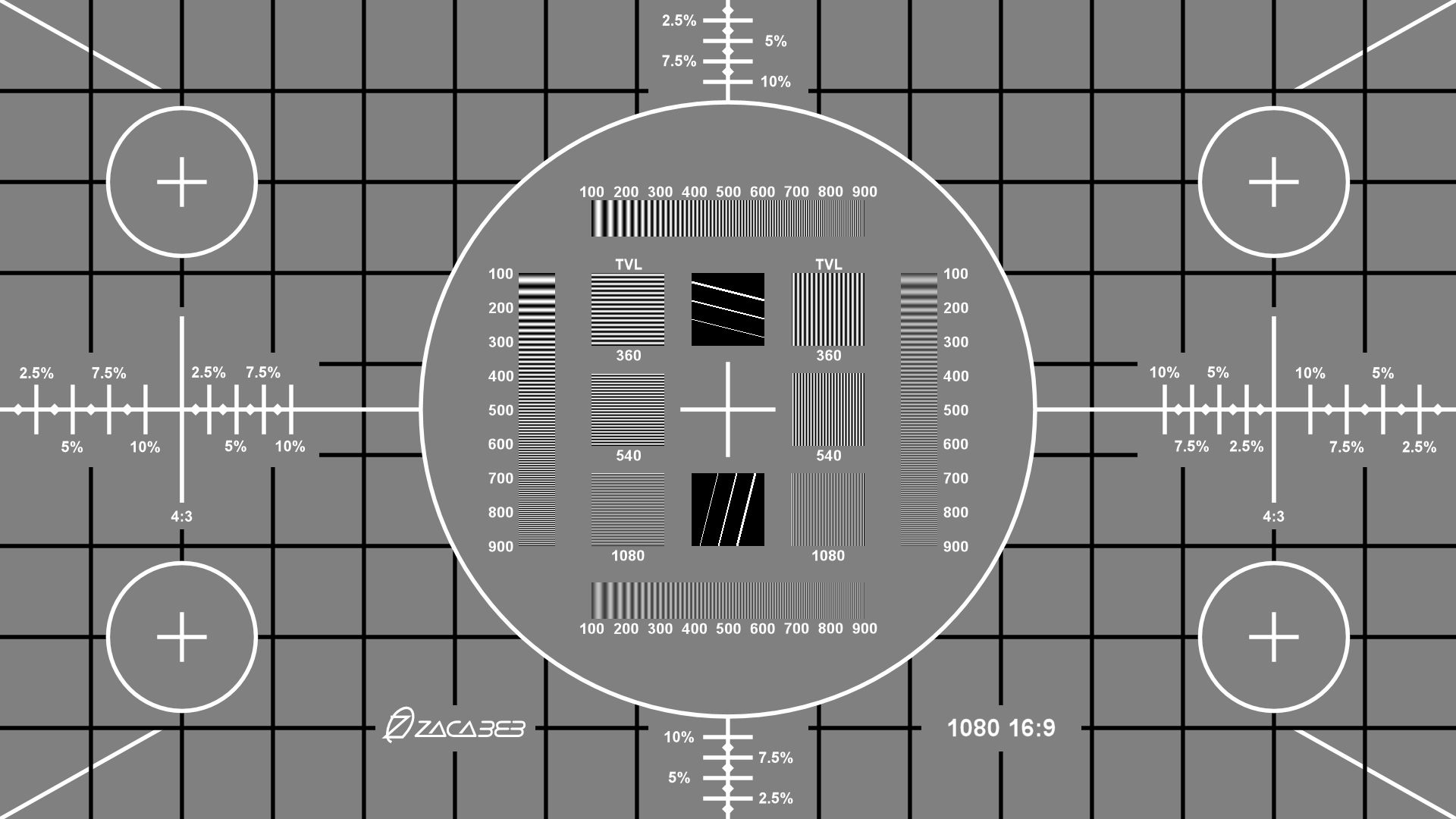
scalingchart1080tf3
A chart used to calibrate video

“May the patience and encouragement that come from God allow you to live in harmony with each other the way Christ Jesus wants.”

Romans 15:5

“Now make me completely happy! Live in harmony by showing love for each other. Be united in what you think, as if you were only one person.”

Philippians 2:2

The science and method of calibration provides us with a way to bring two, or more things into harmony.  It is done frequently on diverse things as scientific instruments, avionics, or music.  Without ‘this quest for blending’ things degrade into a symphony of confusion.

A piano is tuned, and the worship leader then tunes into that piano.    The worship team is blending simultaneous sounds of different pitch or quality, making chords. This takes practice, and a gift. This principle is enhanced when we think of several gears that mesh and turn together.  There is a certain congruity, or a symmetry that makes it successful. Beautiful music can happen only if the musicians have been calibrated with each other.

We need a calibration of our spirit with God’s Holy Spirit.  We tune in to Him.  His Word is a little bit like a tech manual, showing us, and helping us.  He helps us adjust so that we are harmoniously flowing with Him and with others. Sometimes this takes time.

Have you ever met a believer not in harmony?  I bet you have. They may have a belief that is out-of-balance.  It may be health, or sickness.  That is quite common today.  Finances are also an issue, or politics. Be very careful.

I lived in San Francisco in the 1980s with SOS Ministries.  There was a small church down in Pacifica who would drive up to ‘worship on the street’ with us.  They were incredible.  They had a sensitivity and anointing that other groups didn’t have.  They loved Jesus very much and loved each other, and it showed.

Within six months they disbanded, and went their own ways.  I was told that their meetings were essentially ‘gutted out’.  They became fanatical about the ‘anti-abortion’ message to such an extreme they didn’t even have a church service anymore.  It was now nothing more than a political rally, and they were not even reading the Word or worshiping together. They were no longer calibrated to the Spirit or the Church.  They were no longer aligned to the truth.

I have to be regularly adjusted into a harmony with the promises of God.  I need my gauges to be consistent with the Word.  Not to be ‘heavy’ on certain things. I realize that my illness causes me to be very inconsistent.  I sometimes feel like I’m God’s ‘ping-pong ball.’  I wish I was different, but the promises given are that He intends to change me.  I bet He can do this remarkable thing.

Bless you,

Bryan


Making Progress

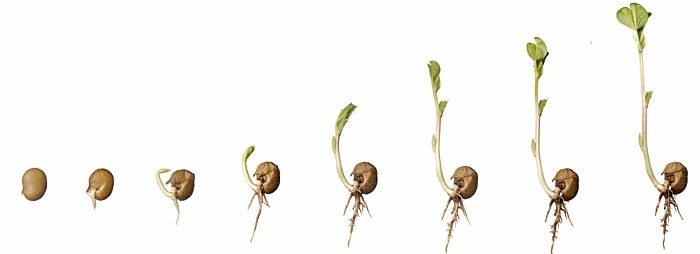
The earth produces the crops on its own. First a leaf blade pushes through, then the heads of wheat are formed, and finally the grain ripens.

Mark 4:28, NLT

This concept of physical growth is now applied by Jesus to us.  He has cultivated us, and we must insist on a maturation.  We sprout, and extend ourselves in a growth that means, ‘there is now life’ here.  Life is not mechanically rigid.  It has nothing to do with plastic, steel girders or cement.  It is emphatically not a concrete issue.  It is life!  It has a very different definition.

Jesus takes a seed, that seed splits open.  A green leaf pushes through, and it is growing!  Put into the ground, and watered, it will have life!  It is living.  This all seems easy and obvious now.  “Of course,” we say.  “I understand that.”  But when Jesus taught this (even as simple as it is) the implications were profound.  The earth seemed to shake when He declared this truth.

There was a rigidity to the spiritual world in Jesus’ day. 

This principle of life, and growth, and greenness was not at all descriptive of Pharisees.    The legalistic and cold hardness was unmoving, unrelenting and unyielding.  For many, this is a really major issue–the spiritual life was supposed to be have more organic freshness, then this.

But a living life of spiritual growth should be more than that; it was meant to be energizing and life-giving.  I remember seeing a mannequin in a mall (it was dressed in nicer clothes than I was.)  But although this display was in human form, it was definitely inanimate.  Going up to it, I tried to talk with him.  I wanted to explain things of the Spirit, but he just stood there, staring.  He was decidely devoid of real life.

Ridiculous?  Perhaps.  But having eternal life is profound.  We are like department store mannequins that have been made to really live.  And there is a growth that now takes place.  There is a supernatural, organic development–its this that should really infuse us with the life of the Spirit.  Our life is constantly and wonderfully changing, it should infuse us with a joy and elation we can’t keep a lid on.

Blessings,

Bryan

Why the Church? [Fellowship of the Saints]

fellowship-program

It is easy to become cynical and hard about the Church.

We easily see failure and defeat permeating our local churches. That is a serious problem, if we look too close, or for too long. The sins of the Church are evident and massive. It’s popular to diss the Church.

Understand this, for it’s important. Satan has a personal  vendetta against the Church. He clearly strategizes and makes tactical moves to stultify it. It is his grim effort to make the Church a non-factor in the lives of many. This is Satan’s will. The black lord desires to destroy the saints.

The question begs to be asked, “Why the Church?”

Fellowship, or in Koine Greek is “Koinonia.” It implies a common sharing of things or experiences. It is to share with others what you have. At it’s best, believers share all that is good and right with each other. However, bad things can also be shared. Yes, we have seen this!

However, to be a Christian is to be:

There is a real dependence in all of these, an attachment to something that provides nourishment to the individual and protection of the person. God has designed it so we come to Him corporately. We are all family, and that is how we must access the Father. We can do thus individually, or as a corporate body.

I don’t necessarily think the job of the church is to make people happy.

I think it’s to make them holy. And it can be the most dedicated place on this planet to accomplish this. When we belong to Him, we now have relationships given that will change us deeply, (Proverbs 27:7).

Why the Church? Because it is the source of life and community for believers. It is the way we should love each other. The Church exists for the Lord’s glory. It’s not perfect, at least not yet. But it will be some day, the Church is growing up. (Colossians 2:19.)