
Just in case you wondered, I have ‘ordered’ snow to fall on all my posts until January 2nd. I hope it isn’t a hassle. This snow is a reminder of all that God has given us. Enjoy!
Author: Pastor Bryan Lowe
A repentant rascal with definite issues, but who is seeking to be authentic in his faith to Jesus Christ.
An avid reader and a hopeful writer. Husband and father. A pastor and Bible teacher. A brain tumor survivor. Diagnosed with clinical depression, and now disabled.
Enjoys life, such as it is, in Alask.a (Actually I have it pretty good.)
Pride on Rollerskates
 Our foolish pride comes from this world, and so do our selfish desires and our desire to have everything we see. None of this comes from the Father.
1 John 2:16, CEV
You and me– We are trying very hard to escape from the evil found everywhere in this world system. Satan’s access point is our own ‘built-in’ pride. He can reach right into our hearts using that particular spot. We all have this thirst for recognition and worship (of course, with a small ‘w’). John calls this ‘foolish’. And we are fools! And yet it is so hard for us to be small.
‘Our selfish desires’ are very difficult to unplug. We have a thirst for things and we will spend a great deal of time and effort to get the ‘item of the moment’. We see something new or novel, and we must get one for ourselves. It’s like a compulsion. When we get our prize, it starts to collect dust in our closet. It rarely lives up to our lofty expectations. Funny thing, is we feel deprived if we can’t possess it. Even though the consistent pattern is to lose interest in our ‘prize’ once we have it.
‘Our desire to have everything we see’ is John’s evaluation of people in general. It’s been thousands of years, but John is timeless. He ‘zaps’ us and lifts the curtain to what is really inside our hearts. WE WANT IT ALL! Everything that ‘tickles’ our fancy, is to become ours. I want all of it! If I see it, desire it, it is mine. Step back, and think about the wickedness of this. If we ‘x-ray’ pride, do a CAT scan on it, we will discover 1 John 2:16 opened up and wiggling right there in front of us.
We must come to the place were we want to look at who we are, deep down. We can so easily avoid truth. ‘Just keep moving’, and don’t think about it. And then we run right smack dab into this solid marble pillar of 1 John 2:16. We pick ourselves up, check for broken bones, and start to wonder about this thing that can’t be eroded away. It stands, untouched through time. That stands before us as eternal truth. It causes us to come to the point of making a real decision.
Is John making sense? Is he communicating clearly? I believe he is. I have no significant reason to set aside his observations. As a matter of fact, he confirms my suspicions and gives me some intelligence and guidance on how life unfolds. This verse, all that it is contains, is the property of the Holy Spirit. It is a completely saturated ‘sponge’, that is overfilled with the presence of the Lord. I must encourage you, the reader, to look again at John. Let that book press into your very being.
What is Your Shelf Life?

There is a time for everything,
and a season for every activity under the heavens:
a time to be born and a time to die,
a time to plant and a time to uproot…
Eccl. chapter 3
They also serve who only stand and wait.– John Milton
Our spiritual lives are cyclical, or seasonal. We move in and out of seasons that take us through various experiences and different theologies and thinking. There have been times when all I could think was about ‘evangelism’. Than I went through a period when ‘teaching’ was everything. Morning, noon and night. Teach, teach, teach. I have walked through seasons of prayer; and parenthood or work issues.
There are many dozens of these spiritual excursions. Each season brings us something neat. And demanding. There will be unique concerns around each place you visit. Jesus, who is in charge of turning us into disciples, has itineraries and dossiers on each one of us. He knows the lessons we have already undertaken. He is going to teach us our next unit.
Sometimes what it is, is a lot of scariness, anxiety and work. I’ve heard it said, more then once that Jesus is more concerned with our character than our comfort. His followers have had to traverse some nasty terrain. They’ve had some ugly falls, and blisters and ‘charley horses’. He did not ‘issue’ them shoes with wings.
Let’s be honest–I am currently in a season of illness and pain. It’s funny, I have been in ministry over 20 years. I sit in this classroom and it is the hardest thing I have ever done. Remember, staring at the clock, using your secret powers in order to make the bell to ring sooner? That’s me, right now.
When we live in spiritual seasons, we are amazed how quickly they change from one to another. Very little remains the same. And, if you’re dealing with mental illness things are usually more fragmented. My Bipolar turns me into a liquid. I float over there and then over here. From moment-to-moment I can be anywhere. I am unstable. This makes things problematic, but not impossible.
This particular season I have been put on the shelf. For the most part, I’m in the dark, I’m on the bottom, pushed to the back and I wait. I know He hasn’t forgotten me. Over the years, I have observed this and I do have a general idea of ‘how it works’. But God is faithful, if not patient. That blesses me, and infuriates me, at the same time.
I came across a quote by John Milton, and it has been solace for me for months. “They also serve who only stand and wait.” I am assured that I have not escaped my Master’s heart.
Below are the lyrics from Larry Norman (and an CCM artist by the name of Honeytree). Look for them, or this song on YouTube.
I Am a Servant
I am a servant, I am listening for my name,
I sit here waiting, I’ve been looking at the game
That I’ve been playing, and I’ve been staying much the same
When you are lonely, you’re the only one to blame.I am a servant, I am waiting for the call,
I’ve been unfaithful, so I sit here in the hall.
How can you use me when I’ve never given all,
How can you choose me when you know I’d quickly fall.So you feed my soul and you make me grow,
And you let me know you love me.
And I’m worthless now, but I’ve made a vow,
I will humbly bow before thee.
O please use me, I am lonely.I am a servant getting ready for my part,
There’s been a change, a rearrangement in my heart.
At last I’m learning, there’s no returning once I start.
To live’s a privilege, to love is such an art
But I need your help to start,
O please purify my heart, I am your servant.
And I can’t say anything else. B

We Have No Control
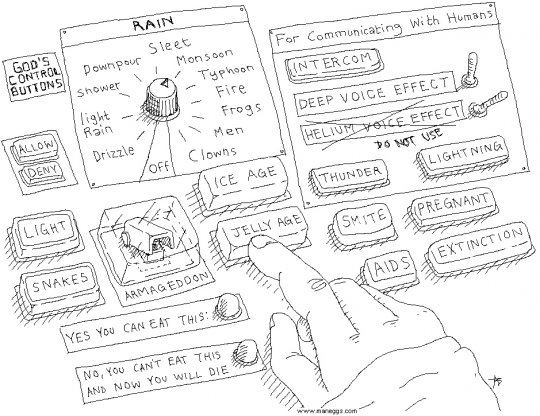
Lord, I know that a man doesn’t control his own life.
He doesn’t direct his own steps.
Jeremiah 10:23
As we step into what matters, we find this simple verse. Simply put, we have no idea about control. We step out in ignorance, we don’t understand this concept of turning one’s life over to someone else. This grates against everything we profess to understand.
There is no control. He declares Himself to be completely and utterly in charge. At this point, we must back-off and just assume that He is in charge. There has been a determination at the highest of points. We always are available to connect with Him at these levels. We simply come and ask for all mercy that has been stated.
I don’t turn anything off. I most certainly open my heart to all that is available and retrievable. I can’t dwell on anything above and beyond this. When He comes, He generates a dynamic that works its way into our hearts.
The simple fact is that we have been brought to a definite assurance of a divine life. It is freely given. We do nothing to deserve it. We advance with this concept and idea cemented into our hearts. Nothing can be offered, it has already been done so. All we can do is to absorb the kindness that has been offered and then step tentatively forward.
My trust is in His character. He comes to me and it makes perfect sense. I start connecting the dots. And it makes me understand His goodness. His love has been extended to me, and all I can do is turn to Him, and let Him in. There is nothing but His love for me that can affect me in this way.


