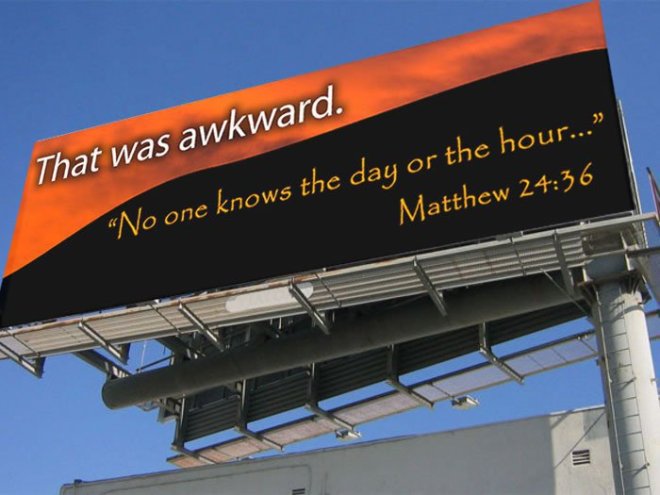
(In this essay, writer Lee Strobel offers his defense of Easter.)
It was the worst news I could get as an atheist: my agnostic wife had decided to become a Christian. Two words shot through my mind. The first was an expletive; the second was “divorce.”
I thought she was going to turn into a self-righteous holy roller. But over the following months, I was intrigued by the positive changes in her character and values. Finally, I decided to take my journalism and legal training (I was legal editor of the Chicago Tribune) and systematically investigate whether there was any credibility to Christianity.
Maybe, I figured, I could extricate her from this cult.
I quickly determined that the alleged resurrection of Jesus was the key. Anyone can claim to be divine, but if Jesus backed up his claim by returning from the dead, then that was awfully good evidence he was telling the truth.
For nearly two years, I explored the minutia of the historical data on whether Easter was myth or reality. I didn’t merely accept the New Testament at face value; I was determined only to consider facts that were well-supported historically. As my investigation unfolded, my atheism began to buckle.
Was Jesus really executed? In my opinion, the evidence is so strong that even atheist historian Gerd Lüdemann said his death by crucifixion was “indisputable.”
Was Jesus’ tomb empty? Scholar William Lane Craig points out that its location was known to Christians and non-Christians alike. So if it hadn’t been empty, it would have been impossible for a movement founded on the resurrection to have exploded into existence in the same city where Jesus had been publicly executed just a few weeks before.
Besides, even Jesus’ opponents implicitly admitted the tomb was vacant by saying that his body had been stolen. But nobody had a motive for taking the body, especially the disciples. They wouldn’t have been willing to die brutal martyrs’ deaths if they knew this was all a lie.
Did anyone see Jesus alive again? I have identified at least eight ancient sources, both inside and outside the New Testament, that in my view confirm the apostles’ conviction that they encountered the resurrected Christ. Repeatedly, these sources stood strong when I tried to discredit them.
Could these encounters have been hallucinations? No way, experts told me. Hallucinations occur in individual brains, like dreams, yet, according to the Bible, Jesus appeared to groups of people on three different occasions – including 500 at once!
Was this some other sort of vision, perhaps prompted by the apostles’ grief over their leader’s execution? This wouldn’t explain the dramatic conversion of Saul, an opponent of Christians, or James, the once-skeptical half-brother of Jesus.
Neither was primed for a vision, yet each saw the risen Jesus and later died proclaiming he had appeared to him. Besides, if these were visions, the body would still have been in the tomb.
Was the resurrection simply the recasting of ancient mythology, akin to the fanciful tales of Osiris or Mithras? If you want to see a historian laugh out loud, bring up that kind of pop-culture nonsense.
One by one, my objections evaporated. I read books by skeptics, but their counter-arguments crumbled under the weight of the historical data. No wonder atheists so often come up short in scholarly debates over the resurrection.
In the end, after I had thoroughly investigated the matter, I reached an unexpected conclusion: it would actually take more faith to maintain my atheism than to become a follower of Jesus.
And that’s why I’m now celebrating my 30th Easter as a Christian. Not because of wishful thinking, the fear of death, or the need for a psychological crutch, but because of the facts.
*******
Lee Strobel wrote “The Case for Easter: Journalist Investigates the Evidence for the Resurrection“; his first novel, “The Ambition,” releases May 17.
Please check out some really great stuff at “Speak Easy” from the WSJ. This was taken, and should be greatly acknowledged from http://blogs.wsj.com/speakeasy/2011/04/16/how-easter-killed-my-faith-in-atheism/. I discovered several interesting articles there and encourage all BB’ers to take a minute and check it all out. Go WSJ!
Lee Strobel is a “hotshot” writer/thinker/ex-atheist who has embraced an evangelical faith. In many circles he is recognized as a leader in the specifics of Apologetics. He is worth reading.
You also may checkout Wikipedia.org about the “resurrection.” The link is http://en.wikipedia.org/wiki/Resurrection_of_Jesus. (Just a fleeting thought. But it’s a bit interesting.)
Related articles
- Defending Your Faith (4simpsons.wordpress.com)
- Lent, Holy Week And (Heading For) Easter (bigcircumstance.com)
- EXTRA! EXTRA! The Tomb Was Empty. Does Jesus Lives? (footsoldiers4christ.wordpress.com)
- What is Good Friday? (faithfulprovisions.com)
- Lee Strobel interviews resurrection historian Mike Licona (winteryknight.wordpress.com)