The Future is According to God

13256_905350002810924_2670216087806383429_n

“I say this because I know what I am planning for you,” says the Lord. “I have good plans for you, not plans to hurt you. I will give you hope and a good future.

Jeremiah 29:11, NCV

“So that for all future time he could show the very great riches of his grace by being kind to us in Christ Jesus.”

Ephesians 2:7

The word “future” is defined as “all that time which is to come hereafter.” It seems that it can never be held by us in a literal sense. In trying to explain it, I have come up with this idea or concept of something that will exist or happen in time to come.

People who struggle with a mental illness  often have a problem with the idea of having a personal meaning.  I remember reading this somewhere, Depression is the inability to construct a future.”  I think  that many have issues with trying to make life work.  It seems that hopefulness has been brutally cut out of our hearts, and we think and believe that we’re lost and cursed.

It seems to me that this is one of my own problems.  Closely related are the twin issues of cruel despondency and a terrible despair.  When these two run rampant through my life it is sort of a “spiritual mugging.”  I’ve just been totally ripped off. I’ve been completely drained of hope.  I don’t anticipate life and grace, instead I have profound pain and incredible loss.  I feel terribly alone in an ugly void. My depression is all I can see. A relationship with an eternal God seems highly unlikely.

I believe that it isn’t so much me reaching out to Him— rather it is Him coming to me.

The promises God gives us are made to energize and propel us into life and meaning.  The Father completely understands me, and has purposefully given me “a future and a hope.”   I once worked out a plan to kill myself a couple years ago.  It involved duct-taping heavy weights to my ankles and jumping off the dock in the harbor.   I had reached the point of complete despair. Everything was without hope. And all I will say is that God prevented me and then gave me hope.

At times, our future is sometimes woven with predominently dark threads.  If we just look at the back side it makes no sense at all. But God works patiently and expertly, as a skilled Artisan.  We have His word that what He does will be a wonder and a marvel. And we will see an intricate and beautful work.

“Father forgive me for despairing. I know You control everything, and especially all that concerns me. Give me hope for my future.”

bry-signat (1)

cropped-christiangraffiti1.jpg


Related articles

The Micro and the Macro, by John Piper

10piper
John Piper, Pastor of Bethlehem Baptist Church, Minneapolis. Writer and Speaker, DesiringGod.org

Originally dated, July 14, 2008 | By: John Piper 

One of the reasons God rarely gives micro reasons for his painful providences, but regularly gives magnificent macro reasons, is that there are too many micro reasons for us to manage, namely, millions and millions and millions and millions and millions. God says things like:

  1. These bad things happened to you because I intend to work it together for your good (Romans 8).
  2. These happened so that you would rely more on God who raises the dead (2 Corinthians 1).
  3. This happened so that the gold and silver of your faith would be refined (1 Peter 1).
  4. This thorn is so that the power of Christ would be magnified in your weakness (2 Corinthians 12).

But we can always object that there are other easier ways for God to accomplish those things. We want to know more specifics: Why now? Why this much? Why this often? Why this way? Why these people?

The problem is, we would have to be God to grasp all that God is doing in our problems. In fact, pushing too hard for more detailed explanations from God is a kind of demand that we be God.

horseshoe-anvil-clipartThink of this, you are a blacksmith making horseshoes. You are hammering on a white hot shoe and it ricochets off and hits you in the leg and burns you. In your haste to tend to your leg you let the shoe alone unfinished. You wonder why God let this happen. You were singing a hymn and doing his will. Your helper, not knowing the horseshoe was unfinished gathered it up and put it with the others.

Later there was an invasion of your country by a hostile army with a powerful cavalry. They came through your town and demanded that you supply them with food and with shoes for their horses. You comply. Their commander has his horse shod by his own smith using the stolen horseshoes, and the unfinished shoe with the thin weak spot is put on the commander’s horse. In the decisive battle against the loyal troops defending your homeland the enemy commander is leading the final charge. The weak shoe snaps and catches on a root and causes his horse to fall. He crashes to the ground and his own soldiers, galloping at full speed, trample him to death. This causes such a confusion that the defenders are able to rout the enemy and the country is saved. Now you might say, well, it would sure help me trust God if he informed me of these events so that I would know why the horseshoe ricocheted and burned my leg. Well maybe it would help you. Maybe not.

God cannot make plain all he is doing, because there are millions and millions and millions and millions of effects of every event in your life, the good and the bad. God guides them all. They all have micro purposes and macro purposes. He cannot tell you all of them because your brain can’t hold all of them.

Trust does not demand more than God has told us. And he has given us immeasurably precious promises that he is in control of all things and only does good to his children. And he has given us a very thick book where we can read story after story after story about how he rules for the good of his people. Let’s trust him and not ask for what our brains cannot contain.

flourish1


http://www.desiringgod.org/Blog/1307_why_god_doesnt_fully_explain_pain/

Need Immediate Help? Call 1-888-NeedHim

Outside the Boundaries

boundries

As I spin through this world; I pick up many things. Some are wholesome, but many are not. I’m like a ball of soft wax, and I pick-up whatever is in my path. Some things are good, and others not so. I would love to enlighten you, but am disturbed by all the ‘garbage’ I pick-up. Not everything is good.

In my mind I remember far too much to be ‘good.’ Images of sin are part of the ball, and I can’t dislodge them on my own. Their very presence is wrong, and quite embarrassing. I’m ashamed of what you may find, and yet I know I should be transparent, at least to what I’m capable of. I suppose I am sorry, at least that is I want to be.

Darkness has a way of latching on. At least that is how it seems. It seems what has been seen, can never be unseen. These things are irrevocable and can’t be forgotten. We remember them in the ‘night hours.’ However, the grace of God is such that these dark things are remembered no more. Their evil can never cripple a mind set on the sweet things of God.

I have been damaged by the things I have seen and did. I can admit that they’re shameful and wrong. (Perhaps ‘perverted’ is a better word.) These things are dark and twisted, and far beyond the pale of what is acceptable. I learn to be foul, but deep down I wish to be good.

The Gospel comes to those outside of the boundaries, or it doesn’t come at all. It handles the heavy sin, and easily takes on the lesser. Sin seems to have a way of rubbing through what is true, and certain efforts must be applied. We are meant to soar. We were never meant to be its sin’s slaves.

 “For he has rescued us from the dominion of darkness and brought us into the kingdom of the Son he loves,”

Colossians 1:13, NIV

We ought to trust in what He can do. Sin can never bind us again. He has done something that defies the darkness, once and for all. We who once were slaves, now walk the streets as free men and women. And we dare not rely on our own reasoning on this matter.

What the Father has done exceeds our rational ability. We are completely released and then exonerated us from our sin; it no longer manhandles us the way it used to. We are now prisoners set free. It is easy to become skeptical at this point; the reality of our iniquity is immense. But He has declared us free.

 “So if the Son sets you free, you will be free indeed.”

John 8:36

We hear many things from our pulpits today. But it is imperative that we receive the word, ‘freedom.’ Freedom—

  • from our many sins,
  • from our flesh that delights in them,
  • from death that comes from our sins,
  • from the destroying influence of this world’s system,
  • to enjoy eternal life.

“You have been set free from sin and have become slaves to righteousness.” (Romans 6:18). We must be convinced that this is so, and be willing to leave the sin behind us. And this is right where believers break down; the leaving behind their favorite sin. But it must be renounced and denounced for any progress can be made. You have to say “No!” before you can say “Yes!”

God is fantastically patient with us. He waits patiently as we decide. Are we going to get sick of our sin, or not? He waits for us to decide. Will we continue in sin, or will we let it pass by?

bry-signat (1)

cropped-christiangraffiti1.jpg

Bragging Rights


battery

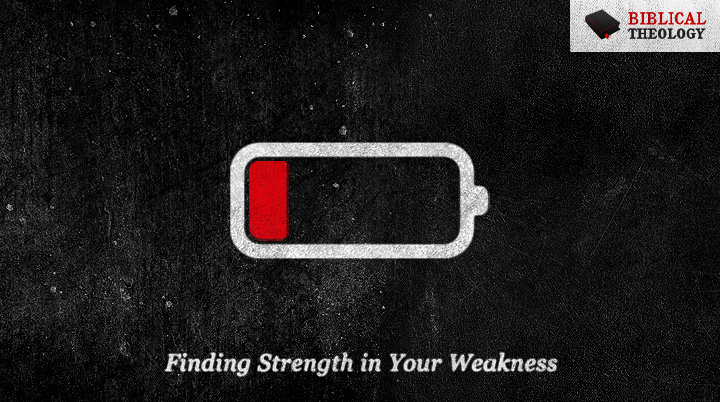
“Three times I begged the Lord to make this suffering go away. But he replied, “My kindness is all you need. My power is strongest when you are weak.” So if Christ keeps giving me his power, I will gladly brag about how weak I am.”

2 Corinthians 12:8-9

This is a very crisp idea, Paul flips things upside down and then gives it a shake.  His attention is directed at bringing clarity and understanding about these issues of pain, weakness and conflict.  There is an understanding that Paul passes on that has personally worked its way through his own heart.  Truth that has taken that pathway is very precious.

Paul shares a conversation he had with the Lord Himself.  It really does seem that this subject was a continual topic between them.  He mentions it to Jesus three different times.  This tells me,  that suffering and pain are issues where it’s hard to get resolution.  When we hurt, we want Jesus to intervene, asap.  It is a real riddle to us, “Why am not healed?”

It seems to me that Paul comes to the point over and over and its not resolved to his satisfaction.  When the Lord does bring Paul to an understanding; it is basically the whole dynamic of the Christian experience.  And it is this, when a believer is sick, or weak–it’s then the strength and power of Jesus can be accessed.  Simply put–No pain, no power.

Paul ‘begged’ for resolution, and the ultimate response was the Lord was showing him the secret for his strength was in that presence of pain.  It gave him a power and force and might that he would not have otherwise.  Now Paul had a very intense ministry.  He would deal with issues and conflicts that would shrivel up most believers.  The list is long (see 2 Corinthians 11:23-28) and painful.  But the gist of it was Paul being abused and attacked by other people, over and over.

Paul had to have an extra boost to fulfill his ministry.  He needed affliction and weakness to connect him to a  huge ‘underground river’ of grace and love that flowed under his feet unseen and unknown.  The difficulties that Paul dealt with were actually what propelled him in his ministry.

There can be no power without pain; no discipleship without some kind of ‘disability.’

Paul tells the truth, “I boast in my weaknesses.  Just tap me into His power”.  Trials are the power outlet for the believer.  When he says things like that, it is good to pay attention.  The earnestness of Paul’s language in these verses gives us a sense of what is real, and how we should trust these ideas, as we are propelled into our ministry to the Lord.

“The power of the Church is not a parade of flawless people, but of a flawless Christ who embraces our flaws. The Church is not made up of whole people, rather of the broken people who find wholeness in a Christ who was broken for us.” –Mike Yaconelli


bry-signat (1)

cropped-christiangraffiti1.jpg