“The Sheep Dip”

sheep+003

“It is not my business to judge those who are not part of the church. God will judge them. But you must judge the people who are part of the church. The Scripture says, “You must get rid of the evil person among you.” 

1 Cor. 5:12-13

a

We live in time of staggering sin.  It’s saturating everything and everybody— the world, and the Church . Our rebellion has gone viral.  We’ve been so inured and taken by it we find we just can’t imagine thinking apart from its influence.  Two generations ago things were astonishingly simple.  Todays sin has gotten superbly sophisticated— or has it?

Paul in his note to the Corinth church was compelled to point out a few things.  The culture in Corinth was like a communal ‘sheep dip’.  Everyone went through it.  It saturated everything— it soaked everyone, from head-to-toe.

This extreme atmosphere of sin pushed Paul to take a stand.  Most likely he would never had to do this.  But, the conditions demanded he respond to the sin that was raging everywhere.  And perhaps by doing this publicly, he could see people saved from feeling ‘the flames’.

The Church in 1 Cor. 5 felt that they were doing the right thing by accepting people living in continuous sin.  It seems as if their liberal hearts were opened to receive sinners of all varieties.  In their thinking, this made themselves as the Corinthian church quite remarkable, maybe even exceptional.

Paul however, will not be manipulated by human logic.  He instead presses us with him, to the good and the true.  He admits (point blank, mind you) that he has no authority over the lost, the secular, and the world.  He has nothing, ‘zilch’ to say about the way the heathen behave.  “It’s none of my business’ says Paul.  And he turns, and walks away.

We Christians, as believers however, are his business.  Paul, like a great ‘lens,’ focuses on you, and on me.  As part of the Church we are brought under its oversight and its direction.  It dictates to us now what is proper for us– acceptable, and honoring.  But the ‘worldling’, he goes free, doing whatever he desires. We however, come into a direct and sure correction of our ways.

What is your sphere of influence, and how far does it extend?  For Paul, he recognized his boundries.  And we must see ours.  The urge to intervene is very strong. We must back off.  But even though we detach from our worldly commitments, we are still to be a strong, sure light in their midst.  But we are not to be the judges of this world system. But the Church is a whole other matter.

bry-signat (1)

cropped-christiangraffiti1.jpg

*

My ‘Agape’ Jalopy

Accepting the reality of our broken, flawed lives is the beginning of spirituality not because the spiritual life will remove our flaws but because we let go of seeking perfection and, instead, seek God, the one who is present in the tangledness of our lives. ”  — Michael Yaconelli

My “Agape” Jalopy

Accepting ourselves is a lifelong process.

We talk of “accepting Christ”, but for many that really is not the problem.  When we talk about Jesus, there is such an attractiveness about him, that makes ‘hard-boiled’ agnostics stand back and grudgingly admire.  But, to accept “me”, well that takes more then just a bit of imagination.  When your depressed or anxious it just escalates the problem.

We just don’t like ourselves.  Sometimes I think that if I met me, I would think, “What a jerk! ”  Having psychiatric issues only intensifies and focalizes my sin into a horrifying mess.  I’m not just a loser, I’m a loser on steroids.  A supreme loser!  I’m certainly not the red Ferrari, I am obviously the rusty Edsel with the balloon tires and a lousy heater.

The remarkable thing though is not my spiritual unattractiveness, but God’s irrational love for me.  The New Testament writers used the word we translate “love” as “agape“.  That Greek word meant a love without any conditions, a selfless love, a love that was passionately committed to the well being of the other.  Actually, it is a love that goes out of the way to care for its enemy.  That’s the audacity of agape.

We do the mental gymnastics to try to grasp the definition.  We strain and contort but it defies comprehension.  We grab, hold it, and then it gets loose and we clutch air.

“This is how much God loved [agape] the world: He gave his Son, his one and only Son. And this is why: so that no one need be destroyed; by believing in him, anyone can have a whole and lasting life .”                                

 -John 3:16, MSG

When I tell you, “Jesus loves you”, you will probably smile politely, nod and say “I know,” and turn away.  But, once in awhile, “lightning will strike,” you will look up in stunned amazement, with tears in your eyes, and whisper, “I know”.

…………………………

Spirituality is not about being fixed; it is about God’s being present in the mess of our unfixedness.” — Michael Yaconelli, Messy Spirituality

bry-signat (1)

cropped-christiangraffiti1.jpg

Bragging Rights


battery

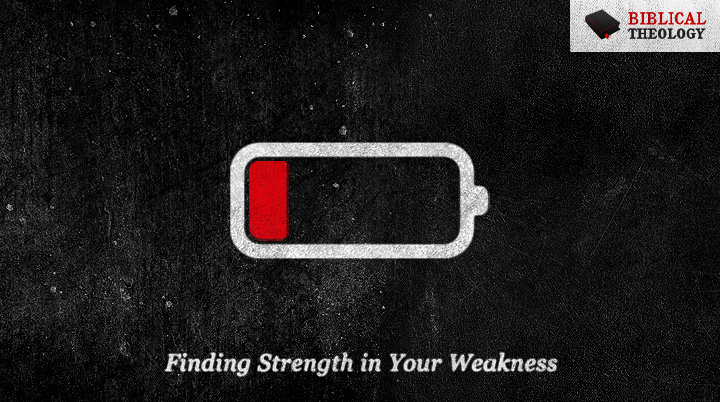
“Three times I begged the Lord to make this suffering go away. But he replied, “My kindness is all you need. My power is strongest when you are weak.” So if Christ keeps giving me his power, I will gladly brag about how weak I am.”

2 Corinthians 12:8-9

This is a very crisp idea, Paul flips things upside down and then gives it a shake.  His attention is directed at bringing clarity and understanding about these issues of pain, weakness and conflict.  There is an understanding that Paul passes on that has personally worked its way through his own heart.  Truth that has taken that pathway is very precious.

Paul shares a conversation he had with the Lord Himself.  It really does seem that this subject was a continual topic between them.  He mentions it to Jesus three different times.  This tells me,  that suffering and pain are issues where it’s hard to get resolution.  When we hurt, we want Jesus to intervene, asap.  It is a real riddle to us, “Why am not healed?”

It seems to me that Paul comes to the point over and over and its not resolved to his satisfaction.  When the Lord does bring Paul to an understanding; it is basically the whole dynamic of the Christian experience.  And it is this, when a believer is sick, or weak–it’s then the strength and power of Jesus can be accessed.  Simply put–No pain, no power.

Paul ‘begged’ for resolution, and the ultimate response was the Lord was showing him the secret for his strength was in that presence of pain.  It gave him a power and force and might that he would not have otherwise.  Now Paul had a very intense ministry.  He would deal with issues and conflicts that would shrivel up most believers.  The list is long (see 2 Corinthians 11:23-28) and painful.  But the gist of it was Paul being abused and attacked by other people, over and over.

Paul had to have an extra boost to fulfill his ministry.  He needed affliction and weakness to connect him to a  huge ‘underground river’ of grace and love that flowed under his feet unseen and unknown.  The difficulties that Paul dealt with were actually what propelled him in his ministry.

There can be no power without pain; no discipleship without some kind of ‘disability.’

Paul tells the truth, “I boast in my weaknesses.  Just tap me into His power”.  Trials are the power outlet for the believer.  When he says things like that, it is good to pay attention.  The earnestness of Paul’s language in these verses gives us a sense of what is real, and how we should trust these ideas, as we are propelled into our ministry to the Lord.

“The power of the Church is not a parade of flawless people, but of a flawless Christ who embraces our flaws. The Church is not made up of whole people, rather of the broken people who find wholeness in a Christ who was broken for us.” –Mike Yaconelli


bry-signat (1)

cropped-christiangraffiti1.jpg


Left-Handed People

Left-handed people are powerful

15 “But when the people of Israel cried out to the Lord for help, the Lord again raised up a rescuer to save them. His name was Ehud son of Gera, a left-handed man of the tribe of Benjamin. The Israelites sent Ehud to deliver their tribute money to King Eglon of Moab. 16 So Ehud made a double-edged dagger that was about a foot long, and he strapped it to his right thigh, keeping it hidden under his clothing. 17 He brought the tribute money to Eglon, who was very fat.

18 After delivering the payment, Ehud started home with those who had helped carry the tribute. 19 But when Ehud reached the stone idols near Gilgal, he turned back. He came to Eglon and said, “I have a secret message for you.”

So the king commanded his servants, “Be quiet!” and he sent them all out of the room.

20 Ehud walked over to Eglon, who was sitting alone in a cool upstairs room. And Ehud said, “I have a message from God for you!” As King Eglon rose from his seat, 21 Ehud reached with his left hand, pulled out the dagger strapped to his right thigh, and plunged it into the king’s belly. 22 The dagger went so deep that the handle disappeared beneath the king’s fat. So Ehud did not pull out the dagger, and the king’s bowels emptied. 23 Then Ehud closed and locked the doors of the room and escaped down the latrine.”

Judges 3:15-23, NLT

Moab had subjected Israel to a considerable tribute. Every Israelite was affected by this arrangement. Just imagine owing a debt that you couldn’t pay, and having to pay it anyway. The Bible (Judges 3:12–4:1) includes the story of Ehud, an Israelite judge who uses his ‘left-handedness’ in successfully assassinating an oppressive king. Moab’s dominance over Israel would last for 12 years prior to Ehud’s brave deed.

We have metal detectors in our airports. If you are carrying a weapon, the detector senses it and alerts the TSA people. You simply can’t carry a gun or a knife and pass through the security. You will be caught.

A Israelite by the name of Ehud manages to get into the King of Moab’s palace with a dagger. The king’s guards searched him as if he were a right-handed man. But Ehud is left-handed, and he manages to keep the dagger hidden. After the search he is allowed to enter the palace.

It is just a moment, and Ehud states that he is carrying a secret message for King Eglon. The king clears the room.  Ehud and the king are now alone. It is then when Ehud draws his dagger strapped to his right leg. He then (rather grotesquely) stabs Eglon and escapes the palace.

Only 10% of the world’s population is left-handed. It is kind of rare, I suppose. Studies have shown that there is a greater incidence of left-handed mathematicians, musicians, architects, and artists. Historically, most regarded left-handedness as a weakness and a deficiency. There is a suggestion that being a lefty is unlucky or evil. There are some who even avoid contact with left handed people. (The Latin for “left” is “sinister.”).

Various Thoughts on This Passage:

1) God will always respond to the cry of His people for deliverance.

2) Our innate gifts are given to us to build God’s people.

3) Our so-called “weaknesses” will often be used to advance God’s kingdom.

4) Sometimes we will have to take a stand and do what no one else will do.

This account in Judges 3 should encourage and strengthen your faith. What others consider is weakness, is often what God uses to deliver His people. I suppose that this is the reason the Holy Spirit preserved this story of Ehud the Judge.

8

bry-signat (1)

cropped-christiangraffiti1.jpg

*