It’s Sunday morning here in Alaska. We survived already this morning– DST, an earthquake, dog poop on the carpet, and snow, and it’s not even noon yet. (Can’t wait to see what the afternoon will bring.)
I had my appointment Friday, and my doctor was blown away. My Bell’s Palsy is diminished by about 70%. He was thunderstruck. And I believe God healed me!
There are some issues though. The BP is still affecting my eye, and the left side of my mouth. I have decided to continue the meds, and start to ease off of managing four blogs. The eyestrain isn’t going to help my affected eye.
I was able to open the service with a meditation from the Word last night at our main service. I managed to do this without a translator, or a sponge, so I survived.
Having so many praying for me, especially early this week during the acute stages was profound. Thanks for mobilizing and standing up for me in the Father’s presence. Thank you!
“Don’t bargain with God. Be direct. Ask for what you need. This isn’t a cat-and-mouse, hide-and-seek game we’re in. If your child asks for bread, do you trick him with sawdust? You’re at least decent to your own children. So don’t you think the God who conceived you in love will be even better?”
Matthew 7:9, 11, Message
His miracles for us often require some responsiveness on our part. He truly supplies what we need–but from day-to-day. He doesn’t just deliver a “pallet” of bread every 2 months. He simply provides what we need, day by day, contingent on us asking. If we don’t ask, he won’t provide. But his ear is very attentive to our cry for provision.
The bread provided is a gift. We are of the impression that we earn our bread, we work for it. This verse simply and profoundly says that he gives it. Bread is an issue of his grace and kindness. It is something that is given. You might say that our bread is grace in wheat form.
We must learn to trust him at this basic need. We need food on a daily level. We really should be aware of this essential need. Your supper tonight is infused with His goodness. He was the provider. Someone else may have taken certain ingredients and enhanced your dining experience, but he made the provision to your table.
The definitive issue is the “day-by-day” factor. We must learn that this is the way our Father operates. We are compelled into His daily care. Grace comes to us with a day-by-day submission. That is not a bad thing. We simply surrender our wills to our Lord. We must keep coming to him, and asking.
A day’s portion, arriving a day at a time. It is a profound deception if we believe we can move beyond this. We accrue wealth and anticipate “protection” from the vagaries of a deity we can’t see. We want safety and security that is definite and solid. We feel that if we have worked long enough, and sweated enough, then we will eat well. It is our privilege.
And we have gone the extra mile, and have developed a “doctrine” that fits our decision-making process. Theology is important to us, and we try to develop something that will cover us and soothe us, and provide a maximum amount of coverage. However being his disciple is not like buying good car insurance. But we can’t shake a deep conviction that we have “adjusted” what is real and lasting.
The Father intends that we are to be reliant on him, exclusively. But that, to be perfectly honest, frightens us. (That maybe why it is done so rarely.)
Being a believer is something quite radical. It should affect us at the deepest of levels. We must insist on a way of thinking that propels us into the place of a simple faith. Our faith in our Father will always be day-to-day. We can’t think otherwise. If we try to make it otherwise, we end up in a deep confusion. The Father has insisted that we depend on Him.
Exodus 16 is the Manna Chapter. To always rely on God daily was for many to be an issue. When they attempted to get ahead, that extra would become rotten. If I remember right, the surplus manna produced maggots.
We come to Him hungry. That is the way he insists. Our stomachs may growl, but He will always provide all that we need. Always–our hunger for a day’s provision should move us into a place of grace. You could say we have a substantial need for His grace. He will always provide for his children. And we really do trust Him. (Or do we?)
By CARONAE HOWELL, From the New York Times, dated July 20, 2009
To fly away
I’m the kind of woman who spends entire days thinking of nothing but birds: woodcocks, goldfinches, kingfishers. I look for loons everywhere I go. Sometimes I find herons in Central Park and they are mysteries. There is one thing in this world that I envy: the hollowness of bird bones. In the three milliseconds of liftoff, a bird separates itself from its problems. The sky is the freest part of the world.
I have always been depressed, and I have always wanted to fly — not to emulate Superman or to travel faster. I want to fly because of the elation. In my dreams I am a butterfly or a fairy or a honeybee. Depression, for me, is when you want to be a bird, but can’t.
There is a specific moment in which I became a woman. It was February — always the worst month with its aching light and its slip-induced bruises. I had been trying to fall asleep for at least four hours. At 3 a.m., I found myself sobbing and shaking and confused, sitting on my metal dorm bed in the bird-with-a-broken-wing position. I dug my fingernails into my forearms, leaving shell-shaped trenches behind. I have the kind of skin that refuses to heal, just stays eternally raw and mottled. It was five weeks into my fourth semester.
In late January, a freshman hanged himself in my old dorm. I found myself asking, really, how hard is it to suddenly find yourself perched on a sink, rope around your beautiful neck, ready to fly? How hard? My dad drove through four states to pick me up the next week. On the way home I had tea and ice cream. He asked me if I remembered the time he took too many of his antidepressants. I did not. Nor did I remember my uncle’s suicide (gun to the cerebrum) or my sister’s delicately sliced arms and hips. These were things I had only been told. The space between my skull and my irises hurts sometimes — hurts like the shatter of a tiny bird that has fallen midflight.
And so it was that sour February night that I took the delicate step into the adult world: realizing that I was too depressed to stay at college was realizing I had not only lost my flock; I had fallen from the air entirely. Michigan has many birds. My favorite might be the wood duck, with its banded neck and flat little wings. When I watch birds take off, I hold my breath. They always make it to the sky.
Every Monday morning at 9 I see my therapist, mug of green tea and honey close at hand. I take new pills now. I have a routine: oatmeal in the morning, Wednesday nights with my father. I tell my therapist about Toni Morrison’s “Song of Solomon.” Who isn’t searching for their people? I arrange my thoughts. (No, I have never been in love and I am, in fact, afraid of men; I panic in Times Square; I grow attached to almost everyone I meet.) I have feathers and questions.
I moved to New York City for college in 2007. School did not grow me into an adult, nor did voting for the first time or doing my own banking. These things were not confrontations. How did I arrive at the place where I could look at my disease and say, “Yes, you are here, but I will not let you take the joy out of looking for birds”? I like to think it was New York, or my newfound discipline, but it was a more internal revolution. I acknowledged my traumas: I was not crazy, just damaged. I was molting. Columbia gave me many new things: a copy of the “Iliad” with a note saying the first six books should be read before orientation, a job in the oral history office, a sense of time management.
But without my sanity — without joy — these things had little value. I knew nothing until I knew I was hardly living. Hobbes and Locke and all the philosophers in the world could not matter when each day was insurmountable and burning. In my year and a half at Columbia, I began to learn how to love myself. I tell my therapist about my earliest memories and the bizarre geography of my family. I’m anxious and I have no self-esteem. But I am mending. Fifteen lost credits is a small price to pay for happiness. Perhaps I am learning how to fly. My bones may not be hollow, and joy will never come easily, but the beauty is in the struggle. The birds are everywhere.
Caronae Howell, Columbia, class of 2011, history major
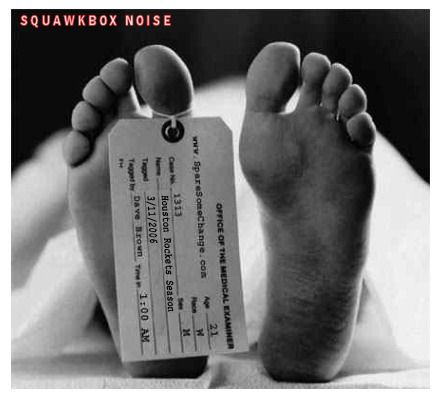
When I was a boy I was terrified of death. The very thought of being six feet deep in a small box, with maggots, rottenness and decay terrorized me. I also had an incredible fear that someone would make a
mistake and that I would wake up entombed in a buried coffin. Just thinking about it now unsettles me. It was an anxiety that required diversions. Which I suppose led me down the road of escalating drug and alcohol abuse. It undoubtedly led to much of my psychological issues that I deal with today.
Here is 2 Timothy 1:10, “Which now has been manifested through the appearing of our Savior Christ Jesus, who abolished death and brought life and immortality to light through the gospel.Scripture says that Jesus has ”abolished death”. I have learned to love that word, “abolish”! It means to nullify, eliminate or make obsolete. This is a decisive and a dramatic word which soothes my fear, and calms my mind.
It’s like he pulled the plug. Death does not operate for the believer, because he did a disconnect for us. I used to think my terror was unique to me. I felt like I couldn’t tell anyone that I had those moments alone when I would be overwhelmed by morbid thoughts of death. But Jesus destroyed the devil!
“We are people of flesh and blood. That is why Jesus became one of us. He died to destroy the devil, who had power over death. But he also died to rescue all of us who live each day in fear of dying”, Hebrews 2:14-15 NCV.
“The fear of death is ingrafted in the common nature of all men, but faith works it out of Christians.“– V. Powell. When an athlete goes into intense training he/she will develop in their muscles “lactic acid” (or for the geeks out there– 2-hydroxypropanoic acid) Lactic acid is what causes the soreness and cramps in an overworked muscle. Trainers will stretch and manipulate the athletes limbs to extract this acid. Death has infused our souls, faith works it out of us.
Fear of death is nothing to be ashamed of. Almost all of us have had those disturbing moments that seem irrational. But it’s not a question of rationality, but of faith. Do I really believe that Jesus unplugged death for me? He made the deliberate decision to change the status quo for me. It wasn’t an afterthought, but a definite act, purposeful and well thought out.
“I assure you, most solemnly I tell you, if anyone observes My teaching [lives in accordance with My message, keeps My word], he will by no means ever see and experience death.“John 8:51, Amplified.
A tremendous promise for the believer, especially the believer who is anxious about death. We are free now, free to live life in outrageous freedom! I proclaim Jesus’ promise to you, you are free!
———————————————————————————————-
These are odds and ends that would not fit in this post. I didn’t want to trash them so here you go. <3
“Christian! Death cannot hurt you! Death is your best friend – who is commissioned by Christ to summon you from the world of vanity and woe, and from a body of sin and death – to the blissful regions of glory and immortality, to meet your Lord, and to be forever with him.” –Wm. Mason
“Death is no more than passing from one room into another. But there’s a difference for me, you know. Because in that other room I shall be able to see.” —Helen Keller





 Broken Believers