Two O’ Clock in the Morning Poetry, #6


Max Ehrmann (1872-1945)
Max Ehrmann
(1872-1945)

Go placidly amid the noise and haste, and remember what peace there may be in silence. As far as possible, without surrender, be on good terms with all persons. Speak your truth quietly and clearly; and listen to others, even to the dull and ignorant; they too have their story. Avoid loud and aggressive persons; they are vexations to the spirit. If you compare yourself with others, you may become vain or bitter, for always there will be greater and lesser persons than yourself.

Enjoy your achievements as well as your plans. Keep interested in your own career, however humble, it’s a real possession in the changing fortunes of time. Exercise caution in your business affairs, for the world is full of trickery. But let this not blind you to what virtue there is; many persons strive for high ideals, and everywhere life is full of heroism. Be yourself. Especially do not feign affection. Neither be cynical about love; for in the face of all aridity and disenchantment, it is as perennial as the shamgrass. Take kindly the counsel of the years, gracefully surrendering the things of youth. Nurture strength of spirit to shield you in sudden misfortune.

But do not distress yourself with dark imaginings. Many fears are born of fatigue and loneliness. Beyond a wholesome discipline, be gentle with yourself. You are a child of the universe no less than the trees and the stars; you have a right to be here. And whether or not it is clear to you, no doubt the universe is unfolding as it should. Therefore be at peace with God, whatever you conceive him to be. And whatever your labors and aspirations, in the noisy confusion of life, keep peace in your soul. With all its sham, drudgery and broken dreams, it is still a beautiful world. Be cheerful. Strive to be happy.

–Desiderata, Max Ehrmann 1927 
n
Max Ehrmann (September 26, 1872 – September 9, 1945) was an American writer, poet, and attorney from Terre Haute, Indiana, widely known for his 1927 prose poem “Desiderata” (Latin: “things desired”). He often wrote on spiritual themes.

Ehrmann was awarded Doctor of Letters honorary degree from DePauw University in about 1937.[6] He was also elected to the Delta Tau Delta Distinguished Service Chapter, the fraternity’s highest alumni award.[3]

Max_Ehrmann_statueEhrmann died in 1945. He is buried in Highland Lawn Cemetery in Terre Haute, Indiana. In 2010 the city honored Ehrmann with a life-size bronze statue by sculptor Bill Wolfe. He is depicted sitting on a downtown bench, pen in hand, with a notebook in his lap. “Desiderata” is engraved on a plaque that resides next to the statue and lines from the poem are embedded in the walkway. The sculpture is in the collection of Art Spaces, Inc. – Wabash Valley Outdoor Sculpture Collection.[7]

Ehrmann returned to his hometown of Terre Haute, Indiana in 1898 to practice law. He was a deputy state’s attorney in Vigo County, Indiana for two years. Subsequently, he worked in his family’s meatpacking business and in the overalls manufacturing industry. At age 40, Ehrmann left the business to write. At age 54, he wrote Desiderata, which achieved fame only after his death. –from Wikipedia
n
be-gentle-with-yourself

Two O’ Clock in the Morning Poetry, #3

Collector_Trench

Middle Parts of Fortune, by Frederic Manning

“The air was alive with the rush and flutter of wings; it was ripped by screaming shells, hissing like tons of molten metal plunging suddenly into water, there was the blast and concussion of their explosion, men smashed, obliterated in sudden eruptions of earth, rent and strewn in bloody fragments, shells that were like hell-cats humped and spitting, little sounds, unpleasantly close, lie the plucking of tense strings, and something tangling his feet, tearing at his trousers and puttees as he stumbled over it, and then a face suddenly, an inconceivably distorted face, which raved and sobbed at him as he fell with it into a shell-hole.”

(Accounts of The Great War) 
R
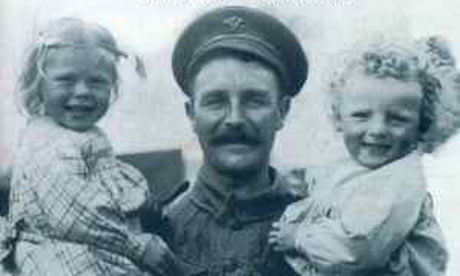
FredricmanningManning was an Australian aspiring intellectual, already in his mid-30s when he enlisted as a private soldier in 1915. His prewar existence in England was dogged by unfulfilled literary hopes and emotional confusions. He served for only a few months in France, and his military career ended in alcoholism and disgrace. But in 1929 he composed a novel, obviously autobiographical, about three soldiers’ experience of the trench nightmare, which is outstanding. Almost certainly the finest work of its kind to emerge from the war. (Penguin)
&

Manning continued to write. In 1917 he published a collection of poems under the title Ediola. This was a mixture of verse predominantly in his former style alongside war poems heavily influenced by the imagism of Pound, which deal introspectively with personal aims and ideals tempered in the crucible of battle. He contributed to anthologies, for example, The Monthly Chapbook which appeared in July 1919 edited by Harold Monro, containing twenty-three poems by writers including John Alford, Herbert Read, Walter De La Mare, Osbert Sitwell, Siegfried Sassoon, D. H. Lawrence, Edith Sitwell, Robert Nichols, Rose Macaulay and W. H. Davies alongside Manning and Aldington. He wrote for periodicals, including The Criterion, which was produced by T. S. Eliot.

&&&

Poetry did not pay, and so in 1923 Manning took a commission from his publisher John Murray to write The Life of Sir William White, a biography of the man who, as Director of Naval Construction, led the build-up of the Royal Navy in the last years of the nineteenth century. Galton had died in 1921, which not only left Manning effectively homeless, but also lacking a forceful directing influence in his life. He lived for much of the time at the Bull Hotel in Bourne, apart from a short spell when he owned a farmhouse in Surrey. At this time he was friendly with T. E. Lawrence, then serving in the Royal Air Force at RAF Cranwell, some twenty miles (a motorcycle ride) from where Manning was living. In 1926 he contributed the introduction to an edition of Epicurus’s Morals: Collected and faithfully Englished by Walter Charleton, originally published in 1656, published in a limited edition by Peter Davies. — from Wikipedia and Penguin

&

Bonus–

wwi13
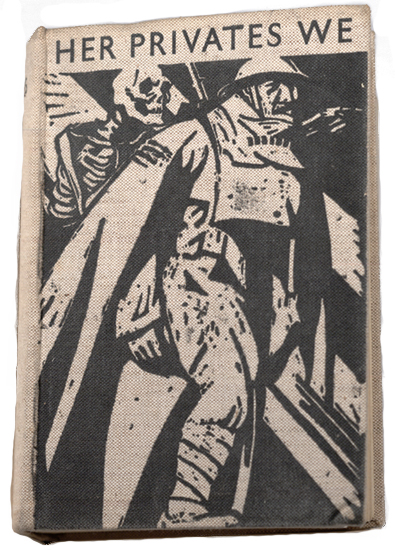
“Her Privates We” 1930, Cover art

Two O’ Clock in the Morning Poetry, #2

John-Donne-Quotes-1

“Death Be Not Proud, Holy Sonnets, no. 10 ” by John Donne

Death be not proud, though some have called thee
Mighty and dreadful, for thou art not so;
For those whom thou think’st thou dost overthrow

Die not, poor death, nor yet canst thou kill me.
From rest and sleep, which but thy pictures be,
Much pleasure, then from thee much more must flow,
And soonest our best men with thee do go,
Rest of their bones, and souls’ delivery.
Thou art slave to fate, chance, kings, and desperate men,
And dost with poison, war, and sickness dwell,
And poppy, or charms can make us sleep as well,
And better than thy stroke; why swell’st thou then?
One short sleep past, we wake eternally,
And death shall be no more; death, thou shalt die.

U

flourish-8
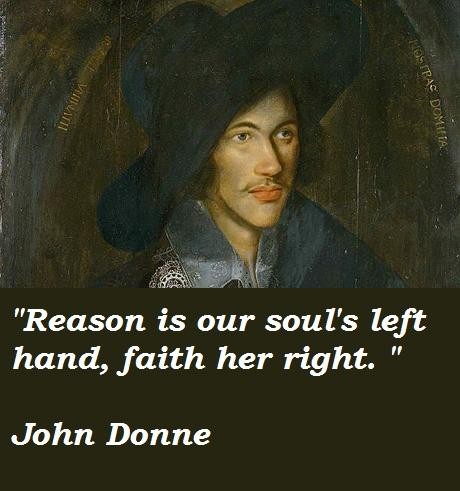
john-donneJohn Donne (/ˈdʌn/ dun) (between 24 January and 19 June 1572[1] – 31 March 1631) was an English poet, satirist, lawyer and a cleric in the Church of England. He is considered the pre-eminent representative of the metaphysical poets. His works are noted for their strong, sensual style and include sonnets, love poetry, religious poems, Latin translations, epigrams, elegies, songs, satires and sermons. His poetry is noted for its vibrancy of language and inventiveness of metaphor, especially compared to that of his contemporaries.
Donne’s style is characterised by abrupt openings and various paradoxes, ironies and dislocations. These features, along with his frequent dramatic or everyday speech rhythms, his tense syntax and his tough eloquence, were both a reaction against the smoothness of conventional Elizabethan poetry and an adaptation into English of European baroque and mannerist techniques. His early career was marked by poetry that bore immense knowledge of British society and he met that knowledge with sharp criticism.
–from Wikipedia
88
Bonus—
John+donne+famous+quotes+3

Two O’ Clock in the Morning Poetry, #1

cohen-poet
(b. 1934- )

“Anthem” by Leonard Cohen

The birds they sang
at the break of day
Start again
I heard them say
Don’t dwell on what
has passed away
or what is yet to be.
Ah the wars they will
be fought again
The holy dove
She will be caught again
bought and sold
and bought again
the dove is never free.
)(
Ring the bells that still can ring 
Forget your perfect offering 
There is a crack in everything 
That’s how the light gets in. 
^
We asked for signs
the signs were sent:
the birth betrayed
the marriage spent
Yeah the widowhood
of every government —
signs for all to see.I can’t run no more
with that lawless crowd
while the killers in high places
say their prayers out loud.
But they’ve summoned, they’ve summoned up
a thundercloud
and they’re going to hear from me.
Ring the bells that still can ring …
You can add up the parts
but you won’t have the sum
You can strike up the march,
there is no drum
Every heart, every heart
to love will come
but like a refugee.
but like a refugee.
Ring the bells that still can ring 
Forget your perfect offering 
There is a crack, a crack in everything 
That’s how the light gets in. Ring the bells that still can ring 
Forget your perfect offering 
There is a crack, a crack in everything 
That’s how the light gets in. 
That’s how the light gets in.
flourish-bird
Wikipedia says the following–
&

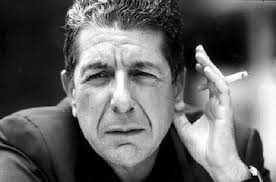
Leonard Norman Cohen, CC GOQ (born 21 September 19170px-Leonard_Cohen17b34) is a Canadian Juno Award-winning[1] singer-songwriter, musician, poet, and novelist. His work often explores religion, isolation, sexuality, and personal relationships.[2] Cohen has been inducted into the American Rock and Roll Hall of Fame and both the Canadian Music Hall of Fame and the Canadian Songwriters Hall of Fame. He is also a Companion of the Order of Canada, the nation’s highest civilian honour. In 2011, Cohen received a Prince of Asturias Award for literature.

The critic Bruce Eder wrote an assessment of Cohen’s overall career in popular music, writing, “[Cohen is] one of the most fascinating and enigmatic … singer/songwriters of the late ’60s … [and] has retained an audience across four decades of music-making … Second only to Bob Dylan (and perhaps Paul Simon) [in terms of influence], he commands the attention of critics and younger musicians more firmly than any other musical figure from the 1960s who is still working at the outset of the 21st century.”[3]

Bonus stuff–

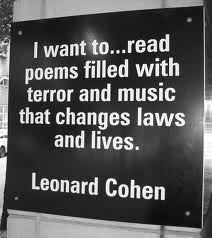
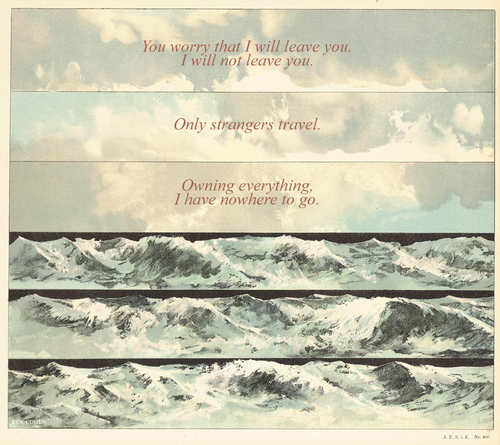
cohen-quote cohen-quote2