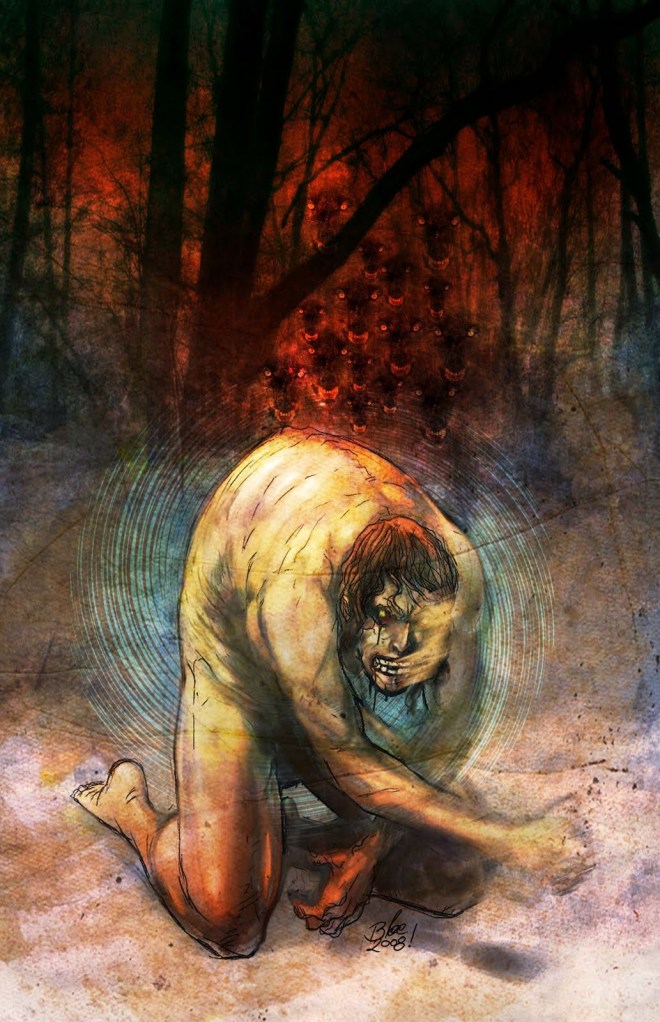
Theoretically Hackable

I encountered this particular phrase as I attempted to do a download from a reasonably effective source.  They came out and made this simple statement.  I suppose it was done for legal issues.  It was “theoretically hackable.” (That word, “theoretically” cracks me up!)  But I understand what it means.

And I started to see something.  It was a thing of some sense.  I am most vulnerable to things that are beyond my control.  I’m pretty much accessible to the many different things that could and should take me apart.  I have to tell you, that I regularly buy cheap “netbooks” with this fully in mind.  In a way they are like “Bic lighters,” I use them over and over, for 1 or 2 years, and than I ditch them.  I have gotten more than $400 out of them, and it beats the $800 plus to keep them going as they should.  It’s “Bryan’s Rule of Good Computing #87.”

“Theoretical Hacking.”  There is so much theology that gets rolled up into this phrase.  It has the idea that you can be accessible to anyone that has just a special urge to make things rough on you.  “Theoretically” speaking they can possibly walk right in and wipe you out.   It’s a bit nebulous, I’m sure, but the threat is out there, and it can happen–to the best of us.

“Hacking” is a bad word.  It carries with it a trickery, or a deceitfulness.  It most certainly is a word we avoid, as it carries with it very substantial problems.  And yet, it has a deeply theological concept.  Deception has incredible issues.  To walk out on it is thin ice.  You never, ever realize what the next step will bring us.  It really comes down to a deception.

We struggle with deception.  Kind of a theological deception.  The idea of being taken in, tricked and then destroyed.   We are so trusting.  Few of us carry the 24/7 “on guard mechanism.”  We step out without the slightest sense of betrayal.  We become “lambs” for the slaughter.

Evil is such, that we can never really factor through it completely.  It folds on itself to dimensions we could never fathom.  We can’t really approach it, because it expands things so rapidly.  It is full of deceit.  To encounter it face-to-face is destructive in itself.  We must hope in the presence of God.  He is the only one who can dismantle it.  Our trust (in the face of such evil) is in Him.

Yes, we are “hackable.” We are in a deep place of vulnerability.  But I must tell you, this is not a bad place to be.  In a theological sense we are pretty much accessible.  We have an openess that places us in front of the dark evil.  From here we have nothing to say.  We can do nothing but to believe that we are immune from the darkness.  That someone has stepped in and altered us, in a way that will prohibit us from harassment.

More info at http://en.wikipedia.org/wiki/Hacker_(computer_security)

Classic CCM Spotlight–Steve Camp

Looks like the boy’s in trouble again
Living much too close to the edge of sin
Now he finds himself where he should not have been
Oh, God, why is your peace so hard to find
And the answer to the questions that haunt my mind?
Oh, Lord, your ways are not like mineAnd it pounds like thunder within my breast
All the anger, all my humanness
And though I call you Lord, I must confess
I’m a stranger to your holiness
A stranger to your holiness

Can we really be what we were meant to be?
Jesus people, living by the Spirit, living free
My heart longs to serve, but wanders so aimlessly
Oh Lord, you deserve every part on me.

Pounds like thunder within my breast
All the anger, all my humanness
And, though I call you Lord, I must confess
I’m a stranger to your holiness
A stranger to your holiness

Hear my cry of desperation
As I see the wickedness of my ways
You alone are my salvation
And, Lord, I’ve learned this one thing to be true Is that the closer I get to you
I see I’m a stranger to your holiness

Don’t want to be no stranger

And it burns like a fire
And it pounds like thunder within my breast
All the anger, all my humanness
And, though I call you Lord, I must confess
I’m a stranger to your holiness
A stranger to your holiness

Don’t want to be no stranger, oh no
Don’t want to be no stranger
Looks like the boy’s in trouble again
Don’t stop loving the stranger

When Demons Rule People

by Julie Anne Fidler, BB Weekly Contributor

   1 They went across the lake to the region of the Gerasenes.[a] 2 When Jesus got out of the boat, a man with an impure spirit came from the tombs to meet him. 3 This man lived in the tombs, and no one could bind him anymore, not even with a chain. 4 For he had often been chained hand and foot, but he tore the chains apart and broke the irons on his feet. No one was strong enough to subdue him. 5 Night and day among the tombs and in the hills he would cry out and cut himself with stones.

 6 When he saw Jesus from a distance, he ran and fell on his knees in front of him. 7 He shouted at the top of his voice, “What do you want with me, Jesus, Son of the Most High God? In God’s name don’t torture me!” 8 For Jesus had said to him, “Come out of this man, you impure spirit!”

 9 Then Jesus asked him, “What is your name?”

   “My name is Legion,” he replied, “for we are many.” 10 And he begged Jesus again and again not to send them out of the area.

 11 A large herd of pigs was feeding on the nearby hillside. 12 The demons begged Jesus, “Send us among the pigs; allow us to go into them.” 13 He gave them permission, and the impure spirits came out and went into the pigs. The herd, about two thousand in number, rushed down the steep bank into the lake and were drowned.

 14 Those tending the pigs ran off and reported this in the town and countryside, and the people went out to see what had happened. 15 When they came to Jesus, they saw the man who had been possessed by the legion of demons, sitting there, dressed and in his right mind; and they were afraid. 16 Those who had seen it told the people what had happened to the demon-possessed man—and told about the pigs as well. 17 Then the people began to plead with Jesus to leave their region.

 18 As Jesus was getting into the boat, the man who had been demon-possessed begged to go with him. 19 Jesus did not let him, but said, “Go home to your own people and tell them how much the Lord has done for you, and how he has had mercy on you.” 20 So the man went away and began to tell in the Decapolis[b] how much Jesus had done for him. And all the people were amazed.

Mark 5:1-20

I have often wondered about this demon-possessed man. The image is striking – he was held captive by demons, and yet no earthly chains could hold him. His behavior sounds familiar to many of us who have lived in the grip of mental illness. Crying out? Cutting himself? I’ve been there. I’ve done that. Is this a story about mental illness before anyone could prescribe drugs to treat it?

I think the wording of this story is especially interesting – the Bible here refers to the demons as “impure spirits.” The King James Version refers to the demons as “unclean spirits.” It seems to indicate that Satan is much more than horns and a pointy tail. “Unclean” and “impure” could mean so many things.

The first time someone suggested I might be dealing with some form of demonic oppression in my life I thought they were crazy. Horror films have made us believe that people who “have demons” always kill people with their minds or cause things to catch on fire by pure will. The Bible includes some scary images of demons, but Satan does his best work by being subtle. It’s a lot harder to believe in demons if they’re not spitting blood directly in your face.

Satan uses daily life against us. He uses our professional struggles to make us think we’re unworthy of success; he uses our financial problems to make us believe we’re not as good as other people; he uses our painful pasts to make us buy the lie that we will never be able to overcome who we used to be.

Mental illness alters the way we see ourselves and the world around us. It makes everything seem dark even though there is reason to rejoice. It robs us of stability and even the ability to reason. I truly believe that mental illness is the enemy’s way of fighting against everything that Jesus really wants us to be. What could be more impure or unclean than that?

The King James Version of verse 20 uses the word “publish” instead of “tell”. The man began to publish in the Decapolis how much Jesus had done for him. I can relate to the demon-oppressed man’s pain but I can also relate to his healing. Jesus might drive all of my demons into the bodies of pigs someday, but for now He has quieted my unquiet mind with the right medications, counseling, and a support system. I rejoice in that, and I publish how much Jesus has done for me.

That’s how we can kick the devil back – by being thankful that help is available. I am thankful that Jesus Christ has quieted the stormy seas in my soul. I know that Satan wants to use mental illness against me, and knowing your opponent is half the battle.

Get grounded in the truth, draw close to God, and let Him cleanse the impure and unclean things that have kept you bound but crying out for so long.

Julie Anne Fidler is a contributing writer for Brokenbelievers.com.  She comes with a humble and understanding heart for those with a mental illness.  Her writing gift is valued greatly.  Look for her post weekly, on this blog.   She keeps a personal ministry blog at www.mymentalhealthday.blogspot.com.  Read more there.

Understanding Suicide

Getting a Grip on Suicide

"Suicide" by Manet, 1877

 Can a Christian believer attempt suicide?  My own first-hand experience rings out a resounding YES!  We can be so driven by major depression that it effects our relationship with the God who loves us and pushes us into a place of complete hopelessness. Very often, it is an attack by evil upon our lives.

 Suicide is not a mental illness in itself, but a serious potential consequence of many mental disorders, particularly major depression.

Who is most likely to commit suicide? Suicide rates are highest in teens, young adults, and the elderly. People over the age of 65 have the highest rate of suicide. Although women are more likely to attempt suicide, men are more likely to be successful.

 Suicide risk also is higher in the following groups:

•Older people who have lost a spouse through death or divorce  

•People who have attempted suicide in the past

•People with a family history of suicide

•People with a friend or co-worker who committed suicide

•People with a history of physical, emotional, or sexual abuse

•People who are unmarried, unskilled, or unemployed

•People with long-term pain, or a disabling or terminal illness

•People who are prone to violent or impulsive behavior

•People who have recently been released from a psychiatric hospitalization (This often is a very frightening period of transition.)

•People in certain professions, such as police officers and health care providers who work with terminally ill patients

•People with substance abuse problems

What are the warning signs for suicide? Following are some of the possible warning signs that a person may be at risk for suicide:

•Excessive sadness or moodiness — Long-lasting sadness and mood swings can be symptoms of depression, a major risk factor for suicide.

 •Sudden calmness — Suddenly becoming calm after a period of depression or moodiness can be a sign that the person has made a decision to end his or her life.

  •Withdrawal — Choosing to be alone and avoiding friends or social activities also are possible symptoms of depression. This includes the loss of interest or pleasure in activities the person previously enjoyed.

 •Changes in personality and/or appearance — A person who is considering suicide might exhibit a change in attitude or behavior, such as speaking or moving with unusual speed or slowness. In addition, the person might suddenly become less concerned about his or her personal appearance.  

•Dangerous or self-harmful behavior — Potentially dangerous behavior, such as reckless driving, engaging in unsafe sex, and increased use of drugs and/or alcohol might indicate that the person no longer values his or her life.

•Recent trauma or life crisis — A major life crises might trigger a suicide attempt. Crises include the death of a loved one or pet, divorce or break-up of a relationship, diagnosis of a major illness, loss of a job, or serious financial problems.  

•Making preparations — Often, a person considering suicide will begin to put his or her personal business in order. This might include visiting friends and family members, giving away personal possessions, making a will, and cleaning up his or her room or home. Some people will write a note before committing suicide.

 •Threatening suicide — Not everyone who is considering suicide will say so, and not everyone who threatens suicide will follow through with it. However, every threat of suicide should be taken seriously.

Can suicide be prevented? Definitely. In many cases suicide can be averted. Research suggests that the best way to prevent suicide is to know the risk factors, be alert to the signs of depression and other mental disorders, recognize the warning signs for suicide, and intervene before the person can complete the process of self-destruction.

Praying for and listening to the afflicted should be something we practice.  The despair of the suicidal is intense, but it gets dangerous when that despair turns into resignation and calmness (without a resolution).