Dancing With Bruises

ballerina stretching
Photo by Beto Franklin on Pexels.com

It seems like bruises are part of our life.

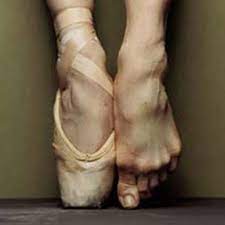
Dancers are some of the most talented people I know. Their gracefulness can be seen both on and off the stage. A dancer’s training is far from easy. But by choosing to become dancers they have made a decision to absorb pain.

Their toes and feet are blistered and bruised; they take constant abuse. Some live with chronic tendonitis. Their feet bleed sometimes, and pain is their constant companion, but they still choose to dance.

Two things to consider.

  • They choose to dance. Dancers must operate with an iron will and an elegant grace. I suppose that is why they can dance the way they do. They have painfully blended the two.
  • The scars and bruises often become “badges of honor.” They would rather dance in pain, than not dance at all.

I once heard someone describe depression as having a mental bruise. I understand this. It makes sense.

As one prone to depression, I know what it is like to bury myself in my bed for weeks at a time. My own mental bruise was simply more than I could take. There was a sensation of sinking into blackness, a sense of total and complete despair. I felt lost and completely alone.

I prayed. I groaned, and I prayed again. Things weren’t going well.

dancer-feet

My sense of being totally lost in sad, dark thoughts was beyond comprehension. Dear reader, this was something quite real, and you must become aware of these things. Some of your friends are suffering, and it is often a hellish and desperate depression.

We would never say that diabetics are that way because of the enemy. The dark one will surely exploit it, but I think you give him far too much credit if you suggest he was able to initiate it. I don’t think Satan has the spiritual “voltage.”

I refuse to hide my mental bruises from those who share my pain. I will make the choice to dance. I’m bruised, but I will try to ignore the pain. I would exult in my God, walk in His love, and “leaping with joy like calves let out to pasture” (Malachi 4:2.)

“A bruised reed he will not break, and a smoldering wick he will not snuff out, till he has brought justice through to victory.”

Isaiah 42:3

The great pastor/evangelist Charles Spurgeon once spoke about his own personal battle with depression. Read this quote slowly and deeply:

 “I find myself frequently depressed – perhaps more so than any other person here. And I find no better cure for that depression than to trust in the Lord with all my heart, and seek to realize afresh the power of the peace-speaking blood of Jesus, and His infinite love in dying upon the cross to put away all my transgressions.”

Charles Spurgeon

Trying to Find a Sound Mind

“For God has not given us a spirit of fear, but of power and of love and of a sound mind.

2 Timothy 1:7

When you’re profoundly depressed issues like taking a hot shower and eating something seem impossible. I’m embarrassed to say I once went 34 days with a shower. I laid in bed pretty much unable to function. I lost 60 lbs.

I suppose that is the insidious truth about chronic depression, I know it well. God seems far, far away. Life doesn’t matter anymore. I am way beyond ‘salvageable.’ I obviously don’t say it, but I feel deep-down like I’m destined for God’s scrap yard of failed souls.

Just a word here about Satan’s battle for our soul.

He’s a boxer who almost always attacks our vulnerabilities and weaknesses. He finds an open cut, and pounds it over and over.


He is evil far beyond human comprehension. His schemes and plots are his attempt to destroy me and to extend his darkness.

Scripture tells us that the devil is conquered. Using God’s weapons (Ephesians 6:10-18) we can protect ourselves from his evil intentions. But that war is still demanding and it’s a real challenge at times. Especially for us.

But yet there is much I can do.

Yes, it’s true–life does seem impossible at times. Depression, if not confronted biblically, will slowly devour us. It deceives and cripples. There is nothing quite like it; some people tell you it will pass, and that you’ll see the sun again, but they don’t get it. Sometimes it seems to be the worst advice ever given.

Please understand that afflicted souls are special to God.

And that alone truly comforts me. It seems like there is an invisible tether that holds from completely dropping off the edge. When I pray–it is often desperate and brief. (More like a quiet scream for help.) There are no frills and no eloquence, but I know I’m being heard by Him who guards my soul.

People, for the most part, don’t always understand and are of little help. I must admit that my own attitude about this can be less than stellar. I want to shout, “unless you have been lost in this particular section of hell yourself, perhaps it’s best if you just shut up.” (I don’t really say this mind you, but I’m terribly tempted to.)

Try to speak honestly to the Lord as often as you can.

Learn to listen to His voice. I read the Psalms–they give me a spiritual ears so that I can hear Him. I find a voice that can speak to God. Reading the Psalms imparts things that I desperately need.

That “sound mind” promised in 2 Timothy 1:7 needs to be believed. You must activate it by faith. Even a faith that falters and is weak. But like a shield, you need to lift it up to defend yourself.

  John Henry Newman

Becoming a Steward of Your Pain

Some time ago I read a story that connected. A visiting speaker stood in front of a congregation and shared a painful incident from his childhood. He wanted to bring healing. After he spoke, an elder came up and spoke to him–

“You have learned how to become a proper steward of your pain.”

The visiting speaker was profoundly touched by this. Something came together in his heart and soul. Yes, he did learn how to deal with those ugly things from his past. And yes, he was starting to become a proper steward of his pain.

The word for steward in the original Greek is oikonomos. It literally means “a keeper of a home.” It describes a manager, or a superintendent to whom the head of the house or proprietor has entrusted the management of his affairs.

Managing these awful things for the Kingdom of God is now our ministry.

No question about it, we live in a world of darkness. Each of us has been touched by hard things. Scars are part of our lives. When we come to Christ they come with us. All of these grim things are a real piece of us; we have been hurt, or we’ve wounded others by our sinfulness.

Are you a good steward of who you are? Maybe it’s a trauma, a physical, sexual, or perhaps a mental illness. It’s a scar you carry from your past, and no one is immune from them it seems.

I believe that you’ll find freedom if you can use these things for Him and his Kingdom.

We must see and understand that Jesus has taken everything and fully redeems it all for His glory.

He understands us fully–our past, present, and future. He ‘knows’ us–the real and hidden us. The challenge is to take these sad events to the throne. He alone can heal and then use that which has devastated us. He uses our pain to touch others deeply.

But Jesus intervenes to save. As we grow to accept this, the Holy Spirit comes as our comforter and guide. He starts to teach us true redemption, and the incredible healing that takes place inside us.

It really is his work, not ours. It’s then we finally understand. It’s then we become the broken healers that God can finally use.

And it’s then we can finally say: “The light has truly overcome the dark.

Becoming a steward of our pain is His doing. We’re able to touch others with these things that cripple and destroy. He has made us “managers” of these things, and we are taught to teach others, declaring that God has completely saved us. He works miracles!

“Therefore, if anyone is in Christ, he is a new creation; the old has passed away, and see, the new has come!”

2 Corinthians 5:17

We’ll meet those who are waiting to hear our story. They’re walking through terrible pain and they don’t know what to do.

We’re being transformed into authentic witnesses. Yes, at times these awful things still hurt, and I suppose that’s to be expected. But we’re learning to manage them. We’ve become real-life stewards of our pain.

To every believer still struggling about the sin of the past or sickness of the present–keep turning it over to Him. He will make it into something quite wonderful.

Welcome to Schizophrenia

Do you know someone who seems like he or she has “lost touch” with reality? Does this person talk about “hearing voices” no one else can? Does he or she see or feel things that others can’t? Does this person believe things that aren’t true?

Sometimes people with these symptoms have schizophrenia, a serious illness.

What is schizophrenia?

Schizophrenia is a serious brain illness. Many people with schizophrenia are disabled by their symptoms.

People with schizophrenia may hear voices other people don’t hear. They may think other people are trying to hurt them–we call this paranoia. Sometimes they don’t make any sense when they talk. The disorder makes it hard for them to keep a job or take care of themselves.

Who gets schizophrenia?

Anyone can develop schizophrenia. It affects men and women equally in all ethnic groups. Teens can also develop schizophrenia. In rare cases, children have the illness too.

When does it start?

Symptoms of schizophrenia usually start between ages 16 and 30. Men often develop symptoms at a younger age than women. People usually do not get schizophrenia after age 45.


What causes schizophrenia?

Several factors may contribute to schizophrenia, including:

  • Genes, because the illness runs in families
  • The environment, such as viruses and nutrition problems before birth
  • Different brain structure and brain chemistry.

Scientists have learned a lot about schizophrenia. They are identifying genes and parts of the brain that may play a role in the illness. Some experts think the illness begins before birth but doesn’t show up until years later. With more study, researchers may be able to predict who will develop schizophrenia.

What are the symptoms of schizophrenia?

Schizophrenia symptoms range from mild to severe. There are three main types of symptoms.

Positive symptoms refer to a distortion of a person’s normal thinking and functioning.

They are “psychotic” behaviors. People with these symptoms are sometimes unable to tell what’s real from what is imagined. Positive symptoms include:
  • Hallucinations: when a person sees, hears, smells, or feels things that no one else can. “Hearing voices” is common for people with schizophrenia. People who hear voices may hear them for a long time before family or friends notice a problem.
  • Delusions: when a person believes things that are not true. For example, a person may believe that people on the radio and television are talking directly to him or her. Sometimes people believe that they are in danger-that other people are trying to hurt them.
  • Thought disorders: ways of thinking that are not usual or helpful. People with thought disorders may have trouble organizing their thoughts. Sometimes a person will stop talking in the middle of a thought. And some people make up words that have no meaning.
  • Movement disorders: may appear as agitated body movements. A person with a movement disorder may repeat certain motions over and over. In the other extreme, a person may stop moving or talking for a while, a rare condition called “catatonia.”

Negative symptoms refer to difficulty showing emotions or functioning normally.

When a person with schizophrenia has negative symptoms, it may look like depression. People with negative symptoms may:
  • Talk in a dull voice
  • Show no facial expression, like a smile or frown
  • Have trouble having fun
  • Have trouble planning and sticking with an activity, like grocery shopping
  • Talk very little to other people, even when they need to.

Cognitive symptoms are not easy to see, but they can make it hard for people to have a job or take care of themselves.

Cognitive symptoms include:
  • Trouble using information to make decisions
  • Problems using information immediately after learning it
  • Trouble paying attention.

Helpful Links for Further Thought

The Mayo Clinic: Good, solid and trustworthy, a great introduction.

WebMd: Early Signs to look for.

World Health Organization: More advanced, but still accessible and understandable.