Welcome to Schizophrenia

Do you know someone who seems like he or she has “lost touch” with reality? Does this person talk about “hearing voices” no one else can? Does he or she see or feel things that others can’t? Does this person believe things that aren’t true?

Sometimes people with these symptoms have schizophrenia, a serious illness.

What is schizophrenia?

Schizophrenia is a serious brain illness. Many people with schizophrenia are disabled by their symptoms.

People with schizophrenia may hear voices other people don’t hear. They may think other people are trying to hurt them–we call this paranoia. Sometimes they don’t make any sense when they talk. The disorder makes it hard for them to keep a job or take care of themselves.

Who gets schizophrenia?

Anyone can develop schizophrenia. It affects men and women equally in all ethnic groups. Teens can also develop schizophrenia. In rare cases, children have the illness too.

When does it start?

Symptoms of schizophrenia usually start between ages 16 and 30. Men often develop symptoms at a younger age than women. People usually do not get schizophrenia after age 45.


What causes schizophrenia?

Several factors may contribute to schizophrenia, including:

  • Genes, because the illness runs in families
  • The environment, such as viruses and nutrition problems before birth
  • Different brain structure and brain chemistry.

Scientists have learned a lot about schizophrenia. They are identifying genes and parts of the brain that may play a role in the illness. Some experts think the illness begins before birth but doesn’t show up until years later. With more study, researchers may be able to predict who will develop schizophrenia.

What are the symptoms of schizophrenia?

Schizophrenia symptoms range from mild to severe. There are three main types of symptoms.

Positive symptoms refer to a distortion of a person’s normal thinking and functioning.

They are “psychotic” behaviors. People with these symptoms are sometimes unable to tell what’s real from what is imagined. Positive symptoms include:
  • Hallucinations: when a person sees, hears, smells, or feels things that no one else can. “Hearing voices” is common for people with schizophrenia. People who hear voices may hear them for a long time before family or friends notice a problem.
  • Delusions: when a person believes things that are not true. For example, a person may believe that people on the radio and television are talking directly to him or her. Sometimes people believe that they are in danger-that other people are trying to hurt them.
  • Thought disorders: ways of thinking that are not usual or helpful. People with thought disorders may have trouble organizing their thoughts. Sometimes a person will stop talking in the middle of a thought. And some people make up words that have no meaning.
  • Movement disorders: may appear as agitated body movements. A person with a movement disorder may repeat certain motions over and over. In the other extreme, a person may stop moving or talking for a while, a rare condition called “catatonia.”

Negative symptoms refer to difficulty showing emotions or functioning normally.

When a person with schizophrenia has negative symptoms, it may look like depression. People with negative symptoms may:
  • Talk in a dull voice
  • Show no facial expression, like a smile or frown
  • Have trouble having fun
  • Have trouble planning and sticking with an activity, like grocery shopping
  • Talk very little to other people, even when they need to.

Cognitive symptoms are not easy to see, but they can make it hard for people to have a job or take care of themselves.

Cognitive symptoms include:
  • Trouble using information to make decisions
  • Problems using information immediately after learning it
  • Trouble paying attention.

Helpful Links for Further Thought

The Mayo Clinic: Good, solid and trustworthy, a great introduction.

WebMd: Early Signs to look for.

World Health Organization: More advanced, but still accessible and understandable.


When There’s No Exit: Psalm 88

  Lord, God of my salvation,
    I cry out day and night before you.
Let my prayer come before you;
    incline your ear to my cry!
For my soul is full of troubles,
    and my life draws near to Sheol.
I am counted among those who go down to the pit;
    I am a man who has no strength,
like one set loose among the dead,
    like the slain that lie in the grave,
like those whom you remember no more,
    for they are cut off from your hand.
You have put me in the depths of the pit,
    in the regions dark and deep.

Psalm 88:1-6, ESV

I definitely needed this Psalm today. Yesterday I went to the doctor and was blindsided by news that really isn’t good, at all.  Of course, I also have this ongoing struggle with depression.  Today I feel like I’m running a marathon with ‘leg weights’ on. 

This particular Psalm is radically different than the others. 

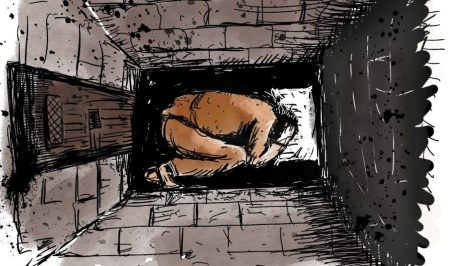
This Psalm has no kind words, and no praise to God for deliverance.  It is a singularly sad song.  Imagine if you will, a huge stone fortress in the mountains.  Every room has a door, and every room a window.  All except one.  No light enters this room.  There is no entrance or exit, no way to get free.  Psalm 88 describes living that torturous experience.

I like my Psalms to be strengthening or encouraging. 

But then comes this one!  Life unravels and frays.  Everything gets confusing. Life comes apart.  The thought of being one who is irretrievably lost and damned, it saturates my thinking.  The despair is beyond belief, I have no words to describe its special variety of darkness. 

Anyone who has walked into this hell will understand.

Am I ‘less’ a Christian because of this vicious despair?  Some would say so.  The writer in verse 1-2, calls out to God.  (I guess this what you are supposed to do).  There is a sense of consistency in his cry.  In verses 3-5, we see him evaluating his position.  Again, there is a underground current of despair. 

There is simply no help, no deliverance for him.

It’s a bitter and painful place to be.  There are no explanations why life has gotten so nasty and bitter and out-of-control.  But one thing that Psalm 88 does quite well, it strips you of any dignity that you have left. 

(Does this make any sense at all?)

There is so much embedded in the book of Psalms.  Comfort, faith, victory and hope are what we find. But in Ps. 88, we find a black pearl, the only one of its kind.  Somehow, we dare not leave it behind, just because we don’t understand it. 

I’m convinced that it has tremendous power to the disciple who is in endless pain.  Just vocalizing this Psalm does something to us.  These real words help.  This Psalm is ours. 

God has provided it for us.


Thinking Without My “Tin Foil Hat”

As we think of mental illness an immediate question arises:  what is “serious” mental illness, and how is it different from the normal issues that are part of everyday life?

Wearing a tin-foil hat is the delusion that those who wear them are some how protected from space rays or conspiracy theories. Crazy, I know. But some believers approach mental illness in this way.
Brother and sister, we’re called to think biblically. Ephesians 6:17 tells us that the “helmet of salvation” is the only head gear we’re called to wear. It tells us that the ‘warriors’ protection is God’s salvation. We are protected by a helmet of truth.
We must educate ourselves, through our community, and knowledgeable Christian leadership, to serve the broken that are in our midst.  This figure includes a wide variety of disorders, these stats are compelling:
  • Severe mental illnesses affect 5.4 percent of adults,
  • Some 22 to 23 percent of the U.S. adult population—or 44 million people-“have diagnosable mental disorders”
  • Such statistics only begin to capture the level of pain many of our fellow believers endure daily.

 One person wrote of the broad reach of mental illness:

“I have a thousand faces, and I am found in all races. Sometimes rich, sometimes poor, sometimes young, sometimes old. I am a person with the disabling pain of a broken brain.”

We must find an acceptable form of understanding about mental illness if we are going to find our way to those who are quite frankly, very definitely lost.

Both Scripture and eldership, (healthy counseling), should be an active component to recovery. The sacrifical sacrifice of Jesus, through His blood must be taught again to the afflicted. Mental disease needs to be as understood in the same context as a physical one (e.g. diabeties or cancer).

Discernment must be sought as the whole person often needs to be taught. Issues like guilt, unforgiveness and pride are a big part of seeing people set free. Issues of past trauma like sexual and phyical abuse are factors as well.

 Your support of Brokenbelievers.com through your prayers and encouragement goes a long way. Linda and I need your help in this. We both need wisdom and a gentle hand on our lives. As we reach out, a ‘tinfoil hat’ is definitely not part of our acceptable head gear. 

The Father’s love embraces the torn and wounded consistently. This is the key to the healing of a broken heart.

Was Jesus Mentally Disturbed?


“When his family heard about this, they went to take charge of him, for they said, “He is out of his mind.”

Mark 3:21, NIV

Even our Lord’s own family did not believe Him.  I can see them gathering out of concern, not only for concern for Jesus, but for the family name– perhaps they felt a need even to protect themselves?  They talked at length, and decided on an intervention, to take custodial care– as families must do at these difficult times.

Jesus had been saying things, disturbing things. 

He had resolutely confronted the religious system, and then rebuked King Herod and the civil government.  He was living on an edge, and the sense that His family had was that He had become mentally unhinged.  He had been cavorting with decidedly irreligious and wicked people.  He lived in constant bedlam, with people mobbing Him for healing.

His teaching seemed extremely radical, almost absurd. His “parables” contained bizarre ideas. And the massive crowds actually would chase Him, trying to anticipate His next move. He was essentially a celebrity –  a “rock star.” I suppose we have no idea, of His appeal to the masses.

We have some choices that must be made. What do we make of Jesus? Is Jesus Christ:

  • Legend
  • Lunatic
  • Liar
  • Lord and GOD?

In his famous book Mere Christianity, C.S. Lewis makes this statement,

“A man who was merely a man and said the sort of things Jesus said would not be a great moral teacher. He would either be a lunatic–on the level with a man who says he is a poached egg–or he would be the devil of hell.”

“You must take your choice. Either this was, and is, the Son of God, or else a madman or something worse. You can shut him up for a fool or you can fall at his feet and call him Lord and God. But let us not come with any patronizing nonsense about his being a great human teacher. He has not left that open to us.”

The accusation has often been the case for His followers. Some of Paul’s friends thought he was crazy when he went blazing over land and sea to carry the gospel to every city. But his answer was, “No, I am not crazy; the love of Christ controls me” (2 Cor. 5:14). 

This was a good kind of crazy. 

He was being used by Jesus to continue the ministry that Jesus had started– the establishment of the Kingdom of God. 

I believe it is a far deeper insanity, that seals up the truth and the light and keeps it away from unbelievers.  It is crazy to know total forgiveness and unconditional love, and then to avoid opportunities to share that same love. Now, that is crazy!

Our fear of being ostracized and mocked is an intense experience. Peer pressure is not just something our teens go through. We are always in danger of being molded into the world’s image.

Who are we? 

Our Lord and Master was vilified, He was falsely accused of insanity.  But perhaps, it is the other way around.  Perhaps it is this world, and its bondages and sicknesses that is ill.  

You must decide.

Please see this link: “Who is Jesus Really?”