Grief Sucks but God Restores Hope

It’s been 15 days since I got the news. My sister Suz passed away at 4:00 a.m. on a Thursday morning.

I hate that phrase, “passed away.” It makes it sound like she floated off in a gondola across the sea.

She died. Why do we shroud death in such wishy-washy language?

I never went to visit her before she died. I had plans to visit Memorial Day weekend. But that was a week too late. I really need to stop planning to visit loved ones who are sick and just do it.

The cards and condolences all give me permission to grieve this terrible loss. But I’m scared to let myself grieve. I can’t think about this loss of my oldest sister without remembering the loss of our sister Peggy (who also died on a Thursday), and Daddy before her, and Mom before him. The grief seems too much to bear.

Grieving is doubly difficult when every impulse to let tears fall feels like teetering on the rim of the pit of depression. What if I let the grief run free and it drags me into that hell I haven’t really known in over 20 years? I remember that place of desperation all too well and I refuse to go back there.

It’s not that I haven’t cried about her being gone. I definitely have, but it terrifies me when I do. And why do the tears keep coming back once they’ve been cried? How do I grieve but continue to live? 

I know this deep sadness is different from major clinical depression. I know the reason for these tears. When my depression was at its worst I had no idea why I couldn’t stop crying. The incessant tears served no discernible purpose. But the head knowledge that my tears of late do have a purpose—the loss of someone I dearly love—doesn’t alleviate the fear that they may drag me into another bout of depression.

The other day I queued up a few Chris Stapleton songs on YouTube while I worked on a relatively mindless project. I fondly reminisced about when she bought us tickets to see him at a small venue in Portland. Then a song came on that I hadn’t heard him sing before called “Drink a Beer.” The next thing I know I’m bawling and my heart feels like it’s breaking into a million little pieces and being compressed in a vise all at once.

Today, as every day for the last two weeks, the hard cider in the fridge calls to me. I usually wait until after work to have one. But I’m on vacation this week and today 3:00 p.m. seemed like a good time to have one. It’s 5:00 p.m. somewhere, right? And at least I’m not drinking tequila in her honor.

Maybe it’s the compound grief that is making it harder for me to cope with this loss. I don’t remember it being quite so unbearable when Peggy died, but then Suz was there with me for that loss. We began the grieving together. Now all my family support it on the other end of a telephone line.

When Mom and then Dad died, I was already depressed. My grief was fused with the vague despair of my mental illness. I suppose it could be that fusion that makes grieving so difficult now. I can’t seem to separate the two states of sorrow.

And yet this spiritual discipline of writing my thoughts and fears on paper helps me to gain a clearer perspective. I’m reminded as I write of a favorite Bible verse. John 11:35 says, “Jesus wept.” The occasion was the death of his dear friend Lazarus. Even though Jesus knew he was about to raise Lazarus to life again, Jesus modeled grief over the loss of a loved one. He declared in that shortest verse that tears are a normal part of this broken life we live in a world of sorrow upon sorrow.

The same apostle who recorded this verse penned the book of Revelation where we are told God “will wipe every tear from their eyes. There will be no more death or mourning or crying or pain, for the old order of things has passed away.” Revelation 21:4 NIV.

These tears I cry for my sister are normal. This grief is okay. Today won’t be the last time I grieve this loss. This will likely not be the last loss I will know in this broken world.

“We will never be the same as we were before this loss, but are ever so much the better for having had someone so great to lose.”

Mending Your Nets

Tools used to mend nets

“And going on from there he saw two other brothers, James the son of Zebedee and John his brother, in the boat with Zebedee their father, mending their nets, and he called them.”

Matthew 4:21, ESV

“And immediately they left their nets and followed him.”

Mark 1:18

To mend nets was tedious but necessary. You would take your net and spread it on the ground in an open space. Every knot would be carefully examined. All holes would be repaired. Nothing was overlooked. Fishing nets were painstakingly maintained. Every day, without fail.

Fish would school, and if your gear was right, and you were in a prime place, you could catch a lot. But simultaneously, you could let hundreds of fish escape through a hole in your net. Each fish that escaped meant money lost.

Jesus walking along the beach surveyed the boats and crews. Since most of these guys had worked through the night, they were tired and maybe a bit “punchy.” Some had gotten somewhat lucky, while others had little to show for working so hard. Most likely the different crews teased each other as they unloaded.

Jesus walked through the bunches of fishermen. He looked at their hauls to see what they had caught. But it wasn’t the catch He was looking at, it was the men. It was from these laboring fishermen that He would choose. These men were rough-and-tumble rednecks. If they had chewing tobacco back then, they would use it.

He stands, looks, and then commands them.

Now if you are looking for disciples– future apostles and leaders, the seashore is not the best place to recruit. They really have a rudimentary education. No theology, and just a meager understanding of Jewish ritual and religion. Essentially there was no time for them to think outside their occupation. Sure there just might be one, or two that possessed more, but that would be the exception.

But Jesus had no desire to interview them, and take the best of the lot. He didn’t have a Human Resources Department, and there were no tests and no forms that had to list references. He simply commanded, and those who understood followed. Only after they left it all did He get their names and addresses. I think that it is the same today.

Will we leave our boat, with your nets? Really, you can keep mending or follow Him– it’s your choice. Most of the time though, decisions have a tendency to be irrevocable. Perhaps you have a moment, an instant of time to decide.

Sometimes mending nets can be back-breaking and tedious. But following the Lord Jesus is an unknown; too many choose to keep fixing. Others are launched into something new, and eternally significant.

The glaring truth is the necessity of obedience to Jesus’ command. There is no other voice we must hear. As a matter of fact, hearing (and really apprehending) is the only foundation we can trust to make our obedience true.

You can keep mending your nets and preparing for another night on the water. That is always your prerogative. But if you decide to follow you will need to leave what you know behind. That is authentic discipleship.

“Rest in this – it is His business to lead, command, impel, send, call or whatever you want to call it. It is your business to obey, follow, move, respond, or what have you.”

-Jim Elliot, missionary to the Auca Indians

Becoming a Part of What is Really Real


195

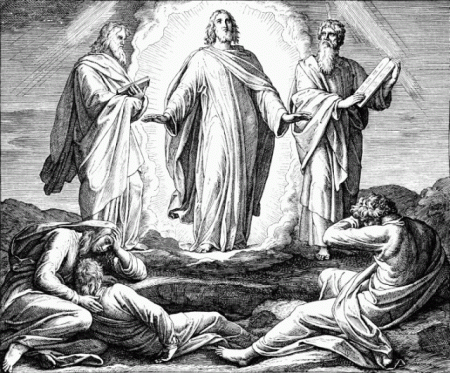
“Six days later, three of them saw that glory. Jesus took Peter and the brothers, James and John, and led them up a high mountain. His appearance changed from the inside out, right before their eyes. Sunlight poured from his face. His clothes were filled with light.”

Matthew 17:1-2, The Message

These three disciples belonged to the inner circle of our Lord’s friends. There must have been something in them that peculiarly endeared them to Him. We know that Peter was a leader among the apostles, and also a bold confessor; that John was “the disciple whom Jesus loved;” and that James was the first of the band to die as a martyr.

It is very encouraging to look at Peter who was admitted to such high privileges; a man with so many faults, who made so many mistakes, who even at the last shamefully denied Christ, and yet we remember that he was one of our Lord’s closest friends. It gives encouragement to us that, with all our faults, we may yet be very dear to Christ.

It does not seem so strange that John was allowed to enter the inner circle. His disposition was gentle and amiable, very much like the Master’s. Yet it is probable that John owed his sweetness and gentleness of character to his being with Jesus. It could be he was not always a man of love.

rose-little1There is a Persian fable of a piece of clay made fragrant by lying on a rose; the perfume of the rose passed into the clay. So it probably was with John. He crept into his Master’s bosom, and lay close to His heart; and his Master’s spirit of love and gentleness passed into his life and transformed it. Thus we have a lesson, too, from John: constant and loving communion with Christ will change us into His likeness.

The lesson from this choosing of three out of the whole band for peculiar privileges is that while Jesus loves all His friends, there are certain ones whom He takes into closer confidence than the others. There are degrees of nearness to Him, even in this world. Should we not strive to be among those who, by disposition and by service, win their way to the closest places? We must remember that those who serve most are chiefest. –JRM

*

kyrie elesion, Bryan

(Lord, have mercy on me, a sinner)
cropped-christiangraffiti1.jpg
 
&


The Tabloids Were Scandalous!

scandalous‘Scandalizing is celebrated openly today. We’ll manipulate and defame so all will pretty much see our enemies as disgraceful or hypocritical. It makes me want to cry when I hear of this intimidation inside the Church. Jesus told us that this would really, truly happen. We shouldn’t be at all disturbed. To be hurt this way is very much part of being his disciple.

In Matthew 11:2-6, 2 Now when John heard in prison about the deeds of the Christ, he sent word by his disciples 3 and said to him, “Are you the one who is to come, or shall we look for another?” 

4 And Jesus answered them, “Go and tell John what you hear and see: 5 the blind receive their sight and the lame walk, lepers are cleansed and the deaf hear, and the dead are raised up, and the poor have good news preached to them. 6 And blessed is the one who is not offended by me.”

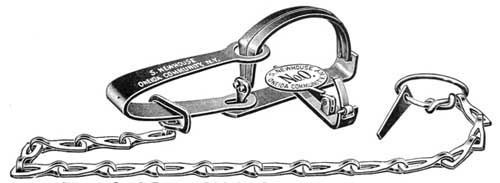
Offended. The word in our Greek N.T. is “skandalon.” It’s used in many ways, but the most amazing one is defined as, “the trigger of a trap, to kill an animal. To be the trap wire or stick used to catch prey; a snare.” We have the word scandalous, or to be involved in a vicious manipulation, scandal. Another metaphor is that it’s like the “fly paper” that’s hung up in the barn to catch those big nasty flies. 

Jesus dug up his dictionary, and chose this very specific word to communicate what he wanted. Of men and women, boys and girls caught in something they can’t get out of without help. John the Baptist, languishing in a dark place, wants to understand Jesus. John seems to expect Jesus to hop on a white stallion, and forcefully exert his messianic role.

Jesus will send his message. “You’re blessed indeed, if you do not stumble” (or get trapped) by the misconceptions. John confined in Herod’s dungeon, would be meticulously praised by Jesus. The Lord honors his own openly.

trap01

It is easy to take up offense, (whether right or wrong.) When we hear a message causing shock, anger, repulsion, or disgust; that is a pretty good indicator that you are being “scandalized.” And turn-around is fair play. We might be the scandalizer, or the victim. It happens all the time.

Are you trapping– or are you trapped? Either way we need to stop it. We can’t continue to trip others up– nor can we allow others to foist their trap on us either. The Gospel regards itself as a ‘stumbling block. For some agnostics’, Jesus is someone they keep tripping over. But for the believer, Jesus is a ‘climbing up’ stone!

Worship is the finest defense. People who stumble, or cause another to stumble are usually…

  • grim,
  • guilty,
  • and grouchy.

They become graceless and sterile in the important matters of the heart. They become rigid and bitter.

The man or woman who stands up for their faith, and who doesn’t fall away or let their zeal ‘leak away,’ is incredibly blessed. God however is ready to forgive all those who backslide and then repent, but is especially pleased with those– like John, who hold firm to the faith.


1brobry-sig4 (2)


cropped-christiangraffiti1-3