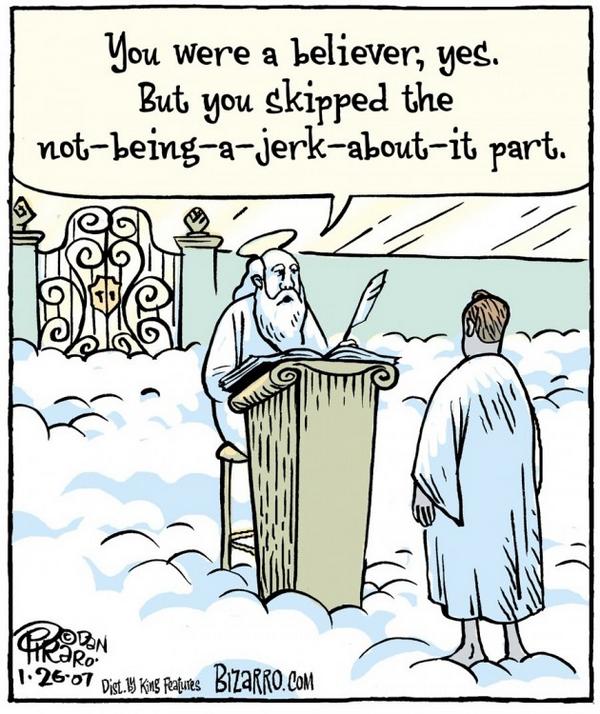
A New Face, or a New Heart?

James H. Aughey

We live in challenging times. As people of faith, we’re slowly learning what Jesus really wants us to recognize. It seems every generation must understand all over again. Sometimes it seems we are taking two steps forward, and one step back. Oh well.

The Church must reacquaint itself with the total love of God for all people once again.

The Father hasn’t given up on us. Repeatedly, over and over, (and then over again) we learn about His unreal faithfulness to the Church and His love for all people. But sometimes we have a hard time believing these things. Honestly, we’re not what we should be, but thank God we’re not like we were. We’re learning this as well.

He’s more faithful than the most loyal person who has ever lived!

And we also must understand this. He is always seeking those who are on the margins: the lame, blind, sick and crippled. But thank God He’s still in the business of ‘collecting’ people who are desperate. (And if you can’t really see this, perhaps you should.)

The Church, and the churches we attend, are meant for those who are sick–the outcasts. It’s primarily a hospital, and the “sentinels” (pastors and elders, and others) must understand this. We must know and believe this. And we must know for ourselves the love “that passes all understanding.”

Jesus loves everyone, but if you must know, He’s specifically looking for the outcasts.

A really good study is those persons in scripture, who in their neediness, scream out “Son of God, have mercy on me.” There are 4-5 in the Gospels who said that. Although they modify this plea/prayer in slightly different ways, all of them are terribly desperate.

I encourage you to study this out, and get a deep handle on it. 

Our churches mustn’t lose sight of this kind of love, and if your fellowship isn’t doing this, just maybe you’re the one called to implement it. And if this isn’t possible, you might consider moving on. (I loathe to advise this.)

But please reject ‘the country club’ version of the Church.

It isn’t right and it’s not the heart of God. It’s religion that comes to us in its gradient forms of foolishness. It doesn’t really reflect the intense seeking of God. Somehow, along the way, churches got lost in the routine efforts of a religious routine.

The challenge is not just getting seekers to renounce the pigpen like the prodigal did. Most understand and are ready to do this. But sometimes the issue is within us, the Church– we dare not become the older brother– (Luke 15:1-2 and vv. 30-32). Usually we will be one or the other.

The question facing the Church is this:

Do we want to see face lifts, or a heart transplant?

One is for looking better, the other describes an entire overhaul. One is cosmetic, the other is a matter of life and death and reaches the heart. One is relatively minor, the other is definitely not. What kind does your Church have?

We really must sort this out.

I suppose the sooner the better.

Is He Your Friend, or Just a Doctrine?

“A rule I have had for years is: to treat the Lord Jesus Christ as a personal friend. His is not a creed, a mere doctrine, but it is He Himself we have.”

  ~D.L. Moody

Friendship with God can be a liberating secret for the believer. It releases us from the terrible bondage of religion and ritual with all its negative connotations. Intimacy with our Lord will carry us beyond creed or doctrine to the place of true communion.

It’s not that the Law is bad, but in the intense light of God’s grace, it’s a very poor substitute for intimacy. We value legalism, and that is precisely what we believe when we bypass the relationship. Doctrine is a good servant, but a poor master.

Grace always trumps legalism. Love truly surpasses rules.

As good evangelicals, we can talk big about “a personal relationship.” That is indeed crucial. But few be the believers that walk in a daily friendship with their Savior. That is truly a tragedy.

As a teacher of God’s Word, I mourn over my listeners when they miss out on what is real and true. I’m afraid for them.

“I no longer call you slaves, because a master doesn’t confide in his slaves. Now you are my friends since I have told you everything the Father told me.”

John 15:15, NLT

Friendship with Jesus will bring true guidance. He shares secrets and wisdom with his friends. We are brought into a true knowledge of the Kingdom through the relationship of friendship with the King. We are not slaves– or drones, slavishly serving out of slavish fear.

Jesus’ kingdom is packed full of great mysteries! He is looking to bring us into the authenticity of constant communion. Only through intimacy with Jesus can we truly handle what He wants to teach us. (See Psalm 25:14; John 15:15.)

He will heal our wounds, and forgive all our sins. He is truly our Savior as well as our friend.

Friendship with Jesus comes with a price. It means we are now tethered to the Lord. That can get old, especially when I want to do my own thing. I will continually have to lay something down and choose to accept being tethered and follow Him.

But my soul now has a best friend. Or just maybe, Jesus has been my friend all along, and I just didn’t know it.

Sinners Get Priority

17 Jesus heard this and said to them, “It is not the healthy people who need a doctor, but the sick. I did not come to invite good people but to invite sinners.”

Mark 2:17, NCV

“The true Christian’s nostril is to be continually attentive to the inner cesspool.”  

–C.S. Lewis

How ironic!  Today, religious people are seen as a sort of an elite, an upper crust. The seem like they have it together, or at least they think so. Somewhat superior to those of us who live hard, and know all about sin.  The hearts of the lower level don’t make any pretension to any kind of spirituality.

They understand that they are the ‘dregs.’  They have adapted to living in an ugly and twisted world that gives nothing.  There is a sense that they know they are on ‘the highway to hell.’ They aren’t surprised by this.

The gross sinner, and the spiritually debilitated, have been brought into a very special place.  Jesus intends to escort us into glory, even in spite of our and unsightly infection.  He is wonderful, and yet we see that He really does specialize in losers.  He ‘homes in’ on them and then connects with those who have no ‘religious’ sense to speak of.

This seems quite counter-intuitive, especially if you’re trying to start a religious movement.  It is quite necessary to have a strong base, to seek out good people, and with finances– obviously.  And ‘the sick’ have blown it all on sex, drugs and rock & roll.  They will never finance the ministry of Jesus.  The disciples all have grasped this, especially Judas.  They are full of practicality.  They approach discipleship as a business. (And truly, these are the dangerous ones.)

The sick, the defective, and the infirm have now been elevated by Jesus’ new focus.  They have ‘zero spiritual’ value, with absolutely nothing to contribute — they are more of a liability then anything.  People like us who are very ill really can’t contribute to what is really happening.  More often then not, they require intensive care from the healthy and whole, sapping the strength of the work. Truly God is not against us because of our sin. He is with us against our sin.

I have a blue handicapped placard. This really helps and gives me preferential parking. And in much the same way spiritually, if you are a loser– you have dibs.   Jesus shines on you specifically (even if the Church won’t.)

There is a kind of a loving triage that He uses as He draws people into His domain and influence.  Hearts and lives that are black receive His eager attention.  Of course, there will be voices that object to this perceived inequity.

But Jesus has no favorites, only intimates.  Remember this, the sinner who has been “forgiven much, loves much.”

*


cropped-christiangraffiti1-2

Are You Too Righteous?

“Do not be excessively righteous and do not be overly wise. Why should you ruin yourself?”

Ecclesiastes 7:16

I’m thinking out loud about something, so I should alert everyone.  Anyway, I’m thinking about “scruples”.  The dictionary defines scruples as an uneasy feeling arising from conscience or principle that tends to hinder action.”

The malady developed in the middle ages.  Among the saints who were not yet labeled saints, there developed a particular syndrome of hypersensitivity toward sin and holiness.  You might say that they got stuck in the proverbial “hamster wheel” and couldn’t get off.  Run, run, run and they developed an irrational fear of somehow missing God.  Many a zealous saint has turned obsessive and superstitious. Suicide would happen.

Wikipedia says this about “scruples”– –an obsessive concern with one’s own sins and compulsive performance of religious devotion.”   It is essentially the doubt and fear that you will do or say something that is not right.  It locks you up inside to the point you can’t do anything.  Scruples can be one of the occupational hazards of the devout believer.

Ecclesiastes postulates the idea of being overly devout.  “Do not be excessively righteous and do not be overly wise. Why should you ruin yourself?” (Eccl. 7:16) This verse, suggests that one can be excessive, or, too good.  That might rankle some, as it did me.  How can you be too righteous?

Luther once said, “Be a sinner and sin strongly, but more strongly have faith and rejoice in Christ.” That intrigues me. I once heard a sermon entitled, “Does Your Christianity Include You?” (I can remember the title, but not the message.)

I guess we sometimes develop a sense of wanting to please God to the extent of denying our humanity. 

At least that’s where my own battles with scrupulosity originate.  I am thinking that “Pharaseeism” is kind of like its cousin; they are closely related. I think we start to have issues when we start to become obsessive about our holiness and our discipleship.  If a little is really good, then a lot is even better; this is our rationale, but it doesn’t work that way.

There are several examples in the Word.  I think of Jephthah and his over-the-top vow to the Lord.  In Judges 11, Jephthah vowed to God that if he were victorious in battle, he would give to God whoever came through the doors of his house upon his return from battle. In verse 34-35  we read that his only child a daughter came out first upon his return from battle. Jephthah was crushed.

This wasn’t necessary, or even required, but if we look at his life it seems that he had an impulse to overcompensate.  He was blown away by his daughter’s appearance when he returned home.  Saul was another, with Jonathan and the honey.  Just something to think about.

“If there be anything that can render the soul calm, dissipate its scruples and dispel its fears, sweeten its sufferings by the anointing of love, impart strength to all its actions, and spread abroad the joy of the Holy Spirit in its countenance and words, it is this simple and childlike repose in the arms of God. “

S.D. Gordon

ybic, Bryan


cropped-christiangraffiti1-2