Nothing But the Blood


1 John 1:7, ESV

At first glance it seems that the Old Testament is a collection of extremely bloody books. So many sacrifices were made that the levitical priesthood had to sacrifice lambs 24 hours a day. People had this desperate need to cover their sins with an offering. This was instilled in them by the Law and their conscience. The guilt emanating from their sins must be covered by a lamb’s blood.

As our sins mount up (and they will) we have an innate need to cover them up.

Sin is almost never hidden, and never, ever exalted as a virtue. And yet we try to skate though our accumulation of many sins. We forget many, and try to excuse the more heinous. Our guilt condemns us, and we have no choice but to hide it, from ourselves, others, and from God. We can no longer pretend we’re without sin.

“Human beings, all over the earth, have this curious idea that they ought to behave in a certain way, and can’t really get rid of it.”

-C.S. Lewis

The Jewish people no longer sacrifice lambs, and it seems the Gentiles have never caught on. But sin has never gone out-of-style. But yet there is still a way for God to forgive our sin. The New Testament teaches clearly that Jesus has offered His blood as the payment of every sin ever committed. His death wiped our slates clean, forever.

The New Testament is crystal clear on this. I’m not making this up.

The crucifixion of Jesus Christ had enough sufficiency to cover everyone, once, and for all. It seems astonishing, beyond belief and possibility. The blood it seems, has never lost its power. This may be why Christians can’t seem to ‘shut-up’ about their faith.

They ‘see’ something!

“Therefore, brothers and sisters, since we have confidence to enter the Most Holy Place by the blood of Jesus.”

Hebrews 10:19

We are given a ‘backstage pass.’

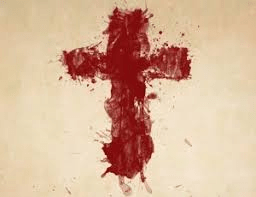
Simply put, you now have the confidence–sort of like ‘backstage passes,’ into God’s presence, all because of His death. The cross is far, far beyond a gold religious medallion worn around the neck. The cross of Christ, and more precisely His blood, is now regarded as complete righteousness for anyone (who by faith) receives it as his/her own. A brand-new confidence takes hold. “God loves me, and He really has forgiven me.” 

2 Corinthians 5:17

Our sins, from our fallenness, are now smothered in the blood of Jesus. That red blood makes us ‘white as snow’ in God’s analysis. At long last, the tremendous guilt is lifted from the believer, and they want others to know about it. Brokenbelievers’ everywhere are cheering.

We know we aren’t quite right, and we understand our sin, but we have become fans of Jesus Christ. After all, His death has brought us eternal life.


Becoming a Steward of Your Pain

Some time ago I read a story that connected. A visiting speaker stood in front of a congregation and shared a painful incident from his childhood. He wanted to bring healing. After he spoke, an elder came up and spoke to him–

“You have learned how to become a proper steward of your pain.”

The visiting speaker was profoundly touched by this. Something came together in his heart and soul. Yes, he did learn how to deal with those ugly things from his past. And yes, he was starting to become a proper steward of his pain.

The word for steward in the original Greek is oikonomos. It literally means “a keeper of a home.” It describes a manager, or a superintendent to whom the head of the house or proprietor has entrusted the management of his affairs.

Managing these awful things for the Kingdom of God is now our ministry.

No question about it, we live in a world of darkness. Each of us has been touched by hard things. Scars are part of our lives. When we come to Christ they come with us. All of these grim things are a real piece of us; we have been hurt, or we’ve wounded others by our sinfulness.

Are you a good steward of who you are? Maybe it’s a trauma, a physical, sexual, or perhaps a mental illness. It’s a scar you carry from your past, and no one is immune from them it seems.

I believe that you’ll find freedom if you can use these things for Him and his Kingdom.

We must see and understand that Jesus has taken everything and fully redeems it all for His glory.

He understands us fully–our past, present, and future. He ‘knows’ us–the real and hidden us. The challenge is to take these sad events to the throne. He alone can heal and then use that which has devastated us. He uses our pain to touch others deeply.

But Jesus intervenes to save. As we grow to accept this, the Holy Spirit comes as our comforter and guide. He starts to teach us true redemption, and the incredible healing that takes place inside us.

It really is his work, not ours. It’s then we finally understand. It’s then we become the broken healers that God can finally use.

And it’s then we can finally say: “The light has truly overcome the dark.

Becoming a steward of our pain is His doing. We’re able to touch others with these things that cripple and destroy. He has made us “managers” of these things, and we are taught to teach others, declaring that God has completely saved us. He works miracles!

“Therefore, if anyone is in Christ, he is a new creation; the old has passed away, and see, the new has come!”

2 Corinthians 5:17

We’ll meet those who are waiting to hear our story. They’re walking through terrible pain and they don’t know what to do.

We’re being transformed into authentic witnesses. Yes, at times these awful things still hurt, and I suppose that’s to be expected. But we’re learning to manage them. We’ve become real-life stewards of our pain.

To every believer still struggling about the sin of the past or sickness of the present–keep turning it over to Him. He will make it into something quite wonderful.

Welcome to Schizophrenia

Do you know someone who seems like he or she has “lost touch” with reality? Does this person talk about “hearing voices” no one else can? Does he or she see or feel things that others can’t? Does this person believe things that aren’t true?

Sometimes people with these symptoms have schizophrenia, a serious illness.

What is schizophrenia?

Schizophrenia is a serious brain illness. Many people with schizophrenia are disabled by their symptoms.

People with schizophrenia may hear voices other people don’t hear. They may think other people are trying to hurt them–we call this paranoia. Sometimes they don’t make any sense when they talk. The disorder makes it hard for them to keep a job or take care of themselves.

Who gets schizophrenia?

Anyone can develop schizophrenia. It affects men and women equally in all ethnic groups. Teens can also develop schizophrenia. In rare cases, children have the illness too.

When does it start?

Symptoms of schizophrenia usually start between ages 16 and 30. Men often develop symptoms at a younger age than women. People usually do not get schizophrenia after age 45.


What causes schizophrenia?

Several factors may contribute to schizophrenia, including:

  • Genes, because the illness runs in families
  • The environment, such as viruses and nutrition problems before birth
  • Different brain structure and brain chemistry.

Scientists have learned a lot about schizophrenia. They are identifying genes and parts of the brain that may play a role in the illness. Some experts think the illness begins before birth but doesn’t show up until years later. With more study, researchers may be able to predict who will develop schizophrenia.

What are the symptoms of schizophrenia?

Schizophrenia symptoms range from mild to severe. There are three main types of symptoms.

Positive symptoms refer to a distortion of a person’s normal thinking and functioning.

They are “psychotic” behaviors. People with these symptoms are sometimes unable to tell what’s real from what is imagined. Positive symptoms include:
  • Hallucinations: when a person sees, hears, smells, or feels things that no one else can. “Hearing voices” is common for people with schizophrenia. People who hear voices may hear them for a long time before family or friends notice a problem.
  • Delusions: when a person believes things that are not true. For example, a person may believe that people on the radio and television are talking directly to him or her. Sometimes people believe that they are in danger-that other people are trying to hurt them.
  • Thought disorders: ways of thinking that are not usual or helpful. People with thought disorders may have trouble organizing their thoughts. Sometimes a person will stop talking in the middle of a thought. And some people make up words that have no meaning.
  • Movement disorders: may appear as agitated body movements. A person with a movement disorder may repeat certain motions over and over. In the other extreme, a person may stop moving or talking for a while, a rare condition called “catatonia.”

Negative symptoms refer to difficulty showing emotions or functioning normally.

When a person with schizophrenia has negative symptoms, it may look like depression. People with negative symptoms may:
  • Talk in a dull voice
  • Show no facial expression, like a smile or frown
  • Have trouble having fun
  • Have trouble planning and sticking with an activity, like grocery shopping
  • Talk very little to other people, even when they need to.

Cognitive symptoms are not easy to see, but they can make it hard for people to have a job or take care of themselves.

Cognitive symptoms include:
  • Trouble using information to make decisions
  • Problems using information immediately after learning it
  • Trouble paying attention.

Helpful Links for Further Thought

The Mayo Clinic: Good, solid and trustworthy, a great introduction.

WebMd: Early Signs to look for.

World Health Organization: More advanced, but still accessible and understandable.


When There’s Blood in the Water

It’s a fact. Biologists tell us that sharks can smell blood from 2-3 miles away. They follow their noses to the place where they sense it. They have an ‘attack mechanism’ that drives them to their victim . Blood acts as a trigger inside their brains. Occasionally dozens of sharks attack in a feeding frenzy.

Over 40 years in the Church has taught me that sharks aren’t the only ones that turn on the wounded.

The Church is supposed to be a safe and a healing place.

This is what the Holy Spirit wants. That isn’t always the case. Someone fails, another falters. Sin is uncovered and the sharks move in. There is blood in the water. Now things don’t always work this way, but it does happen.

There are some who might be restored, and yet others are trampled down instead.   There’re many who would rather pounce than pray. Unfortunately when the “sharks” attack it almost always ends up being a as a vicious personal attack. It only creates more blood in the water.

There are many who are bleeding.

They are those with a mental illness, or confined to a wheelchair, or with Downs Syndrome, they are the first that come to mind. They’re often the the very sick, the developmentally disabled, the drunk, the addict, the adulterer, the disabled, the homosexual, the poor, and the ex-con who are just several kinds of people that regularly get hurt in our churches.

Matthew 5:7, ESV

Mercy is what God extends to people who don’t deserve any. Failure to understand God’s deep penchant for the broken puts us in a bad place. We don’t always understand. Keep in mind that the Prodigal’s older brother refused to party with the forgiven son.

How terribly sad, and religiously confusing. I have to wonder, who really has been attacked by the enemy? The Kingdom of God is specifically designed for losers; it exists for the sick, the stumbler and the sinner.

In theory, we agree with Matthew 5:7.

We find tremendous inspiration when this verse is read. But the noble feelings don’t always translate into dedicated action. I’ve come to see that I must consciously press this into action. I must actively show mercy for the healing of others– and if anything, just to protect my own heart.

The Great Physician has come for the sick, not so much who consider themselves healthy.

He loves each of us, but Jesus cares in different ways. He tailors His grace to fit our sin. He’s concerned for the very worst of us. Yes, repentance is necessary and crying out to Jesus for healing is always needed.

Jesus has always been associated with the lowly.

If there is blood in the water, let’s turn it up a notch, and let’s show special mercy for those who are struggling. Let us be kinder than we have to be. If we err— let us always err on the side of mercy and kindness. 

For further studyPsalm 72:13; Psalm 82:4; Matt. 9:12; Romans 15:1; 1 Thess. 5:14;

&