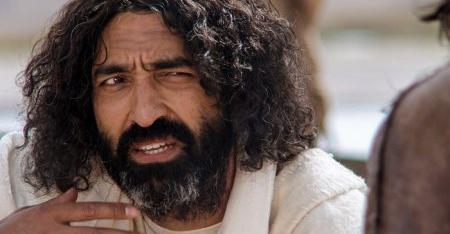
The Art of Denying Jesus

deny

“Suddenly, Jesus’ words flashed through Peter’s mind: “Before the rooster crows, you will deny three times that you even know me.” And he went away, weeping bitterly.”

Matthew 26:75, NLT

Three denials are followed by three reaffirmations.

A third time he asked him, “Simon son of John, do you love me?” Peter was hurt that Jesus asked the question a third time. He said, “Lord, you know everything. You know that I love you.” Jesus said, “Then feed my sheep.”

John 21:17

The apostle Peter was a fervent disciple. He knew who Jesus was before most. He was always included in special times (e.g. the transfiguration, Gethsemane). He was favored by Jesus throughout times of ministry. I also believe that he was Jesus’ friend.

Peter is known for:

  • being called on the shores of Galilee, Matt 4:18-19
  • ‘almost,’ sort of, walking on water, Matt 14:29-30
  • finding the tax money in a fishes’ mouth, Matt 17:24-27
  • having his feet washed, John 13:6-7
  • in Gethsemane– cutting off an ear, John 18:10-11
  • his remorse at denying Jesus, Matt 26:75
  • running to the empty tomb with John, John 20:3-8

Peter’s own denials were of a serious nature affecting who he was, and who he was to become. Jesus astutely intervenes as they ‘breakfasted’ on the seashore. There would be three affirmations; one for each denial. Peter needed to meet the resurrected Jesus, and speak with him about what he had done. Peter needed this.

A denial has different intensities and can be understood in many different ways.

Out of our own confusion, we realize that we can also deny Jesus. Perhaps frequently.  (And none of us have any immunity as of yet.) We deny the Lord when we refuse to speak of him to others. We deny the Lord when we fail to do what is right. Sometimes we deny him flagrantly, other times it is a more subtle attitude. At best, we’re still inconsistent, and at worst (I hate to say it,) apostates.

We’re not punished or abandoned for this behavior.

(It seems like we punish ourselves though.)

Human logic would suggest that we should be condemned. But instead we are gently restored. Given the opportunity, Peter the fisherman, would eventually become a wise shepherd to the young Church. I would suggest that Peter’s personal weakness would serve him well as a gentle, and caring pastor.

Peter now understood these things, and he would be careful and gentle.

“God appoints our graces to be nurses to other men’s weaknesses.”

 Henry Ward Beecher

Peter, near the end of his life, goes ‘full circle’ and uses a very precise Greek word found in only two places in the New Testament. It is the specific form of the word “shepherd.” It is only used in John 21:16-17 in Peter’s restoration, and in 1 Peter 5:2. Peter encourages the Church with the same words Jesus himself spoke to him on the beach so long ago!

Peter wrote this:

Be shepherds of God’s flock that is under your care, watching over them—not because you must, but because you are willing.”

1 Peter 5:2


He Despises Our Hypocrisy


“This people honors me with their lips, but their heart is far from me.”

Matthew 15:8, NASB

“Of all bad men, religious bad men are the worst.”  C.S. Lewis

This singular verse is set in a series of other verses– it certainly does not stand alone.  When these come together, we realize how much the Holy Spirit despises hypocrisy. He hates it, I suppose, because of the destructiveness wreaked on our spirits.

A father or mother may feel a hatred at the dealers who sell the drugs to their child. It’s not that they have any special animosity toward the pusher, but rather, they love their son so much. They will do whatever it takes to protect him.

I really think this is what Jesus feels when it comes to the purveyors of religious legalism, or hypocrisy. He burns with a holy hatred against this particular form of darkness. His vehemence seems reserved, not for sin so much as these lies of “religious pretending”. His repeated “roughness” has to be considered– why?

This should jar us into what is real, and all that is not. The word for hypocrite is “two-faced”. It was used in the Greek theaters for the masks worn by the actors. They would wear whatever the script called for. The audience never knew what was real, and what was only theatrical props.

With our lips (speech) we will honor God. We’ll only speak good things, and words (and actions) become an issue of being appropriate. We put on the particular mask of the moment, and enter the theater. Our hearts are hardly touched, and the deepest part of us becomes inoculated to the real presence of God.

The deep hatred Jesus has is due to the enormity of this sin. It is spirituality gone bad. Twisted and confused, with the shallow veneer of “respectability”. It seems to work for many of us. When our discipleship gets used to wearing masks, things can get very religious.

“Beware of no man more than of yourself; we carry our worst enemies within us.”

Charles Spurgeon


Scorched, but Deeply Loved

“But he turned and said to Peter, “Get behind me, Satan! You are a hindrance to me. For you are not setting your mind on the things of God, but on the things of man.”

Matt. 16:23

The principles of the Kingdom will often confuse an outsider.  In this chapter of Matthew, we hear Peter extolling the divinity of Jesus (vv. 15-17).  Peter exceeds the norm with his analysis of what he believes is real and true.

Peter’s insight is as perceptive as it is supernatural.  “You are the Christ,” Peter proclaims, “the Son of the Living God,”  Jesus responds to this and He praises Peter for his sensitivity.

But, just a short time after he makes his astonishing pronouncement, he is taken apart by Jesus, being solidly rebuked face-to-face.  In one clear and singular moment, he expresses a wonderful faith, and then suddenly his personal awareness precipitously crashes.  He is now an evil person with Satan’s agenda. (See verse 23.)

I’m not sure why Peter does what he does. 

It seems that in the light of this chapter (which actually seems like a bright glare), Peter is devastated.  In three years of discipleship, it seems that all he merits is a brutal ‘dressing-down.’ All because he thinks he can correct Jesus, “the Son of the Living God.”

The rebuke is bitter.  Peter is being compared to Satan!

I suspect that Peter was ashamed.  He most likely wished he had a rewind button.  His Savior, Jesus– has given him a new label.  And it hurts.  Many times, we would become resentful, maybe a bit bitter.  It could cause some to walk away, developing an anger that solidifies into a permanent offense. Thank God, Peter doesn’t do anything that stupid.

The correction in the rebuke gives him life and hope.

But who’s to say we would be as correctable?  Peter was rebuked in the presence of the other disciples.  The publicity was embarrassing.  Too many people were watching and listening. Peter will survive this, but he has to learn something valuable.

Our daily commitment to Jesus hinges on our willingness to be undone. 

Jesus pretty much rakes us over the coals.  He insists on total obedience to His faithfulness. And like Peter, we will learn. It may take some time though.

Every true disciple will be scorched– but incredibly loved.

Judas Speaks

Matthew 27:3-10

My name is Judas Iscariot, and I betrayed my Lord. It really had nothing to do with avarice or greed. The money was fine, don’t get me wrong, but that isn’t why I turned Him in to the authorities. I simply did what they couldn’t. I wanted to force Jesus’ hand, so he had to drive the Romans out of our country. I was mistaken, I see that now.

Jesus loved each of us, including me. But I didn’t see it at the time.

When Jesus knelt to wash my feet, I was profoundly disturbed. And when He stripped down to his underwear, I really began to have serious doubts. Behaving like a common slave wasn’t really in my thinking. It would take extra work to shape Him, and to deaden such strange behavior. But it would be worth it in the end, if only Jesus would cooperate.

In my mind I knew that Jesus only needed the right moment to become the next ruler of Israel. That was His true destiny–and I was going to help him bring it to pass.

I knew that God had called me–this was my real purpose. I would do the work of God. I would be the kingmaker, and Jesus would certainly reward me.

Some have said that Satan was inside me.

But I hardly noticed. Instead, I was filled with excitement. Finally, the other disciples would come to my side, and together we could make it happen. Enough kneeling, no more groveling–we were going to rule Israel and end the wicked Roman occupation. I truly believed this. He was our Messiah, our deliverer.

The tricky part was to convince Jesus, to manipulate him if necessary, to get him to take control.

He had to see the opportunity that was waiting for him. He was already immensely popular among the people. We could quite easily turn all of this enthusiasm into a full-blown insurrection. But we obviously needed Him to lead us, and I could help him find His way. I knew we could do it. This was God’s will for me.

My plan was fairly simple–after I met with the Pharisees, I’d lead them to the garden where Jesus was staying. They insisted on an armed escort, just in case there was trouble among the disciples. I suppose that was prudent, but my part in all of this was simply to give Jesus a kiss on the cheek, to signify that he was the one to the soldiers.

I assumed he would resist and fight. I was wrong.

You see nothing went as planned. Jesus didn’t take charge, and he certainly didn’t overthrow the government. As a matter of fact, you could say that the opposite happened–He was silent and refused to answer most of their questions. I did hear Him say, “My kingdom is not of this world.” I should have listened.

I realized way too late, that I shed innocent blood. I went back to the priests who hired me, and I insisted they take back the silver. They refused. I threw the bag at their feet and left the temple. Ugly thoughts now filled my mind, and I knew without a doubt that I was completely lost.