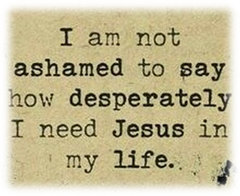
Repeat Offenders

“Father, every family has a rascal someone who breaks the rules a juvenile delinquent of untold frustrations and sleepless nights a repeated offender and bearer of sad woe the problem child who needs the most discipline.

Is this why you love me most persistently? When you correct me, is it because I’m the one most contrary?

Or is it that you love me so much?”

 I wrote this thinking about Hebrews 12 and God’s purpose of chastening. I don’t pretend to understand this dynamic completely–all I can say is that my childhood was punctuated by much difficulty. But now, as a father (my two children are now grown), fatherhood has become far easier than my dad had with me.

7 “As you endure this divine discipline, remember that God is treating you as his own children. Who ever heard of a child who is never disciplined by its father? 10 For our earthly fathers disciplined us for a few years, doing the best they knew how.

But God’s discipline is always good for us, so that we might share in his holiness. 11 No discipline is enjoyable while it is happening—it’s painful! But afterward there will be a peaceful harvest of right living for those who are trained in this way.”

Hebrews 12:7, 10-11

I really think we understand our Heavenly Father when we spend quality time with Hebrews 12. We are given insight into His care and into our own issues. It is a good thing He gives us— it enriches our spiritual lives.

It’s never nice to be corrected.

It’s not pleasant. Part of being corrected is being reminded that we’re not as righteous as we think we are. To be corrected strikes us to a reprimand, an admonition that something isn’t right inside of us.

The Father corrects His children–in many ways through a myriad of circumstances. He loves us far too much to allow us to continue in our sin. He’s making us into the image of Christ.

We should welcome His correction. He has a plan for you.

When He disciplines you, it only proves that He is your Father. It’s critical to remember: God’s correction is always for our good. It may be painful yes, but it comes with real hope. It’s not to harm or punish you.

“Father, I’m so sorry that I grieve you as often as I do. I promise to behave. Thank you for being a faithful Father who cares deeply for my soul. Amen.”

 Hannah Whitall Smith.

Safe Haven

This poem is written in the Triolet form. I really love this form because it has the perfect amount of repetition, with lines 1, 4, and 7 being the same, and then lines 2 and 8 being the same. I have found that the Triolet is well suited to Christian poetry.

Safe Haven

This life is hard and treacherous
It’s no place to go it alone
The only safe haven is Jesus
This life is hard and treacherous

Our  Emmanuel, God with us
Will never forsake or leave us
This life is hard and treacherous
It’s no place to go it alone

I hope this poem serves as a reminder to the reader that you don’t have to navigate the treacherous waters of this life alone. Jesus wants to walk by your side, to carry you if need be, and bring you safely to the other side of Jordan.

Jesus said, “I have told you these things, so that in me you may have peace. In this world you will have trouble. But take heart! I have overcome the world.”

John 16:33 (NIV)

anotherfearlessyear.net

Make the Decision to Be Weak


Our society has pretty much embraced the American cultural icon of the cowboy.  We revere those who ride alone and hard. We are rugged individualists and hardened men making our own way.  Our society reflects this in subdued ways.  No matter what happens, we are fiercely free and independent.  We are ‘desperadoes’–we do whatever we think is best.

John Wayne, the ‘Alamo,’ and the biker with his Harley-Davidson on Route 66 have been our inspiration.  Each are distinctly heroic and carry our hopes and dreams.

We must understand that the Bible is not an American book.

It belongs to every tribe, race, and nation. 

A cowboy did not die for our sins (which are countless).  The way of discipleship does not take us through Luckenbach, Texas. We’re not desperados. We are Jesus’ disciples.

His Words to us are bold and entirely challenging in an amazingly fresh and different direction.  We are told to wash feet, to repeatedly turn the other cheek, to surrender all our rights, and then take the lowest place there is in every situation.

Our lives truly begin when we come under the Lordship of Jesus Christ.

Humility is to become the way we think and how we act, we have become slaves to righteousness.  Our vaunted independence has been toppled. This selfish crown has slipped. My willfulness still wants to stand instead of kneeling. We discover this has been the truth all along.  We have never ever been in control. 

He has been the King since before time, and will always be, for an eternity.

“Many Christians have what we might call a “cultural holiness”. They adapt to the character and behavior pattern of Christians around them. As the Christian culture around them is more or less holy, so these Christians are more or less holy. But God has not called us to be like those around us.

He has called us to be like Himself. Holiness is nothing less than conformity to the character of God”.

Jerry Bridges

Our churches often struggle over our personal issues of pride and stubbornness. 

I pose the following questions.  Are we honestly in a condition of being weak?  Can you serve with a basin and towel?  Is your heart that of a child? Do we see the world through the ‘lens’ of a soft and broken spirit?

I write these things surveying my own life. 

Self will and my hard heart fit ‘hand-and-glove’ with being that desperado.  I ride alone, making my own way, and I don’t make any disciples. I jettison my cross— my cross of discipleship.  I serve no one, unless it suits me.  Am I His disciple, or am I a man of my own?  Is He my Lord, or have I decided to claim that right for myself?

I only hope I have spoken the truth today. Forgive me if I offended.

“Lord, I am willing to receive what You give, to lack what You withhold, to relinquish what You take, to suffer what You inflict, to be what You require.”  Amen.


Welcome to Schizophrenia

Do you know someone who seems like he or she has “lost touch” with reality? Does this person talk about “hearing voices” no one else can? Does he or she see or feel things that others can’t? Does this person believe things that aren’t true?

Sometimes people with these symptoms have schizophrenia, a serious illness.

What is schizophrenia?

Schizophrenia is a serious brain illness. Many people with schizophrenia are disabled by their symptoms.

People with schizophrenia may hear voices other people don’t hear. They may think other people are trying to hurt them–we call this paranoia. Sometimes they don’t make any sense when they talk. The disorder makes it hard for them to keep a job or take care of themselves.

Who gets schizophrenia?

Anyone can develop schizophrenia. It affects men and women equally in all ethnic groups. Teens can also develop schizophrenia. In rare cases, children have the illness too.

When does it start?

Symptoms of schizophrenia usually start between ages 16 and 30. Men often develop symptoms at a younger age than women. People usually do not get schizophrenia after age 45.


What causes schizophrenia?

Several factors may contribute to schizophrenia, including:

  • Genes, because the illness runs in families
  • The environment, such as viruses and nutrition problems before birth
  • Different brain structure and brain chemistry.

Scientists have learned a lot about schizophrenia. They are identifying genes and parts of the brain that may play a role in the illness. Some experts think the illness begins before birth but doesn’t show up until years later. With more study, researchers may be able to predict who will develop schizophrenia.

What are the symptoms of schizophrenia?

Schizophrenia symptoms range from mild to severe. There are three main types of symptoms.

Positive symptoms refer to a distortion of a person’s normal thinking and functioning.

They are “psychotic” behaviors. People with these symptoms are sometimes unable to tell what’s real from what is imagined. Positive symptoms include:
  • Hallucinations: when a person sees, hears, smells, or feels things that no one else can. “Hearing voices” is common for people with schizophrenia. People who hear voices may hear them for a long time before family or friends notice a problem.
  • Delusions: when a person believes things that are not true. For example, a person may believe that people on the radio and television are talking directly to him or her. Sometimes people believe that they are in danger-that other people are trying to hurt them.
  • Thought disorders: ways of thinking that are not usual or helpful. People with thought disorders may have trouble organizing their thoughts. Sometimes a person will stop talking in the middle of a thought. And some people make up words that have no meaning.
  • Movement disorders: may appear as agitated body movements. A person with a movement disorder may repeat certain motions over and over. In the other extreme, a person may stop moving or talking for a while, a rare condition called “catatonia.”

Negative symptoms refer to difficulty showing emotions or functioning normally.

When a person with schizophrenia has negative symptoms, it may look like depression. People with negative symptoms may:
  • Talk in a dull voice
  • Show no facial expression, like a smile or frown
  • Have trouble having fun
  • Have trouble planning and sticking with an activity, like grocery shopping
  • Talk very little to other people, even when they need to.

Cognitive symptoms are not easy to see, but they can make it hard for people to have a job or take care of themselves.

Cognitive symptoms include:
  • Trouble using information to make decisions
  • Problems using information immediately after learning it
  • Trouble paying attention.

Helpful Links for Further Thought

The Mayo Clinic: Good, solid and trustworthy, a great introduction.

WebMd: Early Signs to look for.

World Health Organization: More advanced, but still accessible and understandable.