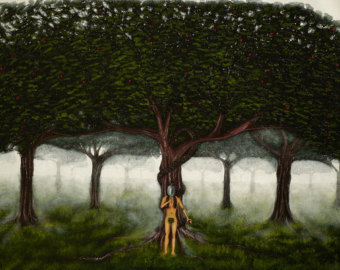
Self-Destruction

“For whoever finds me finds life
and receives favor from the Lord.
But those who miss me injure themselves.
All who hate me love death.”  

Proverbs 8:35-36

“There are seeds of self-destruction in all of us that will bear only unhappiness if allowed to grow.”  Dorothea Brande 

*

“If one looks with a cold eye at the mess man has made of history, it is difficult to avoid the conclusion that he has been afflicted by some built-in mental disorder which drives him towards self-destruction.”   Arthur Koestler 

*******

 Among people with a mental illness, there is a sort of impulsivity, and in advanced cases we can see a ‘self-destructive behavior‘.  We do things, superficially we recognize and even assert that it is detrimental, but we will continue to do it regardless.  Those ‘in the know around us’ can’t believe what we are doing. It is totally irrational.

Bipolar, schizophrenia, and many other mental illnesses have impulsivity as a common aspect of their disease processes.

  • We drink,
  • do drugs,
  • do pornography, strippers
  • steal from our friends,
  • cut ourselves,
  • misuse our credit cards (and go deeply in debt)
  • get crazy at rock concerts,
  • and much more.

We are impulsive and we do things that a healthy person would never do.  We consistently choose the worst things and we can’t seem to stop ourselves.

We are the ‘wild children,’ we just seem to thrive on the edge of destruction, repeatedly.  This is in spite of the consequences.  We just don’t worry about the side-effects of our choices.  We don’t think ahead, all we think is of the moment.  We consistently choose what is really bad for us, and then throw ourselves headlong into the darkness.  The more we do these terrible things, the wilder it seems to get.

We can’t seem to stop. 

I can say this because I had a personal issue with ‘self-destruction’.  You might say I have a ‘Masters degree’ in it.  I have gotten very proficient at it, and have utilized deception to cover my tracks.  So much of my life is hidden and I seem to float my darkness out in such a way as to diffuse questions and to excuse awful nasty behavior.

Being impulsive/self-destructive is a hard life in many ways. 

We cultivate an image to others that we have really never attained.  We are very good at deception, we have discovered how to do and say what we want without others “getting in our faces.” Being impulsive, ready to step into the most pleasurable darkness, becomes something we must cover up, at all costs.

“Can a man scoop a flame into his lap
    and not have his clothes catch on fire?”

Proverbs 6:27

Am I secretly drinking, doing drugs or using sex (esp. in pornography)?  The impulses that drive us to do this stuff will become the way we experience destruction, but somehow we don’t seem to get it.  The mentally ill have a horrendous rate of alcoholism and addiction.  I’ve seen figures that put us at 80% that have significant issues.  We seem to be ‘self-medicating’ ourselves to escape, or trying to get some stability.

When we come to Jesus, we discover that He loves us completely, including our ‘hidden side’.  His love comes to us without any conditions.  We are free to do whatever we want.  However, we will find that ‘sin accepted’ is very brutal to us.  Smashing out heads against a brick wall, over and over, doesn’t make the wall any softer.  And yet we continue to do the most foolish thing we can do, and then we–  REPEAT.

There is a way out of this.  But few will really do it. 

It’s called ‘public confession.’ We get it out into the open, where the sun shines, and it will be seen exactly for what it is.  We choose not to live out our lives in secretiveness. We must learn the skills of transparency, as we lay out our evil, our deception for the church to see.

When we deceive others, we will end up deceiving ourselves.  We absolutely cannot continue a life in darkness, or in long-term sin. wPeop cover their faults and excuse themselves do not have a repeneir faults and excuse themselves do not have a repentant spirit.

***

cropped-christiangraffiti1-3-1

To Be, Rather Than Seem to Be

il_340x270.336585301

“When the woman saw that the fruit of the tree was good for food and pleasing to the eye, and also desirable for gaining wisdom, she took some and ate it. She also gave some to her husband, who was with her, and he ate it. Then the eyes of both of them were opened, and they realized they were naked; so they sewed fig leaves together and made coverings for themselves.”

Genesis 3:6-7

The broken believer survives because he or she is constantly having to move toward “authenticity.” There exists a credibility and a realness about them. You’ll suddenly realize that you’re talking with someone who is real. They’ve stepped out of the wreckage and have survived their personal catastrophes. This doesn’t come easy.

It is a rarity and a gift.

On the other hand, we see those wrapped up in so much self-imposed deception that can’t admit anything is wrong. Like the problem drinker who denies he has a problem, we can’t handle the reality and drink to alter it. The addicted are compelled to live a delusion of their own choices, and soon discover they are hopelessly trapped. And so we hide under our favorite bush.

(Euphoria was my favorite.)

“When the cool evening breezes were blowing, the man and his wife heard the Lord God walking about in the garden. So they hid from the Lord God among the trees. Then the Lord God called to the man, “Where are you?”

Genesis 3:8

There is a Latin phrase, esse quam videri; to be rather than seem to be.” We would rather be “seeming to be” than actually just “be.” The sons of Adam and the daughters of Eve are still using “fig leaves.” We don’t want to deal with the truth about ourselves and face the sin of our lives. But it seems to be more than that.

The struggler and the broken believer may try to conceal themselves.

They may hold up an image that deflects the curious onlooker from seeing the real them. We won’t deal with the truth, and we choose to hide ourselves. We want to be seen as “together” even if we are not. It is all about looking good. This is pretense and sham. We dodge and deflect.

“And this is the judgment: the light has come into the world, and people loved the darkness rather than the light because their works were evil.”

John 3:19

 This was Jesus’ indictment of the human heart. I wish it was otherwise.

Each day I must put to death my old self. Take my meds, and ask the Lord for strength to stay real. No more pretense, and no more projecting a false self to others (and myself.) I choose reality over fantasy.

The Holy Spirit is eagerly waiting to fill me. In this I discover I can live well with the strength and joy He gives me.

“The God who can change a sinner into a Christian by giving him His life can equally transform the fleshly Christian into a spiritual one by giving him His life more abundantly.”

—Watchman Nee

Lord Jesus, may it be that the real me meets the real You. Keep me real and authentic. Amen.


bry-signat (1)

The Awful Weariness of It All

“Now hear my prayer;
    listen to my cry.
For my life is full of troubles,
    and death draws near.
I am as good as dead,
    like a strong man with no strength left.”

Psalm 88:2-4

Not really ‘positive’ is it? Life can be monotonous and difficult, especially for those dealing with significant mental and physical challenges. It’s relentless, a constant struggle.

We experience depression, confusion, paranoia, and frustration that come and go pretty much at will. Sometimes it feels like these feelings have become an integral part of us, and it almost seems these awful things have settled in for good.

There can be a terrible hopelessness in living like this.

An ugly realization that there is no hope for today, and that tomorrow will not be any different. Some consider ending it all–rather than continue without hope. It is a terrible way to live, and hopelessness isn’t something people can handle well.

Contained in the scriptures are many stories and parables about wedding feasts and the king’s banquets.  On one occasion, somebody ‘finagles’ his way into the party. It seems ok at first but suddenly it all goes south for him and he is strongly confronted. 

He simply did not belong there.

The bouncers bind his hands and feet, carry him out.  He is thrown out into the “outer darkness.”  What prompted this was his attire, it was all wrong.  He simply wasn’t dressed for the wedding.

Matthew 22:11-14

Many have given in to their despair, they now reside in “the outer darkness.”  They are no longer dressed for the banquet. They’ve stripped themselves of their wedding garments. How tragic. They have given up and tried to walk away.

But the Father understands and increases his deposit of grace to make up for this deficiency. He doesn’t treat his beloved sons equally. Extra grace is given to the chronically ill. God’s grace comes to the hurting. And it truly meets the struggler who needs an extra portion to survive.

You must wear His kindness and grace. It’s now time. The Wedding starts soon.

God has created us for a wedding feast for believers. And it is with confidence that we look forward to this feast, for in Christ we will not be found naked but clothed in the white garments of His righteousness.  He takes our dirty and muddy clothes and exchanges them for his own beautiful white ones. 

We wear his “clothes,” and oh my what a wonder we are!

“I will greatly rejoice in the Lord;
    my soul shall exult in my God,
for he has clothed me with the garments of salvation;
    he has covered me with the robe of righteousness,”

Isaiah 61:10, NLT

Understanding Schizophrenia

Symptoms

By Mayo Clinic staff,

There are several types of schizophrenia, so signs and symptoms vary. In general, schizophrenia symptoms include:

  • Beliefs not based on reality (delusions), such as the belief that there’s a conspiracy against you
  • Seeing or hearing things that don’t exist (hallucinations), especially voices
  • Incoherent speech
  • Neglect of personal hygiene
  • Lack of emotions
  • Emotions inappropriate to the situation
  • Angry outbursts
  • Catatonic behavior
  • A persistent feeling of being watched
  • Trouble functioning at school and work
  • Social isolation
  • Clumsy, uncoordinated movements
Schizophrenia ranges from mild to severe.

Some people may be able to function well in daily life, while others need specialized, intensive care. In some cases, schizophrenia symptoms seem to appear suddenly. Other times, schizophrenia symptoms seem to develop gradually over months, and they may not be noticeable at first.

Over time, it becomes difficult to function in daily life. You may not be able to go to work or school. You may have troubled relationships, partly because of difficulty reading social cues or others’ emotions. You may lose interest in activities you once enjoyed. You may be distressed or agitated or fall into a trance-like state, becoming unresponsive to others.

In addition to the general schizophrenia symptoms, symptoms are often categorized in three ways to help with diagnosis and treatment:

Negative signs and symptoms
Negative signs and symptoms represent a loss or decrease in emotions or behavioral abilities. They may include:

  • Loss of interest in everyday activities
  • Appearing to lack emotion
  • Reduced ability to plan or carry out activities
  • Neglecting hygiene
  • Social withdrawal
  • Loss of motivation

Positive signs and symptoms
Positive signs and symptoms are unusual thoughts and perceptions that often involve a loss of contact with reality. These symptoms may come and go. They may include:

  • Hallucinations, or sensing things that aren’t real. In schizophrenia, hearing voices is a common hallucination. These voices may seem to give you instructions on how to act, and they sometimes may include harming others.
  • Delusions, or beliefs that have no basis in reality. For example, you may believe that the television is directing your behavior or that outside forces are controlling your thoughts.
  • Thought disorders, or difficulty speaking and organizing thoughts, such as stopping in midsentence or jumbling together meaningless words, sometimes known as “word salad.”
  • Movement disorders, such as repeating movements, clumsiness or involuntary movements.

Cognitive signs and symptoms
Cognitive symptoms involve problems with memory and attention. These symptoms may be the most disabling in schizophrenia because they interfere with the ability to perform routine daily tasks. They include:

  • Problems making sense of information
  • Difficulty paying attention
  • Memory problems
When to see a doctor:\ People with schizophrenia often lack awareness that their difficulties stem from a mental illness that requires medical attention. So it often falls to family or friends to get them help.
Suicidal thoughts and behavior

Suicidal thoughts and behavior are common among people with schizophrenia. If you have a loved one who is in danger of committing suicide or has made a suicide attempt, make sure someone stays with that person. Call 911 or your local emergency number immediately. Or, if you think you can do so safely, take the person to the nearest hospital emergency room.

For more info, Mayo Clinic has much more on its website: http://www.mayoclinic.com/health/schizophrenia/DS00196/DSECTION=symptoms

\