Jesus is Our Centerpiece

The Gospel of John describes a wonderful image of the vineyard— branches and vine. This illustrates our relationship with Jesus.  We must abide and remain in him to be fruitful.  He is the vine, and we, we are merely the branches. He is the sole source of everything.

Notice the clear implications of John 15. (Come to Me, remain in Me, stay connected to Me.)  He didn’t advise or suggest we attend a seminar, go to Bible school, or attend a prayer meeting.

He said,Come to ME.”  He, and He alone is the one we are to center on. He insists that He is to be our total focus. There is no other (Matthew 11:28.)

This is either an egotistical religious fanatic intoxicated with His power and self-importance, or He really is reality.  C.S. Lewis comments,

“I am trying here to prevent anyone saying the really foolish thing that people often say about Him: I’m ready to accept Jesus as a great moral teacher, but I don’t accept his claim to be God. That is the one thing we must not say. A man who was merely a man and said the sort of things Jesus said would not be a great moral teacher.
He would either be a lunatic — on the level with the man who says he is a poached egg — or else he would be the Devil of Hell. You must make your choice. Either this man was, and is, the Son of God, or else a madman or something worse. You can shut him up for a fool, you can spit at him and kill him as a demon or you can fall at his feet and call him Lord and God, but let us not come with any patronizing nonsense about his being a great human teacher. He has not left that open to us. He did not intend to.”


Jesus insists that we worship Him.  That much is clear.  I am the way, I am the truth, I am the life.  I am the only way to the Father.”  And of course, “He who believes in Me has eternal life, and he who doesn’t is condemned” (John 14:6.) We just breeze through these verses and never truly grasp the ramifications. A mere man could not say these things (at least not with straight face) and be considered sane.

He either was what He said He was, or a liar or lunatic.  And we must decide who He really is. 

As believers we need to realize Jesus’ His rightful position.  The One who sits on the throne is the center.  All things derive their life, meaning and essence from Him.  We must not forget that He is the Risen Lord.  We need to realize that He has asked us to worship Him.  Point blank.

Many of our struggles come when we try to reduce Jesus to something less than what is real. If He really is the only way to the Father, we had better pay attention.

“A rule I have had for years is: to treat the Lord Jesus Christ as a personal friend. His is not a creed, a mere doctrine, but it is He Himself we have.”

–D.L. Moody

bry-signat (1)

cropped-christiangraffiti1.jpg

Feeding the ‘Beast’

I am by nature a rascal who cultivates pride, lust, anger and selfishness. I am inherently dishonest and can be very spiteful. There is NO WAY the beast within me can serve God. When I am acting my best I’m still a phony and a fraud! I believe I am not alone in this.

Scripture reveals that if I am to be a real disciple I must “deny myself”. There is a reason for this.   Jesus told his disciples, “If anyone would come after me, let him deny himself and take up his cross and follow me.” (Matt 16:24, ESV).

If I attempt to be a disciple without dying, I reinterpret the terms of discipleship.   This is not possible. We trick ourself if we believe this, it is a devilish lie, demonic and it leads to eternal destruction. It can be forgiven if we repent.

For instance, we live in a generation where lust is so pervasive and acceptable that no one bats an eye at pornography. Christian men (and even pastors) are addicted to porn on the internet.  It is one of Satan’s most powerful weapon to shatter families and destroy marriages.  We don’t realize that we are committing adultery whenever  we choose porn.  We are feeding the beast. Continue reading “Feeding the ‘Beast’”

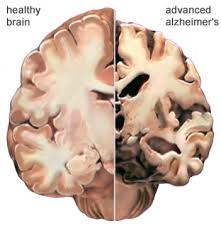
That Awful Wasteland of Alzheimer’s

alzheim

What is Alzheimer’s disease (AD)?

Alzheimer’s disease (AD) is an irreversible, progressive brain disease that slowly destroys memory and thinking skills and, eventually, the ability to carry out the simplest tasks of daily living. In most people with AD, symptoms first appear after age 60. AD is the most common cause of dementia among older people, but it is not a normal part of aging. Dementia refers to a decline in cognitive function that interferes with daily life and activities.

AD starts in a region of the brain that affects recent memory, then gradually spreads to other parts of the brain. Although treatment can slow the progression of AD and help manage its symptoms in some people, currently there is no cure for this devastating disease. AD is named after Dr. Alois Alzheimer, a German doctor. In 1906, Dr. Alzheimer described changes in the brain tissue of a woman who had died of an unusual mental illness. He found abnormal clumps (now called amyloid plaques) and tangled bundles of fibers (now called neurofibrillary tangles). alzheimers-brain

Today, these plaques and tangles in the brain are considered hallmarks of AD. The third main feature of AD is the gradual loss of connections between nerve cells (neurons) in the brain. This loss leads to diminished cell function and cell death. We don’t know what starts the AD process, but we do know that damage to the brain begins as many as 10 to 20 years before any obvious signs of forgetfulness appear. As nerve cells die throughout the brain, affected regions begin to shrink. By the final stage of AD, damage is widespread, and brain tissue has shrunk significantly.

How many Americans have AD?

According to recent estimates, as many as 2.4 million to 4.5 million Americans have AD. Unless the disease can be effectively treated or prevented, the number of people with AD will increase significantly if current population trends continue. That’s because the risk of AD increases with age, and the U.S. population is aging. The number of people age 65 and older is expected to grow from 39 million in 2008 to 72 million in 2030, and the number of people with AD doubles for every 5-year interval beyond age 65. In the years to come, AD is expected to pose physical and emotional challenges for more and more families and other caregivers, in addition to those with the disease. The growing number of people with AD and the costs associated with the disease also will put a heavy economic burden on society.

How long can a person live with AD?

AD is a slow disease that starts with mild memory problems and ends with severe brain damage. The time from diagnosis to death varies—as little as 3 or 4 years if the person is older than 80 when diagnosed to as long as 10 or more years if the person is younger. Other factors that affect how long a person will live with AD include the person’s sex, the presence of other health problems, and the severity of cognitive problems at diagnosis.

What is dementia?

Dementia is a general term that refers to a decline in cognitive function so extensive that it interferes with daily life and activities. This loss in the ability to think, remember, and reason is not a disease itself, but a group of symptoms that often accompanies a disease or condition. Many conditions and diseases cause dementia. Two of the most common causes of dementia in older people are AD and vascular dementia, which is caused by a series of strokes or changes in the brain’s blood supply. Other conditions that cause memory loss or dementia include:

•medication side effects

•chronic alcoholism

•certain tumors and infections in the brain

•blood clots in the brain

•vitamin B12 deficiency

•dehydration

•high fever

•some thyroid, kidney, or liver disorders

Many of these conditions are temporary and reversible, but they can be serious and should be treated by a doctor as soon as possible. Emotional problems, such as stress, anxiety, or depression, can make a person more forgetful and can be mistaken for dementia. Someone may feel sad, lonely, worried, or bored when facing retirement or coping with the death of a spouse, relative, or friend. Adapting to these changes leaves some people feeling confused or forgetful. Supportive friends and family or professional help from a doctor or counselor can help older adults adjust to big changes.

Source: National Institute of Aging, http://www.nia.nih.gov/

Lamb Followers

JC-Lamb“These are the ones who follow the Lamb wherever He goes. These were redeemed from among men, being firstfruits to God and to the Lamb.”

Rev. 14:4

Distinctions are going to be made, whether we like it or not.  John saw a select group of people who were extraordinary in many ways.  Their particular badge of honor was their deep and insatiable desire for the Lamb.  They saw themselves as followers whose happiness was only manifested walking in the footsteps of the Lamb.

“Lamb-followers” are a rare breed.  They are not like others.  They draw all comfort and well being by being in close proximity with the Lord, and maintaining that as their primary purpose. They follow Him because they love Him before anything else. Jesus has truly become their first-love.

Scripture has some eccentricities at times.  In this verse Jesus specifically and precisely is identified as a Lamb.  It is perhaps a bit unusual, as Jesus is given so many titles, names and accolades in this Revelation of Jesus Christ given to the gentle disciple, John. But why “Lamb?” There certainly others more majestic, more stately and dignified.

The Lamb is following his Father, and we are following the Lamb.  The Lamb takes an interesting path.  He takes us on a tour of discipleship, and we follow him through difficult challenges and sweet blessings.  He is most gentle and kind.  But he has supreme power and complete authority.  And yet, he is a lamb. An all-powerful lamb.

This badge of honor is a mark of special grace.  Lamb-followers understand this, there is no pretension to any righteousness within their minds.  Everything they need has been graciously provided.  It is their exclusive position.  And He gives it to all who ask for it.

They carry this distinction without any self-awareness or conceit.  Their eagerness to be with him strips them of any foul contamination, or they could never travel in his path.  The Lamb teaches them patiently.  They learn to strip themselves of all vanity and fleshiness.

The Lamb has gone to the cross.  He has laid down all of his deity and all its various divine accouterments. He stripped himself down and became the least of everyone. Lamb-followers must walk this same path, and it is most challenging.  But the Lamb also has come to his throne, and we who follow share in his glory. But He must become our soul’s “first-love.”


cropped-christiangraffiti1-2