Two O’ Clock in the Morning Poetry, #4

Frye-pic

Don’t stand beside my grave and weep,
For I’m not there; I do not sleep.
I am a thousand winds that blow,
I am the diamond glints on snow,
I am the sun on ripened grain,
I am the gentle autumn rain.

When you awaken in the morning’s hush
I am the swift uplifting rush
Of quiet birds in circling flight.
I am the soft star-shine at night.
Do not stand at my grave and cry,
I am not there; I did not die.

Mary Elizabeth Frye

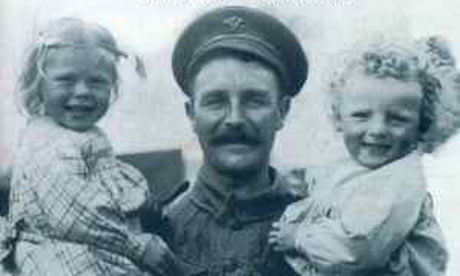
angel-wept1“Do not stand at my grave and weep” is a Holocaust poem and elegy with a very interesting genesis, written in 1932 by Mary Elizabeth Frye (1905-2004). Although the origin of the poem was disputed for some time, Mary Frye’s authorship was confirmed in 1998 after research by Abigail Van Buren, the newspaper columnist better known as “Dear Abby.” The version above was published by The Times and The Sunday Times in Frye’s obituary on November 5, 2004.

Mary Frye wrote the poem in 1932. As far as we know, she had never written any poetry before, but the plight of a young German Jewish woman, Margaret Schwarzkopf, who was staying with her and her husband at the time, inspired the poem. Margaret Schwarzkopf had been concerned about her mother, who was ill in Germany, but she had been warned not to return because of increasing anti-Semitic unrest that was erupting into what became known as the Holocaust.

When her mother died, the heartbroken young woman told Frye that she never had the chance to “stand by my mother’s grave and shed a tear”. Frye found herself composing a piece of verse on a brown paper shopping bag. Later she said that the words “just came to her” and expressed what she felt about life and death.

Mary Frye circulated the poem privately. Because she never published or copyrighted it, there is no definitive version. She wrote other poems, but this, her first, endured. Her EwaltElizFryeobituary in The Times made it clear that she was the author of the famous poem, which has been recited at funerals and on other appropriate occasions around the world for eighty years. The poem was introduced to many Britons when it was read by the father of a young soldier, Stephen Cummins, killed by a bomb in Northern Ireland. The soldier’s father read the poem on BBC radio in 1995 in remembrance of his son, after having found it in an envelope addressed “To all my loved ones” in his son’s personal effects.
She inspired many to write

Two O’ Clock in the Morning Poetry, #3

Collector_Trench

Middle Parts of Fortune, by Frederic Manning

“The air was alive with the rush and flutter of wings; it was ripped by screaming shells, hissing like tons of molten metal plunging suddenly into water, there was the blast and concussion of their explosion, men smashed, obliterated in sudden eruptions of earth, rent and strewn in bloody fragments, shells that were like hell-cats humped and spitting, little sounds, unpleasantly close, lie the plucking of tense strings, and something tangling his feet, tearing at his trousers and puttees as he stumbled over it, and then a face suddenly, an inconceivably distorted face, which raved and sobbed at him as he fell with it into a shell-hole.”

(Accounts of The Great War) 
R
FredricmanningManning was an Australian aspiring intellectual, already in his mid-30s when he enlisted as a private soldier in 1915. His prewar existence in England was dogged by unfulfilled literary hopes and emotional confusions. He served for only a few months in France, and his military career ended in alcoholism and disgrace. But in 1929 he composed a novel, obviously autobiographical, about three soldiers’ experience of the trench nightmare, which is outstanding. Almost certainly the finest work of its kind to emerge from the war. (Penguin)
&

Manning continued to write. In 1917 he published a collection of poems under the title Ediola. This was a mixture of verse predominantly in his former style alongside war poems heavily influenced by the imagism of Pound, which deal introspectively with personal aims and ideals tempered in the crucible of battle. He contributed to anthologies, for example, The Monthly Chapbook which appeared in July 1919 edited by Harold Monro, containing twenty-three poems by writers including John Alford, Herbert ReadWalter De La MareOsbert SitwellSiegfried SassoonD. H. LawrenceEdith SitwellRobert NicholsRose Macaulay and W. H. Davies alongside Manning and Aldington. He wrote for periodicals, including The Criterion, which was produced by T. S. Eliot.

&&&

Poetry did not pay, and so in 1923 Manning took a commission from his publisher John Murray to write The Life of Sir William White, a biography of the man who, as Director of Naval Construction, led the build-up of the Royal Navy in the last years of the nineteenth century. Galton had died in 1921, which not only left Manning effectively homeless, but also lacking a forceful directing influence in his life. He lived for much of the time at the Bull Hotel in Bourne, apart from a short spell when he owned a farmhouse in Surrey. At this time he was friendly with T. E. Lawrence, then serving in the Royal Air Force at RAF Cranwell, some twenty miles (a motorcycle ride) from where Manning was living. In 1926 he contributed the introduction to an edition of Epicurus’s Morals: Collected and faithfully Englished by Walter Charleton, originally published in 1656, published in a limited edition by Peter Davies. — from Wikipedia and Penguin

&

Bonus–

wwi13
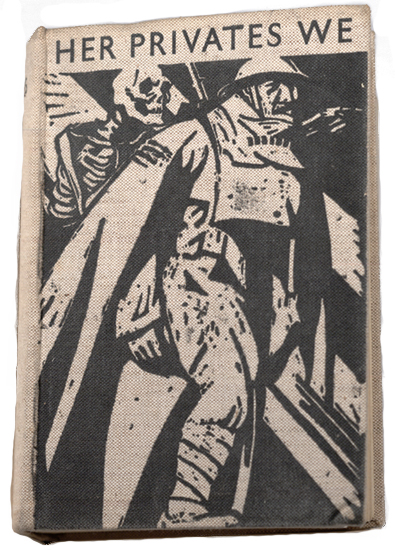
“Her Privates We” 1930, Cover art

My Comfort Food

comfort foods collage

Lord, you know the hopes of the helpless.
Surely you will hear their cries and comfort them. Psalm 10:17

Even when I walk
through the darkest valley,
I will not be afraid,
for you are close beside me.
Your rod and your staff
protect and comfort me. Psalm 23:4

You will restore me to even greater honor
and comfort me once again. Psalm 71:21

When doubts filled my mind,
your comfort gave me renewed hope and cheer. Psalm 94:19

Now let your unfailing love comfort me,
just as you promised me, your servant. Psalm 119:76

My eyes are straining to see your promises come true.
When will you comfort me? Psalm 119:82

These are the verses that speak of a Psalms comfort,

  • comfort sought
  • comfort given
  • comfort strengthening

Undoubtedly we have a God who comforts His people. That is his favorite thing to do, it is like the “special of the house.” He cooks up five-star entrees, and these all meet us on a seriously high level.

“Comfort food is traditionally eaten food (which often provides a nostalgic or sentimental feeling to the person eating it), or simply provides the consumer an easy-to-digest meal, soft in consistency, and rich in calories, nutrients, or both. The nostalgic element most comfort food has, may be specific to either the individual or a specific culture. Many comfort foods are flavorful; some may also be easily prepared.” From Wikipedia, http://en.wikipedia.org/wiki/Comfort_food.

My comfort foods are Wisconsin based and farm fresh.  Favorites are pan fried blue-gill, 0r perch, and fried potatoes. Honey glazed carrots, and homemade white bread, with real butter and jam. Whole milk straight from our cow, and cream two inches thick from a gallon jug. Very sharp Colby cheese with hot homemade apple pie, with an open lattice crust. And coffee, of course, with cream.

These dishes comfort me on some basic level, and I’m sure you have one or more favorites. Simple, but satisfying dishes made by a loved one. They are far more than mere calories, they provide things greater than you can see. “Mom’s home cooking” plain with no pretense.

“Taste and see that the Lord is good.
    Oh, the joys of those who take refuge in him!” Psalm 34:8

God feeds us comfort food.  A true easiness and calm, imparted by Grace to our hearts. The Holy Spirit has a title on His desk– “The Comforter.” Why is He called that? Because that is what He specializes in and masters. He is our dear sufficiency and satisfaction, freely set on our tables.

Don’t just look– eat up (just like mom insisted we do)!

3 “All praise to God, the Father of our Lord Jesus Christ. God is our merciful Father and the source of all comfort. He comforts us in all our troubles so that we can comfort others. When they are troubled, we will be able to give them the same comfort God has given us. 5 For the more we suffer for Christ, the more God will shower us with his comfort through Christ. 6 Even when we are weighed down with troubles, it is for your comfort and salvation! For when we ourselves are comforted, we will certainly comfort you. Then you can patiently endure the same things we suffer. 7 We are confident that as you share in our sufferings, you will also share in the comfort God gives us.”

–1 Corinthians 1:3-7, NLT

recite-25825-95458975-1jznxku

Pathp

Deciding What Makes Up Wisdom

kind-words1

“Often wise sayings fall on barren ground; but a kind word is never ever thrown away.” Sir Arthur Helps

There are so many things to grasp. Our own recovery practically insists we grab vital truths. When we latch on them, we must stick to them no matter what. When we lose someone, or even lose ourselves, we must listen so much closer– the Lord will send someone to our side.

Some rules though:

  • Curiosity is not ever the same as caring.
  • Losing ones balance is never the same as losing ones testimony.
  • A gentle touch can mean more than a powerful revelation.
  • Words of kindness are better than cold truth.
  • To really hear is better than a speech of true words.
  • We must live out the questions we whisper to God
  • Practising prayer is better than just simply praying.
  • Similar experiences that emphasize a connection is never the same as the individuals.
  • Our questions to God reveal far more than His answers.
  • When we do decide to dance, our true friends will dance too.

Ok, I must admit these are not always true and concrete in my heart. My life seems to be a cavern of emptiness; there is little inside but a silly reputation. But it’s a blanket that can’t warm my chilly heart.

12 “Since God chose you to be the holy people he loves, you must clothe yourselves with tenderhearted mercy, kindness, humility, gentleness, and patience. 13 Make allowance for each other’s faults, and forgive anyone who offends you. Remember, the Lord forgave you, so you must forgive others. 14 Above all, clothe yourselves with love, which binds us all together in perfect harmony.”

Colossians 3:12-14, NLT

“Share each other’s burdens, and in this way obey the law of Christ.”

Galatians 6:2

“It is a sin to belittle one’s neighbor;
    blessed are those who help the poor.”

Proverbs 14:21

recite-25825-95458975-1jznxku