Affliction Understood, [Daily Pain]

The 2009 Pulitzer Prize Winner

There is the unquestionable presence of affliction that is present in our lives.  Affliction is the general term for specific instances of trials, tribulations, persecutions, emotional or physical pain and suffering.

The ancient Assyrians used the word for “affliction” as the same word to describe their method of a public execution, which involved being impaled to the ground.  Rocks were gradually piled high until the victim expired.  The combination of being impaled and the rocks piled on you was quite devastating.

And you know what?  That is a terribly specific concept of what afflictions feel like.  Just ask someone, it is exceedingly terrible to be in pain and feel ‘buried’ at the same time.  There is a feeling of suffocating in suffering.  Some have described it, like being ‘hit with a 2×4’. You have just been completely blindsided.

In the letters from the Early Church there was a patentability, or openness when it came to persecution and pain.  The writers of the New Testament operated out of a profound awareness of the pain of the believers of their day.

  • “We think you ought to know, dear brothers and sisters, about the trouble we went through in the province of Asia. We were crushed and overwhelmed beyond our ability to endure, and we thought we would never live through it.”   2 Cor. 1:8
  • “We are pressed on every side by troubles, but we are not crushed. We are perplexed, but not driven to despair.”  2 Cor. 4:8
  •  “You have greatly encouraged me and made me happy despite all our troubles.”   2 Cor. 7:4

‘The Ostrich Effect’ in Affliction

One of the most extensive arguments concerning ‘affliction’ develops around the nature of the atonement.  The thought is that Jesus died and rose to bless me.  Sin and sickness, poverty or lack are not part of God’s plan for the redeemed.

Now, it is possible to refute this in this little post.  But I will try to nudge you a bit to examine the issues of the Early Church.  Know however that there are many people who will follow the ostrich’s example and bury their heads to avoid reality of affliction.  But, I can understand this impulse– this desire to honor God, even if we “play word games” with our faith.

I also know first-hand that the struggles are hard.  Wrestling with them is a brutal way to live the abundant life.  Failure and frustration are trying to short circuit our faith.  And our faith must be protected and valued.

“Afflictions add to the saints’ glory. The more the diamond is cut, the more it sparkles; the heavier the saints’ cross is, the heavier will be their crown.”

–Thomas Watson

 What Does the Scripture Say About Affliction?

  • “Dear friends, don’t be surprised at the fiery trials you are going through, as if something strange were happening to you.”   1 Peter 4:12
  • “…where they strengthened the believers. They encouraged them to continue in the faith, reminding them that we must suffer many hardships to enter the Kingdom of God.”   Acts 14:22
  • I have told you all this so that you may have peace in me. Here on earth you will have many trials and sorrows. But take heart, because I have overcome the world.”   John 16:33

“The wisdom of God appears in afflictions. By these He separates the sin which He hates, from the son whom He loves. By these thorns He keeps him from breaking over into Satan’s pleasant pastures, which would fatten him indeed, but only to the slaughter.”  

-James H. Aughey

I want to try to visit this subject again.  We will trust that ‘real light’ will come to our twilight worlds.

1brobry-sig4 (2)


cropped-christiangraffiti1-3-1

*

Life in the Fast Lane, [Rest]

“Surely I have calmed and quieted my soul, Like a weaned child with his mother; Like a weaned child is my soul within me.”

Psalm 131:1

“We are going as fast as we can, living life at a dizzying speed, and God is nowhere to be found. We’re not rejecting God; we just don’t have time for him. We’ve lost him in the blurred landscape as we rush to church. We don’t struggle with the Bible, but with the clock. It’s not that we’re too decadent; we’re too busy. We don’t feel guilty because of sin, but because we have no time for our spouses, our children, or our God. It’s not sinning too much that’s killing our souls, it’s our schedule that’s annihilating us. Most of us don’t come home at night staggering drunk. Instead, we come home staggering tired, worn out, exhausted and drained because we live too fast. “

— Michael Yaconelli

We have a problem.  We cannot hide it anymore.  It is invasive and a detriment to our lives.  It is called activity, or busy-ness.  It can destroy our souls as much as adultery, or stealing would.

Jesus commanded his disciples to rest, so we must conclude that this is necessary for us as 21st century disciples.  But the current is strong and it seems there is no “slow lanes” anymore.  Our days start early and we are propelled through it by the frantic pace of continual demands.

Can we honestly say that this is the abundant life that Jesus promised us?  Is this the fruitful Christian life?  The verse we must consider, “Be still and know that I am God.”  That word “still” means to be without motion, calm, at rest.

Tozer wrote to his generation with the penetrating question, “Has busy-ness become the new holiness?”  He observed that the Church was partial to activity, and that discipleship was becoming equated to work and movement.  The presence of the Lord was no longer a factor to the modern disciple.

We must return to the Master.  We must become quiet and listen to what he has to tell us. Matthew 11:28 tells us,

“Come to Me, all you who labor and are heavy laden, and I will give you rest.”

1brobry-sig4 (2)


cropped-christiangraffiti1-3-1


“For thus says the Lord God, the Holy One of Israel: “In returning and rest you shall be saved; In quietness and confidence shall be your strength.” But you would not”

Isaiah 30:15


Becoming a Part of What is Really Real


195

“Six days later, three of them saw that glory. Jesus took Peter and the brothers, James and John, and led them up a high mountain. His appearance changed from the inside out, right before their eyes. Sunlight poured from his face. His clothes were filled with light.”

Matthew 17:1-2, The Message

These three disciples belonged to the inner circle of our Lord’s friends. There must have been something in them that peculiarly endeared them to Him. We know that Peter was a leader among the apostles, and also a bold confessor; that John was “the disciple whom Jesus loved;” and that James was the first of the band to die as a martyr.

It is very encouraging to look at Peter who was admitted to such high privileges; a man with so many faults, who made so many mistakes, who even at the last shamefully denied Christ, and yet we remember that he was one of our Lord’s closest friends. It gives encouragement to us that, with all our faults, we may yet be very dear to Christ.

It does not seem so strange that John was allowed to enter the inner circle. His disposition was gentle and amiable, very much like the Master’s. Yet it is probable that John owed his sweetness and gentleness of character to his being with Jesus. It could be he was not always a man of love.

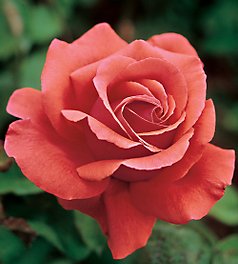
rose-little1There is a Persian fable of a piece of clay made fragrant by lying on a rose; the perfume of the rose passed into the clay. So it probably was with John. He crept into his Master’s bosom, and lay close to His heart; and his Master’s spirit of love and gentleness passed into his life and transformed it. Thus we have a lesson, too, from John: constant and loving communion with Christ will change us into His likeness.

The lesson from this choosing of three out of the whole band for peculiar privileges is that while Jesus loves all His friends, there are certain ones whom He takes into closer confidence than the others. There are degrees of nearness to Him, even in this world. Should we not strive to be among those who, by disposition and by service, win their way to the closest places? We must remember that those who serve most are chiefest. –JRM

*

kyrie elesion, Bryan

(Lord, have mercy on me, a sinner)
cropped-christiangraffiti1.jpg
 
&


Why This Waste? [Extravagance]

JAdore-LOr
J’Adore L’Or: Version Haute Joaillerie Exception – $ 30,000

Now when Jesus was at Bethany in the house of Simon the leper, 7 a woman came up to him with an alabaster flask of very expensive ointment, and she poured it on his head as he reclined at table. 8 And when the disciples saw it, they were indignant, saying, “Why this waste? 9 For this could have been sold for a large sum and given to the poor.”’ 

Matthew 26:6-9, ESV

Chapter 26 is the beginning of the end. This chapter sets up the last week of Jesus which without question his prime purpose of death and resurrection. Matthew sets up this “Anointing at Bethany” as the front door of this final week. The immediate verses prior to this concern themselves with an organized plot by the Jewish leadership to murder Jesus.

There are things to consider:

  • Simon (the leper), Jesus stayed here sometime during his last days. Had Simon been healed by Jesus? He might even be a carrier of this fearsome disease. And even if he didn’t, the stigma was so ingrained his first name was attached to the appellation “the leper.”
  • the value of the perfume was essentially unheard of. (You might have given a tin of the most expensive caviar to a homeless man– it was that shocking.) The calculations have been done and the perfume would have been worth $30,000. And this was no ordinary perfume– it was an ointment, a concentrate from which lesser perfumes would be made. This was the real stuff.
  • the disciples, are quite disturbed. They quickly deduced the value of this anointing, and balked. Scripture says, “they were indignant.” Deeply offended, they could not process what was really going on in front of them. They were quietly livid.
  • the wasted potential of the perfume. A years wages could of been given away to the needy. Passover was the special time when everyone saw to the needs of the poor, and scripture says a lot about helping the poor. It didn’t sit too well with the disciples to empty this flask over Jesus head and feet.
  • the effect on Jesus would’ve been profound. It was God’s signal of an impending death. Because this was more an ointment than a liquid, its effect would have lingered for weeks. It is quite possible that Jesus would’ve smelled that smell while he was being beaten and crucified. I have to believe it encouraged him, as he suffered.

The disciples really missed it with this one. The practical thing would take Mary’s expensive jar and sell it, and then to give the money to a needy family. Disciples throughout history have confused discipleship with serving and doing, but it really is concerned with a person of Jesus Christ. This really is a crucial point.

We serve a person, not a “discipleship.” We pour out ourselves for Jesus, serving him as out “first love.” Without this love we just become a good religion, among many good religions. But our sacrifice for Jesus does indeed set us apart.

Be extravagant in your love to him. Jesus should always be the center. As your love pours out over him, I have to believe it perfumes heaven with your gift.

bry-signat (1)

cropped-christiangraffiti1.jpg