On Life Support

 untitled (2)And I will give them singleness of heart and put a new spirit within them. I will take away their stony, stubborn heart and give them a tender, responsive heart, 20 so they will obey my decrees and regulations. Then they will truly be my people, and I will be their God. 21 But as for those who long for vile images and detestable idols, I will repay them fully for their sins. I, the Sovereign Lord, have spoken!”

Ezekiel 11:19-21, NLT

This is one of those complex portions of God’s scripture where several ideas overlap. In our English translation, we read compound sentences and knotty syntax. But the thoughts are God’s, and therefore significant. Without these truths though, I believe that we can quickly slip into a ‘comatose’ condition.

First we must consider who is involved.

  1. God [speaking through the prophet] declares His intentions.
  2. His repentant people [Israel] are acted upon.
  3. But there is a third bunch, those unrepentant ones who have decided within themselves that they will stick with their idols.

God is very decisive by this point. The prophetic ministry was supposed to work, many prophets and teachers have been sent out. But with very limited success. If we pick one out, it would have to be Hosea; his ministry was dramatic– but ultimately fruitless. The only real successful prophet was Jonah– preaching to Ninevah, ironically a pagan people. But God’s own people are living in flagrant sin. They remain untouched. They’ve chosen to remain in their sinful condition.

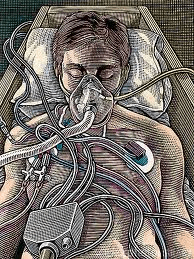
A solid and clear promise has been given. An interior work has been promised by God, if they can only show a minute sense of life. The nation is on “life support.” The prophets attend to the needs before them. They are very far from the virile and robust nation– they are in the ICU and are showing only scanty signs of life.

This promise is that a special work will be done inside. They will become both tender and responsive again. A new receptivity and awareness will come into being. The ability to obey will ignite within. We call this “revival.” Revivalists throughout history have carried this to every generation.

As I scan over my Christian life of more than 30 years, I simply see my own “cycles” of sin and revival. I wish I could have been more consistent. But I cling to the faithfulness of God. He stays true even when I’m not. He has promised me. I’ll take Him at His word.

And I am certain that God, who began the good work within you, will continue his work until it is finally finished on the day when Christ Jesus returns.”

Philippians 1:6, NLT

God will do what He can, His efforts are heroic. He fully intends to change us— if we’re only willing.

“A revival is nothing else than a new beginning of obedience to God.” 

Charles Finney
1brobry-sig4

cropped-christiangraffiti1 (1)

)

The Micro and the Macro, by John Piper

10piper
John Piper, Pastor of Bethlehem Baptist Church, Minneapolis. Writer and Speaker, DesiringGod.org

Originally dated, July 14, 2008 | By: John Piper 

One of the reasons God rarely gives micro reasons for his painful providences, but regularly gives magnificent macro reasons, is that there are too many micro reasons for us to manage, namely, millions and millions and millions and millions and millions. God says things like:

  1. These bad things happened to you because I intend to work it together for your good (Romans 8).
  2. These happened so that you would rely more on God who raises the dead (2 Corinthians 1).
  3. This happened so that the gold and silver of your faith would be refined (1 Peter 1).
  4. This thorn is so that the power of Christ would be magnified in your weakness (2 Corinthians 12).

But we can always object that there are other easier ways for God to accomplish those things. We want to know more specifics: Why now? Why this much? Why this often? Why this way? Why these people?

The problem is, we would have to be God to grasp all that God is doing in our problems. In fact, pushing too hard for more detailed explanations from God is a kind of demand that we be God.

horseshoe-anvil-clipartThink of this, you are a blacksmith making horseshoes. You are hammering on a white hot shoe and it ricochets off and hits you in the leg and burns you. In your haste to tend to your leg you let the shoe alone unfinished. You wonder why God let this happen. You were singing a hymn and doing his will. Your helper, not knowing the horseshoe was unfinished gathered it up and put it with the others.

Later there was an invasion of your country by a hostile army with a powerful cavalry. They came through your town and demanded that you supply them with food and with shoes for their horses. You comply. Their commander has his horse shod by his own smith using the stolen horseshoes, and the unfinished shoe with the thin weak spot is put on the commander’s horse. In the decisive battle against the loyal troops defending your homeland the enemy commander is leading the final charge. The weak shoe snaps and catches on a root and causes his horse to fall. He crashes to the ground and his own soldiers, galloping at full speed, trample him to death. This causes such a confusion that the defenders are able to rout the enemy and the country is saved. Now you might say, well, it would sure help me trust God if he informed me of these events so that I would know why the horseshoe ricocheted and burned my leg. Well maybe it would help you. Maybe not.

God cannot make plain all he is doing, because there are millions and millions and millions and millions of effects of every event in your life, the good and the bad. God guides them all. They all have micro purposes and macro purposes. He cannot tell you all of them because your brain can’t hold all of them.

Trust does not demand more than God has told us. And he has given us immeasurably precious promises that he is in control of all things and only does good to his children. And he has given us a very thick book where we can read story after story after story about how he rules for the good of his people. Let’s trust him and not ask for what our brains cannot contain.

flourish1


http://www.desiringgod.org/Blog/1307_why_god_doesnt_fully_explain_pain/

Need Immediate Help? Call 1-888-NeedHim

The Lost & Found Department of the Universe

 istock_000011738379small


“What man among you, who has 100 sheep and loses one of them,  does not leave the 99 in the open field  and go after the lost one until he finds it?” 

Luke 15:4

I like ‘red letter’ editions of the Holy Scriptures.  I will personally pause when I read these selected verses, pausing to process the steady fact that these are Jesus’ own words.  They are different, and there is a quality to them that is not found in the thoughts of mere men.  I have no doubt of the inspiration of all of God’s Word.  I trust it implicitly.

When I make that pause, very often I reflect afresh on what I’m about to read, and my heart starts preparing to listen closer.  In Luke 15, everything is lost; a lost coin, a lost sheep, and a lost son.  All three link and give a common theme of

1) Something getting away,

2) The value of that lost thing, 

3) The diligent searching that follows,  

4) The apprehension of that which is lost,  

5)  The joy of the finder over the recovery of the thing which was lost.


These three parables strengthen each other.  Together they have the deep power of declaration.  They speak of the merciful heart of our Heavenly Father with a permanence and eloquence that defies any comparison. 

When we read Jesus’ words they reveal to us the intense searching that the Lord has for our lost souls, and that is the central theme of all history.  Jesus is looking for you– concentrating intently and focused.

It doesn’t matter how ensnared you are, or how deeply you have sunk.  God’s love for you compels Him to seek you.  He will reach into the thorns and thistles, if He has to.  Perhaps your sin has been frequent and you are stained deeply.  The declaration of Jesus’ words reveals the heart of God.  It is irrevocable and central to the way God deals with us.

What is the secret of the universe?  Why does reality exist?  What is the purpose of human history? 

I believe it is the apprehension and deliverance of human beings. 

That’s it.  What should the Church be doing?  Finding and rescuing people who are lost.  That is the purpose of everything, and that searching is to be our focus.

The question remains of what about God’s thinking?  Jesus’ words (in red) reveal the true essence of His dealings with us.  He will always act this way! He is constant and true.  He will always be this way.  Searching, finding, redeeming and celebrating.  Don’t doubt His love for you.

bry-signat (1)

cropped-christiangraffiti1.jpg

*


Bragging Rights


battery

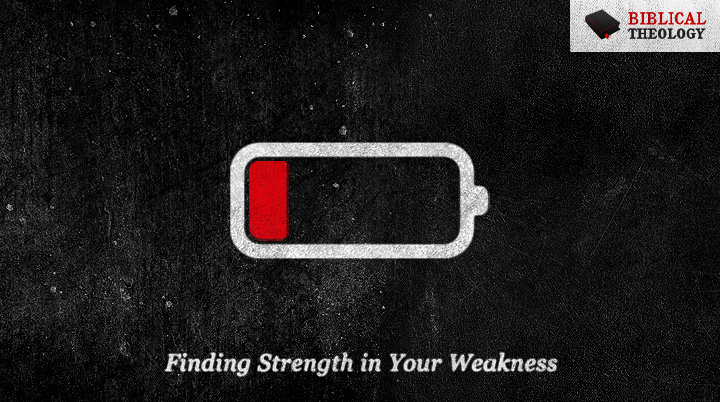
“Three times I begged the Lord to make this suffering go away. But he replied, “My kindness is all you need. My power is strongest when you are weak.” So if Christ keeps giving me his power, I will gladly brag about how weak I am.”

2 Corinthians 12:8-9

This is a very crisp idea, Paul flips things upside down and then gives it a shake.  His attention is directed at bringing clarity and understanding about these issues of pain, weakness and conflict.  There is an understanding that Paul passes on that has personally worked its way through his own heart.  Truth that has taken that pathway is very precious.

Paul shares a conversation he had with the Lord Himself.  It really does seem that this subject was a continual topic between them.  He mentions it to Jesus three different times.  This tells me,  that suffering and pain are issues where it’s hard to get resolution.  When we hurt, we want Jesus to intervene, asap.  It is a real riddle to us, “Why am not healed?”

It seems to me that Paul comes to the point over and over and its not resolved to his satisfaction.  When the Lord does bring Paul to an understanding; it is basically the whole dynamic of the Christian experience.  And it is this, when a believer is sick, or weak–it’s then the strength and power of Jesus can be accessed.  Simply put–No pain, no power.

Paul ‘begged’ for resolution, and the ultimate response was the Lord was showing him the secret for his strength was in that presence of pain.  It gave him a power and force and might that he would not have otherwise.  Now Paul had a very intense ministry.  He would deal with issues and conflicts that would shrivel up most believers.  The list is long (see 2 Corinthians 11:23-28) and painful.  But the gist of it was Paul being abused and attacked by other people, over and over.

Paul had to have an extra boost to fulfill his ministry.  He needed affliction and weakness to connect him to a  huge ‘underground river’ of grace and love that flowed under his feet unseen and unknown.  The difficulties that Paul dealt with were actually what propelled him in his ministry.

There can be no power without pain; no discipleship without some kind of ‘disability.’

Paul tells the truth, “I boast in my weaknesses.  Just tap me into His power”.  Trials are the power outlet for the believer.  When he says things like that, it is good to pay attention.  The earnestness of Paul’s language in these verses gives us a sense of what is real, and how we should trust these ideas, as we are propelled into our ministry to the Lord.

“The power of the Church is not a parade of flawless people, but of a flawless Christ who embraces our flaws. The Church is not made up of whole people, rather of the broken people who find wholeness in a Christ who was broken for us.” –Mike Yaconelli


bry-signat (1)

cropped-christiangraffiti1.jpg