100% Pure Depression


depression

Answer me quickly, O Lord!
    My spirit fails!
Hide not your face from me,
    lest I be like those who go down to the pit.
Let me hear in the morning of your steadfast love,
    for in you I trust.
Make me know the way I should go,
    for to you I lift up my soul.

Psalm 143:7-8

I am not a psychiatrist nor a licensed therapist. I am just an ordinary man serving God’s flock. Yet if I were to speak I would speak on the subject of clinical depression. The stats are pretty grim. Depression affects 16.1 million people, or 6.7% of the population every year, age 18 or older. The median age is 32.5 years old. (These are just U.S. stats only.)

I’ve come to understand this much through my own struggles. It seems that there are three types of depression to consider.

These ‘big three’ seldom stand alone; they mix or overlap each other to make diagnosis difficult. Only a doctor can make that, but we can at least know that these three are most likely behind our issues. You can have these three working against you at once.

the big three:

1) Guilty depression- when our behavior hasn’t been what it should be (sin), this is the source of condemnation. Jesus forgives us, so we should forgive ourselves. Guilty depression is very hurtful and damaging to our spirits. Often our healing will come when we draw close to the Lord Jesus.

2) Organic depression- when it’s built into our DNA and part of our very being; it becomes fundamental to your personality. You can compare it to  someone who has diabetes or MS. We live in a fallen world and genetics affects us at this core level.

3) Reactionary depression when we react to some bad news or injury, or working too much with no time off. We react to difficulties in this way when outside forces infringe upon our inner heart. Often God sends us an elder or a mature believer to come and help us out.  This is fortuitous indeed to have someone to speak through our confusion.

Each of these are different, but if you could identify them it may help you move through them more gracefully. These three can overlap. Perhaps it’s helpful to see reactionary depression as the most common, while guilty depression can be the most hurtful to the believer’s heart.

Satan is involved in the intensification of each.

He creeps in and slowly strangles all hope. Worship and the Word is critical and necessary weapons for us out us to walk-out clean and clear. We must defend ourselves (and others) with these weapons that the Father has given us.

Knowing the type of depression will give you understanding and perhaps this will help you defuse the situation. These things have helped me personally to work through my own issues.

“Anxiety in the heart of man causes depression, but a good word makes it glad.”

Proverbs 12:25

Statistics in opening paragraph from Anxiety and Depression Assn of America. These numbers are just for the U.S. Here is their website: https://adaa.org/about-adaa/press-room/facts-statistics


Anger That Will Destroy You

“Be not quick in your spirit to become angry, for anger lodges in the heart of fools.”

-Ecclesiastes 7:9

“Of the Seven Deadly Sins, anger is possibly the most fun. To lick your wounds, to smack your lips over grievances long past … to savor to the last toothsome morsel both the pain you are given and the pain you are giving back — in many ways it is a feast fit for a king. The chief drawback is that what you are wolfing down is yourself. The skeleton at the feast is you.”

-Frederick Buechner

What really happens when I get angry? I suppose my B/P goes up and I get all red, but just perhaps it’s a bit more than that. The Bible is painfully clear on the subject of anger. It seems there is an anger that is righteous; and one that is unrighteous. It is the latter I’m most familiar with, unfortunately. And repeatedly our anger, the earthly kind, is condemned by Scripture. It is terribly wrong, and it is sin.

Merriam-Webster defines anger as “a strong feeling of displeasure and usually of antagonism, or rage.” This definition seems right on. First–it’s a strong feeling. There is an intensity to it, and it ‘clouds’ my sense of what is reasonable. Second–it has some form of frustration and irritation. Third–it escalates into “rage.” And I suppose that anger at this particular level is where it really, really gets destructive. At this point we become totally irrational and unbelievably destructive. When we get to this point we become “fools.”

I remember clearly having a dog that killed a chicken. My dad took the carcass and wired it to the dogs neck. After some time that chicken began to rot. It putrefied to the point where pieces of that carcass started to fall off. I can still see the dog’s eyes rolling, and he was slobbering all over. the place. That dog never even touched another chicken. It completely cure him. (I suppose the ASPCA would object today.)

I suppose that is what carnal anger is like. It’s something that we carry around and it defiles us. We learn that evil attaches itself to each of us and pollutes us. We soon realize that this kind of life is really death. When anger is attached to us, we are poisoned inside. Someone once said that “he who angers you, conquers you.”

No matter how just your words might be, you ruin everything when you speak with anger.”

–John Chrysostom

There is another kind of anger though. It’s the kind that is turned on when we are angry with ourselves. We call this “self-condemnation.” Internalized disgust with yourself is extremely corrosive to our personality and our spirits. Instead of an authentic confidence in what Jesus’ has done, we look inside with hate, anger and disgust. We condemn and put ourselves under a twisted form of justice that is not biblical, nor is it true.

When we become angry with ourselves (and yes, we sin constantly) we dismiss the sacrifice of Jesus and His forgiveness. We become a law unto ourselves, and we pass a guilty judgement on our sinfulness. Christians are quite often ‘crippled’ by self-condemnation and a vicious guilt. Perhaps we are the most ‘visible’ when it comes to this kind of self-hatred.

Satan is the prime instigator of this attack. He desires to split you from fellowship with God. That is the way he functions, you might say that this is his evil ‘ministry.’ His specialty is guilt, an inciting an unholy anger which we turn inward. We give him the right to accuse us before God. We no longer see the blood of Christ as our covering for our sin. He indicts us before a holy God, and all we see is our guilt. Is it any wonder that we are angry with ourselves?

“The salvation and the power and the kingdom of our God and the authority of his Christ have now come. The accuser of our brothers and sisters, who accused them day and night before our God, has been thrown down.” (Revelation 12:10)

I suppose this anger at ourselves is perhaps our most difficult challenge we face. More believers are ‘hamstrung’ by this than any other sin. When we turn on ourselves, we become angry and self-condemned. We avoid His healing presence, His Word and the fellowship of other saints. Most of all, we don’t want to pray or worship.

Dear one, come to Jesus, and bring along your issues. He is the one who loves you. He died, and He has covered you with His blood. He is God’s Passover lamb who takes away all your sin. Jesus’ present day ministry is not just sitting on a golden throne, He is actively interceding for you even as you read this.

” He poured out his life unto death, and was numbered with the transgressors. For he bore the sin of many, and made intercession for the transgressors.” (Isaiah 53:12)

Your forgiven brother,

Bryan

‘Snowflake’ Discipleship

“Thank you for making me so wonderfully complex! Your workmanship is marvelous—how well I know it.”

Psalm 139:14

“God is not a duplicator, He is a Creator. You are an original.”

-Reinhard Bonnke

The Bible states many wonderful things. One of them is that we are created in the image of God, and I’m quite certain that each of us are shaped completely different. I recently read that an estimated 117 billion people have lived on earth. That’s amazing; and to think we are all unique.

Sometime ago I found my Grandmother’s Bible.

I was somewhat intrigued, and I supposed that it might just ‘impart’ some special spiritual blessing to me. I sat down on the couch, and reverently opened it up. It was filled with wonderful handwritten notes.

As I sat down to read it though, I slowly began to realize that it was exactly like my own! The verses and the promises were the same, they had not changed. What was true for my grandma was true for me. That amazed me, and it kind of sent me spinning. But I suddenly started thinking.

Each of us struggles differently.

We endure depression, PTSD, schizophrenia, even suicidal thoughts. We struggle with different addictions and lonely divorces. There are those believers who are epileptics or disabled. There are some of us who have been raped or molested. I have a paralyzed right arm, and am typing this with my left hand. I also struggle with depression and anger.

Each of us are the same in a basic sense, and yet we are all distinctly different. We all have gone through things, some good, some quite awful. These issues are uniquely our own. Our “personal” testimony with God is unlike someone else’s. We respond to our different circumstances in different ways.

We are “snowflakes’ that have been artistically crafted. Our circumstances are individually tailored by God, who is the ultimate Artist. I opened this post with the idea that God creates “snowflakes,” and I’ve been told that every one of them is unique.

I do believe that when we stand before God we will all have these fantastically different stories. Each of us have found forgiveness, mercy and grace that the Lord freely gives us. As “grace-walkers” our life can be mixed with His love, filtered through a myriad of circumstances.

And they mix exceedingly well.

Reading the Word we must realize that each man or woman who walked with God had a different story to tell. We rightly consider them in amazement. And yet none of them knew they were special at the time, all they understood was “the daily grind.”

We can trust Him. We slowly begin to see, and understand, that there are implications of being ‘snowflakes.’ God took Joseph and ‘molded’ him by His unique circumstances, he went from prison to the Prime Minister overnight. Each of us has testimony of His incredible care.

–Francis Schaeffer

Your very unique brother,

Bryan

My Facebook

How Well Do You Suffer?

John Newton, Exodus 3:2

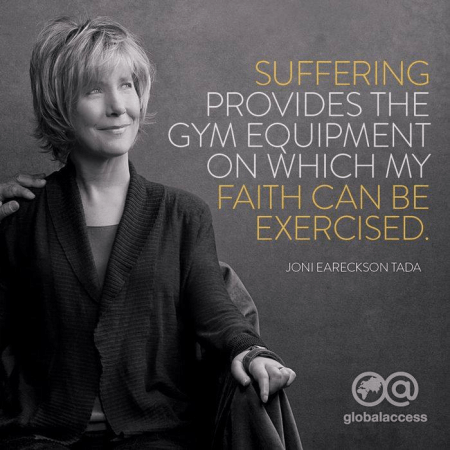
It seems that pain is the best teacher. We learn the hard way to come under God’s direction, and we finally learn to love others. Maybe it’s our pain that communicates His grace–is this how God changes us?

After all, the crushed grapes make the wine.

C.S. Lewis once made the comment, (and it’s worth thinking about), that “experience is the most brutal of teachers. But you learn, my God do you learn.” We face many obstacles, run into quite a few dead ends, and along the way we learn that when we really hurt, we start to teach something that the Church desperately needs.

My discipleship has been chock full of challenges. I’ve lost the use of my right arm, I have struggled with depression. I had a brain tumor removed, and must walk with a cane. I struggle with intense fatigue. I now have severe issues with pain. (I no longer pastor a church or teach in a Bible college.)

In November 1999, my wife and I lost a child.

I have prayed earnestly for a complete healing and had others pray for me. It’s funny, but all of this has happened after I became a Christian disciple! I often ask myself why? Why did God allow this to happen?

What did I do to deserve all of this?

Paul and Barnabas came into an interesting place (we can read about it in Acts 14.)

“Strengthening the souls of the disciples, encouraging them to continue in the faith, and saying that through many tribulations we must enter the kingdom of God.”

Acts 14:22, ESV

Some Bible teachers we listen to on the internet choose to minimize suffering, and of course we adopt a lot of our own theology to factor out pain and difficulty. But is this what the Bible teaches? If we read Hebrews 11, we find that life could be pretty grim for those with faith in God.

“Women received back their dead, raised to life again. There were others who were tortured, refusing to be released so that they might gain an even better resurrection. 36 Some faced jeers and flogging, and even chains and imprisonment. 

37 They were put to death by stoning; they were sawed in two; they were killed by the sword. They went about in sheepskins and goatskins, destitute, persecuted and mistreated— 38 the world was not worthy of them. They wandered in deserts and mountains, living in caves and in holes in the ground.”

Why does it have to be so hard for us as believers in Jesus?

Common sense suggests that things should get easier for those who believe. We somehow think that God rewards faith with instant glory. But I painfully discovered that my discipleship, my faith, doesn’t mean some wonderful existence on this planet. It seems that pain becomes the way we grow up and mature in Him.

I honestly believe, after over 40 years of following Jesus, that suffering is part of God’s plan for me.

It has never been easy. It never was. And I wish it was different.

My God, I wish it was different.

No matter what you are going through, remember that God always loves you. He has chosen us to navigate us through much difficulty. We must however, convert these painful things by our faith in Him. And only our faith does this.

And we know that in all things God works for the good of those who love him, who have been called according to his purpose.”

Romans 8:28

We must learn to regard people less in light of what they do or omit to do, and more in the light of what they suffer.

Dietrich Bonhoeffer