God’s Authentic Artisans

photo: aalmarkllc.com

Sculpture is 3-D art. It can be made with marble, glass, metal, wood, plastics. It can be carved or cast, welded or painted. There can be sculpture using light, sound, water, kinetic (moving), land art, and environmental enhancements. It’s just one way to be creative, with many applications.

Sometimes we can define and confine sculpture far too simply or narrowly, but there are so many ways to communicate visual art. There are so many ‘cutting edge’ efforts, showing the creativity of people who are themselves created in the image of God. When we create, we emulate the Creator. It’s something worth pondering: God creates beautiful snowflakes, and we make ‘Styrofoam’ cups. (Hardly creative.)

There are over thirty uses of “skillful” people in the Old Testament alone. The Hebrew word used is carries with it the idea of “excelling at a task– an artisan.” When both the tabernacle and the temple were constructed, the Holy Spirit directly commanded the selection of artists and artisans to design beauty right into their work. There was nothing that was prefab or shoddy. The work done was meticulous and took patience.

13 And King Solomon sent and brought Hiram from Tyre. 14 He was the son of a widow of the tribe of Naphtali, and his father was a man of Tyre, a worker in bronze. And he was full of wisdom, understanding, and skill for making any work in bronze. He came to King Solomon and did all his work.

1 Kings 7:13-14, ESV

I’ve come to the place where I see talented people, with enhanced skills in many places: they are mothers, fathers, mechanics, plumbers. They are teachers and nurses, lawyers and accountants. They all excel at what they do, and it’s great when they are acknowledged and honored. They are creative in their work, “and full of understanding.”

When they go to work, they will carry out their duties with a flair. Some will have an awareness of God’s presence– some may not be aware. I was hospitalized a few years ago, I remember quite clearly a lady who came in and mopped my floor. She was skilled at her task, thorough and even artful. Tears came as I thought about her working. I felt humbled by her kindness. She was truly a minister of God’s grace on that day.

There is a line from Bernandos novel, “A Diary of a Country Priest.” It’s at the very end of the book, and the protagonist is dying. His attendant was disturbed by his inability to get a priest to come and minister the Sacrament of Last Rites. The dying man, looked at his friend, “What does it matter? Grace is everywhere.” Looking at the housekeeper, that same line came to my mind– grace is everywhere!


The man who carved the flourish above is a master carver. He is also a pastor and lives in Florida. His website is at http://www.aalmarkllc.com/ and he has posted a short video on YouTube,  http://www.youtube.com/watch?v=TTIuxKz5joc&w=640&h=360. He is a true example of a great woodworker.

aabryscript

Horses and Chariots, [Seeing the Invisible]

Photo: Therrol Andrews, Homer Alaska

“Earth’s crammed with heaven,
And every common bush afire with God,
But only he who sees takes off his shoes;
The rest sit round and pluck blackberries.”

― Elizabeth Barrett Browning

Just beyond our earthly vision there exists the world of the invisible. There are things happening all around us. Things that are of a spiritual essence but no less real because we can’t see them.

 “When the servant of the man of God got up early the next morning and went outside, there were troops, horses, and chariots everywhere. “Oh, sir, what will we do now?” the young man cried to Elisha.

16 “Don’t be afraid!” Elisha told him. “For there are more on our side than on theirs!” 17 Then Elisha prayed, “O Lord, open his eyes and let him see!” The Lord opened the young man’s eyes, and when he looked up, he saw that the hillside around Elisha was filled with horses and chariots of fire.”

2 Kings 6:15-17, NLT

Elisha’s servant saw the physical presence of the enemy. It was a fearful sight to see and the servant was afraid. They were surrounded. There was no escape–no way out. All seemed lost.

Elisha’s concern for his servant is touching. He didn’t rebuke or harshly correct the young man. He simply prayed and then it was done. The servant would see what actually existed. You might say that he would really see for the first time.

The Bible is the best way to perceive the imperceptible. It frames and then guides us into what is really real. It is God’s of introducing us to what is really real. The Holy Spirit delights in revealing truth to our incredulous souls.

We have severe limitations as men and women. We have to be instructed in these things. We’re not equipped to perceive the supernatural. It is not a part of our lives. I find when God shows me what is really out there I get a bit freaked out. I need the firm hand of the Father in those times.

And I said: “Woe is me! For I am lost; for I am a man of unclean lips, and I dwell in the midst of a people of unclean lips; for my eyes have seen the King, the Lord of hosts!”

Isaiah 6:5, ESV

Consider the prophet Isaiah when he came in contact with the “real” world. He was completely undone. I can’t imagine acting any differently. I probably would become unglued.

A thought on this subject for you to consider:

“It is not the objective proof of God’s existence that we want but the experience of God’s presence. That is the miracle we are really after, and that is also, I think, the miracle that we really get.”

–Frederick Buechner

Creativity– Coloring Outside the Lines

5157516276_1cc5c4239c_b

“So God created human beings in his own image.
    In the image of God he created them;
    male and female he created them.”

Genesis 1:27

“Christianity is not about learning how to live within the lines; Christianity is about the joy of coloring.”

— Mike Yaconelli (Dangerous Wonder)

I know that this is not Bible, I have thought a lot about this and I can see no direct biblical correlation.  But my topical Bible lists dozens of occupations requiring giftedness.  And I know deep down that our Father is full of creativity.  He has done things that are exceptionally innovative, he reveals imagination in everything he has created.  Think about a butterfly, or the color purple, or, wonder about a giraffe.  And your house cat is a work of intense beauty and motion that rivals anything found in the Louvre.

When we first begin to color with crayons, we are told that we must color in the boundaries.  Our picture will get taped up on the classroom wall if we can manage this feat.  We become aware that this ability is extrapolated into the different areas of living life.  The desire to be accepted and appreciated squashes anything creative we might do.

Perhaps, these issues that involve us being creative, do need to be stifled or shut down.  I suppose we could make a case out of this.  We definitely as believers should avoid these theatrics, and conform into a homogeneous place of acceptability.  The Japanese have a phrase, “The nail that sticks up will be hammered down.”  But I wonder, why then do we desire to create and imagine things? Why do I want to write, paint, dance, sculpt, sing, and play the guitar?

Each of us carries a deep sense of aesthetics  or what is beautiful.  We instantly understand beauty when we see it.  We stand in front of a Van Gogh in a museum, or before Michelangelo’s’ statue of David.  They collectively undo us.  We step back and take a deep breath.  One becomes gentle in the face of such wonder and beauty. And after all, we create really for “an audience of One.”

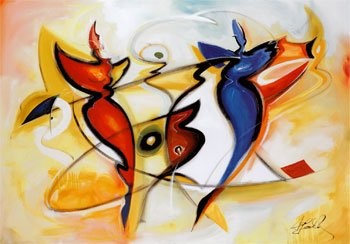
Dance of the Joyful Bride

We were built for creativity and beauty.  It is part of our DNA.  It also means that we have been created in God’s image.  When we pick up our crayons, we are revealing his presence.  When we color, our Father notes what we have done.  Some may see a scrawling.  But they honestly do not matter.  The Father completely understands and is thrilled.

“It’s like you come onto this planet with a crayon box. Now, you may get the 8-pak, or you may get the 16-pak, but it’s all in what you do with the crayons–the colors– that you’re given. Now don’t worry about coloring inside the lines or outside the lines. I say, color outside the lines! Color right off the page!”

Waking Life

I’m of the firm opinion that we need to communicate to our children the wonderful gift of being creative.  We must release them, to imagine and be inspired.  We need to encourage them to use their crayons, even if they color outside the lines.

1brobry-sig4

cropped-christiangraffiti1 (1)

The Melancholy of Edvard Munch

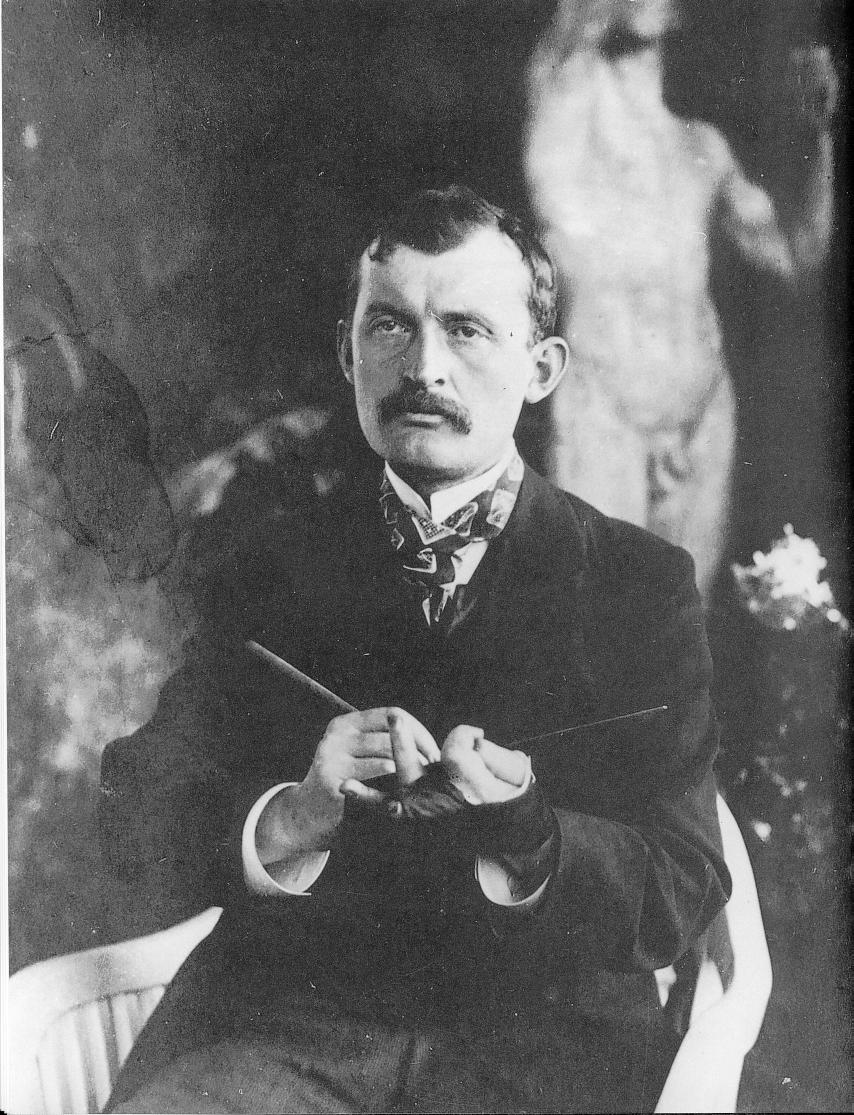
munchDecember 2, 1863 – January 23, 1944, he was a Norwegian painter. He is regarded as a Symbolist and a forerunner of expressionism. He focused on themes of fear, anxiety, melancholy, and death. He did not believe in heaven, or other Christian themes or doctrines, as far as I know.

My intention is to reintroduce you to an artist that I highly esteem.  The challenge I suppose is to understand the issues that Munch discovers in his work. He clearly taps into the ‘angst’ of the modern man, and what he does perpetuates a mindset for our generation.

Obviously these paintings are just an introduction, and I understand that they are selective. I have refrained from any kind of interpretation, other than laying down a general principle–  to Munch, color is everything.

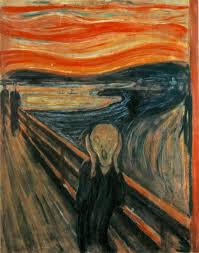
Munch was probably not a cheery person. He essentially was driven by anxiety through his whole life. It seems that he could be very ambitious. His classic work was “The Scream” which he made several versions to sell. He used different mediums to do this– tempera, lithograph and pastel. Interestingly, “The Scream” is a favorite target for art thefts. It captures the minds of every modern thinker.

Within our culture, “The Scream” is iconic. Warhol, Gary Larson, Dr. Who and even “The Simpsons” have cashed in on a parody of it.

Quotes

“I painted the picture, and in the colors the rhythm of the music quivers. I painted the colors I saw.”

“Painting picture by picture, I followed the impressions my eye took in at heightened moments. I painted only memories, adding nothing, no details that I did not see. Hence the simplicity of the paintings, their emptiness.”

“For as long as I can remember I have suffered from a deep feeling of anxiety which I have tried to express in my art.”

“Disease, insanity, and death were the angels that attended my cradle, and since then have followed me throughout my life.”

munch-thescream
The Scream, 1893
Munch’s best known painting ^


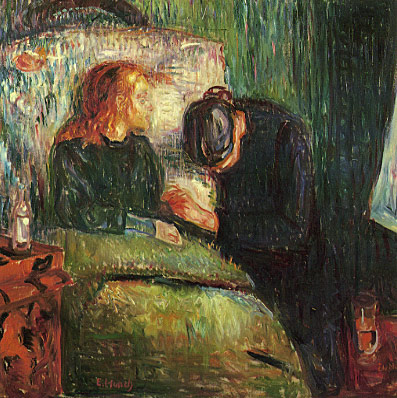
The Sick Child (1885)
Melancholy, 1894
Melancholy, 1894
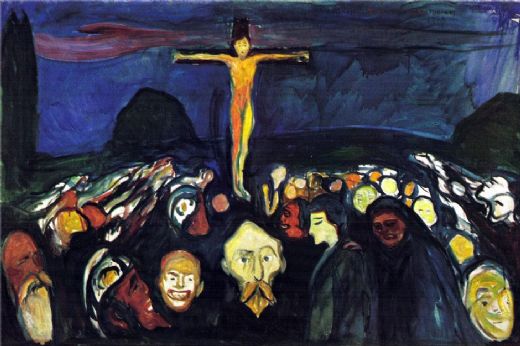
Golgotha, 1900
Golgotha