The Blood of Jesus, [Tenacity]

538.jpg

“For I will never leave you, or forsake you.”

 Hebrews 13:5

It’s funny, but it seems that our civilization claim to fame revolves around this grand idea of inventing good adhesives. Chemists and manufacturers have astutely given us wonderful glues and epoxies. One of the more recent on the market is a compound known as cyanoacrylate or “Superglue”. Perhaps you have seen their ads? A man wearing a hard hat is lifted off the ground by a crane after a drop is applied to the hat.

Now that is the ultimate stickability! He wiggles, and strains but he is stuck (literally). It seems to be a swell product, and marketed quite well. Everyone should have on hand a tube or two. You never know when you might need it.

The Lord Jesus has created that powerful bond between us. His blood is sticky, and once applied there is a permanence and a connection between Him and us. I think it was Dostoevsky who said, “Those who have been infected by Jesus Christ will never, ever be the same again.” Even with the strange metaphor, the principle is very true.

The blood of Jesus is a tenacious thing. We are cemented to the Lord, locked by His determined love. Some will try to escape this determined relationship, but experience teaches us that it is highly unlikely this can be done. Romans 8 is directly involved,

“And I am convinced that nothing can ever separate us from God’s love. Neither death nor life, neither angels nor demons,[p] neither our fears for today nor our worries about tomorrow—not even the powers of hell can separate us from God’s love. 39 No power in the sky above or in the earth below—indeed, nothing in all creation will ever be able to separate us from the love of God that is revealed in Christ Jesus our Lord.”

Romans 8:38-39, NLT

Dear saint, God is determined to bring you home to Him. You and He are bonded together, and God’s tenacious love will never let you alone. People who apostatize are still being pursued, and those of us who are struggling along, are also being pursued. And those of us who are managing, are also being pursued. That is the nature of the love God has for you. Don’t ask me why, but He truly loves you!

1brobry-sig4 (2)

cropped-christiangraffiti1-3-1

&

She Gave Everything She Had

“Jesus sat down near the collection box in the Temple and watched as the crowds dropped in their money. Many rich people put in large amounts. Then a poor widow came and dropped in two small coins.

Jesus called his disciples to him and said, “I tell you the truth, this poor widow has given more than all the others who are making contributions. For they gave a tiny part of their surplus, but she, poor as she is, has given everything she had to live on.”

Mark 12:41-44, New Living Translation

“God judges what we give by what we keep.”

–George Mueller

flourish1

Jesus has a whole different way of counting.  He sat, and waited, and watched.  Lots and lots of money was being dropped into the box.  The rich actually hired ‘criers’ to proceed them.  They shouted out to prepare the crowds in the Temple for their generous offerings.  Great effort was made to choreograph their procession when the Temple would be crowded. (I think some Churches might allow this, if only to increase the offering.)

But I’d like to think the best of these rich ‘fat cats.’  I want to somehow believe that they didn’t have ulterior motives.  But, knowing the heart of man, I strongly suspect these ‘givers’ intended to get as much ‘PR mileage’ as they could.

When we focus on the widow we find we pretty much dismiss her offering.  To put it in perspective, a laborer would work all day for a denarius.  This widow gave just 1/164th of that. And certainly without the fanfare that these pharisees and scribes created.

Jesus is sitting, and watching very near to the offering box.  He is impressed with this widow, and her scanty contribution.  But He looks at each heart, of each giver.  He puts a value on each one.  The size of the gift is not at all the issue here. It is the dimension of the sacrifice. She was dropping in everything she had.  All of it, without hesitation or negotiation.

As we are His disciples, this particular lesson must be learned.  And, indeed, it is learnable.  If it seems too hard to emulate we need to deal with hard issues.  Like fear, doubt and pride.  And there is nothing quite like ‘sacrificial giving” to penetrate our stony hearts.

“I do not believe one can settle how much we ought to give. I am afraid the only safe rule is to give more than we can spare.”

–C.S. Lewis

**

kyrie eleison, Bryan

(Lord, have mercy on us)


cropped-christiangraffiti1-3

Related articles 

Psalm 23, Understood

psalm-23

Psalm 23, an annotated version:

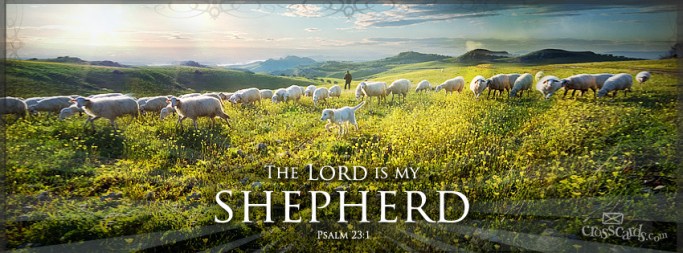
The Lord is my shepherd; I shall not want.– That’s relationship

    He makes me lie down in green pastures.– That’s rest
He leads me beside still waters.– That’s  refreshment
    He restores my soul.– That’s healing
He leads me in paths of righteousness– That’s guidance
    for his name’s sake.– That’s purpose

Even though I walk through the valley of the shadow of death,– That’s testing
    I will fear no evil,– That’s protection
for you are with me;– That’s faithfulness
    your rod and your staff,  they comfort me.– That’s discipline

You prepare a table before me– That’s hope
    in the presence of my enemies;– That’s witness
you anoint my head with oil;– That’s consecration
    my cup overflows.– That’s abundance
Surely goodness and mercy shall follow me all the days of my life,– That’s blessing
and I shall dwell in the house of the Lord– That’s security
    forever.– That’s eternity

Psalm 23, ESV

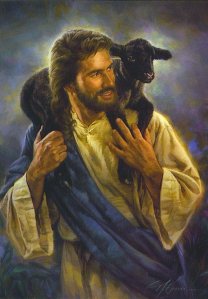
Jesus-Good-Shepherd-04We really do live in a world of uncertainty. Anything can happen (and often does) and at times we will struggle. Psalm 23 is something stable that we can latch on. It is a psalm of unparalleled comfort for the turmoil.

It is especially good to those of us who struggle with a suffering or illness. It is a tether for us that holds us in place. For those who fear death it promises us life– forever.

If you’re a broken believer who has issues, I encourage you to memorize this psalm.  As you commit it to memory it will instinctively draw you to reality. It will be something the Holy Spirit will use over and over in your life. I have been crippled with fear many times, and this psalm has protected me.

I love the Shepherd of Psalm 23.


bry-signat (1)

cropped-christiangraffiti1.jpg

Devotions, [Eugene Peterson, Interview]

eugene-petersonInterview with Eugene Peterson

Why Can’t I Hear God? By Nancy Lovell

The musical group U2’s Bono quotes Eugene Peterson from the stage. Readers of the best selling Bible, ‘The Message,’ find themselves holding onto lines from his ‘fog-slicing’ Bible paraphrase, and many other works. For several years now, TheHighCalling.org has provided a daily prayer and reflection by Eugene Peterson. Recently, we asked the man himself: What are devotions and why do they matter in our daily work?

Why do so few people who believe in God bother to know Him?

The most obvious answer is that we’re in a hurry and not used to listening. We’re trained to use our minds to get information and complete assignments; but the God revealed to us in Jesus and our Scriptures is infinitely personal and relational. Unless we take the time to be quiet, in a listening way, in the presence of God, we never get to know him.

The same question is why so few married couples really know their spouses. People get divorced after 20 years of marriage, and the rejected spouse says, “I never knew this was coming. I thought everything was fine.” But there was not much listening in those 20 years. Devotions are the discipline of being quiet and listening for what we don’t hear in the streets, in the media, in the workplace.

What about people who sincerely set apart time, read the Bible, stay still, and hear nothing? They ask themselves whether God’s voice is anything more than their own thoughts.

We’re not good at this. We’ve had no practice doing it. No wonder we only hear our own thoughts. This is why the church is so insistent that we do this whether anything happens or not. Supported by 2000 years of history, we know that God does commune with us in our listening. But because we’re so unused to this way of communion, we don’t hear it. So it takes time.

How would you direct someone trying to start?

I would say: Get your Bible and find a place. If you can’t do this daily (some people can’t because of their life circumstances; mothers with young children are obvious instances), try for at least 20-30 minutes, two or three times a week, or four. Don’t make demands on yourself too high. Don’t ask questions about, “How long is this going to take?” Believe that something does happen in that silence—usually through Scripture, but not always—in prayerful, attentive listening, knowing that you’re in the presence of God.

I ask for a commitment of six months; so don’t come back in three weeks and say nothing’s happened. I’ve never had anyone who’s done this at least six months who came back to me and said, “I did it and nothing happened; I’m going on to something else.” Not many who give this a fair test ever say that nothing happens. Also, when I’ve asked people to do this as their pastor, I also ask them to worship regularly. This is a place where the whole community is gathered and listening and being in the presence of God.

Is that how you started?

I was lucky. In the family I grew up in, I started when I was about 14 …mostly with the Psalms, but all the Scriptures become part of it.

In your writing and speaking, you must have seen moments when a person realizes, “Yes, I want more and I want God.” What turns on the light for people?

Often the motivation is that people are tired of the way they’re living. They think there’s got to be more than just the motions they’re going through and the work they’re doing. There’s a craving and hunger that they identify with God. There’s enough pain or boredom or something to motivate them to do something that the culture’s not telling them to do. I got a letter recently from a friend of 40 years. She had been a parishioner of mine for a long time. Then she was ill, and divorced; and she quit, just gave up. She quit reading the Bible, quit going to church. Six months ago she wrote me a lovely letter that she was sitting with a group of friends and, in her words, “a rooster crowed”—it all came back and she was a Christian again and aware of the presence of God. Isn’t that a wonderful phrase? ‘A rooster crowed.’

Who knows what went into that statement of hers? Twenty years of unhappiness, pain, suffering, disillusionment …but still there was the need.She would have said during that time she didn’t believe in God. But the rooster crowed. That’s why we use the term the Holy Spirit to explain times like this. Given that it’s hard to discipline ourselves to silence, listening—and to daily time in quiet—tell us about your devotions on this website. I wrote those in the early morning for 20 years, maybe 25 years. And what I was trying to do was be present to the Scripture, listen to God, and to write as honestly as I could. I wasn’t thinking about anybody else but me.

It’s really hard to be honest as a writer. You get these wonderful ideas, and you love to manipulate words and see if you can make it sound good. It’s hard to be honest, especially working for God. That was the thing I was most aware of. “Eugene: Don’t say anything that is not relational, immediate, honest; stay present to the text and be honest before God.” I believed if I could be honest, I could draw some other people to honesty, too.

To read the rest of this interview, you will need to follow this link: http://www.christianitytoday.com/workplace/articles/interviews/eugenepeterson.html

 

cropped-christiangraffiti1-3