How Well Do You Suffer?

John Newton, Exodus 3:2

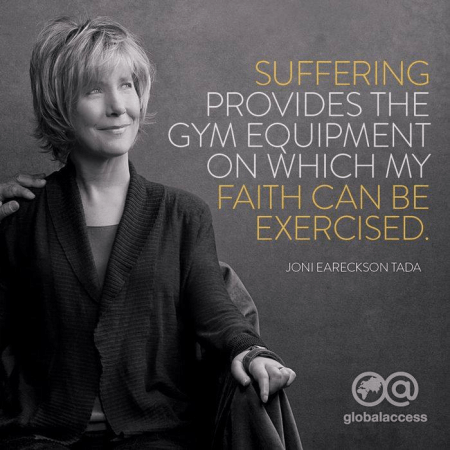
It seems that pain is the best teacher. We learn the hard way to come under God’s direction, and we finally learn to love others. Maybe it’s our pain that communicates His grace–is this how God changes us?

After all, the crushed grapes make the wine.

C.S. Lewis once made the comment, (and it’s worth thinking about), that “experience is the most brutal of teachers. But you learn, my God do you learn.” We face many obstacles, run into quite a few dead ends, and along the way we learn that when we really hurt, we start to teach something that the Church desperately needs.

My discipleship has been chock full of challenges. I’ve lost the use of my right arm, I have struggled with depression. I had a brain tumor removed, and must walk with a cane. I struggle with intense fatigue. I now have severe issues with pain. (I no longer pastor a church or teach in a Bible college.)

In November 1999, my wife and I lost a child.

I have prayed earnestly for a complete healing and had others pray for me. It’s funny, but all of this has happened after I became a Christian disciple! I often ask myself why? Why did God allow this to happen?

What did I do to deserve all of this?

Paul and Barnabas came into an interesting place (we can read about it in Acts 14.)

“Strengthening the souls of the disciples, encouraging them to continue in the faith, and saying that through many tribulations we must enter the kingdom of God.”

Acts 14:22, ESV

Some Bible teachers we listen to on the internet choose to minimize suffering, and of course we adopt a lot of our own theology to factor out pain and difficulty. But is this what the Bible teaches? If we read Hebrews 11, we find that life could be pretty grim for those with faith in God.

“Women received back their dead, raised to life again. There were others who were tortured, refusing to be released so that they might gain an even better resurrection. 36 Some faced jeers and flogging, and even chains and imprisonment. 

37 They were put to death by stoning; they were sawed in two; they were killed by the sword. They went about in sheepskins and goatskins, destitute, persecuted and mistreated— 38 the world was not worthy of them. They wandered in deserts and mountains, living in caves and in holes in the ground.”

Why does it have to be so hard for us as believers in Jesus?

Common sense suggests that things should get easier for those who believe. We somehow think that God rewards faith with instant glory. But I painfully discovered that my discipleship, my faith, doesn’t mean some wonderful existence on this planet. It seems that pain becomes the way we grow up and mature in Him.

I honestly believe, after over 40 years of following Jesus, that suffering is part of God’s plan for me.

It has never been easy. It never was. And I wish it was different.

My God, I wish it was different.

No matter what you are going through, remember that God always loves you. He has chosen us to navigate us through much difficulty. We must however, convert these painful things by our faith in Him. And only our faith does this.

And we know that in all things God works for the good of those who love him, who have been called according to his purpose.”

Romans 8:28

We must learn to regard people less in light of what they do or omit to do, and more in the light of what they suffer.

Dietrich Bonhoeffer

Learning to Walk Again

Hosea 11:3

Early in my walk, over 40 years ago, I concluded that I would be able to acquire all the knowledge that I could ever want.  I was on the short track, going up of course.  It was a glorious thing, it took me some time to realize I was very ignorant of so much.

The Bible communicates truth, not always facts.

As I age, I start to understand that things are much more enigmatic and unfathomable than I ever dreamed they would be.  It is a step of faith to accept the truth when there are still a lot of things that are still vague. 

Take the mystery of healing for example:

“You say you have faith to be healed, but what about the faith to be sick?”

Mike Mason

That’s a penetrating question, indeed.  “Why are some healed, and others are not?  Why do I have eternal life, and my friend does not?  Why should AIDS sweep through poor African villages when I live in a very comfortable suburb in the US?” 

I have many other questions like this.

And I’m not making a whole lot of headway here.  Reasons and facts are not there. Life becomes more mysterious and inscrutable.  But there is a word we must know–it is the word “trust.”  It is a faith that assists us through the landscape of challenging questions.

As a sometimes struggling, mentally ill Christian, many (even in my own church) create more questions for me.  “Therapists, psychiatrists, and daily medications are really good, but do you really need them?” or  “Did God create in you the need for lithium and Zoloft?” and ” How can you follow Jesus when you have all of these depression issues?”

And here’s a humdinger that stings, “Where is your joy?”

But it is precisely these issues that help me be a disciple. Someone who must trust.

I’ve been slowly learning you see.  And my weaknesses are becoming my strengths.  They lead me to exercise my feeble faith.  I trust in Jesus; my faith helps me trust. I find it interesting to note that the Book of Psalms, for the most part, was written by “a broken believer” like David– a king and (also) a rascal.

These nebulous areas have only increased. 

And ironically my trust has only grown.  I have more questions than ever before, but my faith in him only gets stronger. I suppose I will never, ever be a gleefully upbeat, cheery person.  But I am learning “to trust and obey, there is no other way…” 

He himself has taken up the chore of teaching me to walk again. But just one thing, He wants me to keep trusting.

Psalm 131:1-2

Contemplating the Crib

When we think about Jesus, when we start to contemplate the crib, we explode into joy over what we have seen. We inaugurate a convincing of His second coming. You might say that we suddenly adjust to a Jesus who just drops in on us.

“And when Christ, who is your life, is revealed to the whole world, you will share in all his glory.”

Col. 3:4, NLT

Jesus anticipates that His visits to earth, will start to bear fruit. There will be many who will be validated to step up into this place of salvation. But many of us will be part of many others who are involved in this sharing. Jesus has come, and all of us enter into something quite exceptional.

But this is all a future event, it hasn’t happened yet, but we do think about when He will return. But this is not an occasional, fleeting awareness. But we are confident we do understand that His return alters everything. All of a sudden, we are launched into real and eternal promises. These critical assignments coming from this world, will never take the place of being in God‘s purposes.

Paul is wrapped up with a deep and profound understanding of things that are on the threshold.  He is the apostle of the aware. He seems to sizzle with understanding that progresses out of his initiative and creative effort.

But Paul develops, after he sees, a careful sense of certain things that are moving. But he knows what He has seen, and he insists that others join him in this.

This is why we must procure this awareness. To operate in the realm of Paul will be worth our weight in “celestial gold.”  Things are rich and fecund, and they wait in a exceptional awareness. As Paul follows, so we follow. In the Heavenly places, we are being counted as being faithful and quite true.

Always Be Children, [Always]

Matthew 18:1-3, ESV

I have always believed that maturity brings wisdom and growth, a beautiful journey to embark on. When it comes to spiritual matters, it is an opportunity to delve deeper into the richness of faith. I eagerly embraced the challenge of expanding my understanding and exploring the profound teachings. Jesus’ devoted disciples, too, were presented with invaluable guidance and encouraging direction:

15 “Now they were bringing even infants to him that he might touch them. And when the disciples saw it, they rebuked them. 16 But Jesus called them to him, saying, “Let the children come to me, and do not hinder them, for to such belongs the kingdom of God. 

17 Truly, I say to you, whoever does not receive the kingdom of God like a child shall not enter it.”

Luke 18:15-17

Jesus makes a special effort to get his followers to see their need. He voices the dictate that they must become children again; that they must learn that the basics are the core. We won’t grow out of them.

Real faith remains childlike even as it gets old.  

As we see the children that are in our midst, we should see in them the pattern for us as we connect with the Lord, and with each other. It’s a paradox, but we mature as children, and this doesn’t ever change. Jesus told us that the Kingdom belongs to those whose faith is childlike.

Childlike faith seems to have three focuses:

  1. Areas of intimacy, coming together in the presence of the Lord as His sons and daughters.
  2. Areas of relationships, between each other as brothers and sisters in love with each other.
  3. Issues of spiritual warfare, facing the daily battle with sin and darkness with a steady awareness of the ones alongside us.

Holding a child’s faith has an extraordinary power to shape our lives in profound ways. It’s a delicate balance of innocence, trust, and vulnerability that leaves an indelible mark on our hearts and souls. The childlike belief in something greater than ourselves and it opens up a world of possibilities and invites us to embrace the wonders of the unknown with open arms.

Our Father is with us.

But what does it truly mean to hold onto a child’s faith? It goes beyond the simple act of believing in something beyond our understanding. It requires a humility that allows us to acknowledge our own limitations and embrace the beauty of our imperfections. In a world that often values strength and self-assuredness, the child’s faith reminds us of the importance of embracing vulnerability and being open to being led in fresh ways.

Picture for a moment the scenario of being suddenly clothed in nothing but our humility. It is a humbling thought, isn’t it? In that state, stripped of all pretenses and facades, we are forced to confront our true selves. We are reminded of our humanity, and our weakness with the swirling world around us. It’s in those vulnerable moments that we truly come to appreciate the depth and power of a child’s faith.

In a society that often prioritizes material success, power, and self-exaltation, we may find ourselves striving to shed our humility in favor of more desirable qualities. However, it’s precisely in cherishing our humility that we can find true wisdom and grow into more compassionate and merciful people. It’s through humility that we can connect with others on a deeper level, understanding their joys and sorrows with a genuine empathy.

Let’s embrace the innocence of a child’s faith.

Let’s allow it to ‘infect’ our lives with a sense of real wonder, curiosity, and a supernatural love. Let’s never forget the lessons it teaches us about the importance of embracing humility in our journey through life.

Let’s hold onto a child’s faith tightly, for within its grasp lies the power to transform our lives and the world around us. May it be a constant reminder of the child-like beauty that exists within each and every one of us.

Humility is the stuff Jesus uses to make a place for His Kingdom.

Becoming a person of childlike faith will take a lifetime, that is why we should stay small and keep growing in our dependence on Him.

Martin Luther

bry-signat (1)