A “Zucchini-Blasted” Faith

Too much zucchini!
Too much zucchini!

I have been rightly branded as a pessimist.  My struggles are such that I must continue to press into joy, to continue over and over, shaking off the grave clothes, and step into the sunshine.  I need to spontaneously sing once in a while, and pick flowers. I know this.

For there’s an abundance in the kingdom of our Father.  The currency of that place is joy (and love).  The spiritual economy of heaven is solely based a free and lavish grace that is poured on criminals like me.  It’s outrageous!  And most of us do know it– far, far too well.

So fantastical are our perceptions of this awesome grace, that we can’t believe it is true.  It’s easy to doubt—to add things, make adjustments to this completely radical faith.  But as sick people we defy it all, and will often neuter the strong promises of God, making those verses eunuchs–without any power or vitality. I have done this repeatedly.

“And may you have the power to understand, as all God’s people should, how wide, how long, how high, and how deep his love is. 19 May you experience the love of Christ, though it is too great to understand fully. Then you will be made complete with all the fullness of life and power that comes from God.”

20″ Now all glory to God, who is able, through his mighty power at work within us, to accomplish infinitely more than we might ask or think.”

Ephesians 3:19-20, NLT

Knowing God’s love for you will totally change your life.  The promises in the Bible are additionally enhanced by the Spirit’s active presence.  When he enters your life, its like finding a 220 volt electrical line just when you have stepped out the shower.  You will be energized!  Watch the progression of thought in the very next verse.  It builds and broadens on this “grace thought.”

And God will generously provide all you need. Then you will always have everything you need and plenty left over to share with others.

2 Corinthians 9:8, NLT

zucchini3As I kid, I remember one year we hit the zucchini  jackpot.  They seemed to ripen all at once.  We canned and froze, but just couldn’t handle this harvest.  We gave away so much, until I resorted to putting full boxes in people’s cars– while they were in the store shopping! (Captain Zucchini strikes again!)

God is like that, we just would like our bucket filled and he fills up a dozen wheelbarrows for us.  We are super-abundantly, mammothly overwhelmed and “zucchinied-blasted” by forgiveness and grace.  This is just how things work in our Father’s Kingdom.

recite-25825-95458975-1jznxku

Rolling Stones Theology

I was time travelling today.  I journeyed back to Christmas, 1972.  I had told my parents that life could only have meaning, if I could have just one thing.  I held out in hope that on Christmas morning, that I would open up a “rock tumbler.”

I was an 11 year old boy, and I imagined that I could turn gravel from the driveway into polished gems.  I would make jewelry for my mom, and then I would go on to know the thrill of turning ugly stones into precious jewels.  Somehow, doing this would give me a profound purpose. I guess I wanted to become a alchemist– turning gravel into gems.

This is all I wanted.  I dreamed of having my polisher– a rock tumbler that would be all and everything I wanted.  I was fixated, and just knew this was my destiny.  I would become a lapidarist! Today, I haven’t changed, I am always looking for the right stone.

Opening up our gifts, I had eyes only for my new rock tumbler.  I ripped open my present and tore into the box.  Within 10 minutes I had it up and going.

The principle was simple:

  • Step 1— Add the stones, and the “grit.” Resist putting in too many stones.
  • Step 2— Measure out the water.  The idea is to make a “slurry.”
  • Step 3— Let the machine run, don’t open the drum every 30 minutes. This takes time, and patience.
  • Step 4— A trick– add a tablespoon of sugar to the final polishing stage. It adds an extra gleam.

The Church is a lot like a rock tumbler.  The Holy Spirit places us in a fellowship with others.  We are rough and drab, we show nothing that would suggest a polish or gleam.  There is nothing beautiful about us.  We really understand this.

We join others who have been picked up.  Different grit is then added.  There are special types– some are very coarse and others are quite fine.  Water is added.  (The whole process is to parallel what happens at the beach, but purposefully accelerating it in your drum.)

As the drum rotates, things are constantly changing as they move.  The water and grit roll between the stones.  The stones themselves move with each other, sometime counter, but they smooth out all roughness and coarseness.  Some rocks are harder, and not easily polished.  Sometimes, the grit will need to be changed to speed up the process.  Whatever happens, we need to trust Him to do the right thing.

I really don’t want to bore you with all the different details.  But each step has a connection to authentically spiritual things.  We are a mixture of stones with different shapes and angles. There are a lot of variables, and it gets tedious.  The polishing takes a lot of time. There is the need for patience.  We often bring ‘a thirst for the instant,’ and for the quick work.  Polishing a rock takes a lot of time– months.  And we take years– maybe sometimes even decades.

“And you are living stones that God is building into his spiritual temple. What’s more, you are his holy priests. Through the mediation of Jesus Christ, you offer spiritual sacrifices that please God.”  1Peter 2:5, NLT

We are all in this process, what is hidden is being revealed.  We may bounce off each other, (here comes that ‘flinty’ sister again!)  But the Spirit is the superintendent of the process.  He will change the grit, add more water, or add others to the tumbler. He knows exactly what He is doing. No one will get overlooked.

Related articles

Two O’ Clock in the Morning Poetry, #3

Collector_Trench

Middle Parts of Fortune, by Frederic Manning

“The air was alive with the rush and flutter of wings; it was ripped by screaming shells, hissing like tons of molten metal plunging suddenly into water, there was the blast and concussion of their explosion, men smashed, obliterated in sudden eruptions of earth, rent and strewn in bloody fragments, shells that were like hell-cats humped and spitting, little sounds, unpleasantly close, lie the plucking of tense strings, and something tangling his feet, tearing at his trousers and puttees as he stumbled over it, and then a face suddenly, an inconceivably distorted face, which raved and sobbed at him as he fell with it into a shell-hole.”

(Accounts of The Great War) 
R
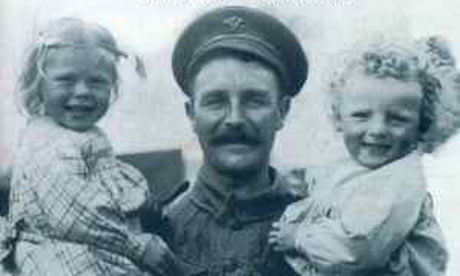
FredricmanningManning was an Australian aspiring intellectual, already in his mid-30s when he enlisted as a private soldier in 1915. His prewar existence in England was dogged by unfulfilled literary hopes and emotional confusions. He served for only a few months in France, and his military career ended in alcoholism and disgrace. But in 1929 he composed a novel, obviously autobiographical, about three soldiers’ experience of the trench nightmare, which is outstanding. Almost certainly the finest work of its kind to emerge from the war. (Penguin)
&

Manning continued to write. In 1917 he published a collection of poems under the title Ediola. This was a mixture of verse predominantly in his former style alongside war poems heavily influenced by the imagism of Pound, which deal introspectively with personal aims and ideals tempered in the crucible of battle. He contributed to anthologies, for example, The Monthly Chapbook which appeared in July 1919 edited by Harold Monro, containing twenty-three poems by writers including John Alford, Herbert ReadWalter De La MareOsbert SitwellSiegfried SassoonD. H. LawrenceEdith SitwellRobert NicholsRose Macaulay and W. H. Davies alongside Manning and Aldington. He wrote for periodicals, including The Criterion, which was produced by T. S. Eliot.

&&&

Poetry did not pay, and so in 1923 Manning took a commission from his publisher John Murray to write The Life of Sir William White, a biography of the man who, as Director of Naval Construction, led the build-up of the Royal Navy in the last years of the nineteenth century. Galton had died in 1921, which not only left Manning effectively homeless, but also lacking a forceful directing influence in his life. He lived for much of the time at the Bull Hotel in Bourne, apart from a short spell when he owned a farmhouse in Surrey. At this time he was friendly with T. E. Lawrence, then serving in the Royal Air Force at RAF Cranwell, some twenty miles (a motorcycle ride) from where Manning was living. In 1926 he contributed the introduction to an edition of Epicurus’s Morals: Collected and faithfully Englished by Walter Charleton, originally published in 1656, published in a limited edition by Peter Davies. — from Wikipedia and Penguin

&

Bonus–

wwi13
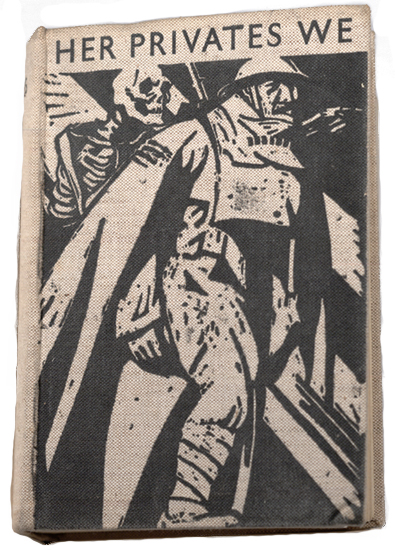
“Her Privates We” 1930, Cover art

Deciding What Makes Up Wisdom

kind-words1

“Often wise sayings fall on barren ground; but a kind word is never ever thrown away.” Sir Arthur Helps

There are so many things to grasp. Our own recovery practically insists we grab vital truths. When we latch on them, we must stick to them no matter what. When we lose someone, or even lose ourselves, we must listen so much closer– the Lord will send someone to our side.

Some rules though:

  • Curiosity is not ever the same as caring.
  • Losing ones balance is never the same as losing ones testimony.
  • A gentle touch can mean more than a powerful revelation.
  • Words of kindness are better than cold truth.
  • To really hear is better than a speech of true words.
  • We must live out the questions we whisper to God
  • Practising prayer is better than just simply praying.
  • Similar experiences that emphasize a connection is never the same as the individuals.
  • Our questions to God reveal far more than His answers.
  • When we do decide to dance, our true friends will dance too.

Ok, I must admit these are not always true and concrete in my heart. My life seems to be a cavern of emptiness; there is little inside but a silly reputation. But it’s a blanket that can’t warm my chilly heart.

12 “Since God chose you to be the holy people he loves, you must clothe yourselves with tenderhearted mercy, kindness, humility, gentleness, and patience. 13 Make allowance for each other’s faults, and forgive anyone who offends you. Remember, the Lord forgave you, so you must forgive others. 14 Above all, clothe yourselves with love, which binds us all together in perfect harmony.”

Colossians 3:12-14, NLT

“Share each other’s burdens, and in this way obey the law of Christ.”

Galatians 6:2

“It is a sin to belittle one’s neighbor;
    blessed are those who help the poor.”

Proverbs 14:21

recite-25825-95458975-1jznxku