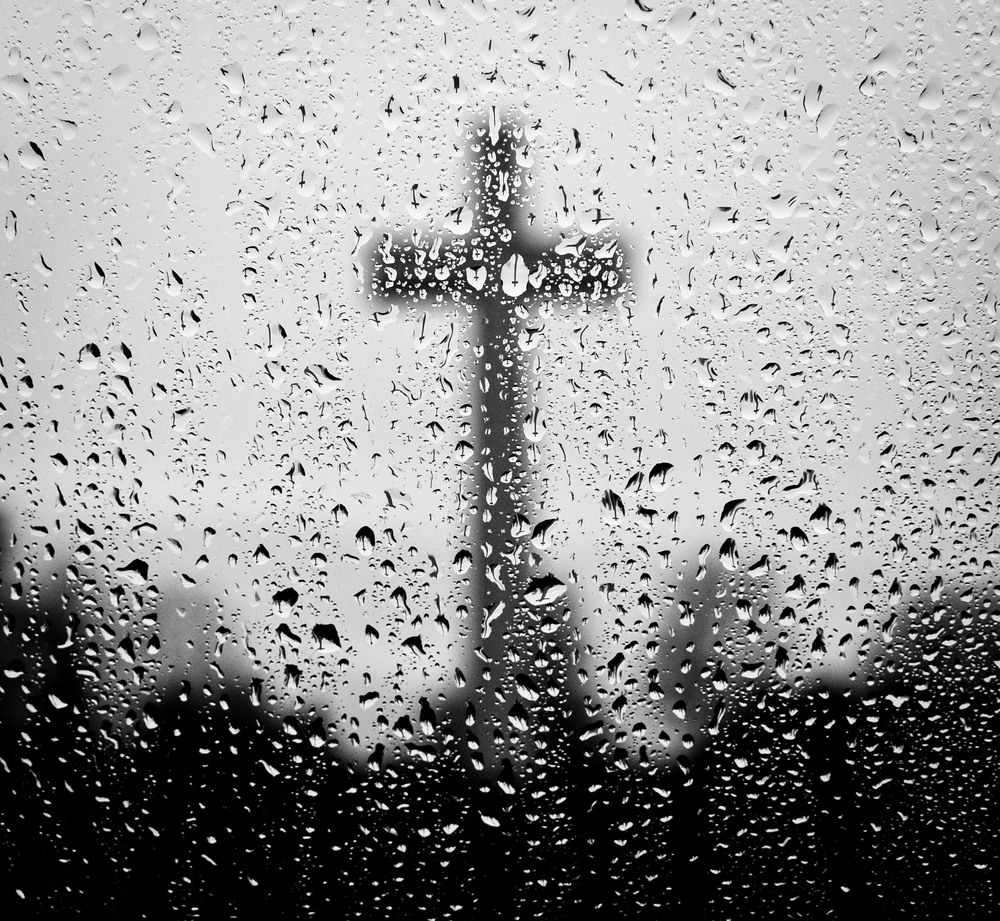
There are going to be times when things become exceptionally clear to you.
Every so often, we have moments that awaken our senses and make us see things clearly. It’s like a splash of cold water on our sleepy faces. It shakes us up and helps us understand our feelings, thoughts, and connections with others.
To the mentally ill, our arrival at this place brings a glimmer of hope. With clarity, we can distinguish between reality and illusion. The power of change lies in this discernment, a remarkable work of the Holy Spirit. We learn that self-transformation is out of our reach, only the Spirit possesses this ability.
The Bible and its promises are completely saturated with His power.
There is a certain hope and security that comes from His restoration of our mixed-up lives. His work is quite exceptional, for He is an Artisan. However, we will never be happy or at peace if we refuse. And if we decide poorly we will get stuck inside a deep loneliness, and failure– the realization of being cast aside.
It’s scary, but so much is based on what we decide in these chosen times. Choose wisely.
Depression and darkness may affect us, but there is no better refuge to find than God. Even though we may feel discouraged, we can still choose to protect ourselves. If we don’t choose the right path, we will struggle in our own mistakes and faults.
Trust me, I understand how miserable that can be.
We dare not let the darkness we face confuse us.
In every fiber of our being, we must resolutely stand against such a dire fate. We must not, under any circumstances, allow the tendrils of darkness to once again ensnare us. In the very core of our essence, we are guided and redeemed by the profound sacrifice of the Lord Jesus.
Picture it, if you will: like a lost soul traversing a treacherous minefield under the cloak of night. Nothing should hold more significance to us than shielding ourselves from this ominous threat. Let us rise together, united in our relentless pursuit of light and liberation.
It advances on us and so many can’t resist its strength. But being mentally ill is not something that someone can just decide on, it is real and carries a poison that few can resist. Any odd romanticism of “being a tragically wounded poet” is so foolish, and dangerous.
But the truth is, we have Someone who has decided to be our Savior and He speaks to heaven about us.
He will speak on our behalf. He alone can escort us through this terrible darkness. Without His voice, we can’t defend ourselves, and we will just deceive ourselves. We are desperately sick, and He is the only cure.
If you are presently struggling, I would tell you that you have a home. It is a place of acceptance and assurance. The cost of depression and delusion can’t even come close to matching even the simplicity and basic place of just being a “minor” disciple of Jesus Christ.
But no matter what has happened, He has been pursuing you, in a deep hope you will respond to Him.
I exhort you to embrace this love and trust Him, even when it gets very hard. But no matter what happens, don’t ever give up.
Depression runs rampant through our society. It seems like it’s the “common cold” of mental illness.
Depression is often a progressive and debilitating disorder.
It is like having a ‘bruised brain’ that refuses to heal. There is an substantial list of psychological disorders. Technically depression is a mood disorder that has a series of symptoms. These symptoms are the evidence that something is definitely wrong.
Depressed mood (such as feelings of sadness or emptiness).
Reduced interest in activities that used to be enjoyed.
Change in appetite or weight increase/decrease.
Sleep disturbances (either not being able to sleep well or sleeping too much).
Feeling agitated or slowed down.
Fatigue or loss of energy. Feeling exhausted, even when you wake up.
Feeling worthless or excessive guilt.
Difficulty thinking, concentrating or troubles making decisions.
The above list is a summary of something called the DSM-IV which doctors use to diagnose the mental disorder of depression. Spinning off this, you will discover some other disorders, like:
Generalized anxiety disorder (GAD)
Panic disorder, panic attacks
Social withdrawal, isolating from others
Depersonalization/derealization
OCD (obsessive compulsive disorder)
Psychosis and paranoia, hallucinations
PTSD (post traumatic stress syndrome)
Specific Phobias (fears of something)
SAD (social anxiety disorder)
Schizophrenia, or, schizoaffective disorder
Eating disorders (bulimia, anorexia)
One in four.
Even though mental illness is widespread in the population, the main burden of illness is concentrated in a much smaller proportion-about 6 percent, or 1 in 17 Americans-who live with a serious mental illness. The National Institute of Mental Health reports that one in four adults–approximately 57.7 million Americans–experience a mental health disorder in a given year.
Unfortunately, there is a great deal of misunderstanding and stigma for those who have these disorders. I suppose people often compare it to having VD (venereal disease) or AIDS. It seems that our culture is pretty quick at labeling people as deviant or undesirable.
I hope this helps somehow. I can see a 100 holes in it, and alas, it is a meager attempt. But perhaps it will be of some value. Both NAMI.org, Psychcentral.com, and WebMD.com all have excellent info on Mental Illness.
“For you are all children of the light and of the day; we don’t belong to darkness and night.”
1 Thess. 5:5
This is my personal testimony of the grace of God.
A year before I received Christ as my Savior, I was hospitalized in a U.S. Army psychiatric ward. My uniform was replaced with the distinctive attire of a mental patient. Ironically, I’d been attached to the same hospital working on the pediatric floor.
And to make things only slightly more surreal was that a medic there on the psych ward was someone I bought drugs from!
Previous to this hospitalization, I had dropped two hits of LSD and found myself in an awful mess. It was night out and I was hallucinating badly. I had lost control of my thoughts. I had pretty much flipped out and it entered my drug-saturated brain that the darkness would kill me, that very night!
Utterly convinced I was going to die, my mind seized upon the street lights outside.
If I could stay in that illuminated circle I would escape dying. Somehow I knew that the light would save me. So I remained under that street light for several hours. As I stood I could see very clearly the boundary between the light and the dark. I knew I was safe as long as I didn’t wander, I knew I would stay safe.
But despite that very traumatic experience, the drugs and my mental instability continued to slide.
I was now shooting up cocaine, crossing my “no needle rule.” I also became quite the heavy drinker, with whiskey for breakfast. I had one basic rule though. As a medic who worked in maternal/child health, I had one of the best assignments in the Army. Many people coveted it, and I was not going to endanger it with drugs or alcohol.
I never went on duty loaded. That was my rule. I would be the best medic the Army ever had.
Shortly after my psych ward discharge, I was reassigned to Labor & Delivery on the night shift. One slow time I was pulled from my duty there to go on an ambulance run as the medic in charge. We were called to the officer’s housing where an older man had died in bed. This got me thinking. Back at the hospital, I returned to L&D. But on the way back I took a shortcut through a ward on another floor. That’s when I found it!
On a waiting room table was a small book called,“More Than a Carpenter” by Josh McDowell. I picked it up, reading it right on duty because there was no one in the delivery room. By the end of my shift, I was well on my way to becoming a Christian. It was a book solidly speaking of the light, and of the dark. And I knew beyond a doubt that I couldn’t remain in the dark anymore.
I was honorably discharged from the U.S. Army in June of 1982.
I became a born-again believer shortly after that. I went to Bible College that October. Life has become radically different, and over time, I became a missionary, pastor, and Bible college instructor.
I married my sweetheart and I now have a wonderful family. I attend a great and wonderful church faithfully.
I want to tell you that Jesus is real, He is alive and the Bible is true. I have been lifted from the dark and I am not afraid anymore. Jesus is my light.
“The people who sat in darkness have seen a great light. And for those who lived in the land where death casts its shadow, a light has shined.”
This should give direction and dialogue on the issues faced by every church member. It is a great opportunity we have been given— to minister to every person in the Body of Christ. —Bryan
by Ken Camp, Associated Baptist Press —
Living with depression — or any other form of mental illness — is like viewing life “through a glass darkly,” according to Jessy Grondin, a student in Vanderbilt University’s Divinity School. “It distorts how you see things.”
Like one in four Americans, (25%), wrestles significantly with a mental illness.
Depression is one of the most common types of mental illness, along with bipolar disorder, another mood-altering malady. Other forms of mental illness include schizophrenia and disorders related to anxiety, eating, substance abuse and attention deficit/hyperactivity.
Like many Americans with mental illness, Grondin and her family looked to the church for help. And she found the response generally less-than-helpful. “When I was in the ninth grade and hospitalized for depression, only a couple of people even visited me, and that was kind of awkward. I guess they didn’t know what to say,” said Grondin, who grew up in a Southern Baptist church in Alabama.
Generally, most Christians she knew dealt with her mood disorder by ignoring it, she said. “It was just nonexistent, like it never happened,” she said. “They never acknowledged it.” When she was an adolescent, many church members just thought of her as a troublemaker, not a person dealing with an illness, she recalled.
Mental Illness that affects believers must be accepted by the Church.
A few who acknowledged her diagnosed mood disorder responded with comments Grondin still finds hurtful. “When dealing with people in the church … some see mental illness as a weakness — a sign you don’t have enough faith,” she said. “They said: ‘It’s a problem of the heart. You need to straighten things out with God.’ They make depression out to be a sin, because you don’t have the joy in your life a Christian is supposed to have.”
A Baylor University study revealed that among Christians who approached their local church for help in response to a personal or family member’s diagnosed mental illness, more than 30 percent were told by a minister that they or their loved one did not really have a mental illness. And 57 percent of the Christians who were told by a minister that they were not mentally ill quit taking their medication.
It’s not a sin to be sick.
That troubles neuroscientist Matthew Stanford. “It’s not a sin to be sick,” he insists. Stanford, professor of psychology and neuroscience and director of the doctoral program in psychology at Baylor, acknowledges religion’s longstanding tense relationship with behavioral science. And he believes that conflict destroys lives. “Men and women with diagnosed mental illness are told they need to pray more and turn from their sin. Mental illness is equated with demon possession, weak faith and generational sin,”
Stanford writes in his recently released book, Grace for the Afflicted. “The underlying cause of this stain on the church is a lack of knowledge, both of basic brain function and of scriptural truth.” As an evangelical Christian who attends Antioch Community Church in Waco, Texas, Stanford understands underlying reasons why many Christians view psychology and psychiatry with suspicion. “When it comes to the behavioral sciences, many of the early fathers were no friends of religion. That’s certainly true of Freud and Jung,” he noted in an interview.
Often sin is not the main issue.
Many conservative Christians also believe the behavioral sciences tend to justify sin, he added, pointing particularly to homosexual behavior. In 1973, the American Psychiatric Association famously removed homosexuality from its revised edition of its Diagnostic and Statistical Manual of Mental Disorders. As a theologically conservative Christian, Stanford stressed that scripture, not the Diagnostic and Statistical Manual, constitutes the highest authority.
But that doesn’t mean the Bible is an encyclopedia of knowledge in all areas, and all people benefit from scientific insights into brain chemistry and the interplay of biological and environmental factors that shape personality. Furthermore, while he does not presume to diagnose with certainty cases of mental illness millennia after the fact, Stanford believes biblical figures — Job, King Saul of Israel and King Nebuchadnezzar of Babylon, among others — demonstrated symptoms of some types of mental illness. “Mental disorders do not discriminate according to faith,” he said.
Regardless of their feelings about some psychological or psychiatric approaches, Christians need to recognize mental illnesses are genuine disorders that originate in faulty biological processes, Stanford insisted. “It’s appropriate for Christians to be careful about approaches to treatment, but they need to understand these are real people dealing with real suffering,” he said. Richard Brake, director of counseling and psychological services for Texas Baptist Child & Family Services, agrees. “The personal connection is important. Church leaders need to be open to the idea that there are some real mental-health issues in their congregation,” Brake said.
Pastors much carefully reach out to the mentally ill.
Ministers often have training in pastoral counseling to help people successfully work through normal grief after a loss, but may lack the expertise to recognize persistent mental-health problems stemming from deeper life issues or biochemical imbalances, he noted. Internet resources are available through national mental-health organizations and associations of Christian mental-health providers. But the best way to learn about available mental health treatment — and to determine whether ministers would be comfortable referring people to them — is through personal contact, Brake and Stanford agreed. “Get to know counselors in the community,” Brake suggested. “Find out how they work, what their belief systems are and how they integrate them into their practices.”
Mental-health providers include school counselors and case managers with state agencies, as well as psychiatrists and psychologists in private practice or associated with secular or faith-related treatment facilities, he noted. Stanford and Brake emphasized the vital importance of making referrals to qualified mental-health professionals, but they also stressed the role of churches in creating a supportive and spiritually nurturing environment for people with mental-health disorders. Mental illness does not illustrate lack of faith, but it does have spiritual effects, they agreed. “Research indicates people with an active faith life who are involved in congregational life get through these problems more smoothly,” Brake said.
You can’t fix the issues, but you can love them.
Churches cannot “fix” people with mental illness, but they can offer support to help them cope. “The church has a tremendous role to play. Research shows the benefits of a religious social support system,” Stanford said. They stressed the importance of creating a climate of unconditional love and acceptance for mentally ill people in church — a need Grondin echoed. “There needs to be an unconditional sense of community and relationships,” she said. She emphasized the importance of establishing relationships that may not be reciprocally satisfying all the time.
People with mental-health issues may not be as responsive or appreciative as some Christians would like them to be, she noted. “Others need to take the initiative and keep the relationship established. People don’t realize how hard it can be (for a person with a mood disorder) to summon the courage just to get out of bed,” Grondin said. Christians who seek to reach out to people with mental illness need to recognize “they are not able to see things clearly, and it’s not their fault,” Grondin added.
Mostly, Christians need to offer acceptance to people with mental illness — even if they don’t fully understand, she insisted. “Just be present. Offer support and love,” Grondin concluded. “You won’t always know what to say. Just speak words of support into a life of serious struggles. That means more than anything.”
(EDITOR’S NOTE — Camp is managing editor of the Texas Baptist Standard.)
A great book:
“Grace for the Afflicted: A Clinical and Biblical Perspective on Mental Illness” [Paperback] can be found at www.Amazon.com, by Matthew S. Stanford Ph.D
*******
For more information: National Alliance on Mental Illness (800) 950-6264 Anxiety Disorders Association of America (240) 485-1001 Depression & Bipolar Support Alliance (800) 826-3632 American Association of Christian Counselors (800) 526-8673 Stephen Ministries (314) 428-2600