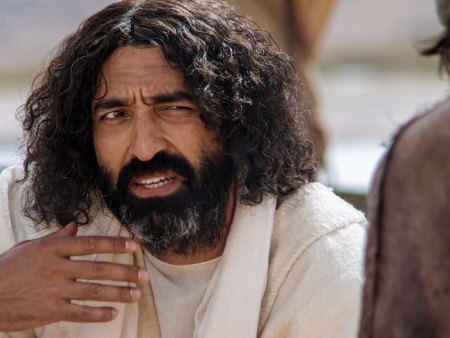
Scorched, but Deeply Loved

“But he turned and said to Peter, “Get behind me, Satan! You are a hindrance to me. For you are not setting your mind on the things of God, but on the things of man.”

Matt. 16:23

The principles of the Kingdom will often confuse an outsider.  In this chapter of Matthew, we hear Peter extolling the divinity of Jesus (vv. 15-17).  Peter exceeds the norm with his analysis of what he believes is real and true.

Peter’s insight is as perceptive as it is supernatural.  “You are the Christ,” Peter proclaims, “the Son of the Living God,”  Jesus responds to this and He praises Peter for his sensitivity.

But, just a short time after he makes his astonishing pronouncement, he is taken apart by Jesus, being solidly rebuked face-to-face.  In one clear and singular moment, he expresses a wonderful faith, and then suddenly his personal awareness precipitously crashes.  He is now an evil person with Satan’s agenda. (See verse 23.)

I’m not sure why Peter does what he does. 

It seems that in the light of this chapter (which actually seems like a bright glare), Peter is devastated.  In three years of discipleship, it seems that all he merits is a brutal ‘dressing-down.’ All because he thinks he can correct Jesus, “the Son of the Living God.”

The rebuke is bitter.  Peter is being compared to Satan!

I suspect that Peter was ashamed.  He most likely wished he had a rewind button.  His Savior, Jesus– has given him a new label.  And it hurts.  Many times, we would become resentful, maybe a bit bitter.  It could cause some to walk away, developing an anger that solidifies into a permanent offense. Thank God, Peter doesn’t do anything that stupid.

The correction in the rebuke gives him life and hope.

But who’s to say we would be as correctable?  Peter was rebuked in the presence of the other disciples.  The publicity was embarrassing.  Too many people were watching and listening. Peter will survive this, but he has to learn something valuable.

Our daily commitment to Jesus hinges on our willingness to be undone. 

Jesus pretty much rakes us over the coals.  He insists on total obedience to His faithfulness. And like Peter, we will learn. It may take some time though.

Every true disciple will be scorched– but incredibly loved.

Anger That Will Destroy You

“Be not quick in your spirit to become angry, for anger lodges in the heart of fools.”

-Ecclesiastes 7:9

“Of the Seven Deadly Sins, anger is possibly the most fun. To lick your wounds, to smack your lips over grievances long past … to savor to the last toothsome morsel both the pain you are given and the pain you are giving back — in many ways it is a feast fit for a king. The chief drawback is that what you are wolfing down is yourself. The skeleton at the feast is you.”

-Frederick Buechner

What really happens when I get angry? I suppose my B/P goes up and I get all red, but just perhaps it’s a bit more than that. The Bible is painfully clear on the subject of anger. It seems there is an anger that is righteous; and one that is unrighteous. It is the latter I’m most familiar with, unfortunately. And repeatedly our anger, the earthly kind, is condemned by Scripture. It is terribly wrong, and it is sin.

Merriam-Webster defines anger as “a strong feeling of displeasure and usually of antagonism, or rage.” This definition seems right on. First–it’s a strong feeling. There is an intensity to it, and it ‘clouds’ my sense of what is reasonable. Second–it has some form of frustration and irritation. Third–it escalates into “rage.” And I suppose that anger at this particular level is where it really, really gets destructive. At this point we become totally irrational and unbelievably destructive. When we get to this point we become “fools.”

I remember clearly having a dog that killed a chicken. My dad took the carcass and wired it to the dogs neck. After some time that chicken began to rot. It putrefied to the point where pieces of that carcass started to fall off. I can still see the dog’s eyes rolling, and he was slobbering all over. the place. That dog never even touched another chicken. It completely cure him. (I suppose the ASPCA would object today.)

I suppose that is what carnal anger is like. It’s something that we carry around and it defiles us. We learn that evil attaches itself to each of us and pollutes us. We soon realize that this kind of life is really death. When anger is attached to us, we are poisoned inside. Someone once said that “he who angers you, conquers you.”

No matter how just your words might be, you ruin everything when you speak with anger.”

–John Chrysostom

There is another kind of anger though. It’s the kind that is turned on when we are angry with ourselves. We call this “self-condemnation.” Internalized disgust with yourself is extremely corrosive to our personality and our spirits. Instead of an authentic confidence in what Jesus’ has done, we look inside with hate, anger and disgust. We condemn and put ourselves under a twisted form of justice that is not biblical, nor is it true.

When we become angry with ourselves (and yes, we sin constantly) we dismiss the sacrifice of Jesus and His forgiveness. We become a law unto ourselves, and we pass a guilty judgement on our sinfulness. Christians are quite often ‘crippled’ by self-condemnation and a vicious guilt. Perhaps we are the most ‘visible’ when it comes to this kind of self-hatred.

Satan is the prime instigator of this attack. He desires to split you from fellowship with God. That is the way he functions, you might say that this is his evil ‘ministry.’ His specialty is guilt, an inciting an unholy anger which we turn inward. We give him the right to accuse us before God. We no longer see the blood of Christ as our covering for our sin. He indicts us before a holy God, and all we see is our guilt. Is it any wonder that we are angry with ourselves?

“The salvation and the power and the kingdom of our God and the authority of his Christ have now come. The accuser of our brothers and sisters, who accused them day and night before our God, has been thrown down.” (Revelation 12:10)

I suppose this anger at ourselves is perhaps our most difficult challenge we face. More believers are ‘hamstrung’ by this than any other sin. When we turn on ourselves, we become angry and self-condemned. We avoid His healing presence, His Word and the fellowship of other saints. Most of all, we don’t want to pray or worship.

Dear one, come to Jesus, and bring along your issues. He is the one who loves you. He died, and He has covered you with His blood. He is God’s Passover lamb who takes away all your sin. Jesus’ present day ministry is not just sitting on a golden throne, He is actively interceding for you even as you read this.

” He poured out his life unto death, and was numbered with the transgressors. For he bore the sin of many, and made intercession for the transgressors.” (Isaiah 53:12)

Your forgiven brother,

Bryan

Becoming a Steward of Your Pain

Some time ago I read a story that connected. A visiting speaker stood in front of a congregation and shared a painful incident from his childhood. He wanted to bring healing. After he spoke, an elder came up and spoke to him–

“You have learned how to become a proper steward of your pain.”

The visiting speaker was profoundly touched by this. Something came together in his heart and soul. Yes, he did learn how to deal with those ugly things from his past. And yes, he was starting to become a proper steward of his pain.

The word for steward in the original Greek is oikonomos. It literally means “a keeper of a home.” It describes a manager, or a superintendent to whom the head of the house or proprietor has entrusted the management of his affairs.

Managing these awful things for the Kingdom of God is now our ministry.

No question about it, we live in a world of darkness. Each of us has been touched by hard things. Scars are part of our lives. When we come to Christ they come with us. All of these grim things are a real piece of us; we have been hurt, or we’ve wounded others by our sinfulness.

Are you a good steward of who you are? Maybe it’s a trauma, a physical, sexual, or perhaps a mental illness. It’s a scar you carry from your past, and no one is immune from them it seems.

I believe that you’ll find freedom if you can use these things for Him and his Kingdom.

We must see and understand that Jesus has taken everything and fully redeems it all for His glory.

He understands us fully–our past, present, and future. He ‘knows’ us–the real and hidden us. The challenge is to take these sad events to the throne. He alone can heal and then use that which has devastated us. He uses our pain to touch others deeply.

But Jesus intervenes to save. As we grow to accept this, the Holy Spirit comes as our comforter and guide. He starts to teach us true redemption, and the incredible healing that takes place inside us.

It really is his work, not ours. It’s then we finally understand. It’s then we become the broken healers that God can finally use.

And it’s then we can finally say: “The light has truly overcome the dark.

Becoming a steward of our pain is His doing. We’re able to touch others with these things that cripple and destroy. He has made us “managers” of these things, and we are taught to teach others, declaring that God has completely saved us. He works miracles!

“Therefore, if anyone is in Christ, he is a new creation; the old has passed away, and see, the new has come!”

2 Corinthians 5:17

We’ll meet those who are waiting to hear our story. They’re walking through terrible pain and they don’t know what to do.

We’re being transformed into authentic witnesses. Yes, at times these awful things still hurt, and I suppose that’s to be expected. But we’re learning to manage them. We’ve become real-life stewards of our pain.

To every believer still struggling about the sin of the past or sickness of the present–keep turning it over to Him. He will make it into something quite wonderful.

I’m Tethered to His Cross

We live in this place.

St. Francis of  Assisi once wrote, “The devil never rejoices more than when he robs a servant of God of the peace of God.” 

Sometimes I think maybe I’ve made the devil dance far too many times.

I confess that peace has never been really high on my list. Love, joy, kindness, and even goodness are clear priorities. Peace… not so much. Until it’s not there. And then I get frantic by its absence and look for it with manic bewilderment.

Sometimes I don’t understand why God still loves me. At times like this anxiety eats at me. I beat myself up by my last failure. The guilt of my latest sin grows until it looms larger than the blood that saved me. Sometimes I suppose, religious people have the most neurosis.

I’m afraid that we are taking “the present tense’ out of the Gospel. The past tense is far preferable to us as we manage the Christian life. We like to make check marks on our list. Repentance– check. Baptism– check. Bible study– check. I think it gives me a definite feeling of ‘maturity.’

But these matter little without intimacy with Jesus.

I certainly haven’t arrived, and it seems at times I’m still the hideous sinner I always was. I cannot pretend otherwise, even with a truckload of cosmetics at my disposal. I know, I’ve tried. And I’m still ‘ugly.’ I do know forgiveness, and I do walk in its wonderful light (by grace.)

I read Luther 30 years ago. (And Bonhoeffer would say something similar.)

“When our Lord and Master Jesus Christ said, ‘Repent,’ he willed the entire life of believers to be one of repentance.”

Martin Luther

This is the first of his 95 Theses nailed to the door of Wittenburg. There is a present tense here we can’t ignore. I don’t just repent over smoking, beer drinking, fornication, or hypocrisy, once and done. But my entire way of living is to be one of repenting.

Repentance is your key to open up the door of grace.

“All of the Christian life is repentance. Turning from sin and trusting in the good news that Jesus saves sinners aren’t merely a one-time inaugural experience but the daily substance of Christianity. The gospel is for every day and every moment. Repentance is to be the Christian’s continual posture.”

John Piper

Luther’s last words, on his deathbed, was found written on a scrap of paper words, “We are beggars! This is true.” Thirty years before, he was only echoing his first thesis.

It seems dear ones, we are to live at the foot of the cross.

Everyday. Because we desperately need to.