Low Sodium Christians

“Let your conversation be always full of grace, seasoned with salt, so that you may know how to answer everyone.”

Colossians 4:6

“Salt is good, but if it loses its saltiness, how can it be made salty again?”

Luke 14:34

 Our distinctiveness for God is first evident in our communication.  The way we talk is the primary way we share; and it’s in the tone we use, the inflection of our voices, the vocabulary we utilize, and the way we articulate.  And all of this is communicated in just a few seconds of time.

We should be aware that when we say something it is instinctively and instantly examined. People, deep within want to know its veracity and authenticity.  But the above list is lacking one vital thing– grace, pieces of it, that break off and sprinkles all over our words and thoughts.  We added it all to our conversations, like salt on ‘french fries’.  This takes a ministry of grace, and we ourselves are made into a direct witness.

But not everyone of us is articulate, or gifted to speak.  But we are all salty!  Each of us has a savory presence of grace.  Every believer has it.  I’ve gotten to know two deaf brothers at my church.  They are sometimes neglected and avoided.  (But I think that is just fear.)  They use a ‘sign language‘ with gestures and hand motions.  They are actually quite articulate.  One of the young men has an opening door to Russia to do evangelism.

I guess I’m a bit taken aback by this.  A man who cannot hear or speak being used by the Holy Spirit in this way.  He jokes about being the ‘first evangelist to the deaf community in Russia’.  He is an inspiration to me.  My issue is with mental illness.  But handicapped people do quite well, they are particularly ‘salty’ and you’ll notice the difference.

Learning to communicate with grace is a lot like learning any foreign language.  My wife and I went to learn Spanish at an institute.  We learned so much I felt I was leaking out my ears.  Learning to speak “Grace” will be a challenge as well.  But we have the promised Holy Spirit.  He is the Helper.  He will show how to speak with grace to every person and situation.

bry-signat (1)

cropped-christiangraffiti1.jpg

*

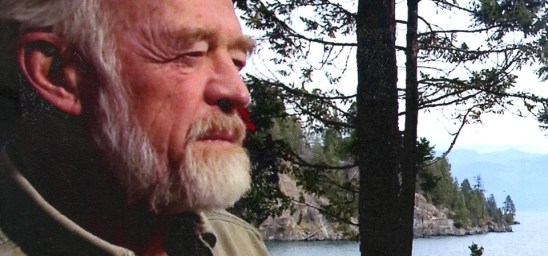
Devotions, [Eugene Peterson, Interview]

eugene-petersonInterview with Eugene Peterson

Why Can’t I Hear God? By Nancy Lovell

The musical group U2’s Bono quotes Eugene Peterson from the stage. Readers of the best selling Bible, ‘The Message,’ find themselves holding onto lines from his ‘fog-slicing’ Bible paraphrase, and many other works. For several years now, TheHighCalling.org has provided a daily prayer and reflection by Eugene Peterson. Recently, we asked the man himself: What are devotions and why do they matter in our daily work?

Why do so few people who believe in God bother to know Him?

The most obvious answer is that we’re in a hurry and not used to listening. We’re trained to use our minds to get information and complete assignments; but the God revealed to us in Jesus and our Scriptures is infinitely personal and relational. Unless we take the time to be quiet, in a listening way, in the presence of God, we never get to know him.

The same question is why so few married couples really know their spouses. People get divorced after 20 years of marriage, and the rejected spouse says, “I never knew this was coming. I thought everything was fine.” But there was not much listening in those 20 years. Devotions are the discipline of being quiet and listening for what we don’t hear in the streets, in the media, in the workplace.

What about people who sincerely set apart time, read the Bible, stay still, and hear nothing? They ask themselves whether God’s voice is anything more than their own thoughts.

We’re not good at this. We’ve had no practice doing it. No wonder we only hear our own thoughts. This is why the church is so insistent that we do this whether anything happens or not. Supported by 2000 years of history, we know that God does commune with us in our listening. But because we’re so unused to this way of communion, we don’t hear it. So it takes time.

How would you direct someone trying to start?

I would say: Get your Bible and find a place. If you can’t do this daily (some people can’t because of their life circumstances; mothers with young children are obvious instances), try for at least 20-30 minutes, two or three times a week, or four. Don’t make demands on yourself too high. Don’t ask questions about, “How long is this going to take?” Believe that something does happen in that silence—usually through Scripture, but not always—in prayerful, attentive listening, knowing that you’re in the presence of God.

I ask for a commitment of six months; so don’t come back in three weeks and say nothing’s happened. I’ve never had anyone who’s done this at least six months who came back to me and said, “I did it and nothing happened; I’m going on to something else.” Not many who give this a fair test ever say that nothing happens. Also, when I’ve asked people to do this as their pastor, I also ask them to worship regularly. This is a place where the whole community is gathered and listening and being in the presence of God.

Is that how you started?

I was lucky. In the family I grew up in, I started when I was about 14 …mostly with the Psalms, but all the Scriptures become part of it.

In your writing and speaking, you must have seen moments when a person realizes, “Yes, I want more and I want God.” What turns on the light for people?

Often the motivation is that people are tired of the way they’re living. They think there’s got to be more than just the motions they’re going through and the work they’re doing. There’s a craving and hunger that they identify with God. There’s enough pain or boredom or something to motivate them to do something that the culture’s not telling them to do. I got a letter recently from a friend of 40 years. She had been a parishioner of mine for a long time. Then she was ill, and divorced; and she quit, just gave up. She quit reading the Bible, quit going to church. Six months ago she wrote me a lovely letter that she was sitting with a group of friends and, in her words, “a rooster crowed”—it all came back and she was a Christian again and aware of the presence of God. Isn’t that a wonderful phrase? ‘A rooster crowed.’

Who knows what went into that statement of hers? Twenty years of unhappiness, pain, suffering, disillusionment …but still there was the need.She would have said during that time she didn’t believe in God. But the rooster crowed. That’s why we use the term the Holy Spirit to explain times like this. Given that it’s hard to discipline ourselves to silence, listening—and to daily time in quiet—tell us about your devotions on this website. I wrote those in the early morning for 20 years, maybe 25 years. And what I was trying to do was be present to the Scripture, listen to God, and to write as honestly as I could. I wasn’t thinking about anybody else but me.

It’s really hard to be honest as a writer. You get these wonderful ideas, and you love to manipulate words and see if you can make it sound good. It’s hard to be honest, especially working for God. That was the thing I was most aware of. “Eugene: Don’t say anything that is not relational, immediate, honest; stay present to the text and be honest before God.” I believed if I could be honest, I could draw some other people to honesty, too.

To read the rest of this interview, you will need to follow this link: http://www.christianitytoday.com/workplace/articles/interviews/eugenepeterson.html

 

cropped-christiangraffiti1-3

“Fool’s Wisdom”–Malcolm & Alwyn, [1973]

Alwyn Wall, Jano Wall and Tom Hooper at Calvary Chapel Melbourne, Florida, playing “Fool’s Wisdom.”

Malcolm and Alwyn were a popular British gospel beat music group in the 1970s. They played Beatles-influenced rock music with lyrics reflecting their conversion to Christianity. The duo was composed of Malcolm Wild and Alwyn Wall, who had been performing together in a band called “The Zodiacs” prior to their conversion.

Malcolm and Alwyn recorded two albums in the early ’70s before they disbanded in 1976, and a live reunion album in 1981 before again parting ways. The live album was recorded on January 24, 1981 at Calvary Chapel, Costa Mesa, California.

They recorded “Fool’s Wisdom” in 1973.  It is a simple, spiritual song.  It identifies and expresses the heart of the early “Jesus Movement.”  My personal thinking is that is, the simplicity of lyrics and performance was a blessing.  When I first listened to “Fool’s Wisdom” back in 1976, I was astounded.  Not for its flair, or pyrotechnics, but for its core simplicity.

Fool’s Wisdom Lyrics

Got myself some wisdom from a leather-backed book
Got myself a Saviour when I took a second look
Opened up the pages and what did I find?
A black and white portrait of a King who’s a friend of mine
Funny how when you think you’re right
Everybody else must be wrong
Till someone with Fool’s Wisdom somehow comes along
His voice was strange and the words He said
I didn’t quite understand
Yet I know that he was speaking right
By the leather-backed book in his hand
Hey, hey, what a day!… Fool’s Wisdom
Got myself some wisdom from a leather-backed book
Got myself a Saviour when I took a second look


“The message of the cross is foolish to those who are headed for destruction! But we who are being saved know it is the very power of God.”

1 Corinthians 1:18, NLT

Some of this was edited from Wikipedia.  http://en.wikipedia.org/wiki/Malcolm_and_Alwyn and

http://robertigno-christianblogspotcom.blogspot.com/2008/10/malcolm-and-alwyn-fools-wisdom-1973.html

bry-signat (1)

cropped-christiangraffiti1.jpg

 **************

Put Yourself into Position

Someone is waiting for you

“Jacob’s well was there; and Jesus, tired from the long walk, sat wearily beside the well about noontime.”  

John 4:6, NLT

This is a remarkable account of Jesus’ humanity.  He is tired.  He had been walking for a long time.  It was hot and sticky,  and He finds a cool place by an historic well to sit.  His legs were exhausted.  The funny thing is that we are so quick to emphasize our energy and vigor, and regard that to be our spirituality.  But, if we are honest, we also have times of fatigue.

It’s instructive to note that while Jesus is very tired, He is still in the very center of the Father’s will.  When I get tired, I just shut down, and retreat.  I will often just “unplug” and I’m not very spiritual.  But Jesus remains receptive, and even though He is so tired, He is activated by the Holy Spirit.  I would like to suggest that perhaps too often we let our humanity direct our spirit.

By choosing to sit by the well, in the hottest part of the day, Jesus positions Himself to wait.  He inserts Himself in the Will of God.  It is intentional.  He is waiting for her to come.  He has an appointment, and the Kingdom of God is scheduled to break out in the life of a certain woman.

It is imperative that we weave the spiritual into the fabric of the physical. 

This is important because ministry happens more frequently then we imagine.  It happens when we are really tired.  (And maybe more!).  Inserting yourself into God’s Will is an intentional act of love.  It is putting yourself into the flow, and committing a deliberate act of faith.

Jesus wants to marinate us in His presence, to be saturated in the capability that He wants to give us.

We may be tired and wanting to retreat in our fatigue.  But our spiritual man rarely gets weary, we just let our flesh dictate what we will and will not do.  I challenge you to wait expectantly for the the flow to bring to you those in your appointment book.

bry-signat-1

cropped-christiangraffiti1 (2)