Sunshine and Mercy

sunshine2

The Lord passed in front of Moses, calling out, “Yahweh! The Lord! The God of compassion and mercy! I am slow to anger and filled with unfailing love and faithfulness.”

Exodus 34:6, NLT

“I’m in a desperate situation!” David replied to Gad. “But let us fall into the hands of the Lord, for his mercy is great. Do not let me fall into human hands.”

2 Samuel 24:14

Sitting on the deck, it’s a cold morning, but the sun is bright. It’s a typical winter day here in Alaska, which means the sun is pushing back the winter for all it’s worth. Up here we have a ‘the love affair’ with the sun; it hides herself in the gloominess of winter— only to show herself off big time during our summers.

Soaking up the sun got me thinking about the mercy of God. I find I am of two minds. For the most part I love His mercy. It is probably the attribute I love most about Him. Mercy defined by my dictionary:

  • compassionate or kindly forbearance shown toward an offender, an enemy, or other person in one’s power; compassion, pity, or benevolence: Have mercy on the poor sinner.”

Who could not like this in ones deity? Most of us would agree that we are thrilled that God is this compassionate— especially when we’re such rascals ourselves. We will ground ourselves in His mercy, even when our minds give up.

But this is the hard part. I must be as merciful as He is. Mercy comes with the caveat that I become a compassionate person, even to those who are undeserving.

“Shouldn’t you have mercy on your fellow servant, just as I had mercy on you?’

Matthew 18:33

If you want mercy, you must be prepared to give it. Perhaps this is how God changes the world?

See what the Alaskan winter sunshine can do?
1brobry-sig4


“When a Christian shows mercy, he experiences liberation.”   ~Warren Wiersbe


cropped-christiangraffiti1 (1)

Our View From the Tree

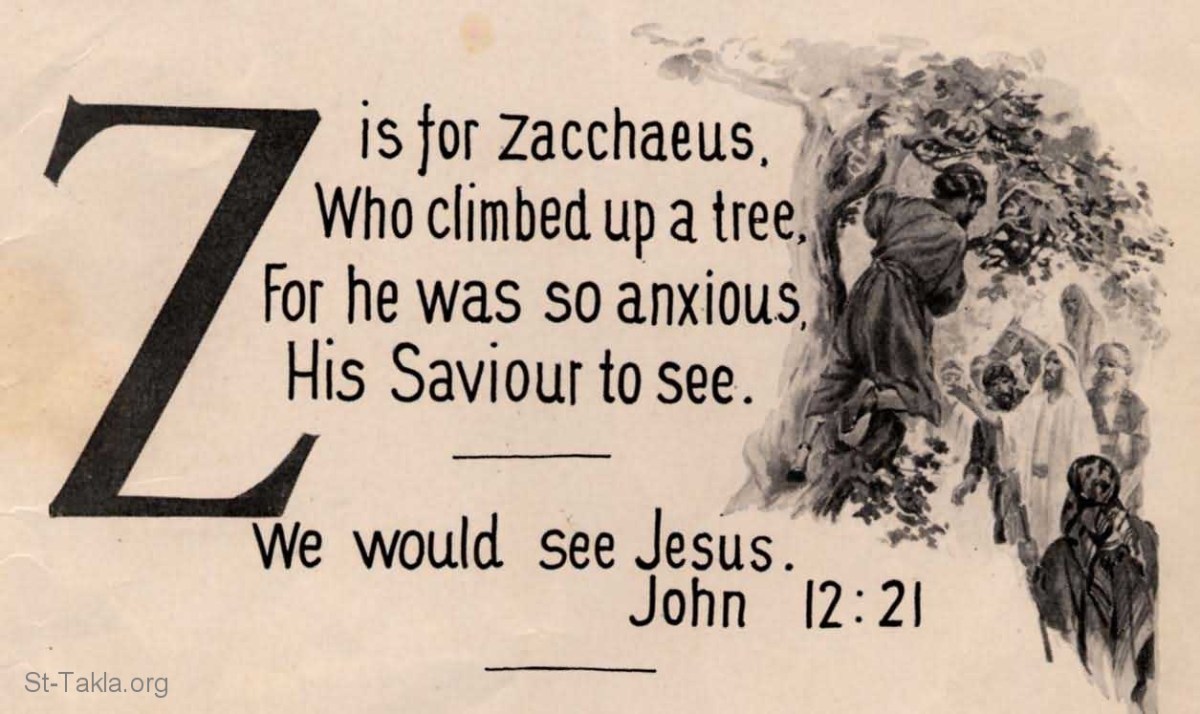
Jesus entered Jericho and was passing through. 2A man was there by the name of Zacchaeus; he was a chief tax collector and was wealthy.

3He wanted to see who Jesus was, but being a short man he could not, because of the crowd. 4So he ran ahead and climbed a sycamore-fig tree to see him, since Jesus was coming that way.

 5When Jesus reached the spot, he looked up and said to him, “Zacchaeus, come down immediately. I must stay at your house today.” 6So he came down at once and welcomed him gladly.

 7All the people saw this and began to mutter, “He has gone to be the guest of a ‘sinner.’ “

Luke 19:1-7

This particular story is one of my personal favorites.  Zacchaeus faced with the chance of missing Jesus shows his resourcefulness by running ahead.  He positions himself up in a tree that grew by a busy road.  Climbing up he placed himself where he could see Jesus.

I can see Jesus stopping under Zacchaeus’ tree, looks up and calls him to come down. “I must stay at your house today”, Jesus declares.  Now there is some serious protocol issues here.  A guest never invited himself to dinner, that just didn’t happen.  Also Jesus, as an esteemed religious teacher/prophet/messiah was supposed to set an example and not to associate with “sinners”. Rules are being broken.

There are many lessons here for the modern disciple.  We would do well to meditate on the many issues imbedded in the text.  The graciousness of Jesus is profound.  He is kind and yet assertive at the same time.

Imagine if this account was all  the New Testament we had, what would our mindset be like?  I think we’d all have to make some adjustments. To put it simply, Jesus is not normal.  He touches peoples hearts in unorthodox ways.

I think what blesses me the most is Zacchaeus’ decision to climb that tree.  He is a man who is “vertically challenged.” But basically he overcomes his liabilities when he commits to climb up into the branches.  He positions himself to see Jesus, and you can’t say a thing against that. Zacchaeus’ adventure is just now begun.

But isn’t that is what we do as Christians?  We put ourselves in a place where we can be close to him.  Think about the ‘disciplines’ of the Christian.  Disciplines like prayer, fasting, Bible study, tithing, baptism, serving and worship.  All of these are like branches on the Sycamore tree.  Ascending we put ourselves in place where Jesus is coming.  It is a way of seeing Jesus. But, that is surely enough.

When I pray, I do so in order to see Him more clearly.  

I can get it all confused and see it as an end in itself.  This is a common flaw in our thinking.  We forget that all these disciplines do is to help us see Jesus. Nothing more– just to see Jesus, and to be seen by Him.

Zacchaeus did not stay in the tree, you might say the tree accomplished its purpose when Jesus drew close.  Zacchaeus did not say, “Jesus, I have this wonderful spot, and it took ‘effort’ to get here. I think I will stay right here.” No, he didn’t just want to climb– he wanted to see Jesus.

“Sir, we want to see Jesus.”  John 12:21


bry-signat (1)
cropped-christiangraffiti1.jpg 

How Things Grow, [Work]

plow1930s

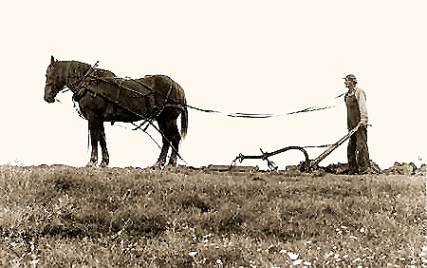
A farmer slowly walks behind his plow. The ground is hard and unyielding, but the steel cuts the heavy sod like a knife. He is preparing the soil for receiving the seed. He knows that what he is doing is imperative and he shouts out to encourage the horse. Its getting late and he wants to cut another furrow before night.

Plodding behind the plow he thinks many things. He can break up the ground, till and fertilize it, sow the seed— and then wait. He is powerless it get the seed to germinate and grow. He is limited to cultivating the soil and waiting. That is all he can really do, and he accepts this powerlessness. He can do everything right, and still not have a crop. All he can do is his part.

The farmer works in partnership with God. He is dependent on Him to grow the seed. The farmer must rely on the weather to meet and engage the planted seed. There are no shortcuts here. He does all he can, and then hopes that it is enough.

Farming is a joint endeavor between man and God. The man does what he has to do. God takes what the man has done and then finishes it. The crop will grow because He wills it. The farmer plays a part for sure, but ultimately God must become involved. Afterall, He makes the seed to sprout and grow.

We can say decisively that the pursuit of holiness in a Christian’s life is a joint endeavor between a believer and God.

Each have made the effort. The Christian does what is necessary, and then the seed is finally sown. It is then up to God to make the seed become the seedling. But each must work to finish the growth.

No one can attain holiness in their life apart from the work of preparation (it’s indeed work). The man must prepare the ground through plowing and cultivating. The farmer works the ground in order to make the ground ready. On the other hand, God provides both the environment and the growth needed to grow the seedling. Both the farmer and God must do their work.

A life of holiness is not automatic. It will never come at measured pace, trickling into our souls at a mechanized rate. (It would be nice if it would). Rather it wheat-field-landscape-picture_1920x1200_79595seems to come, in fits and spurts, sputtering rather than simply flowing.

Holiness is like a steamy Amazon jungle, vibrant and full of life. It is saturated with things living and green. It is not like an arid and sterile desert. Holiness is pulsating and powerful, full of lush growing things.

Becoming a person of holiness is the grandest adventure for the human soul. It defies our tendency to be rigid and legalistic. It is quite the opposite. It is tapping into life itself, and who is up to the task? Our morbid ideas of what holiness are not worthy of what really is.

Yes, to be holy is to work. Just as the farmer must prepare the soil for the seed, we too must guide our plows. God is ready to sow, and we should be ready to be ready. That is if we want to be fruitful and productive.

“Oh, the fullness, pleasure, sheer excitement of knowing God on earth!”

 Jim Elliot

bry-signat (1)

cropped-christiangraffiti1.jpg

Led Aside by Jesus, [Consideration]

“He took the blind man by the hand and led him outside the village. When he had spit on the man’s eyes and put his hands on him, Jesus asked, “Do you see anything?”

–Mark 8:23, NIV

Here I can imagine the gentleness and the kindness of Jesus–we see Him leading this man out of town to a quieter place. Showmanship?  Not on your life.  Jesus has made the decision to avoid the theatrics of a blind man given sight, and ducked the paparazzi for a moment to touch this man.

In a way, we are all like this blind man.  We stumble around and try to make our way.  But it is raucous confusion– the fields of philosophy, religion, psychology, politics and art are not much more than a blind men tapping with his cane, trying to find their way into the light.  This may be rather simplistic, but I believe it’s more true then we care to admit.  The entire social history of humans is based on confusion and conflict.

We grope in the gloom, and there is none to take our hand and lead us out of the darkness.  We stumble and fall, and come no closer to understanding then when we first started.  It is hopeless.  Our striving borders on madness and insanity.

The blind man in Mark 8 entrusted himself to Jesus’ care.  He willingly went with Jesus, following down the path and out of the village.  Jesus carefully leads him by the hand, which is quite remarkable.  (I guess I’m envious.)  Jesus would have led this man past every obstacle.

Each of us have to encounter Jesus for ourselves.

We are born blind, having no awareness (zero, zilch, nada) of spiritual truth.  We must be taught to see.  At the airport in Salt Lake City recently, I saw a young blind man being led through large crowd.  I was fascinated by his trust in his guide as people jostled to try to make their connections.  There was a quiet composure in him.  (In his place, I would be terrified.)

We must trust Jesus, with that same composure and grace.  When we cannot see, we must trust.

“I do not try to see my way,
Before, behind, or left, or right;
I cannot tell what dangers gray
Do haunt my steps, nor at what height
Above the sea my path doth wind:
For I am blind. 

“Yet not without a guide I wend
My unseen way, by day, by night;
Close by my side there walks a Friend,——
Strong, tender, true: I trust His sight;
He sees my way before, behind,
Though I am blind.”

by an Unknown Author

bry-signat

cropped-christiangraffiti1-3