“The Sheep Dip”

sheep+003

“It is not my business to judge those who are not part of the church. God will judge them. But you must judge the people who are part of the church. The Scripture says, “You must get rid of the evil person among you.” 

1 Cor. 5:12-13

a

We live in time of staggering sin.  It’s saturating everything and everybody— the world, and the Church . Our rebellion has gone viral.  We’ve been so inured and taken by it we find we just can’t imagine thinking apart from its influence.  Two generations ago things were astonishingly simple.  Todays sin has gotten superbly sophisticated— or has it?

Paul in his note to the Corinth church was compelled to point out a few things.  The culture in Corinth was like a communal ‘sheep dip’.  Everyone went through it.  It saturated everything— it soaked everyone, from head-to-toe.

This extreme atmosphere of sin pushed Paul to take a stand.  Most likely he would never had to do this.  But, the conditions demanded he respond to the sin that was raging everywhere.  And perhaps by doing this publicly, he could see people saved from feeling ‘the flames’.

The Church in 1 Cor. 5 felt that they were doing the right thing by accepting people living in continuous sin.  It seems as if their liberal hearts were opened to receive sinners of all varieties.  In their thinking, this made themselves as the Corinthian church quite remarkable, maybe even exceptional.

Paul however, will not be manipulated by human logic.  He instead presses us with him, to the good and the true.  He admits (point blank, mind you) that he has no authority over the lost, the secular, and the world.  He has nothing, ‘zilch’ to say about the way the heathen behave.  “It’s none of my business’ says Paul.  And he turns, and walks away.

We Christians, as believers however, are his business.  Paul, like a great ‘lens,’ focuses on you, and on me.  As part of the Church we are brought under its oversight and its direction.  It dictates to us now what is proper for us– acceptable, and honoring.  But the ‘worldling’, he goes free, doing whatever he desires. We however, come into a direct and sure correction of our ways.

What is your sphere of influence, and how far does it extend?  For Paul, he recognized his boundries.  And we must see ours.  The urge to intervene is very strong. We must back off.  But even though we detach from our worldly commitments, we are still to be a strong, sure light in their midst.  But we are not to be the judges of this world system. But the Church is a whole other matter.

bry-signat (1)

cropped-christiangraffiti1.jpg

*

The Lost & Found Department of the Universe

 istock_000011738379small


“What man among you, who has 100 sheep and loses one of them,  does not leave the 99 in the open field  and go after the lost one until he finds it?” 

Luke 15:4

I like ‘red letter’ editions of the Holy Scriptures.  I will personally pause when I read these selected verses, pausing to process the steady fact that these are Jesus’ own words.  They are different, and there is a quality to them that is not found in the thoughts of mere men.  I have no doubt of the inspiration of all of God’s Word.  I trust it implicitly.

When I make that pause, very often I reflect afresh on what I’m about to read, and my heart starts preparing to listen closer.  In Luke 15, everything is lost; a lost coin, a lost sheep, and a lost son.  All three link and give a common theme of

1) Something getting away,

2) The value of that lost thing, 

3) The diligent searching that follows,  

4) The apprehension of that which is lost,  

5)  The joy of the finder over the recovery of the thing which was lost.


These three parables strengthen each other.  Together they have the deep power of declaration.  They speak of the merciful heart of our Heavenly Father with a permanence and eloquence that defies any comparison. 

When we read Jesus’ words they reveal to us the intense searching that the Lord has for our lost souls, and that is the central theme of all history.  Jesus is looking for you– concentrating intently and focused.

It doesn’t matter how ensnared you are, or how deeply you have sunk.  God’s love for you compels Him to seek you.  He will reach into the thorns and thistles, if He has to.  Perhaps your sin has been frequent and you are stained deeply.  The declaration of Jesus’ words reveals the heart of God.  It is irrevocable and central to the way God deals with us.

What is the secret of the universe?  Why does reality exist?  What is the purpose of human history? 

I believe it is the apprehension and deliverance of human beings. 

That’s it.  What should the Church be doing?  Finding and rescuing people who are lost.  That is the purpose of everything, and that searching is to be our focus.

The question remains of what about God’s thinking?  Jesus’ words (in red) reveal the true essence of His dealings with us.  He will always act this way! He is constant and true.  He will always be this way.  Searching, finding, redeeming and celebrating.  Don’t doubt His love for you.

bry-signat (1)

cropped-christiangraffiti1.jpg

*


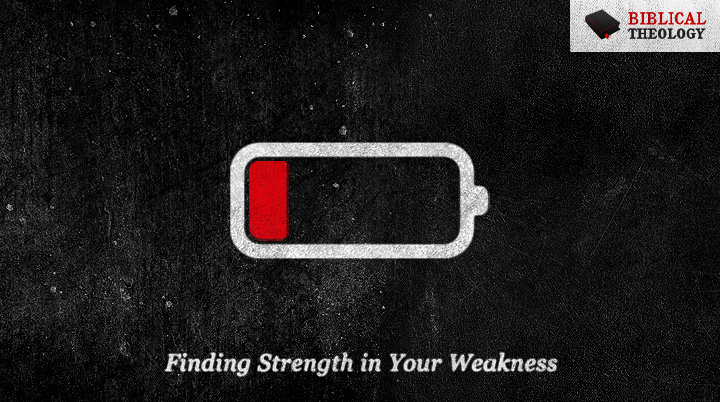
Bragging Rights


battery

“Three times I begged the Lord to make this suffering go away. But he replied, “My kindness is all you need. My power is strongest when you are weak.” So if Christ keeps giving me his power, I will gladly brag about how weak I am.”

2 Corinthians 12:8-9

This is a very crisp idea, Paul flips things upside down and then gives it a shake.  His attention is directed at bringing clarity and understanding about these issues of pain, weakness and conflict.  There is an understanding that Paul passes on that has personally worked its way through his own heart.  Truth that has taken that pathway is very precious.

Paul shares a conversation he had with the Lord Himself.  It really does seem that this subject was a continual topic between them.  He mentions it to Jesus three different times.  This tells me,  that suffering and pain are issues where it’s hard to get resolution.  When we hurt, we want Jesus to intervene, asap.  It is a real riddle to us, “Why am not healed?”

It seems to me that Paul comes to the point over and over and its not resolved to his satisfaction.  When the Lord does bring Paul to an understanding; it is basically the whole dynamic of the Christian experience.  And it is this, when a believer is sick, or weak–it’s then the strength and power of Jesus can be accessed.  Simply put–No pain, no power.

Paul ‘begged’ for resolution, and the ultimate response was the Lord was showing him the secret for his strength was in that presence of pain.  It gave him a power and force and might that he would not have otherwise.  Now Paul had a very intense ministry.  He would deal with issues and conflicts that would shrivel up most believers.  The list is long (see 2 Corinthians 11:23-28) and painful.  But the gist of it was Paul being abused and attacked by other people, over and over.

Paul had to have an extra boost to fulfill his ministry.  He needed affliction and weakness to connect him to a  huge ‘underground river’ of grace and love that flowed under his feet unseen and unknown.  The difficulties that Paul dealt with were actually what propelled him in his ministry.

There can be no power without pain; no discipleship without some kind of ‘disability.’

Paul tells the truth, “I boast in my weaknesses.  Just tap me into His power”.  Trials are the power outlet for the believer.  When he says things like that, it is good to pay attention.  The earnestness of Paul’s language in these verses gives us a sense of what is real, and how we should trust these ideas, as we are propelled into our ministry to the Lord.

“The power of the Church is not a parade of flawless people, but of a flawless Christ who embraces our flaws. The Church is not made up of whole people, rather of the broken people who find wholeness in a Christ who was broken for us.” –Mike Yaconelli


bry-signat (1)

cropped-christiangraffiti1.jpg


Our Very Real Treasure

 B
As Christians often our theology tells us that mental illness, depression, and bipolar disorder have no place in the believer’s life.  So we hide, sneaking into our sessions with our therapists, and then change the subject to minimize our exposure to direct questions. We have hidden our issues really well.
 B
But I would submit to you that it is we who are closest to the Kingdom of God. It is far easier for us to approach the Father, in our brokenness, humility, and lostness. We have needs; a sound mind, a healthy body and we know it. We have no illusions of wellness, nothing can convince us that we are well. We are not. We are broken and only our loving creator can mend us.
 B
You might say that the Church needs us. An Archbishop was given an ultimatum by the Huns who surrounded his cathedral. “You have 24 hours to bring your wealth to these steps”, the war-leader declared. The next morning the Archbishop came out leading the poor, the blind, the lame, and the lunatics. “Where is your treasure? Why have you brought out these, people?” The Archbishop said this, “These are the treasures of the Church, these who are weak are our valuables. They make us rich.”
 B
I am afraid the the Western Church no longer sees its “treasures” like it should. In our pride and self-centeredness we have operated our churches like successful businesses. We value giftedness more than weakness. We definitely have no room for the desperately weak. It’s time for the Church to begin to act like Jesus.
 B
Church isn’t where you meet. Church isn’t a building. Church is what you do. Church should be a verb.  Church is who you are. Church is the human outworking of the person of Jesus Christ. Let’s not go to Church, let’s be the Church.
B
bry-signat (1)
cropped-christiangraffiti1.jpg