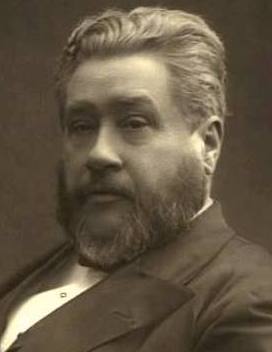
Redeeming Pain

When history speaks, do we listen?

by Terry Powell

It’s one thing to say that God’s sovereignty redeems our pain or weakness for a greater purpose. It’s another thing altogether to see a vivid illustration of the truth.

David Brainerd (1718-1747) took the gospel of Christ to Indians in Massachusetts, Pennsylvania, and New Jersey, often living alone with sparse food rations and exposure to cold. Extremely melancholy in temperament, Brainerd endured long episodes of joylessness, often slinking into despair over awareness of his sin, or over an incapacity to feel more love for the people he was trying to reach. Physical frailty accompanied his psychological anguish. He died of tuberculosis before his thirtieth birthday.

A couple years after launching missionary work among the Indians, in 1845, God’s Spirit brought a spiritual awakening in New Jersey. Within a year, the church Brainerd started numbered 130.

Brainerd kept diaries in which he described bouts of despondency, disclosed his consciousness of sin in light of God’s holiness, and recounted efforts to evangelize the Indians. Their pages teem with honest self-disclosure as well as desperate dependence on God for physical and emotional sustenance.

Twenty-two places in his diaries he yearned for death as an escape from his misery. Yet he persisted in proclaiming Christ, even when his own temperamental makeup eclipsed his ability to experience the joy inherent in the gospel. One entry revealed his acceptance of weakness and deeply-entrenched desire to finish well: “Oh, for more of God in my soul! Oh, this pleasing pain! It makes my soul press after God… Oh, that I might never loiter on my heavenly journey.”

After his death, the fruit of Brainerd’s life multiplied exponentially. In 1749, Jonathan Edwards, in whose home Brainerd died, took the diaries and published them as a Life of Brainerd, a book that’s never been out of print. Renown missionaries and leaders galvanized by Brainerd’s story include John Wesley, Henry Martyn, William Carey, Robert McCheyne, David Livingstone, Andrew Murray, and Jim Elliot.

The borders of Brainerd’s impact weren’t expanded in spite of his emotional and physical afflictions, but because of them.

His story resonates with so many servants over the years because when push comes to shove, they, too, wrestle with sinful propensities, episodes of despondency, and physical frailties. They believe they are candidates for the same divine grace they observe in Brainerd’s life. John Piper, himself buoyed by Brainerd’s story, offers this apt summary statement: “Brainerd’s life is a vivid, powerful testimony to the truth that God can and does use weak, sick, discouraged, beat-down, lonely, struggling saints who cry to him day and night to accomplish amazing things for his glory.”

How can God use you despite physical or emotional frailty?

For biblical indicators that God uses weak, needy people, read these texts: 1 Corinthians 1:26-29; 2 Corinthians 4:7; 12:9-10. Resources quoted are The Life of David Brainerd, by Jonathan Edwards, and The Hidden Smile of God: The Fruit of Affliction on the Lives of John Bunyan, William Cowper, and David Brainerd, by John Piper.


Terry teaches in the areas of Church Ministry and Ministry Leadership at Columbia International University in South Carolina. He has served as a Christian Education staff member for three  churches, and he’s a licensed preacher in the Presbyterian Church of America.  His current books in print are Serve Strong:  Biblical Encouragement to Sustain God’s Servants, and  Now That’s Good A Question!  How To Lead Quality Bible Discussions. Terry has been married for 46 years, and has two sons, a daughter-in-law, one grandson, and a dachshund.  His constant prayer is, “Lord, make me half the man my dog thinks I am!”

Terry has a new blog at http://www.penetratingthedarkness.com. It deals with the believer’s depression and other mental issues. Please visit him and tell him “Hi” from me.

True Comfort, Total Rest

“I have taken much pains to know everything that is esteemed worth knowing amongst men; but with all my reading, nothing now remains to comfort me at the close of this life but this passage of St. Paul: “It is a faithful saying, and worthy of all acceptation, that Jesus Christ came into the world to save sinners.” To this I cleave, and herein do I find rest.”

–John Selden

Return, O my soul, to your rest;
    for the Lord has dealt bountifully with you.

Psalm 116:7. ESV


Come What May

Go forth today, by the help of God’s Spirit, vowing and declaring that in life – come poverty, come wealth, in death – come pain or come what may, you are and ever must be the Lord’s. For this is written on your heart, “We love Him because He first loved us,” 1 John 4:19.

–Charles Spurgeon


“…but as for me and my house, we will serve the Lord.”

Joshua 24:15


On Being Loved

risk-being-loved

“The human heart is the most deceitful of all thingsand desperately wicked. Who really knows how bad it is?”

Jeremiah 17:9

For the sinful nature is always hostile to God. It never did obey God’s laws, and it never will. That’s why those who are still under the control of their sinful nature can never please God.”

Romans 8:7-8

The reality is that we are in a real fix. The grim news isn’t changed simply because we graduated from a ‘charm school’ or become Eagle Scouts. We are fundamentally flawed, our hearts throughly contaminated. Any good we try to do is a ‘freak of nature,’ and astronomically beyond our ability. The race of men has failed. (Maybe that’s why history keeps repeating itself.) Without the presence of God, we would destroy ourselves. And each other.

The word “hostile” is used. That sort of sums it all up, doesn’t it?

God’s Constant Love for You

8 “But God showed his great love for us by sending Christ to die for us while we were still sinners.”

Romans 5:8

Although we’re in active rebellion, “God so loved the world…” His love for us is called ‘agape,’ it is a word used in the New Testament, and it’s a love marked by consistency and selflessness. God loves without any conditions or merit on our part. Agape is love undeserved. The word is full of mercy, a concept very hard for us to grasp.

God’s love for us the way the universe is run. Love is what empowers Him to save us from our sins. It is the Lord’s love that draws us to Himself. Love is like a magnet that pulls us out of darkness into the light. His love for you is infinite.

“In math, if you divide an infinite number by any number, no matter how large, you still have an infinite quotient. So Jesus’ love, being infinite, even though it is divided up for every person on earth, is still infinitely poured out on each one of us!”

  Charles Spurgeon

You can trust the Lord to be fully loving you right this minute. It is a full and constant love— there is scarcely a human parallel. The ‘prophets’ exhaust language seeking a metaphor to explain God’s love to a doubting and disobedient people. I imagine they are frustrated; they can’t explain what they’ve seen. They try, and end up explaining God’s love by type: marriage, and motherhood.

Over and over, these two metaphors are used extensively. And over and over you can see the love of God for people (flesh and blood, like you and I) for us. He loves us like a husband loves his straying wife. He loves us like a father loves his struggling child. We stray and struggle, and we will find no peace apart from His love. After all we are His, and we really can’t ‘work right” apart from His guiding presence.

Look at His heart. See His hands.

They both bear us witness of a supreme love. He loves you right now— wrecked and ravaged by your sin. I don’t know where you are at this very moment, but I do know He loves you intensely. Sin may have destroyed you, but His love never, ever vacillates. God is passionate about you— He won’t let you go. But you must risk being loved.

“See how very much our Father loves us, for he calls us his children, and that is what we are! But the people who belong to this world don’t recognize that we are God’s children because they don’t know him.”

1 John 3:1

bry-signat (1)

cropped-christiangraffiti1.jpg