The Angels are Bewildered

457

“When the Japanese mend broken objects, they aggrandize the damage by filling the cracks with gold. They believe that when something’s suffered damage and has a history it becomes more beautiful.”

~Barbara Bloom

Just a short word of encouragement to all my suffering brothers and sisters. 

I believe God loves you (it’s not a cliche) and has a tremendous plan for you.  Scripture tells us that we will reign with Him (and the last time I looked, there is no disqualification for being mentally or physically ill). 

Having suffered through your whole life will be just an enhancement, a bonus when you finally are held by Jesus, and you can rest in His arms.

Those of us who struggle with depression, mania, and paranoia know a lot about cracks and brokenness.  Mixed states, anxiety, and social withdrawal all have taken their toll. Some of us hear voices. Addictions and suicide attempts have made up our past life (and even sometimes try to intrude on the present.)

I once had a dear friend with advancing Alzheimers She understands little of what is happening to her,  but she still worshiped God with the rest of the congregation. Before dementia, she was a dynamic spiritual marvel.  Without a doubt one of the astonishing women I had ever met.

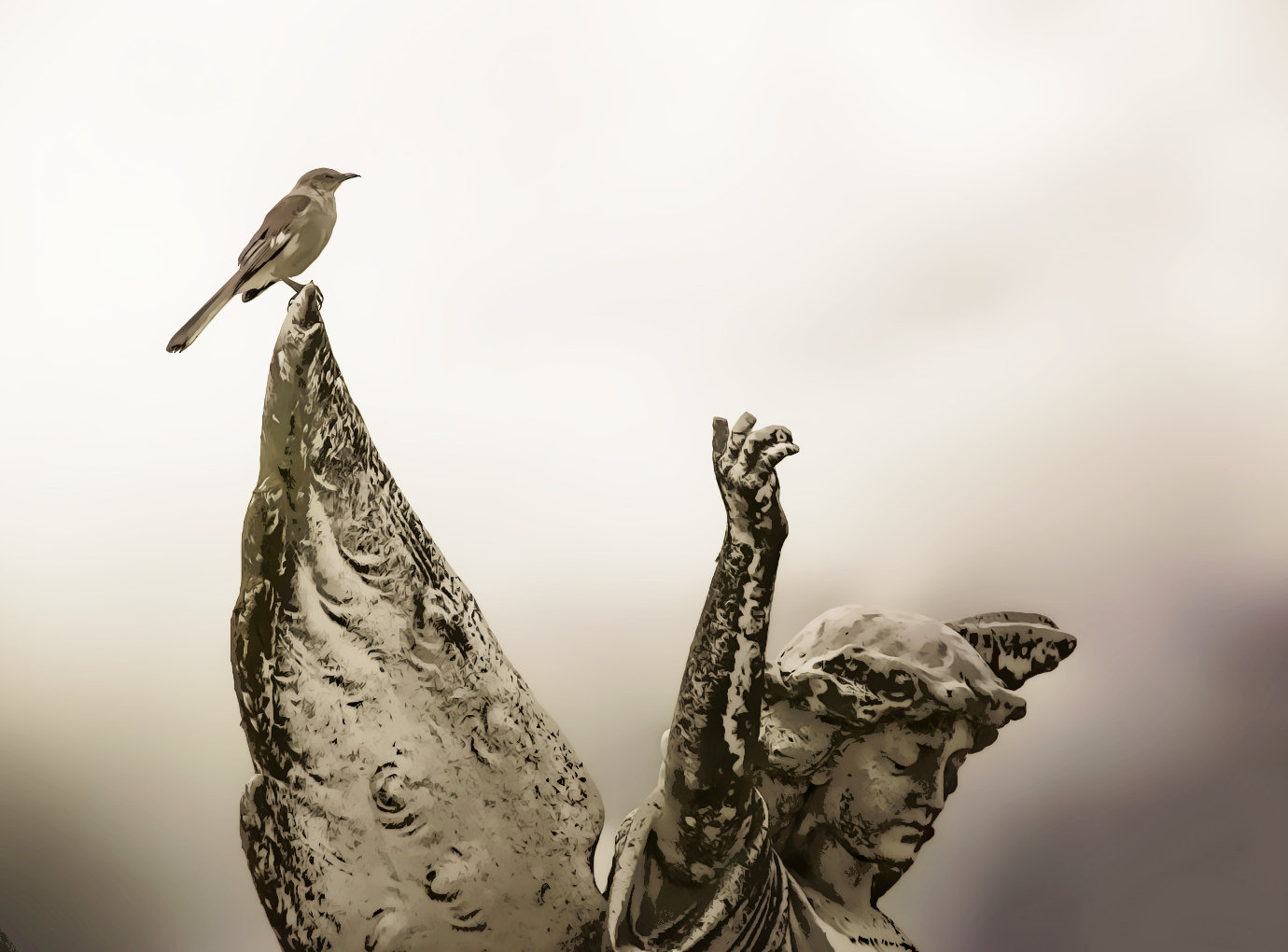
Now however, when she raises her hands, I believe the angels step back in a deep awe. 

I just realized this–the angels understand worship, they really do. Praise seems to be their specialty. Each angel that surrounds the throne has a PhD in “worshipology.”

But you know what? The angels really don’t understand our worship out of our pain, weakness, and brokenness. Since they have never experienced it, I don’t think they understand.

Let’s worship God with our cracks and brokenness.  In John 12:1-7, a woman breaks open a jar of nard on Jesus’ feet, while the other disciples hang back and complain. 

But always remember this dear one–it’s only by brokenness and then being poured out that one can release the perfume.

bry-signat (1)

*

We Are Not Crushed

“Indeed, we felt that we had received the sentence of death, so that we would not trust in ourselves but in God who raises the dead.”

2 Corinthians 1:9

To be chronically ill often means living with awful frustration. We can’t do what we want, we are ‘trapped’ by a disease we never asked for, and we’re held hostage by our minds and bodies. We once had a job– a career… and our time was occupied by that.

We wanted something else, anything more than being very sick.

I once was a pastor of a small church. I also taught Gospels for several years in a local Bible Institute. I loved ministry very much. I enjoyed helping people and teaching the Word. I endeavored to be faithful in the ministry. I hope I did.

With the sudden onset of a brain tumor, followed up by a diagnosis of severe depression, my life more or less exploded. I had extensive memory loss. I knew I had to step out of the ministry. I simply could not function. It was a hard thing to leave it behind.

The post-op recovery following the tumor was an ordeal, as I had to relearn much. A few years later I ended up on disability; I was unable to work, and my symptoms were so unpredictable. I dealt with profound depression and a solid dose of paranoia and fear.

My depression grew even more profound with the stillborn death of our third child just 3 days before her delivery, Things suddenly ground to a standstill as my wife and I tried to process all of this. I guess I just couldn’t understand and more or less just shut down. I spent months in bed, unable to function.

The isolation of being ill seems worse than the pain. We wonder why this is happening to us, and we hear lies about our own unworthiness or God’s anger. We think that the Church has abandoned us. We can feel cursed, forgotten, or even worse. (Maybe even irrevocably lost?)

Satan craves our spiritual destruction, and he snares unsteady souls.

I admit I have been slow to learn this– but God brings good things out of the dark. I’m embarrassed by my personal lack of acquiring all of this. Now I’m starting to learn finally, and I want His words to reflect these truths.

I’m learning how to walk in brokenness.

His light will shine, and the treasure is found in clay vessels. Brokenness only means the treasure is now seen clearly. It’s important to note–jewels lose none of their value by being surrounded by broken clay. Our weaknesses are being turned into goodness, understanding, and love for our brothers and sisters.

Troubles of many varieties will pay us a visit. Count on it.

“We are pressed on every side by troubles, but we are not crushed. We are perplexed, but not driven to despair. We are hunted down, but never abandoned. We get knocked down, but we are not destroyed.”

2 Corinthians 4:8-9

Bryan Lowe

Visit my new site: alaskabibleteacher.com

Quarantined, for His Purposes

quarantine

Quarantines are a real possibility, even in this day. A quarantine is imposed when disease is contagious enough that it would harm a society: Measles, Smallpox, and the recent COVID-19 are just a few physical diseases where isolation must be imposed. It can be severe— an epidemic, with desperate consequences if not adhered to; in some rare cases, the use of deadly force have been authorized to maintain a quarantine until the disease is no longer communicable.

This may surprise you, but there are examples of ‘quarantines’ in the Bible. The term ‘unclean’ was used for ‘leprosy.’ Those afflicted had to isolate themselves; they had to ‘announce’ their presence when in contact with society. Lepers lived in groups away from the general populace, as a result of their disease.

In Paul’s epistle to the Corinthian he addresses another kind of ‘quarantine.’ The situation was dire; the church had advocated a Christian living with his father’s wife.

“I have already passed judgment on this man in the name of the Lord Jesus. You must call a meeting of the church. I will be present with you in spirit, and so will the power of our Lord Jesus. Then you must throw this man out and hand him over to Satan so that his sinful nature will be destroyed and he himself will be saved on the day the Lord returns.”

1 Corinthians 5:3-5, NLT

Understanding the Principal of Usefulness

Now in a large house there are not only gold and silver vessels, but also vessels of wood and of earthenware, and some to honor and some to dishonor.”

2 Timothy 2:20, NASB

Found in God’s pantry are lots of pots and pans of various uses.  Paul writes Timothy about the ‘large house’ which is the Church inclusive. Look around Timothy, there are gold ones, and there are silver ones. They have a noble purpose fitting for such a great house. These are the ones the guests will use; they befit the significance of the Lord himself. These vessels have great value for they are made of precious metals.

There are vessels of a different category. These are the ones made of wood, and of clay. These are part of the household, make no mistake about it. But their use is one of function, they’re utilized in common and ignoble ways. (A clay ‘bed-pan’ perhaps?!)

21 “Therefore, if anyone cleanses himself from these things, he will be a vessel for honor, sanctified, useful to the Master, prepared for every good work.”

2 Timothy 2:21

Paul, the author of New Testament doctrine of grace emphasizes the place of personal holiness. We are to ‘cleanse’ ourselves to become a vessel of honor. There is good news here:

  • All are vessels in the Father’s house. Each of us belong to Him. He alone determines their use.
  • Things are not yet in their final state. Change in status can be experienced. In God’s economy, clay pots can become ‘golden.’ Silver can become ‘wood.’

Some sin is contagious. It affects believers, and the Church becomes compromised by our sin. And then sometimes we are quarantined by the Holy Spirit–until the contagion passes. This spiritual disease must not be permitted.

I have experienced this several times in my own discipleship. These are not pleasant times, but there is no condemnation. I’m still His servant, His love for me stays outrageously constant. He has never turned away a sinning child who repents of their sin.

“Yes, I am His servant, but I must wait out in the hall. I haven’t been faithful. So I sit in His waiting room, waiting for His call. This is for my good. And my Father knows what is best.” 


Deeply Hurt for a Reason

Pastor A.W. Tozer seems to have gotten a hold on something here. Those who step into discipleship or ministry will inevitably be hurt in some significant way. I wouldn’t say it was a ‘given’, but it seems to be the common path we must take. We must be aware–but often we can’t or won’t understand. This is hard and we’re easily confused.

God really isn’t our problem.

He loves us and saves us and He really wants to bless us. He is all goodness and grace. He has no evil intentions concerning you, and certainly has no desire to see you suffer in a crisis of suffering or trial. Even in times of temptation, He simply views it as a step to strengthen us–He never is out to trip us up.

I really think that the issue is us.

Our old nature–the sinner inside, delights in things like pride and selfishness (even in religious matters). Some of the most difficult people I have ever had to work with were in places of oversight within the Church!  May I suggest something?

Could it be that the problem isn’t that we are too weak, rather, it is because we are too strong?

God’s intention is ‘to bless greatly.’ But my pride and self-will must be left at the door (repeatedly). My old nature cannot truly work in the Kingdom. Only when these issues are dealt with (repeatedly) will humility and brokenness transform us. Quite simply, there is no way around this. God uses broken things. We must be broken as well.

“It takes broken soil to produce a crop, broken clouds to give rain, broken grain to give bread, broken bread to give strength. It is the broken alabaster box that gives forth perfume.”

“It is Peter, weeping bitterly, who returns to greater power than ever.”

Vance Havner

Becoming broken often takes years of trial, temptation, and affliction.

But God is patient. He’s not in any hurry.

You will ‘log-in’ many hours in the desert. Many of His best soldiers have been recruited from that barren place. The Holy Spirit is our best guide through the difficult loneliness and aridity of this place. He will guide you, and comfort you.

I sometimes teach at a local Bible college–I love Song of Solomon and choose to teach it whenever I can. Here’s a verse that has encouraged me over and over:

“Who is that coming up from the wilderness, leaning on her beloved?”

Songs 8:5, ESV

“Before God could bring me to this place He has broken me a thousand times.” 

Smith Wigglesworth