Setting Yourself on Fire

Difficulty and pain sometimes come from others, and challenges to the Lordship of Jesus often come from our unique circumstances.

But what if it was something we’ve done?

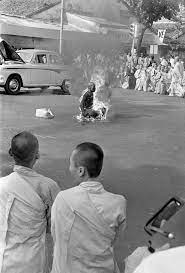
I remember the classic picture of a Buddhist monk who sat in the middle of a street. He was serene as he soaked himself with gasoline, and lit himself on fire as a protest against a war he believed was wrong and evil. He burned himself in front of the cameras.
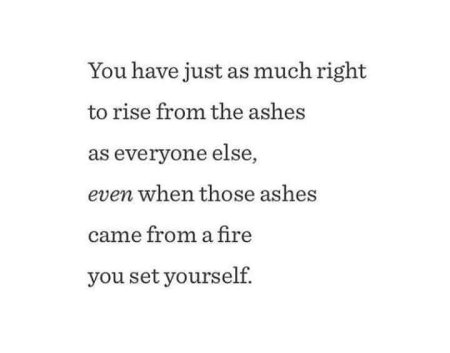
All too often we’re pretty much responsible for our own self-immolation. It is we (and we alone) that set ourselves ablaze. Sin affects our minds and hearts. We set ourselves on fire.

When we sin– when we walk in ‘known’ disobedience we always put ourselves in an awful place. We love it but learn to hate it too. But we continue to do it regardless of the awful death that ensues.

God promises to forgive us. Out of our ashes, He keeps bringing us life and hope.

You can be forgiven. You can find life again, even if you’re fully responsible for the evil we’ve done to yourself. Yes, we all sin, and yes we walk in our own personal rebellion. But Jesus knows it all. These awful things we’ve all done can be forgiven.

As a man and a preacher of the Gospel, I realize that I often choose to sin. In spite of all I know and teach I realize that I can live in the ashes of my own making. As one who also struggles with bipolar, I understand that I’m even more susceptible to doing awful things. I understand that I choose darkness even though others will call me “a man of God.”

As you read this I’m praying that you find His forgiveness and mercy. You’ve come a long way it seems, but you must see His blood that was ‘released’ from His veins and arteries for you.

He desperately loves you–even if you’ve set yourself on fire, and sit in the ashes of your doing.

“To appoint unto them that mourn in Zion, to give unto them beauty for ashes, the oil of joy for mourning, the garment of praise for the spirit of heaviness; that they might be called trees of righteousness, the planting of the Lord, that he might be glorified.

Isaiah 61:3

We Plead for Good Pastors

Within our personal issues of vulnerability, there are usually troubling problems. These are bruised and painful areas, things that result in terrible devastation in our lives and loved ones. Here are just a few of them:

  • alcoholism and drug abuse
  • mental illnesses
  • homosexuality
  • sex addictions, internet porn
  • physically disabled
  • chronic depression
  • suicidal thinking
  • religious deception, cults
  • on and on…

This isn’t a definitive list by no means. (Although each are substantial issues of pain and conflict.) But it’s strange, as defeated strugglers we often feel intimidated by leadership in the Church. We feel frustrated, and very much alone. This is a problem.

It seems all we can see is their authority, and we are afraid.  

Typically, in our fellowships, our pastors and elders are men.  And that alone can sometimes create issues in hearts looking for a tenderness that will heal. We need to make room for our sisters to help us out. (Just a thought.)

Often rather than opening our brokenness up to our shepherds, we fabricate illusions of self-sufficiency and invulnerability. But we are still afraid deep down, and our weaknesses effect us profoundly. We are afraid of disclosure. We fear that some will find out who we really are inside. It seems everyone is hiding something; especially us.

Because we’re strugglers filled with great deal of pain and confusion, we feel lost. And no one will help us.

We can easily label ourselves as “hopeless” and very lost.  Some of us secretly believe that they have committed the unpardonable sin. (But this is a lie, as God forgives every sin but one.)

Some have heard (or misheard) that they are going to hell no matter what they do, and that they are truly lost and irrevocably separated from God. They need to know this is a lie, because whenwe confess our sins, the blood of Jesus covers them ALL and cleanses us from ALL unrighteousness” (1 John 1:9).

Many of us who struggle have an ugly and a twisted sense of our leaders in the Church. We get really strange whenever we meet them– a sort of a deep change comes over us when we shake hands with them after the service. Deep inside we can be afraid of the ‘man of God,’ and think he is going to ‘see’ the sin and weaknesses in our lives, and shame us publicly (see Joshua 7).

Pastor, you should understand that some of us feel pretty much lost all the time, and afraid when we meet you.

Typically, we pretend or even avoid those who are sent to pastor us.  As a result of our flaws and weaknesses we want to separate ourselves from the Church. This reality is we feel like we don’t belong. We may feel like a hypocrite just coming to the service. We end up going out of duty or habit. That is a warning light of trouble.

Often we try to live a life insulated from any outside intervention.  We avoid people who could really help us.  We are terribly sick, and need a pastor or elder to help us work through these things. Certainly that there is often a need for scriptural correction, but always in love– and even then with some tears.

There is a spiritual war that encompasses us. The torrents of hell are released on us and we discover Satan working in various ways. Admitting you’re under attack is not weakness. (If you knew what you are really facing you’d be terrified.) But Jesus Christ stands to intervene for us. He stands and intercedes for our souls–all the time

We must pray for our pastors. Sometimes their title and gift is hard to carry. Their gifting is often limited by extraneous things, and yet Jesus, the Good Pastor comes alongside to help them. Pray hard for your pastor. Cover them and bless them.

flourish2

Continue reading “We Plead for Good Pastors”

He Forgets

“I, I am he who blots out your transgressions for my own sake, and I will not remember your sins.”

Isaiah 43:25, ESV

Sometimes we’ve got a hard time forgiving ourselves for our sin.

Ironically though, the Lord has a hard time remembering them.  Obviously, He isn’t becoming senile on us. He chooses to become “forgetful.”  We’re told repeatedly that he has completely forgot and forgiven all of our darkest evils, and twisted agendas.

“He will again have compassion on us;
he will vanquish our iniquities.
You will cast all our sins
into the depths of the sea.”

Micah 7:9

Once we turn away from those very dark things, we find that the true God is patiently waiting. We discover that his arms are wide open, and he’s running down the path to meet us (Luke 15:20-21.)

There is something noteworthy and special about a forgiven sinner. 

In a deep sense we have been altered.  We have become a new creation (that word can easily be translated as “species.”)  Something tangible has happened, an alteration has taken place.  We’re something completely new and totally different–a forgiven believer now exists! “If anyone belongs to Christ, he is a new creation. The old things have gone; everything is made new!” (2 Cor. 5:17)

By our faith in Christ’s death, we discover that the power of our sin has been shattered.

And for the first time, we have the ability to say “no!”  We can now turn and go the other direction.  We can walk in such a freedom and awareness of being loved, that it really easy to let Him change us from the inside out. Like the prodigal, we must turn our backs on the pigs, and go home (Luke 15:16-17.)

“For I will be merciful toward their iniquities, and I will remember their sins no more.”

Hebrews 8:12, ESV

Sorry, Not Sorry

Have you ever heard someone say those words? “Sorry, not sorry.” It’s kind of annoying. It’s said following a statement or action the speaker knows is unkind or won’t be appreciated by someone else, but they just don’t care. It’s worse than not saying sorry at all.

We humans have a terrible time admitting when we are in the wrong. There’s always some justification for our actions, often that we were wronged first, or we had no choice, or some such nonsense. Misunderstandings escalate into disagreements, which quickly become heated arguments, and nobody really wins in the end. Sometimes good friends end up enemies, all because no one will say those two simple, yet truly difficult, words: “I’m sorry.”

We sometimes have the same problem with God. We know we have not acted as we should, but we can’t let go of pride and say we are sorry. Scripture reveals the truth: a contrite heart is all God wants from us. He desires for us to admit when we’ve missed the mark.

The stories of King David and King Saul illustrate this principle. Both were in the wrong. David committed adultery, and then had the husband of the woman he slept with sent to the front lines of a battle, knowing he would be killed. But when the prophet Nathan brought David’s transgressions to his attention, David’s response was a remorseful attitude. He immediately fell to his knees and confessed his sin. And God forgave David.

Saul, on the other hand, committed a transgression that seems much less serious. He counted his army. Doesn’t sound like much of a sin, does it? But the heart of Saul’s transgression was a lack of trust in God. He didn’t believe he would win a battle even though God had promised him victory. Not only did Saul not trust God, he refused to confess his lack of trust. Instead he made excuses, tried to justify his actions. As a result, God took away Saul’s kingdom and gave it to David. And God did not forgive Saul.

David is remembered as a man after God’s own heart in spite of his many sins because a relationship with God was most important to him. Saul is not remembered so kindly.

What have we lost because we refuse to say we are sorry? A kind word, an admission of our own contribution to a dispute, can go a long way toward healing relationships. Is there someone you need to say “I’m sorry” to today? What’s holding you back? Is it a stubborn nature, like what often holds me back? What do you have to lose? What do I have to lose? More importantly, think what we have to gain.

What about your relationship with God? Is there some transgression you need to confess to restore the intimacy you once enjoyed with your Savior? What do you have to lose? You have the best God intends for you to gain.