Jesus Help Me, I’m Knotted Up, Again

gordian-knot

Jeremiah 14:9

Looking back on it has been very helpful.

In recent weeks I’ve gone through a time of profound confusion. My grip on reality has been tenuous at best. I’ve had a struggle with a depersonalizing sense, I seem not to “see” reality as I used to. Everything seems increasingly odd, and disjointed. I see myself outside myself.

Everything is knotted up, again.

I have had bouts with this before. And yet every time the Father has “fathered” me. I have been led through each bout. In many ways, the clinical depression has changed, now it slams. It used to be kind of low grade, kind of a grey fog, a steady and tedious despair, but now it’s more like a black lightning bolt.

I have had suicidal urges and thinking. I hate handling a kitchen knife, as I get the urge to plunge it into my chest. It’s funny like that, I call out to Jesus and He truly does find me.

He straightens out my knotted life only as He can.

History:

This blog initially started off in September 2009 following the idea of “broken believers.” Perhaps it was overly ambitious. But my heart’s desire is to be transparent and very honest. I still want to see this happen, and it does, sometimes.

I know I am not some super-saint with just the right answer for everyone. If I ever made this impression, please forgive me. Believe me, I only want His gentle presence to touch broken people.

For you see, I am the broken believer that writes this blog.

These Very Temporary Troubles

The apostle Paul once wrote, “For our light and momentary troubles are achieving for us an eternal glory that far outweighs them all.” 2 Corinthians 4:17 (NIV).

The troubles we face don’t seem light or momentary. They feel heavy and often permanent. Especially when one struggles with troubles like mental illness, fibromyalgia and other chronic pain syndromes, physical disabilities, and cancer. Surely Paul was mistaken when he described our troubles as light and momentary. Perhaps his life was a different experience?

No, Paul knew what he was talking about; he knew about all about troubles.

He was flogged and beaten, threatened with stoning, and thrown in jail multiple times for proclaiming Christ. He was shipwrecked not once, not twice, but three times. Although the Bible doesn’t tell us how Paul died, other historical documents suggest that he was beheaded.

Once he chose to follow Christ and proclaim His name, Paul’s life was anything but easy, his troubles anything but light and momentary. And yet, compared to the eternal glory his passion for Christ was earning for him, he could truthfully call them light and momentary.

Our burdens become light when we give them to Jesus.

Come to me, all you who are weary and burdened, and I will give you rest.” Matthew 11:28 (NIV). He will carry the load if only we are willing to give it up. Sometimes he brings fellow believers alongside to help with this.

Our troubles become momentary when we see them from an eternal perspective.But do not forget this one thing, dear friends: With the Lord a day is like a thousand years, and a thousand years are like a day.” 2 Peter 3:8 (NIV). In our earthly bodies we are bound by time and can be easily fooled by it.

In God’s kingdom, time becomes somewhat irrelevant.

aasignLinda

Paranoia & Delusions

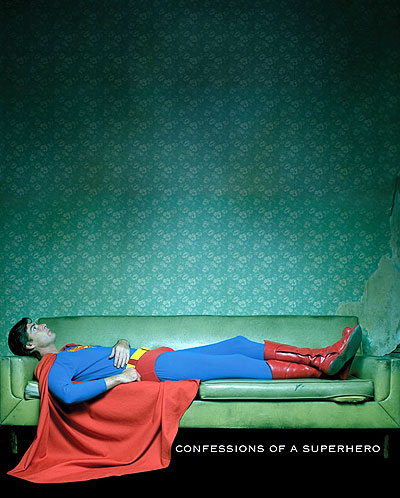
superhero_400pxDelusional disorder, (previously called paranoid disorder,) is a type of serious mental illness called a “psychosis in which a person cannot tell what is real from what is imagined. The main feature of this disorder is the presence of delusions, which are unshakable beliefs in something untrue.

People with delusional disorder experience non-bizarre delusions, which involve situations that could occur in real life, such as being followed, poisoned, deceived, conspired against, or loved from a distance. These delusions usually involve the misinterpretation of perceptions or experiences.

In reality, however, the situations are either not true at all or highly exaggerated.

People with delusional disorder often can continue to socialize and function normally, apart from the subject of their delusion, and generally do not behave in an obviously odd or in a bizarre manner. This is unlike people with other psychotic disorders, who also might have delusions as a symptom of their disorder. In some cases, however, people with delusional disorder might become so preoccupied with their delusions that their lives are disrupted.

Types of delusional disorder

There are different types of delusional disorder based on the main theme of the delusions experienced. The types of delusional disorder include:

  • Erotomanic — Someone with this type of delusional disorder believes that another person, often someone important or famous, is in love with him or her. The person might attempt to contact the object of the delusion, and stalking behavior is not uncommon.
  • Grandiose — A person with this type of delusional disorder has an over-inflated sense of worth, power, knowledge, or identity. The person might believe he or she has a great talent or has made an important discovery.
  • Jealous — A person with this type of delusional disorder believes that his or her spouse or sexual partner is unfaithful.
  • Persecutory — People with this type of delusional disorder believe that they (or someone close to them) are being mistreated, or that someone is spying on them or planning to harm them. It is not uncommon for people with this type of delusional disorder to make repeated complaints to legal authorities.
  • Somatic — A person with this type of delusional disorder believes that he or she has a physical defect or medical problem.
  • Mixed — People with this type of delusional disorder have two or more of the types of delusions listed above.

Basic Principles

There are no systematic studies on treatment approaches and results in Delusional Disorder. The patient’s distrust and suspiciousness usually prevents any contact with a therapist.

Hospitalization

Hospitalization is indicated if a potential for danger is present; otherwise outpatient management is advisable. Unfortunately, involuntary hospitalization may increase distrust and resentment and increase the patient’s persecutory delusions.

Antipsychotic Drugs

Antipsychotic medication may be useful, particularly for accompanying anxiety, agitation, and psychosis. Because patients may be suspicious of medication, depot forms may be helpful. Although antipsychotics may have a good response, they are often only marginally effective for specific forms of Delusional Disorder.Other Therapies

Other treatments have been tried (electroconvulsive therapy, insulin shock therapy, and psychosurgery), but these approaches are not recommended.


Copied materials. NO COPYRIGHT INFRINGEMENT INTENDED. All content belongs to its rightful owners. Not for monetary gain. For educational purposes only.
 

Dog Poop in the Living Room! (Stigma)

One out of five Americans will experience a mental disorder during their lifetime.  But, people can get better.  With proper treatment, most people with a mental illness recover quickly, and the majority do not need hospital care, or have only brief admissions.

Mental illness has traditionally been surrounded by community misunderstanding, fear, and stigma.  Stigma towards people with a mental illness has a detrimental effect on their ability to obtain services, their recovery, the type of treatment and support they receive, and their acceptance in the community.

Often when we discover a pile of dog poop in the living room there can be issues. Frustration, a bit of anger, and some disgust are typical reactions.

Exactly what is stigma?  Stigma means a mark or sign of shame, disgrace or disapproval, of being shunned or rejected by others.  It emerges when people feel uneasy or embarrassed to talk about behavior they perceive as different.  The stigma surrounding mental illness is so strong that it places a wall of silence around this issue.

The effects are damaging to the community as well as to the person will the illness and his/her family and friends. But at Mental Health agencies and many churches are working hard to erase the stigma associated with having a mental illness.

In-House-46638176283_xlarge

The emphasis needs to be on supporting and treating people in their own communities, close to their families, friends and familiar surroundings.

Yet discrimination and community misconceptions remain among the most significant barriers to people with a mental illness being able to actively participate in the community and gaining access to the services they need.

But it is not only people with a mental illness who experience discrimination and stigma.  Rejection of people with mental illness inevitably spills over to the caregiver and family members.

Improving community attitudes by increasing knowledge and understanding about mental illness is essential if people with a mental illness are to live in, and contribute to, the community, free from stigma and discrimination.

People with mental problems are our neighbors. They are members of our congregations, members of our families; they are everywhere in this country. If we ignore their cries for help, we will be continuing to participate in the anguish from which those cries for help come. A problem of this magnitude will not go away. Because it will not go away, and because of our spiritual commitments, we are compelled to take action.”

~Rosalynn Carter