Front and Center

John 8:3-11

Then the scribes and the Pharisees brought a woman caught in adultery, making her stand in the center. “Teacher,” they said to him, “this woman was caught in the act of committing adultery. In the law Moses commanded us to stone such women. So what do you say?” They asked this to trap him, in order that they might have evidence to accuse him.

Jesus stooped down and started writing on the ground with his finger. When they persisted in questioning him, he stood up and said to them, “The one without sin among you should be the first to throw a stone at her.” Then he stooped down again and continued writing on the ground. When they heard this, they left one by one, starting with the older men. Only he was left, with the woman in the center. 10 When Jesus stood up, he said to her, “Woman, where are they? Has no one condemned you?”

11 “No one, Lord,” she answered.

John 8:3-11

I remember how Jesus defended me. I had been led through the crowds. The temple was filled with people who were there for the festival. It was a time of joy and feasting, but not for me.

Especially not for me.

The temple police escorted me to Jesus. I was now the focus of everyone’s attention. I felt dirty and ashamed. Standing there I could feel the lustful looks from the Pharisees; but there was something else as well, a look from Jesus that I had never seen before. There was compassion there, something quite extraordinary.

I’m ashamed, I committed adultery, I had slept with another man who wasn’t my husband.

I was to be stoned, to have hard rocks thrown at me by “holy” men. The Law had pronounced my guilt, and I knew how I was to be punished. And I deserved it. Yet the man who I slept with was never charged, he escaped and it was I that would be put to death. I didn’t blame him.

My shame was now public knowledge–everyone knew, the Pharisees made sure of that.

They put me front and center. They were going to test Him. They were going to destroy me.

These men who brought me had ulterior motives, they desperately hoped Jesus would stumble. I think they wanted to prove once and all to the crowds that were watching that Jesus really wasn’t the Messiah. They wanted to trap him.

Jesus seemed to understand the implications of this satanic effort.

Only Rome had the power of execution, and yet the Mosaic Law declared that I was to die. I stood waiting, expecting the worst. What else could I do?

It’s funny, but Jesus understood all of this. He seemed to look right through this theological trick, and He responded in a way that really shocked everyone. He never spoke, but bowed low and began to write in the dirt with his finger. Amidst their vicious accusations, they pressed their case.

Jesus bent down again, and he wrote some more.

I never knew what he wrote–but I had to believe it must have been something that revealed the sin in the hidden hearts of the men who were accusing me. In that moment, they quickly dropped the case against me. They all filed out, one by one, in dramatic fashion. I now stood alone with Jesus.

And it was then that Jesus looked directly at me.

I was still afraid, but it was strange, I felt a wave of peace as well. I quietly waited, not knowing what He was going to say to me. I suppose I half expected the worst.

Yes, he did confront me. But He wanted me to acknowledge that those accusing men had left. I saw it and understood. Jesus was asking me to believe that I was now really free. But then he wanted me to understand something that seemed quite crucial.

“Neither do I condemn you,” said Jesus. “Go, and from now on do not sin anymore.”

That dear one was a powerful moment. He set me free with the understanding that He did not condemn me. But my freedom from judgement came with a catch–sort of. I knew then that my sin must be renounced. My freedom came with a price. But knowing I was completely released, meant I was now a free woman.

At that moment I understood completely.

“God pardons like a mother, who kisses the offense into everlasting forgiveness.”

    Henry Ward Beecher

My Facebook page: https://www.facebook.com/bryan.lowe

Christians in Cages

Psalm 124

We can play “the what if game.” We can think backwards, and hit replay, and pretend alternate realities. What if, I didn’t join the army? What if I died on that last drunken binge, choking on my own vomit? What if I would’ve died on that last suicide attempt?

David asks an enormous “what if” in Psalm 124:1-2

He poses this question. He wants Israel to understand what he is saying. He asks the people to repeat after him. He then re-frames the question in verse 2. “What if God had not stepped into the situation?

David insists that his listeners think this through.

And this trip down ‘memory lane’ examines what would of (or could have) happened if God would have simply taken His hand off Israel as a nation.

I truly believe that we should do the very same today. Just pause to reflect on His grace and care. Simply try to understand that it was God’s hand holding you in place all along. All that He does for us is very good.

There is also can be a sense of being overwhelmed by your enemies.

The malevolent forces of the enemy have a ministry. And that ministry is to ‘steamroll’ and crush out the light. Satan hates the truth and he hates you.

David is a very vivid writer, he had a fantastic gift–a great flair of choosing the best words and images. He weaves a song and we see God intervening, protecting, and preventing Israel from becoming a Satan’s snack.

Psalm 124:6-7

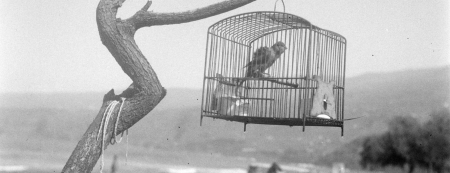
I love these 2 verses. “Escaped” is emphasized twice–the bird catchers have collected many small birds, snared by a little food and a strong net. They keep them in a cage. But wait! Something has just happened, and the birds have somehow escaped!

Have you been wounded inside? Do you struggle hard with depression and loneliness?

There is so much ugliness. The enemy can throw so much at us. Many of us lack the strength to resist him. We can fight and flap and throw ourselves at the bars, but we are trapped. But then Jesus comes, He smashes cages, and frees birds like us.

Verse 8 is the final thought of this psalm.

It sums up everything so wonderfully. There is help. Our Creator deeply cares for us. He has ultimate strength. Put your heart in His hands. We read the last verse…

“Our help is in the name of the Lord,
Who made heaven and earth.”

Psalm 124:8

brokenbelievers.com


Love is an Action Verb

When I first started writing this post in my head, before I had posted it on my blog, Linda Kruschke’s Blog, back in 2009, in my head the title was “Love Is an Action Verb.” But as I thought more about it I realized there is more than one kind of love, and that love AS as an action verb was just one – and in my opinion the best – form of love.

In our impoverished English language, we use the word love in many different ways. I love my spouse, I love my dog, I love chocolate, I love my new shoes, I loved that movie I watched last night, and I love God.

Surely we don’t have the same feelings about all of these things, yet we use the same word. In the parts of the Bible that were originally written in Greek, there are four different Greek words that we translate as love:

  • Storge – refers to the love that is felt between family members and close relatives.
  • Philia – refers to the love that is between friends.
  • Eros – refers to deep emotion or passion that is felt between lovers and spouses.
  • Agape – refers to the kind of love that God has for us and is what I mean by love as an action verb.

Agape is a kind of love that is about giving, not about getting.

God showed us what agape is by His incarnation as Jesus Christ and by His death on the cross to pay for our sins. Agape is not just a feeling, it is what God is. He acts towards us in the way that He does not because of how He feels about us, but because of who He is; because He chooses to love us with agape love.

Agape is a type of love that we can, if we choose, combine with any one of the other three kinds of love. We can go beyond how we feel about others and truly love them in the way that God loves us. C.S. Lewis put it this way in his wonderful book Mere Christianity:

“The rule for all of us is perfectly simple. Do not waste time bothering whether you love your neighbor; act as if you did. As soon as we do this we find out one of the great secrets. When you are behaving as if you loved someone, you will presently come to love him.”

Agape and Philia

A couple of years ago, I went to the beach with some old friends and had an opportunity to practice agape with someone towards whom I feel philia. Before I left home for the weekend, I received an email from one of my friends saying it would be really great if the house we were renting was all warmed up, with the water turned on and 7-layer bars baking in the oven, when they arrived. These friends had a much longer drive than I did, and she knew I would arrive at the house several hours before they did.

I can tell you that I did not feel like driving by myself at night in the pouring rain to Cannon Beach, I did not feel like hunting around outside in the wind and rain for the water valve to turn on the water, and I really did not feel like baking cookies in the gas oven in a kitchen I am unfamiliar with. But I chose to do all of those things anyway because I love my friends and wanted to make them happy. I combined the philia I felt with agape I have learned from God and received blessings in return.

Agape and Eros

In our society today a high percentage of marriages end in divorce. Often the reason cited is that one spouse doesn’t love the other anymore; that feeling they had when they met is gone. The type of love that can disappear in a relationship is eros.

Now eros is important for couples to be attracted to each other and get married, but it cannot, by itself, sustain a lifelong commitment. To create a lasting marriage, a couple must combine eros with agape. Each spouse must act as if they love the other even when they don’t feel like it or are angry or annoyed by the other spouse. A simple text to say “I love you,” a special dinner that your spouse likes, doing housework to lighten the other’s load, a hug and a kiss at the beginning and end of each day – all of these actions are examples of agape.

Who do you need to love (agape) today?

Each day we need to make a conscious effort to incorporate agape love into our interactions with those around us. Who is God calling you to love today? Don’t feel like it? As Nike would say, “Just do it.” After all, love as an action verb can be a blessing to others that is returned to you in an even greater measure than you give.

Romans 12:10

I Agape You,

Linda K

anotherfearlessyear.net

Assurance of Salvation for Desperate People

 For all who are led by the Spirit of God are sons of God. 15 For you did not receive the spirit of slavery to fall back into fear, but you have received the Spirit of adoption as sons, by whom we cry, “Abba! Father!

Romans 8:14-15

Abba! Father!

That’s a title of intimacy. You belong in His family. You’re His son, His daughter. But as broken believers we can struggle a lot. Many in the Church don’t understand us, and we hardly understand ourselves. But we know we’re His own. We’re the shaky ones it seems.

We’re often aware that there’s a mixture of good and bad things regarding our faith. Because of this, we often see what others can’t.

  • The Good: we don’t have to be convinced of our sin.  We live in a broken world, and we’re pretty sure that we have formidable issues. We’re needy. We’ve tried lots of things, and we just might be a little wary (but that can be good too).
  • The Bad: our consistency fluctuates from day-to-day. We never know what our state of mind will be. Some of us have problems socially that hinders us. Attendance at our local church can be hard. We struggle in our relationships with others. We seem to make excuses for everything.

From day to day many of us struggle terribly.

The existence of this ‘flightiness’ is painfully evident. And as strugglers it’s hard to maintain anything, much less a spiritual life. But experience has taught me that the Holy Spirit not only makes an allowance, but even pours out extra grace on the troubled believer. The Lord loves His misfits.

But no matter what, we can’t put any confidence in our flesh. We do bounce around, but salvation is not of our own doing. What stabilizes us is a serious dedication to the promises we have in the Word of God. He gives us His Words to strengthen.

faith-train

Obviously, the engine must pull the other cars. We must look to the promises of God to stay on track. And both faith and feelings must follow the engine. Some struggle a great deal because they are led by their feelings. Confusion will follow if we get the proper order mixed up.

  1. First facts, (the Bible, God’s word to you)
  2. then comes faith,
  3. and finally feelings, (these cannot come first!)

The Word of God is our only safety.

Our faith is to be connected to the promises of God. For those of us with a disability, we realize that we deal with issues that others seem to skate through. (But hey, aren’t used to that now?) And yet the Father makes some things easier for us too. 

Please, read the Word. The Psalms or the Gospels are always good for us.

Focus on God’s promises to you. If you collect up His words, in your mind and heart, the Holy Spirit will bring to your mind these verses when you really need them. (I draw much strength from the Psalms. These keep me on track.)

We’ve been adopted by the Holy Spirit as sons and daughters.

We are deeply loved by God Himself. He has gone and made us ‘heirs’ without any of our own effort (Romans 8:14-17). We are a people in need of stability. What God gives us is His own constancy. Read the Word, fresh just for you. The promises applied lavishly will enable you to be like Jesus.

 “And because of his glory and excellence, he has given us great and precious promises. These are the promises that enable you to share his divine nature and escape the world’s corruption caused by human desires.”

2 Peter 1:4, NLT

“In the darkest of nights cling to the assurance that God loves you, that He always has advice for you, a path that you can tread and a solution to your problem–and you will experience that which you believe.”

“God never disappoints anyone who places his trust in Him.”

 Basilea Schlink

Bryan Lowe